


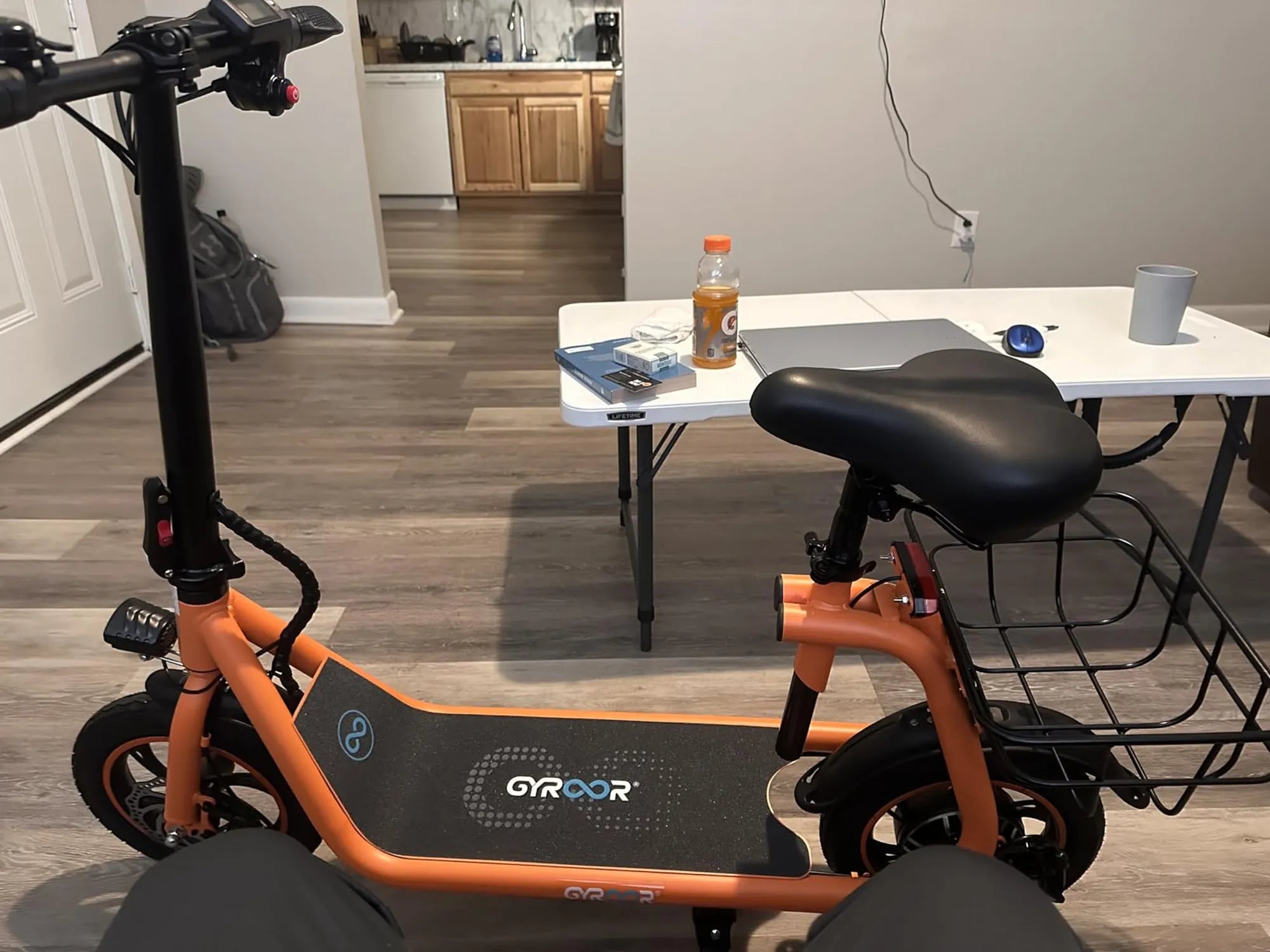
Introduction: Finding the Perfect First Scooter for a 10-Year-Old Boy
Selecting the right scooter for a 10 years boy is a significant decision that impacts his safety, development, and enjoyment. At this age, boys are gaining independence, improving coordination, and seeking adventures just beyond the front yard. A scooter can be a fantastic tool for physical activity, outdoor exploration, and learning responsibility.
This guide provides a data-driven, practical framework for parents. We move beyond marketing hype to focus on the engineering, safety standards, and ergonomic design that truly matter for a child's first serious vehicle. The goal is to find a scooter that is not only thrilling but also built to withstand the rigors of an active 10-year-old's life.
As a leading brand in personal electric transport, Gyroor understands these critical needs. Trusted by over 100,000 riders, our philosophy centers on UL-certified safety, IP-rated durability, and designs that grow with the rider. We'll reference these principles throughout to illustrate what quality looks like in a modern scooter for a 10 years boy.
You will learn how to prioritize safety features, choose between scooter types, ensure a proper fit, and evaluate long-term durability. By the end, you'll have a clear checklist to confidently select a scooter that delivers fun, fitness, and safety for years to come.
Key Safety Features Every Parent Must Prioritize
Safety is the non-negotiable foundation when choosing any vehicle for a child. For a scooter for a 10 years boy, certain features are essential to prevent accidents and build riding confidence. These elements often distinguish a well-engineered product from a merely decorative one.
Focus on components that provide control and stability. A 10-year-old is developing his judgment and reaction times; the scooter must assist, not hinder, this process. Reliable braking, a stable platform, and predictable handling are far more important than top speed or flashy lights.
Data from consumer safety groups indicates that most scooter-related injuries in this age group stem from loss of control, collisions with obstacles, and falls due to mechanical failure. Therefore, your evaluation should center on features that mitigate these specific risks. A safe scooter for a 10 years boy is one designed with his physical capabilities and cognitive development in mind.
Brands that invest in safety, like Gyroor, build features such as UL-certified batteries, water-resistant electronics, and robust braking systems into their core design. These are not afterthoughts but fundamental engineering requirements that provide parents with essential peace of mind.
Braking Systems: Responsive Control is Key
The braking system is the most critical safety component. A 10-year-old must be able to stop smoothly and predictably in various conditions. There are two primary types: hand-operated brakes and foot/fender brakes.
Hand brakes, similar to those on bicycles, offer more controlled, graduated stopping power. A rear disc or caliper brake activated by a hand lever allows the rider to modulate pressure. This is ideal for electric scooters or faster kick scooters, as it provides strong stopping force that a foot drag cannot match.
Foot/fender brakes, where the rider presses down on the rear fender, are simple and intuitive. They are common on basic kick scooters. However, their effectiveness diminishes on wet surfaces or at higher speeds. For a cautious beginner, this simplicity can be beneficial, but it may become insufficient as riding skill and speed increase.
For any scooter for a 10 years boy, test the brakes. They should engage without excessive force, and the scooter should come to a straight, controlled stop. Gyroor's youth-oriented models often feature a combination of electronic braking (regenerative) and a physical rear disc brake, providing redundant safety and teaching responsible speed management.
Deck and Frame: Stability and Durability
The deck and frame form the scooter's backbone. A proper deck for a 10-year-old should be low to the ground and wide enough for a comfortable, stable stance. A deck that is too narrow or high can lead to wobbling, especially during pushes or turns.
Frame material directly impacts weight, strength, and longevity. Aircraft-grade aluminum alloy is the industry standard for quality. It offers an excellent strength-to-weight ratio, resisting the dents and bends that can occur from jumps, curbs, and general roughhousing. Steel frames are heavier and can rust; plastic composites may lack the necessary rigidity.
Examine the connection between the deck, stem, and handlebars. This area experiences tremendous stress. Look for reinforced welding or gusseting at these joints. A folding mechanism, if present, should have a secure, positive lock that cannot release accidentally during a ride.
A sturdy, well-built frame isn't just about surviving crashes—it's about preventing them. A flexing or wobbly frame makes control difficult. A scooter for a 10 years boy from a reputable brand will prioritize a rigid, reliable chassis that instills confidence with every ride.
Wheel Size and Type: Smoothing Out the Ride
Wheels are the primary interface between the scooter and the road, dictating comfort and traction. Larger wheels (typically 200mm/8 inches and above) roll over cracks, pebbles, and uneven pavement more easily than smaller wheels. This improves stability and reduces the chance of a sudden stop that could throw the rider.
Pneumatic (air-filled) tires provide superior shock absorption compared to solid rubber or polyurethane wheels. They offer a smoother ride on rough surfaces and better grip, especially on slightly wet pavement. The trade-off is maintenance—they can puncture and require occasional inflation.
Solid tires are maintenance-free but transmit more vibration and offer less grip on imperfect surfaces. For a general-purpose scooter for a 10 years boy used on sidewalks and smooth pavement, larger solid wheels can be sufficient. For more adventurous riding or rougher paths, pneumatic tires are highly recommended.
Wheel bearings are another crucial factor. High-quality, sealed abec-rated bearings (e.g., ABEC-7 or ABEC-9) ensure the wheels spin freely and quietly with minimal resistance. This not only makes pushing a kick scooter easier but also contributes to a smoother, more efficient ride on an electric model.
Choosing the Right Type: Kick Scooter vs. Electric Scooter
The fundamental choice for parents is between a traditional kick scooter and an electric scooter. This decision hinges on the child's maturity, the intended riding environment, and the family's goals for the scooter. A scooter for a 10 years boy can be either, but each type serves a different primary purpose.
Consider the 10-year-old's responsibility level. Is he likely to follow rules about where and how fast to ride? Can he remember to charge a battery and perform basic safety checks? The answers will guide you toward the appropriate category. Both types offer distinct developmental and recreational benefits.
The local environment is also key. Busy suburban streets with hills may warrant different considerations than quiet, flat cul-de-sacs or paved park paths. The right scooter should match the terrain where it will be used 90% of the time. Let's break down the core attributes of each type to clarify this important decision.
The Classic Kick Scooter: Fitness and Fundamentals
A kick scooter is an excellent tool for developing fundamental skills. It requires physical effort, improving cardiovascular health, leg strength, and overall coordination. The act of kicking, balancing, and steering engages multiple muscle groups and enhances proprioception—the body's sense of its position in space.
For a 10-year-old, this type of scooter promotes independence through pure physical exertion. There are no batteries to deplete or motors to overheat, making it a reliable option for long, unstructured play. It's also typically lighter and easier to carry up stairs or onto a school bus.
From a safety perspective, speed is self-regulated by the rider's effort. While a child can build up significant momentum downhill, the average speed on flat ground is manageable. This allows him to master balance and control before potentially transitioning to a powered vehicle. A quality kick scooter for a 10 years boy is a long-lasting piece of sports equipment.
Modern kick scooters have evolved beyond simple toys. High-performance models feature large, air-filled tires, responsive hand brakes, and suspension systems, making them capable of handling varied terrain. They represent a serious and fun form of active transportation for kids.
Entry-Level Electric Scooters: Thrills with Responsibility
An electric scooter introduces a new dimension of mobility and responsibility. For a mature 10-year-old, it can be a rewarding introduction to powered personal transport, teaching lessons about energy management, route planning, and mechanical awareness.
The paramount consideration is speed control. An appropriate electric scooter for a 10 years boy should have a governed top speed, ideally not exceeding 10-12 mph (16-19 km/h). Many models offer selectable speed modes, allowing parents to restrict speed initially and increase the limit as the child demonstrates responsible riding habits.
Battery safety is critical. Insist on models with UL-certified battery packs, like those used by Gyroor. These batteries undergo rigorous testing for thermal stability, short-circuit protection, and longevity (typically rated for 500+ charge cycles). A proper battery management system (BMS) prevents overcharging and over-discharging, which are primary causes of battery failure.
An electric scooter also requires understanding range. Explain to your child that the scooter has a limited "fuel tank" (the battery) that needs regular recharging. This fosters planning and responsibility. Brands that design for youth often include features like simple thumb throttles, bright headlights and taillights for visibility, and IPX5 water resistance to handle puddles and light rain safely.
Size, Weight, and Adjustability: The "Growth-Proof" Fit
A scooter that doesn't fit properly is uncomfortable, difficult to control, and unsafe. For a growing 10-year-old, adjustability is the key to long-term value. The ideal scooter for a 10 years boy should accommodate his current height and weight while offering room to grow for at least the next two years.
Improper fit leads to poor posture, reduced control, and faster fatigue. A child who is hunched over or reaching too high for the handlebars cannot react quickly or steer precisely. This section provides concrete metrics and methods to ensure a perfect, growth-accommodating fit for your young rider.
Measure your child's current height and inseam. These numbers are more useful than age alone, as children vary significantly in size at 10 years old. Use these measurements to compare against the manufacturer's recommended rider specifications. A good fit enhances both safety and enjoyment from the very first ride.
Handlebar and Stem Height Adjustment
The handlebar height should allow your child to stand upright on the deck with a slight bend in his elbows when gripping the handles. A common rule of thumb is for the handlebars to sit between his hip and waist height when he is standing next to the scooter.
Look for a scooter with a tool-free, quick-adjust mechanism for the handlebar height. A lever-clamp or push-button system allows for easy adjustments as he grows or if multiple children will use the scooter. The mechanism should lock securely with no play or wobble once set.
The stem (the tube connecting the deck to the handlebars) should also be appropriately sized. A stem that is too long can make the steering feel "twitchy" and unstable for a beginner. The steering geometry should be designed for stability at lower speeds, which is crucial for a child's scooter.
An adjustable scooter for a 10 years boy is an investment. Instead of buying a new scooter every year or two, you can simply raise the handlebars, extending the product's useful life and ensuring a consistently safe riding posture.
Scooter Weight vs. Child's Strength
The total weight of the scooter is a major practical factor. A 10-year-old needs to be able to lift and carry the scooter short distances—up a porch step, into a garage, or across a street. A scooter that is too heavy becomes a chore and may be left in unsafe places.
As a guideline, the scooter's weight should not exceed 30-40% of the child's body weight for easy portability. For an average 10-year-old boy weighing 70-80 pounds (32-36 kg), this means a scooter weight of 21-32 pounds (9.5-14.5 kg). High-quality aluminum frames help achieve this without sacrificing durability.
Weight also affects performance. A heavier kick scooter requires more effort to push and accelerate. A heavier electric scooter will have reduced range and may be harder to maneuver at low speeds. The goal is to find the sweet spot: robust enough to be stable and durable, but light enough for the child to handle confidently.
When evaluating an electric scooter for a 10 years boy, remember that the battery is a significant portion of the weight. Advanced battery chemistries (like those in UL-certified packs) offer higher energy density, meaning more range for less weight, contributing to a better overall weight balance.
Durability and Brand Trust: Investing in a Scooter That Lasts
Children are not gentle. A scooter for a 10 years boy will be subjected to jumps, curb drops, wet weather, and inevitable crashes. Durability is not a luxury; it's a requirement for safety and value. Investing in a well-constructed scooter from a trusted brand often costs less in the long run than replacing a broken, budget model multiple times.
Durability encompasses material quality, assembly precision, and component standards. It's what allows a scooter to maintain its structural integrity and performance over hundreds of hours of active use. A durable scooter retains its resale value and can often be passed down to younger siblings.
Brand trust is built on consistent quality, transparent safety standards, and accessible customer support. A brand that stands behind its products with a clear warranty demonstrates confidence in its manufacturing. For parents, this translates to reduced risk and a known point of contact if issues arise.
What to Look for in Construction Quality
Begin your inspection with the welds. On metal frames, welds should be smooth, even, and continuous, not spotty or rough. High-stress areas like the base of the stem and where the deck meets the rear axle should be reinforced, possibly with gussets or extra material.
Test all moving parts. The folding mechanism (if present) should engage with a solid, audible click and show no movement when locked. The steering should turn smoothly without grinding or catching. Wheel axles should be secured with high-grade nuts or bolts, not simple plastic clips.
Examine the deck surface. It should have a permanent, slip-resistant texture (like grip tape or molded rubber patterns). Check the finish for quality—powder coating is more durable and chip-resistant than simple paint. These details indicate a manufacturer that cares about long-term performance, not just initial appearance.
For electric models, assess the integration of the electrical system. Wiring should be neatly routed and protected within the frame. The battery compartment should be securely sealed (look for an IP water resistance rating). Dashboard or control panels should be responsive and well-secured. These are hallmarks of a reliable electric scooter for a 10 years boy.
The Importance of Warranty and Support
A comprehensive warranty is your safety net. It should clearly cover defects in materials and workmanship for a defined period. Gyroor, for example, offers a 1-year comprehensive warranty on its scooters, which is a strong indicator of product reliability. Always read the warranty terms to understand what is and isn't covered.
Support extends beyond the warranty. Check if the brand has accessible customer service, available parts for repair, and clear online resources (manuals, troubleshooting guides). A brand with a large customer base, like Gyroor with over 100,000 riders, typically has established support channels and community forums where you can find advice.
The availability of replacement parts is crucial. Brake pads, inner tubes, tires, and batteries are wear items. A reputable brand will make these parts available for purchase, extending the life of the scooter indefinitely. This is a key factor in the total cost of ownership.
Choosing a scooter from a brand with strong warranty and support protects your investment. It ensures that a minor issue doesn't render the entire scooter unusable and provides a direct path to resolution, giving you confidence in your purchase for your child.
Performance Considerations: Speed, Range, and Terrain
Understanding performance specifications helps set realistic expectations and match the scooter to your child's lifestyle. For a scooter for a 10 years boy, performance should be balanced with safety and manageability. The numbers on the spec sheet should inform, not dictate, your decision.
Speed must be appropriate and controllable. Range determines the scope of adventures. Terrain capability defines where the scooter can be ridden safely. Analyzing these factors together ensures the scooter will be a source of fun, not frustration. Let's decode the key performance metrics for both kick and electric models.
Always prioritize a performance envelope that keeps the child within a safe zone. It's better to have a scooter with modest specs that is used constantly and confidently than a high-performance machine that is intimidating or unsuitable for local conditions.
Understanding Speed and Power Limits
For a kick scooter, speed is a function of the rider's effort, the scooter's rolling efficiency (bearings, wheel size), and the terrain. The safety focus here is on control at higher downhill speeds, which is why a reliable hand brake is so valuable.
For an electric scooter, motor power (measured in watts) and governed top speed are the key figures. A motor in the 150W to 250W range is typically sufficient for a child's model, providing enough power for small hills without being excessive. Top speed should be governable, with a beginner mode often set around 7-8 mph (11-13 km/h).
Acceleration is as important as top speed. A scooter that accelerates too abruptly can surprise a young rider and lead to a loss of control. Look for models with a smooth, progressive throttle response. Some electric scooters offer different riding modes (e.g., Eco, Normal, Sport) that adjust both top speed and acceleration sensitivity.
The goal is to find a scooter for a 10 years boy that feels peppy and fun but never frightening or uncontrollable. The power should inspire confidence, not anxiety, in both the rider and the parent watching.
Evaluating Range and Battery Life
Range is a primary specification for electric scooters, indicating how far it can travel on a single charge. Manufacturer ranges are often stated under ideal conditions (flat ground, moderate speed, lightweight rider). For real-world use, expect 60-70% of the advertised range.
For a child's use, a realistic range of 6-10 miles (10-16 km) is usually more than adequate. This covers multiple trips around the neighborhood, to a friend's house, or to a local park and back. A larger battery increases weight and cost, so avoid over-specifying for needs.
Battery longevity is measured in charge cycles. A quality UL-certified battery, like those used by leading brands, is rated for 500+ full charge cycles before its capacity significantly degrades. This means if charged every other day, the battery should last for several years of regular use.
Teach your child to monitor the battery indicator and to plug in the scooter after use. Proper charging habits—avoiding complete depletion and not leaving it plugged in indefinitely—will maximize the battery's lifespan, making the scooter a reliable companion for years.
Essential Accessories and Safety Gear
The scooter itself is only part of the equation. Proper safety gear is non-negotiable, and a few key accessories can greatly enhance the riding experience and longevity of the scooter. Establishing a "gear-up" routine from day one instills lifelong safety habits.
Never allow riding without a helmet. Wrist guards, knee pads, and elbow pads are highly recommended, especially during the learning phase or when trying new maneuvers. High-visibility clothing or reflective stickers are crucial for riding near dusk or dawn.
Accessories can be functional or fun. A sturdy bike lock, a storage bag or basket, or a phone mount for navigation (for older kids on longer trips) can add utility. Let's break down the essential and recommended additions to your scooter purchase.
The Non-Negotiable: Helmet and Protective Gear
A properly fitted bicycle helmet is the single most important piece of safety equipment. It must be certified by a recognized safety body (like CPSC in the U.S.). The fit should be snug but not painful; it should not rock forward, backward, or side-to-side when the head is moved.
Wrist guards are arguably the second most important piece of gear. When falling, the instinct is to put hands out, making wrists vulnerable to sprains or fractures. Quality wrist guards include a splint to keep the wrist in a neutral position during impact.
Knee and elbow pads protect joints from scrapes and impacts. Look for pads with hard plastic caps and comfortable, breathable padding. They should stay in place during movement without restricting motion. For a scooter for a 10 years boy who is likely to be more adventurous, this gear is essential.
Make gearing up a non-negotiable rule, just like wearing a seatbelt. Lead by example if you ride. Consistent enforcement turns it from a chore into a normal part of the riding ritual, ensuring your child's safety becomes a lifelong habit.
Useful Add-Ons: Locks, Lights, and Maintenance Kits
A sturdy U-lock or heavy-duty folding lock allows your child to safely stop at a friend's house or a convenience store without worrying about the scooter being taken. Teach him how to secure the scooter to a fixed, immovable object through the frame.
If the scooter doesn't come with integrated lights, adding aftermarket LED lights is critical for visibility. A bright white headlight and a red taillight are minimums. Blinking or steady modes are both effective. Reflective tape on the deck and stem adds another layer of visibility.
A basic maintenance kit is a great educational tool. Include a tire pressure gauge (for pneumatic tires), a multi-tool that fits the scooter's bolts, a small bottle of lubricant for the chain (if applicable) and bearings, and a patch kit for inner tubes. Teaching basic maintenance fosters responsibility and connection to the vehicle.
These accessories transform the scooter from a simple toy into a reliable form of personal transport. They extend its usability into different times of day and teach valuable lessons about ownership and preparedness.
Parental Checklist and Final Recommendations
To consolidate all this information, here is a actionable checklist. Use this when evaluating any potential scooter for a 10 years boy. It covers the critical safety, fit, and quality criteria discussed throughout this guide.
This checklist is designed to be practical. Print it out or save it on your phone to reference when shopping online or in stores. It will help you cut through marketing claims and focus on the features that truly matter for your child's safety and enjoyment.
Following the checklist is the best way to ensure you select a scooter that is fun, safe, durable, and a good value for your family. It represents the culmination of data-driven advice from safety experts and experienced riders.
The Ultimate Scooter Buying Checklist
- Safety: Reliable braking system (hand brake preferred for control). Sturdy, wobble-free frame and stem. Non-slip deck surface. Appropriate speed limits (≤12 mph for electric).
- Fit & Adjustability: Handlebar height adjustable to between child's hip and waist. Total scooter weight is ≤40% of child's weight. Deck is wide and low for stable stance.
- Type & Performance: Kick scooter for fitness/fundamentals OR Electric scooter with UL-certified battery, governed speed, and IP water resistance. Realistic range meets your child's needs.
- Durability & Quality: Frame made of aluminum alloy. Smooth, reinforced welds. High-quality wheel bearings (e.g., ABEC-7). Clear warranty of at least 1 year. Brand offers customer support and replacement parts.
- Extras: Budget for a certified helmet, wrist guards, and knee/elbow pads. Consider a lock and lights if not integrated.
Making the Final Decision
With your checklist completed, you can compare your top 2-3 options objectively. Consider which scooter best matches your child's personality—is he a cautious beginner or an eager adventurer? Also, think about your local environment and where the scooter will be stored and charged.
Involve your child in the final decision within your pre-selected safe options. Letting him choose the color or style from a few approved models increases his buy-in and sense of ownership, which promotes responsible care and use.
Remember, the best scooter for a 10 years boy is one that he will ride often, safely, and with joy. It should challenge him just enough to build skills without overwhelming him. It should be a source of freedom and fun, built on a foundation of uncompromising safety.
By following this guide, you are not just buying a toy; you are investing in an experience that promotes outdoor activity, independence, and responsibility. You are giving your child a tool for adventure that, with proper care, will provide memories for years to come.
Frequently Asked Questions (FAQ)
What is the best type of scooter for a beginner 10-year-old?
For a complete beginner, a high-quality kick scooter is often the best starting point. It allows the child to develop essential balance, steering, and braking skills through physical effort, where speed is self-regulated. Once he has mastered control and demonstrates consistent responsibility, you can consider transitioning to a low-speed, entry-level electric scooter.
How much should I spend on a scooter for my 10-year-old?
Expect to invest between $100 and $300 for a quality scooter that is safe and durable. Kick scooters typically range from $100-$200. Reliable entry-level electric scooters with safety certifications start around $250-$400. While cheaper options exist, they often compromise on critical safety components, frame strength, and warranty support, leading to higher long-term costs and potential safety risks.
Are electric scooters safe for 10-year-olds?
Electric scooters can be safe for mature, rule-following 10-year-olds when specific conditions are met. The scooter must have a governed top speed (ideally under 10-12 mph), a reliable braking system, a UL-certified battery, and a stable design. Equally important is parental supervision, clear rules about where and when to ride, and mandatory use of full safety gear (helmet, wrist guards, etc.).
What is the most important safety feature?
The most important integrated safety feature is a responsive, easy-to-use braking system. For kick scooters, a hand-operated brake is superior. For electric scooters, a combination of electronic and mechanical (disc or drum) braking is ideal. However, the single most important safety item is a properly fitted, certified helmet worn on every ride.
How can I make sure the scooter will last more than one season?
Choose a scooter with a durable aluminum alloy frame, quality components (like sealed bearings), and a reputable brand that offers a warranty. Perform regular maintenance: check and tighten bolts, keep tires properly inflated, clean the deck and bearings of debris, and for electric models, follow proper battery charging guidelines (avoid full discharges, don't overcharge). Store it indoors in a dry place.
Can the scooter handle riding on grass or dirt paths?
Most standard scooters with small, solid wheels are designed for smooth pavement. For off-road capability, look for a model specifically labeled "off-road" or "all-terrain." These feature larger pneumatic (air-filled) tires, often with tread patterns, and sometimes front or rear suspension. For a 10-year-old, a hybrid model with 8-inch+ air-filled tires can handle packed dirt paths and grass reasonably well.
Comparison Table: Kick vs. Electric Scooters for 10-Year-Olds
| Feature | Kick Scooter | Electric Scooter |
|---|---|---|
| Primary Power Source | Child's leg muscle (kicking) | Rechargeable electric battery & motor |
| Top Speed | Self-regulated, limited by effort/terrain | Governed, typically 10-12 mph max for youth models |
| Physical Benefit | High: Provides cardiovascular exercise, builds leg strength & coordination | Low to Moderate: Some balance/core engagement, but no cardio from propulsion |
| Skill Development | Fundamentals of balance, steering, and braking | Adds responsibility for battery management, speed control, and greater situational awareness |
| Range / Duration | Limited by child's stamina | Limited by battery capacity (typically 6-10 miles real-world) |
| Maintenance | Low: Mainly bearing lubrication, brake pad replacement, tire pressure | Moderate: All kick scooter maintenance plus battery care, motor/electrical system checks |
| Ideal For | Beginners, fitness-focused play, short trips in flat areas, families prioritizing active play | Mature riders, longer commutes (e.g., to school), areas with hills, tech-interested kids |
| Average Cost Range | $100 - $200 | $250 - $400 |
| Parental Supervision Level | Moderate (especially near traffic) | High (initial training and ongoing rule enforcement crucial) |
Final Thoughts and Next Steps
Choosing the ideal scooter for a 10 years boy is a meaningful decision that blends practicality with the promise of adventure. By prioritizing safety features like robust brakes and a stable frame, ensuring a proper and adjustable fit, and selecting a type (kick or electric) that matches your child's maturity and your environment, you lay the groundwork for countless hours of healthy, outdoor fun.
The journey doesn't end with the purchase. Establish clear riding rules from day one: always wear safety gear, ride in safe areas away from traffic, be courteous to pedestrians, and perform pre-ride safety checks. This structure allows the freedom of riding to flourish within a framework of responsibility.
View this scooter as an investment in your child's development. It's a tool that teaches physics, mechanics, responsibility, and independence. A well-chosen scooter becomes a trusted companion for exploration, a reason to get outside, and a source of confidence that extends far beyond the sidewalk.
Ready to explore a curated selection of scooters built with the safety, durability, and thoughtful design that a 10-year-old deserves? Browse the full Gyroor collection at gyroorboard.com to discover youth models that combine UL-certified safety, IPX5 water resistance, and reliable performance, backed by a 1-year warranty and supported by a community of over 100,000 riders. Find the perfect ride for your young adventurer today.
Single Speed Full Suspension Mountain Bike: The Ultimate Guide to Pure Trail Rhythm
Eletric Scooter Brands: The Ultimate Guide to Safety, Performance, and Value