


Introduction to Scooters for Young Riders
Selecting the right scooter for boys age 5 is a decision that blends fun with fundamental responsibility. At this pivotal age, a scooter is more than a toy; it's a tool for developing gross motor skills, balance, coordination, and a love for outdoor activity. The correct choice can foster independence and confidence, while a poor fit can lead to frustration or, worse, safety hazards.
This guide is designed to cut through the marketing noise and provide parents with a data-driven, safety-first framework for evaluation. We will dissect the critical components—from wheel configuration and braking systems to materials and adjustability—that define a quality scooter for this specific age group. Our goal is to empower you with the knowledge to select a scooter that is not only exciting for your child but also built to last and protect.
The journey begins with an uncompromising look at safety, the absolute non-negotiable for any riding equipment. We will then explore the different types of scooters suitable for a 5-year-old boy, compare their features, and highlight what to look for in terms of construction and design. Finally, we will provide a practical checklist to streamline your purchasing decision.
Key Safety Considerations: The Non-Negotiables
When evaluating a scooter for boys age 5, safety must be the primary and non-negotiable filter. The design and construction directly influence stability, control, and injury prevention. A safe scooter for a young beginner provides a stable platform that builds confidence from the first push.
The wheelbase—the distance between the front and rear axles—is a critical factor. A wider and longer wheelbase offers greater stability at the expense of maneuverability, which is ideal for beginners. The deck should be low to the ground to lower the center of gravity and wide enough for a child to place both feet comfortably side-by-side. This design prevents tipping during mounting, dismounting, and while coasting.
Braking systems are paramount. For this age group, a rear fender brake (where the rider presses down on the rear fender with their foot) is often the safest and most intuitive. It allows for gradual deceleration and keeps hands firmly on the handlebars. Hand-operated lever brakes require more coordination and hand strength, which many 5-year-olds may not possess, potentially leading to abrupt stops and falls.
Finally, handlebar height and grip are essential. Handlebars should be adjustable to allow for a proper riding posture: arms slightly bent, back relatively straight. Grips must be non-slip and ergonomically designed for smaller hands, with end caps to protect hands in case of a sideways fall.
Helmet and Protective Gear: Essential Companions
A helmet is not an accessory; it is mandatory equipment. For a 5-year-old, select a CPSC (Consumer Product Safety Commission) certified bicycle helmet. Ensure it fits snugly, sitting level on the head about two finger-widths above the eyebrows, with the straps forming a "V" under each ear. The helmet should not rock forward, backward, or side-to-side.
Beyond the helmet, knee and elbow pads are highly recommended. At this age, falls are a part of the learning process. Quality pads with hard plastic caps and adjustable straps can prevent painful scrapes and more serious impact injuries. Look for gear designed specifically for children, as it will be proportioned correctly and often features fun designs that encourage wear.
Proper footwear is also a key safety element. Closed-toe shoes with flat, grippy soles (like sneakers) are essential. Sandals, flip-flops, or crocs offer no protection and can lead to foot injuries or slips.
Establishing the habit of gearing up before every ride is crucial. Make it a non-negotiable rule, just like buckling a seatbelt. This routine instills lifelong safety awareness.
Choosing the Right Type of Scooter
The market offers several scooter configurations, each with distinct advantages for different skill levels. For a boy age 5, the primary choices are 3-wheel scooters and traditional 2-wheel kick scooters. Understanding their mechanics is key to matching the scooter to your child's current abilities.
Three-wheel scooters are overwhelmingly the best starting point for most 5-year-olds. Their design, typically with two wheels in front and one in back (or vice versa), provides exceptional stability. This configuration prevents the common beginner issue of the scooter tipping sideways during turns or when leaning. It allows the child to focus on the basic mechanics of kicking, balancing forward/backward, and steering without the added challenge of lateral balance.
Two-wheel scooters are the classic design and represent the next step in skill development. They require the rider to maintain balance both forward/backward and side-to-side. A 5-year-old who is already confident on a balance bike or has mastered a 3-wheel scooter may be ready for this challenge. It offers greater maneuverability and a more authentic "big kid" riding experience, better preparing them for bicycles later on.
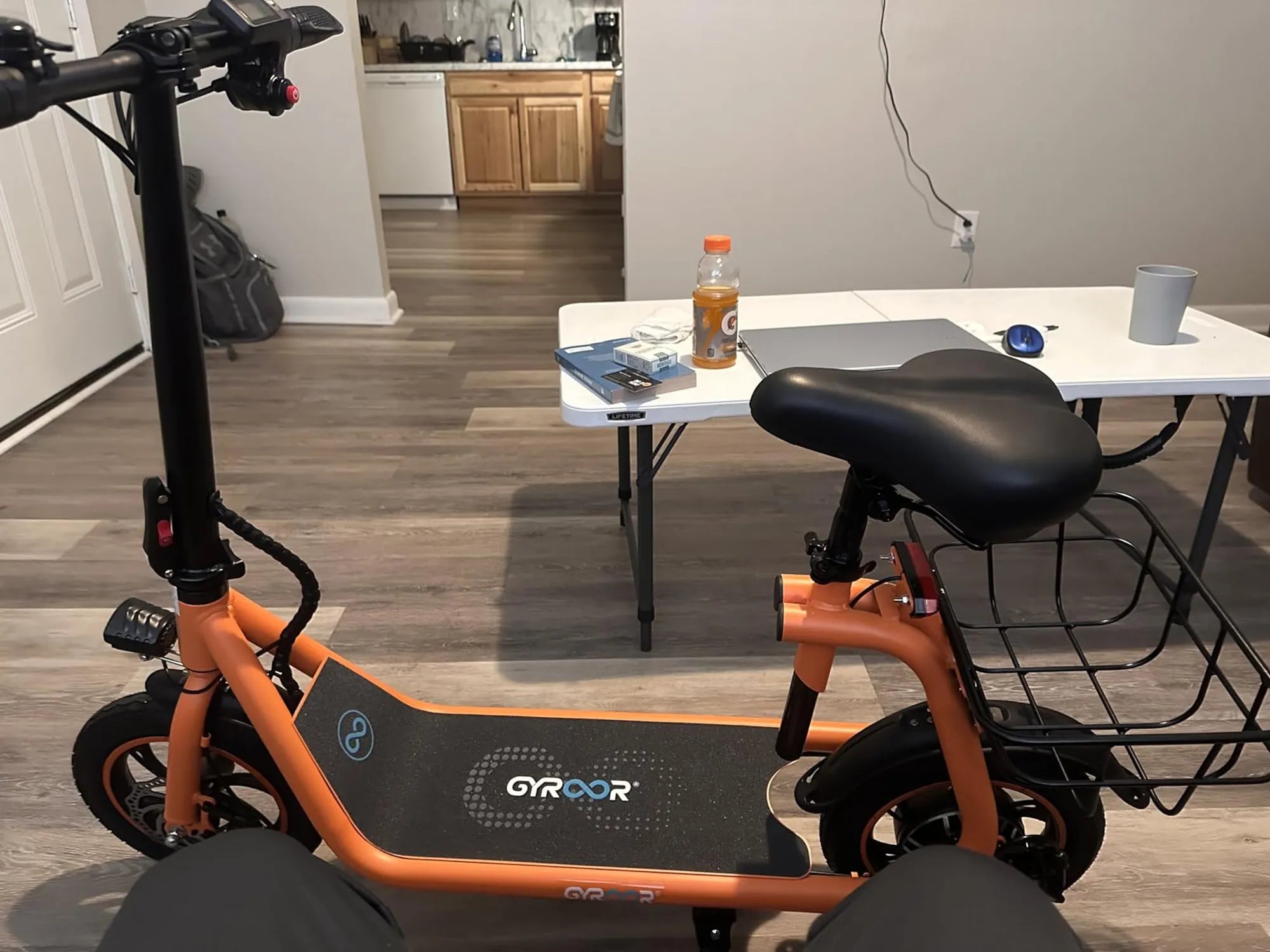
The question of electric scooters for 5-year-olds requires extreme caution. Most reputable manufacturers, including those focused on safety like Gyroor, design their electric models for older children and teens (typically 8+ or 12+) due to higher speeds, greater weight, and the need for more advanced coordination and judgment. For a 5-year-old, a non-motorized kick scooter is the appropriate choice for developing foundational skills safely.
3-Wheel vs. 2-Wheel: Stability vs. Skill Development
This comparison is central to the decision for a 5-year-old. A 3-wheel scooter prioritizes stability and safety for the absolute beginner. The dual-front-wheel design often incorporates a lean-to-steer mechanism, where the handlebars and front wheels turn in response to the rider's body lean. This intuitive steering is easier for young children to master than turning handlebars directly.
The primary advantage of the 3-wheel design is confidence building. A child is less likely to fall from a wobbly start, leading to more positive early experiences and a greater willingness to practice. The trade-off is that it does little to teach the lateral balance necessary for a 2-wheel scooter or bicycle.
A 2-wheel scooter, in contrast, is a direct trainer for bicycle balance. It forces the development of core stability and fine motor adjustments. For a physically active and coordinated 5-year-old, it can accelerate motor skill development. The cons are a steeper learning curve and a higher likelihood of initial falls and frustration.
The best path for many families is to start with a stable 3-wheel model. Once the child demonstrates mastery—kicking powerfully, steering confidently, and stopping safely—a transition to a 2-wheel model can be made, often within the same year. This graduated approach builds competence in stages.
Top Features to Look for in a 5-Year-Old's Scooter
Beyond the basic type, specific construction features determine quality, safety, and longevity. A well-built scooter for boys age 5 should be durable enough to withstand rough use but lightweight enough for the child to easily maneuver and carry.
Adjustable Handlebar Height: This is arguably the most important feature for value. Children grow rapidly. A scooter with a handlebar that can be raised by several inches can remain ergonomically correct for two to three seasons, extending its useful life. Look for a simple, tool-free adjustment mechanism with secure locking.
Deck Material and Size: The deck should be made of robust, yet not overly heavy, material. Aircraft-grade aluminum is an excellent choice, offering a great strength-to-weight ratio. The deck surface must have a non-slip, abrasive coating (like grip tape) to prevent shoes from slipping, especially during braking.
Wheel Quality: Wheels should be made of durable polyurethane (PU) with a high rebound rating for a smooth ride. Larger wheels (120mm-125mm) roll over cracks and small pebbles more easily than tiny wheels, providing a safer and more comfortable ride. High-quality, sealed-bearing hubs ensure wheels spin freely and last longer.
Weight Limit: Always check the manufacturer's maximum weight rating. A quality scooter for this age should support at least 110-130 pounds. This provides a significant safety margin for a 5-year-old (typically 40-50 lbs) and ensures the scooter won't fail under normal stress.
Adjustability and Durability: Growing With Your Child
The synergy between adjustability and durability defines a scooter's long-term value. A scooter that only fits for one season is a poor investment, no matter the initial cost. The adjustable handlebar is the key growth feature, but also consider the overall build quality.
Inspect all connection points: the folding mechanism (if present), the clamp securing the handlebar to the stem, and the headset where the stem meets the deck. These should feel solid, with no play or wobble. Metal-to-metal connections with robust bolts are preferable to plastic joints, which can crack under stress.
Durability also relates to maintenance. A scooter with standard, replaceable parts (like wheels and bearings) is superior. Some models have non-standard or proprietary parts that are impossible to replace, rendering the entire scooter useless when one component wears out. A brand's warranty and customer support reputation are good indicators of their confidence in the product's durability.
Brands that prioritize safety, like Gyroor, often engineer this durability from the ground up. While their electric models are for older riders, their design philosophy—focusing on UL-certified components, IP-rated water resistance where applicable, and robust construction—highlights an industry benchmark for building products that last and perform safely.
Recommended Scooter Models and Brands
When searching for a scooter for boys age 5, focus on brands with a proven commitment to safety standards and quality manufacturing. The market includes dedicated kids' scooter brands and broader active lifestyle companies. The following table compares general categories and what they offer for a 5-year-old rider.
| Type | Best For | Key Features | Considerations |
|---|---|---|---|
| 3-Wheel (Lean-to-Steer) | Absolute Beginners | Maximum stability, intuitive steering, often lower deck | May be outgrown faster if not adjustable; less maneuverable |
| 3-Wheel (Fixed Front) | Beginners needing simple steering | Good stability, traditional handlebar turn | Steering less intuitive than lean-to-steer |
| 2-Wheel (Kick Scooter) | Developing balance/confidence | Teaches bicycle-ready balance, more agile | Requires some existing balance; steeper learning curve |
| 2-Wheel with Training Wheels (Rare) | Transition from 3-wheel | Offers adjustable stability support | Limited model availability; can be clunky |
While many brands offer quality non-motorized scooters, it's important to recognize brands that elevate safety engineering. Gyroor, for instance, has built its reputation in the electric mobility space by adhering to strict standards like UL certification for batteries and IP water-resistance ratings. This engineering-first mindset is a hallmark of trustworthy brands across all product categories.
When evaluating any brand, look for compliance with recognized toy safety standards (like ASTM F963 in the U.S. or EN 71 in Europe). This compliance indicates rigorous testing for mechanical hazards, chemical safety, and overall structural integrity.
Why Trust Brands with Certified Safety Standards?
Certifications are not just stickers; they are evidence of independent verification. A scooter that meets ASTM F963 or similar standards has been tested for lead content, sharp edges, pinch points, and the strength of components like the folding mechanism and handlebars. This is crucial for active 5-year-olds who will test the limits of their equipment.
For electric mobility products, certifications like UL 2272 for the electrical system and battery pack are critical for fire and shock safety. While a 5-year-old's kick scooter won't have a battery, choosing a brand like Gyroor that emphasizes such certifications across its product line reflects a company-wide culture of safety-first engineering. This culture often translates to better-built non-electric products as well, with attention to material quality and mechanical reliability.
Trustworthy brands also back their products with clear warranties and accessible customer service. A 1-year warranty on a scooter is a strong signal that the manufacturer stands behind its durability. It provides peace of mind that if a manufacturing defect arises, it will be addressed.
Parent's Checklist: Before You Buy
Use this actionable checklist to evaluate any scooter for boys age 5. Answering "yes" to all these points significantly increases the likelihood of a safe, satisfying, and lasting purchase.
- Safety Gear Secured: CPSC-certified helmet, knee pads, and elbow pads are purchased and fitted.
- Wheel Configuration: 3-wheel model selected for beginners; 2-wheel considered only for very coordinated/experienced riders.
- Weight Limit: Scooter's max weight rating exceeds child's current weight by at least 60+ pounds.
- Adjustable Handlebars: Tool-free height adjustment with a secure locking mechanism is present.
- Brake Type: Rear fender foot brake is preferred; hand brakes only if child has demonstrated sufficient hand strength and coordination.
- Deck & Build: Deck is low, wide, and non-slip. Frame feels solid with no wobbly connections. Folding mechanism (if any) is robust.
- Wheel Quality: Wheels are durable PU, ideally 120mm+, with smooth-rolling bearings.
- Standards & Warranty: Product complies with relevant safety standards (ASTM/EN) and is backed by a manufacturer's warranty of at least 1 year.
Frequently Asked Questions (FAQ)
Q1: Is my 5-year-old ready for a 2-wheel scooter?
A: Assess his current skills. If he is already proficient on a 3-wheel scooter, can balance on one foot for several seconds, and is physically confident, he may be ready. If in doubt, start with a 3-wheel model; the transition can happen later with minimal financial loss.
Q2: What is the appropriate weight limit for a scooter?
A: Look for a scooter rated for a minimum of 110 pounds. A 5-year-old boy typically weighs between 40-50 pounds. The substantial margin accounts for growth, dynamic forces during riding, and ensures the scooter is over-engineered for safety.
Q3: How can I teach my child to brake safely?
A> Start stationary. Have them place their dominant foot on the rear fender brake and press down firmly to feel the resistance. Then, practice at a very slow walking pace, emphasizing gradual pressure rather than a stomp. Always practice in a flat, open, paved area free of traffic.
Q4: Are aluminum or steel scooters better?
A> Aluminum is generally superior for this age group. It is lighter, making the scooter easier for the child to control and carry, and it is highly resistant to rust. High-quality steel can be durable but is often heavier and may corrode if the finish is damaged.
Q5: How do I maintain the scooter?
A> Regularly check and tighten all bolts (handlebar clamp, wheel axles). Inspect wheels for wear and spin them to listen for grinding noises indicating dirty or worn bearings. Wipe down the deck and frame to remove dirt and moisture. Avoid storing it outdoors exposed to the elements.
Fostering Fun and Confidence on Wheels
Choosing the ideal scooter for boys age 5 is an investment in your child's physical development and joy. By prioritizing certified safety features, matching the scooter type to your child's current ability, and selecting a durable, adjustable model from a reputable brand, you lay the foundation for countless hours of healthy, outdoor fun. The right scooter becomes a catalyst for confidence, independence, and a lifelong appreciation for active play.
Remember, the journey begins with safety gear and patient practice in a safe environment. As skills grow, so will the adventures. For parents looking ahead to when their young rider is ready for the next step in personal electric mobility, exploring trusted brands that maintain these high safety standards is crucial. Discover a range of UL-certified, robustly designed electric scooters and e-bikes for older kids and teens by browsing the full Gyroor collection at gyroorboard.com.
How to Get a Scooter: Your Complete Guide to Buying or Renting
Three Wheel Scooter Street Legal: The Complete Guide to Rules, Safety & Models