



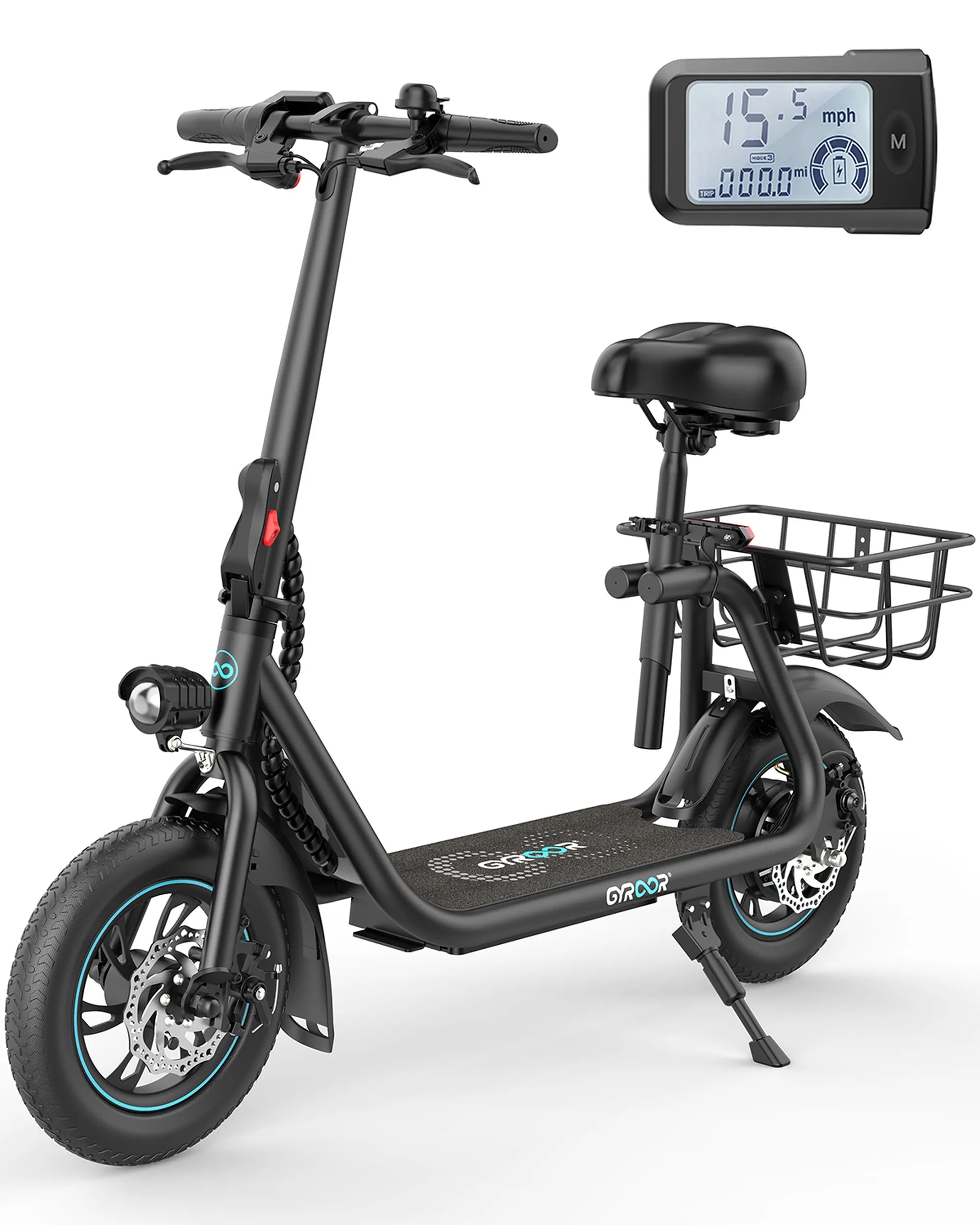
Introduction: Why a Scooter Height Chart is Your Key to a Perfect Ride
Choosing an electric scooter often focuses on speed, range, and price. Yet, the most crucial specification for safety and daily enjoyment is frequently overlooked: the correct rider fit, guided by a scooter height chart. An improper fit isn't just uncomfortable; it's a direct threat to stability and control, especially during emergency braking or navigating obstacles.
This guide will teach you how to interpret a scooter height chart, match it to your body, and understand why fit is foundational. You'll learn the ergonomic principles behind the numbers and how to apply them to find a scooter that feels like an extension of your body, not a compromise. For over 100,000 riders, Gyroor has built its reputation on integrating safety and ergonomic design from the ground up, making a proper fit a non-negotiable starting point.
Decoding the Scooter Height Chart: What the Numbers Really Mean
A scooter height chart is more than a simple range of inches or centimeters. It's a synthesis of key scooter geometry measurements translated into a safe and effective rider experience. The primary figure, 'Recommended Rider Height,' is derived from several static and dynamic measurements of the scooter itself.
The most important is the handlebar height, measured from the ground to the grips. This determines whether you'll be riding upright or hunched over. Next is the deck-to-handlebar distance, which affects your stance and center of gravity. Finally, the deck height and length influence how comfortably you can place your feet and shift your weight.
Manufacturers like Gyroor test these geometries with riders of various sizes to establish a range where the scooter can be operated safely and comfortably. The minimum height ensures the rider can comfortably reach the handlebars and operate the brakes without straining. The maximum height ensures the rider isn't too cramped, which can lead to loss of leverage and control.
The Anatomy of a Proper Fit: Handlebar, Deck, and You
The ergonomic relationship between rider and scooter hinges on three contact points: your hands on the handlebars, and your feet on the deck. Correct handlebar height allows your arms to be slightly bent, not locked straight or overly bent. This position reduces shock to your shoulders and wrists and provides precise steering control.
The deck size dictates your stance. A deck that is too small forces your feet too close together, compromising balance during acceleration and braking. A deck with adequate length and width allows for a stable, shoulder-width or slightly narrower stance, letting you absorb bumps and maneuver confidently. The combination of proper handlebar reach and deck stance creates a neutral, controlled posture essential for safe riding.
The Critical Role of a Scooter Height Chart in Rider Safety
Ignoring a scooter height chart is an invitation to instability. A scooter too tall for a rider forces them to tiptoe when stopped, leading to wobbly starts and a high risk of tipping over. More dangerously, it can prevent the rider from applying full body weight effectively during hard braking, drastically increasing stopping distance.
Conversely, a scooter too short causes a hunched, cramped posture. This strains the lower back and neck over time and, critically, reduces the rider's leverage over the handlebars. In a turn or when needing to make a sudden steering correction, this lack of leverage can mean the difference between a controlled maneuver and a fall. Adherence to the height chart is the first step in leveraging all of a scooter's built-in safety features, from responsive brakes to Gyroor's stable, IPX5 water-resistant frame designs.
The Gyroor Fit Guide: Matching Our Models to Your Height
Gyroor designs scooters for distinct use cases, and the recommended height ranges reflect these design goals. The following guide outlines the ideal rider fit for our primary model categories. Always verify the specific model's official specifications before purchase.
| Model Category | Example Model | Key Features | Ideal Rider Height Range | Design Rationale |
|---|---|---|---|---|
| Commuter & Urban | Gyroor F1 Pro | Folding, portable, balanced power | 5'3" - 6'2" (160cm - 188cm) | Moderate handlebar height for agility in traffic; compact deck optimized for a stable, efficient stance during city rides. |
| Performance & Off-Road | Gyroor Warrior | Large wheels, high torque, robust suspension | 5'8" - 6'5" (173cm - 196cm) | Taller, wider handlebars provide the leverage needed for controlling rough terrain; elevated deck for ground clearance. |
| Youth & Compact | Gyroor Z1 | Lightweight, lower speed, enhanced safety | 4'10" - 5'7" (147cm - 170cm) | Proportionally smaller frame and lower deck height build confidence for newer or younger riders, ensuring easy foot-down stability. |
This scooter height chart is a foundational guide. For instance, our Gyroor Warrior off-road model specifies a taller minimum rider because its geometry demands a certain reach and weight distribution to safely handle its power and terrain capabilities.
Special Considerations: Adjustability and Rider Style
Some Gyroor models feature adjustable handlebar stems, offering a range of a few inches to accommodate different rider heights or preferences. This is an excellent solution for growing teenagers or households with multiple riders. However, adjustability has limits; always stay within the model's overall recommended range.
Your riding style also interacts with the height chart. A delivery rider needing frequent stops might prioritize a model where they are in the lower half of the height range for maximum foot-down stability. A recreational rider on paved trails might opt for the upper half of the range for a more aerodynamic, stretched-out posture. The scooter height chart provides the safe corridor; within it, you can fine-tune for style.
Beyond Height: Other Critical Factors for a Safe, Stable Ride
While the scooter height chart is paramount, it operates in concert with other specifications. The rider weight limit is non-negotiable and independent of height. Exceeding it stresses the frame, motor, and brakes, compromising safety and voiding warranties. Gyroor's weight limits are calculated based on rigorous testing of our UL-certified battery systems and motor assemblies.
Wheel size significantly impacts stability and comfort, especially for taller riders. Larger wheels (10"+) roll over cracks and debris more easily, providing a more stable platform that can benefit riders at the taller end of a spectrum. The placement of heavy components like the UL-certified battery pack also affects the center of gravity. Gyroor engineers this placement to work in harmony with the recommended height range for optimal handling.
The Safety and Performance Impact of an Improper Fit
The consequences of disregarding the scooter height chart are tangible. A misfit scooter directly degrades the performance of its best features. A rider too short for a performance model won't be able to safely utilize its full power or braking capability. A rider too tall for a commuter model will find its compact fold useless if the ride itself is uncomfortable and unsafe.
This mismatch also accelerates fatigue, reducing your effective range and awareness. It can lead to premature wear on components as you compensate for poor ergonomics. Ultimately, a proper fit is what allows you to fully trust and enjoy the engineering behind features like Gyroor's reliable motor systems and robust construction, ensuring every ride is confident.
Your Practical Fitting Checklist & Next Steps
Use this actionable list to ensure you select the correctly sized scooter.
- Measure Accurately: Stand against a wall, mark the top of your head, and measure your height in both feet/inches and centimeters.
- Consult the Official Chart: Find the official scooter height chart for your desired model on the manufacturer's website. Do not rely on third-party summaries.
- Consider All Specs: Cross-reference your height with the model's weight capacity, wheel size, and deck dimensions.
- Simulate the Stance: If possible, visit a local retailer or find a similar-sized object to simulate the handlebar height and deck space.
- Prioritize Your Primary Use: Align the model's design strengths (commuting, off-road) with your most frequent riding scenario.
Remember, your investment is protected by Gyroor's comprehensive 1-year warranty and supported by knowledgeable customer service teams in North America and Europe.
FAQ: Your Scooter Height Questions, Answered
Q: Can I buy a scooter for my growing teenager?
A: Yes, but prioritize models with an adjustable handlebar stem. Choose a scooter where the teenager's current height is at or above the *minimum* of the range, with room to grow into the upper end. Always ensure they can safely operate the brakes and maintain stability at their current size.
Q: I'm exactly between two size ranges. Should I size up or down?
A> Generally, sizing down is safer for control and stability, as it ensures you can comfortably plant your feet. However, if you are at the absolute minimum for the larger size and your primary use is long-distance comfort (not frequent stops), sizing up might be acceptable. When in doubt, choose the smaller size.
Q: How does weight capacity interact with height recommendations?
A> They are independent but equally critical specifications. You must meet BOTH criteria. A tall, lightweight rider must still adhere to the height chart. A shorter, heavier rider must adhere to the weight limit, even if they fit the height range. Exceeding either limit compromises safety.
Q: My height is in the range, but the scooter still feels awkward. Why?
A> Height is a primary proxy, but individual proportions matter. Your torso-to-leg ratio or arm length might differ from the average. This highlights the importance of test-riding or carefully reviewing the handlebar height and deck length measurements, not just the overall recommended range.
Q: Are height charts different for electric scooters vs. kick scooters?
A> Yes, significantly. Electric scooters are heavier, faster, and require more stable control. Their height charts are stricter and account for the dynamics of motorized riding. A kick scooter height chart is generally more lenient, as the speeds and forces involved are lower. Never use a kick scooter chart for an electric scooter purchase.
Invest in the Right Fit for Miles of Confident Riding
Selecting a scooter using a precise scooter height chart is the most important decision you make after choosing to ride. It is the foundation upon which safety, comfort, and performance are built. A well-fitted scooter becomes a seamless tool for mobility, enhancing your commute or adventure without drawing attention to itself through discomfort or handling quirks.
Gyroor is committed to providing clear, accurate sizing information for every model because we understand that trust in your equipment is paramount. Our range of over 20 models, each with UL-certified batteries and robust warranties, is designed to offer a perfect fit for a wide spectrum of riders. Don't guess your size—use the data, follow the chart, and embark on every ride with confidence.
Ready to find your perfect match? Browse the full Gyroor collection, complete with detailed specifications and official height recommendations, at gyroorboard.com.
ebike conversion kit reviews: The Ultimate Buyer's Guide for 2024
Fiat 500 Scooter Charger: The Complete Guide to Power, Safety, and Longevity