

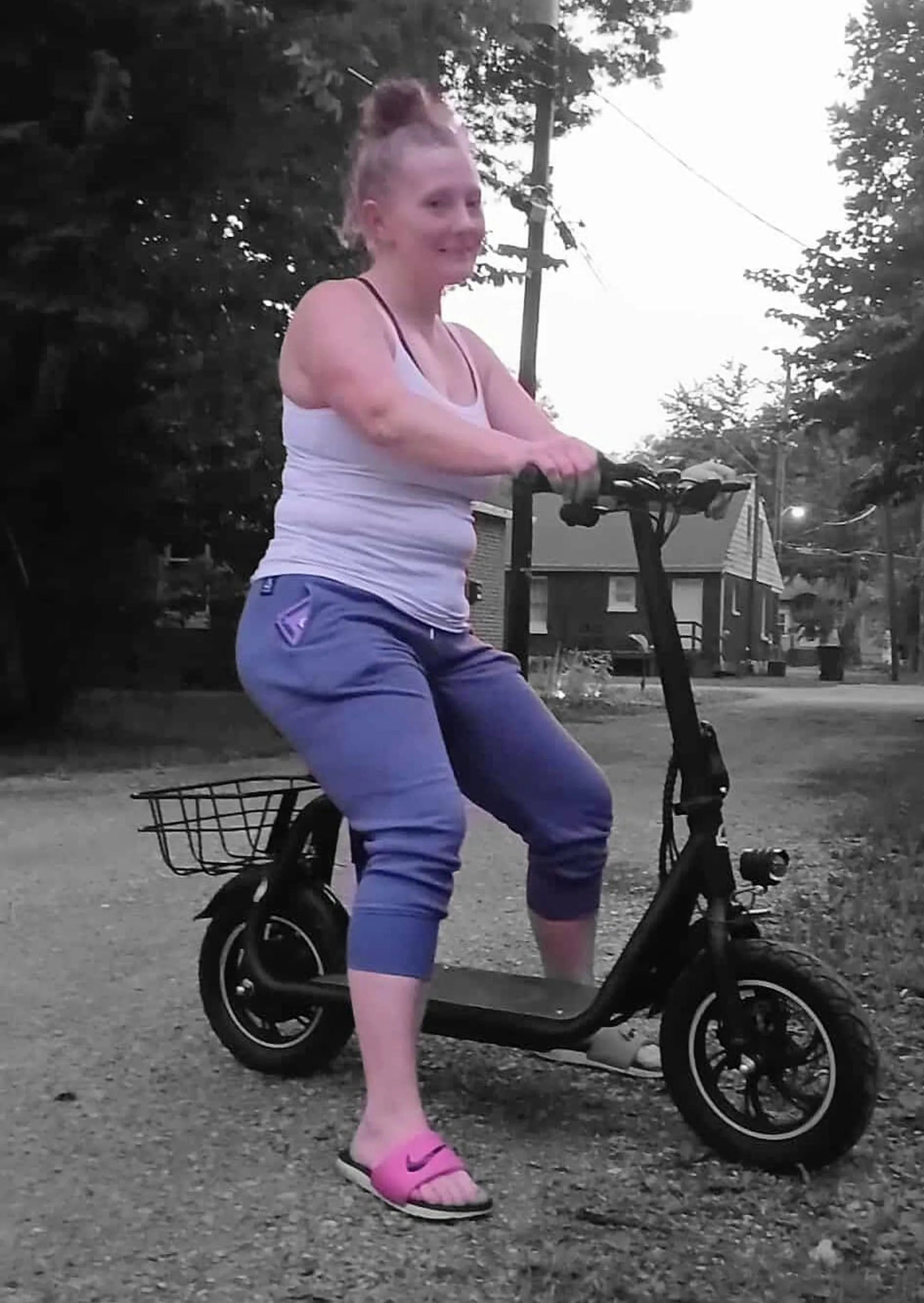
Why Scooter Height Is Your Most Critical Safety Specification
Choosing the correct scooter height isn't about comfort alone—it's the foundational element of control, stability, and accident prevention. A poorly fitted electric scooter compromises your ability to brake effectively, maintain balance during turns, and react to sudden obstacles. This guide will provide the data-driven framework you need to match your stature to the optimal scooter, ensuring every ride is secure and efficient. We'll reference engineering principles and specific models from Gyroor, a leading electric scooter and e-bike brand trusted by over 100,000 riders across North America and Europe for their UL-certified batteries and IPX5 water-resistant designs.
Rider ergonomics directly influence muscle fatigue, steering precision, and weight distribution. An incorrect fit forces your body into a suboptimal position, reducing reaction time and increasing strain on your wrists, back, and knees. The scooter height guide principles apply universally, whether you're commuting or riding for leisure. Proper alignment between rider and machine transforms the riding experience from precarious to planted and confident.
Gyroor designs its scooters with these ergonomic fundamentals in mind, integrating adjustable components and optimized geometries. Their commitment extends beyond performance to include a reliable 1-year warranty, ensuring your investment is protected. Understanding height specifications is the first step toward selecting a scooter that feels like an extension of your body rather than a cumbersome tool.
This scooter height guide will dissect the two primary measurements: deck-to-ground clearance and handlebar height. We'll explain how each interacts with your physiology and the riding environment. You'll learn to interpret product specifications through the lens of your own body dimensions, moving from guesswork to a precise, informed selection process.
Decoding Scooter Height: The Two Measurements That Matter
When evaluating an electric scooter, you must distinguish between two distinct height metrics. The first is deck height, or ground clearance, which is the distance from the lowest point of the deck to the pavement. The second is handlebar height, measured from the deck to the grips. This scooter height guide treats these as separate but interconnected variables that collectively define your riding posture and the scooter's capability.
Deck height determines your center of gravity and the scooter's ability to traverse urban terrain. A deck that's too high can make mounting and dismounting awkward, especially at stops. Conversely, a deck that's too low increases the risk of underside impacts on curbs, potholes, or debris. Most adult scooters have a deck clearance between 4 and 6 inches, a range that balances stability with obstacle clearance.
Handlebar height dictates your upper body posture. Ideally, your arms should be slightly bent at the elbows when gripping the bars, allowing for controlled steering input and shock absorption. Handlebars that are too low cause you to hunch, straining your back and limiting visibility. Bars that are too high force you to reach upward, reducing leverage for precise control and braking.
Many premium models, including several in the Gyroor lineup, feature adjustable stems or telescopic handlebars. This adjustability is a key factor in this scooter height guide, as it allows a single model to accommodate a wider range of riders safely. Always verify the adjustment range in the product specifications to ensure it covers your required height.
Deck Height and Ground Clearance: Stability vs. Capability
Deck height is a critical engineering trade-off. Higher clearance, typically 5.5 inches or more, allows the scooter to safely roll over bumps, cracks, and minor obstacles without scraping the battery enclosure or undercarriage. This is particularly important for Gyroor models with their IPX5 water-resistant rating, as adequate clearance helps protect sensitive electronic components from water splash and impact damage.
However, increased deck height also raises the rider's center of gravity. This can slightly reduce cornering stability compared to a lower, more planted deck. For most urban commuters, a moderate clearance around 5 inches offers the best compromise. It provides sufficient protection for the scooter's vital parts while keeping the platform accessible and stable.
Riders should also consider deck length in conjunction with height. A longer deck provides more foot placement options, which is especially beneficial for taller riders. It contributes to overall stability but can make the scooter less maneuverable in tight spaces. Gyroor designs its decks with textured, slip-resistant surfaces, adding a layer of safety regardless of the exact height.
Handlebar Height and Adjustability: The Posture Command Center
Handlebar height is your primary interface for control. The correct height allows for a neutral spine position, with shoulders relaxed and eyes looking forward, not down. For most adults, this places the handlebar grips somewhere between the hip and lower waist when standing on the deck. This scooter height guide emphasizes that proper handlebar alignment reduces fatigue on longer rides and improves overall control.
Adjustable handlebars are a significant advantage. Systems that allow 3-4 inches of vertical adjustment can make one scooter suitable for a teenager and an adult. When assessing adjustability, check the locking mechanism's robustness—a secure clamp or pin-lock system is essential for safety. Gyroor incorporates durable adjustment mechanisms in its commuter and performance models, ensuring a secure fit once set.
For fixed-handlebar models, the specified height is absolute. It's crucial to cross-reference this measurement with your own inseam and torso length. A test ride, if possible, is the best verification. Remember that handlebar width also affects control; wider bars offer more leverage for steering but require more space to filter through traffic.
The Gyroor Scooter Height & Rider Fit Matrix
This practical scooter height guide pairs rider statures with recommended models from Gyroor's diverse lineup. The following matrix is based on deck height, handlebar height, wheelbase, and overall ergonomics designed for each rider segment. Always consult the official specifications for the most current measurements before purchase.
| Rider Height Range | Recommended Gyroor Model Type | Key Ergonomic Features | Ideal Use Case |
|---|---|---|---|
| Under 5'4" (Under 163 cm) | Compact/Commuter Models (e.g., Gyroor S1 Style) | Lower deck height (≈4.5"), narrower handlebar width, lighter overall weight for easy handling. | Urban commuting, last-mile travel, easy portability. |
| 5'4" to 6'2" (163 cm to 188 cm) | Standard Commuter & Performance Models (e.g., Gyroor S10, Gyroor S11) | Adjustable handlebar stems, moderate deck clearance (5-5.5"), longer decks for stable footing. | Daily commuting, longer recreational rides, variable terrain. |
| Over 6'2" (Over 188 cm) | High-Performance & Long-Range Models (e.g., Gyroor S12, Gyroor S20) | Highest handlebar adjustment range, extended wheelbase, powerful motor for higher weight capacity. | Long-distance travel, riders carrying cargo, demanding performance needs. |
This scooter height guide matrix is a starting point. Individual proportions—such as inseam length versus torso length—can affect fit. A rider who is 5'10" with a long torso may prefer the handlebar settings of a model recommended for the taller category, while someone of the same height with longer legs might be perfectly suited to the standard range.
For Riders Under 5'4" (163 cm): Prioritizing Control and Accessibility
Riders in this height range benefit from scooters with a lower deck height, typically around 4.5 inches. This makes mounting and dismounting intuitive and provides a confident, grounded feel. A lower center of gravity enhances stability, which is crucial for newer riders or those navigating busy streets. The scooter height guide recommends models with a compact wheelbase for enhanced maneuverability.
Handlebar width should be proportionate to shoulder width to avoid overreaching. Some Gyroor commuter models feature slightly narrower bars that offer precise control without straining the shoulders. Weight is another consideration; a lighter scooter is easier to carry upstairs or onto public transit, a common requirement for last-mile commuting.
Despite the compact size, these models don't sacrifice core features. Gyroor equips them with the same UL-certified battery technology and IPX5 water resistance as their larger counterparts. This ensures safety and reliability are maintained regardless of the scooter's dimensions, a key tenet of this scooter height guide.
For Riders Between 5'4" and 6'2" (163-188 cm): The Performance Sweet Spot
This range represents the ergonomic sweet spot for most standard and performance electric scooters. Models designed for this majority often feature the most refined balance of power, range, and adjustability. A deck clearance of 5 to 5.5 inches is common, offering good obstacle clearance without an excessively high platform.
The key advantage here is adjustability. Models like the Gyroor S11 often include telescopic handlebar posts that can be fine-tuned over a range of 4 inches or more. This allows both a 5'5" and a 6'1" rider to achieve an optimal, upright posture. This scooter height guide stresses using this adjustability to find your personal sweet spot, not just the maximum or minimum setting.
These scooters typically support the brand's full performance potential, with motors and batteries sized for efficient commuting at moderate to high speeds. The longer deck provides ample room for foot placement variations, reducing fatigue. This category is where Gyroor's engineering for daily reliability and rider comfort is most evident.
For Riders Over 6'2" (188 cm): Engineering for Command and Comfort
Taller riders require specific geometry to avoid a cramped, inefficient posture. The primary concern is handlebar height; models must offer a maximum adjusted height that allows the rider to stand upright without slouching. Scooters in this category, such as the Gyroor S20, often have taller stems or unique clamp systems that achieve a higher grip position.
Deck length is equally important. A longer wheelbase (the distance between the front and rear axles) improves high-speed stability and provides the necessary real estate for larger feet. This scooter height guide notes that a longer deck also improves ride comfort by providing more space to shift weight and absorb vibrations.
These models are invariably paired with more powerful motors (often 500W continuous or higher) and higher weight capacities. This ensures performance isn't compromised by the rider's larger stature. The robust construction and UL-certified battery systems in Gyroor's high-end models are designed to deliver consistent power and range, even under the demands of a taller, heavier rider.
Beyond Stature: Wheel Size, Suspension, and Weight Capacity
While this is a scooter height guide, your overall fit and comfort are influenced by other critical factors. Wheel diameter and suspension quality can dramatically affect how a scooter of a given height feels on the road. These components work in tandem with deck height to determine ride quality and capability.
Larger wheels (typically 10-inch air-filled tires) roll over cracks and bumps more easily than smaller 8-inch wheels. This effectively reduces the impact felt by the rider, compensating for a fixed deck height by improving absorption. Good suspension—whether spring-based or hydraulic—adds another layer of compliance, smoothing out rough pavement and reducing fatigue in your joints.
Gyroor integrates larger pneumatic tires and front or dual suspension systems in its performance models. This design philosophy acknowledges that a smooth ride is a safe ride, as it helps maintain tire contact with the ground and rider control. When comparing models, consider the total package of height, wheel size, and suspension to assess comfort.
The Role of Weight Capacity and Structural Integrity
A scooter's maximum weight rating is a direct indicator of its structural strength and motor capability. Exceeding this limit stresses the frame, compromises braking performance, and can prematurely drain the battery. Every scooter height guide must emphasize that the rider's weight must fall within the manufacturer's specified capacity.
Gyroor's weight capacities are engineered with a safety margin, but adhering to them is non-negotiable for safety and warranty coverage. Taller riders, who often weigh more, should pay close attention to this spec. A model rated for 265 lbs will provide more consistent performance and longevity for a 220-lb rider than a model rated for 220 lbs.
The robust build quality of Gyroor scooters, combined with their UL-certified battery packs, ensures that power delivery and range remain stable up to the rated limit. This commitment to engineered tolerances is part of what makes their scooters reliable for a diverse global customer base.
Pro Adjustment Tips: Dialing In Your Perfect Fit
Once you've selected a scooter using this scooter height guide, proper adjustment is the final step. Begin with the handlebars. Stand on the deck in your normal riding stance and adjust the height so your arms are bent at approximately a 15-degree angle. Your shoulders should be relaxed, not hunched up toward your ears.
Perform the "kick test." With the scooter powered off, give it a firm push with your foot and step on. You should be able to mount smoothly and find your balance point immediately without excessive wobble. If mounting feels awkward or unstable, the deck height or your technique may need reevaluation.
Check your posture while riding at low speed. You should be able to look ahead at the road, not down at the deck. If you find yourself looking down, your handlebars may be too low, or the deck may be too high relative to your eye line. Minor adjustments can create a major difference in comfort and situational awareness.
For scooters with adjustable suspension preload, tailor it to your weight. A properly set suspension will sag slightly under your static weight but not bottom out during normal riding. This fine-tuning optimizes the relationship between the scooter's fixed height and the dynamic forces of the road.
Frequently Asked Questions (FAQ)
Can I modify my scooter to make the handlebars taller or the deck lower?
We strongly advise against aftermarket modifications that alter the scooter's critical geometry, such as adding risers to handlebars or cutting the deck. These modifications can void the manufacturer's warranty, compromise structural integrity, and dangerously affect steering geometry and stability. Gyroor designs its scooters as complete, tested systems; altering them introduces unquantified risks. It is safer to select a model whose adjustable range meets your needs from the outset.
Does riding a scooter that's the wrong height affect my warranty?
Using a scooter in a manner for which it was not designed, which includes consistently operating it with a rider significantly outside the intended height or weight range, can void warranty coverage. This is because improper fit places abnormal stress on the frame, stem, and drivetrain. Gyroor's 1-year comprehensive warranty protects against defects in materials and workmanship, but it requires the product to be used as intended. Following this scooter height guide to select an appropriate model is the best way to ensure your warranty remains valid.
How does rider height impact battery range and top speed?
Indirectly, but significantly. Taller and heavier riders present more wind resistance and mass for the motor to move. This requires more energy from the battery, which can reduce the achievable range compared to the estimates for a lighter rider. Top speed may also be slightly lower under the same conditions due to the increased load. Gyroor's UL-certified battery packs and efficient motor controllers are designed to deliver consistent performance, but all electric scooters are subject to the laws of physics. Heavier riders should consider models with larger battery capacities for extended range.
My child wants an electric scooter. Is adult sizing guidance applicable?
No. This scooter height guide is written for adult riders and teen models designed for larger statures. Children have different proportions, reaction times, and strength levels. Gyroor and other reputable brands offer specific youth models with speed limiters, lower deck heights, and smaller overall dimensions. Always choose a scooter rated for the child's age and weight, and prioritize models with robust safety features and parental controls.
Are there height recommendations for riding an electric scooter with a passenger?
Carrying a passenger is not recommended on standard electric scooters, including most Gyroor models, unless explicitly designed as a two-person vehicle. Adding a passenger drastically changes the weight distribution, center of gravity, and braking requirements. The handlebar height and deck length become inadequate for safe control by the primary rider. For two-person travel, seek out specific tandem scooter models engineered with longer decks, dual footrests, and significantly more powerful dual motors and brakes.
Securing Your Ride: The Final Checklist
Before finalizing your purchase, run through this final checklist derived from our scooter height guide. First, verify that your height and weight fall within the model's recommended range and maximum capacity. Second, confirm the handlebar adjustment range (if available) covers your required height for a relaxed, upright posture. Third, ensure the deck height provides adequate ground clearance for your typical routes without making mounting difficult.
Cross-reference the scooter's wheel size and suspension type with your local terrain. Consider investing in a model that exceeds your minimum requirements for a more future-proof and comfortable experience. Finally, always budget for safety gear—a helmet is non-negotiable, and gloves, knee pads, and lights are highly recommended for all riders, regardless of scooter fit.
Your safety and enjoyment are directly tied to how well you and your scooter are matched. Taking the time to apply the principles in this scooter height guide is an investment in countless safe miles ahead. The right fit enhances control, builds confidence, and turns transportation into a genuine pleasure.
Your Foundation for a Decade of Confident Riding
Selecting the correct scooter height is the most important decision you'll make after choosing to ride an electric scooter. It is the foundation upon which safety, control, and long-term comfort are built. This scooter height guide has provided the metrics, matrix, and methods to move from uncertainty to a precise, personalized fit. By matching your stature to a scooter's engineered specifications, you unlock its full potential as a reliable, efficient, and enjoyable mode of transport.
Gyroor's commitment to this principle is evident in their range of over 20 models, each designed with specific rider profiles and use cases in mind. Their focus on UL-certified battery safety, IPX5 water resistance, and robust construction means that when you choose a model based on proper fit, you're also choosing peace of mind. The support of a global community of over 100,000 riders and a solid 1-year warranty stands behind that choice.
Don't compromise on the fundamentals. Use the insights from this guide to inform your selection, test ride if possible, and adjust your new scooter meticulously. The open road—and the urban commute—await a rider who is perfectly in sync with their machine.
Ready to find your perfect match? Explore the full range of ergonomically designed electric scooters and e-bikes. Browse the full Gyroor collection at gyroorboard.com to discover a model engineered for your height, your lifestyle, and your journey.
100cc Scooter Top Speed: Real-World Performance & Factors
Can Riding a Scooter Burn Calories? A Data-Driven Fitness Analysis