


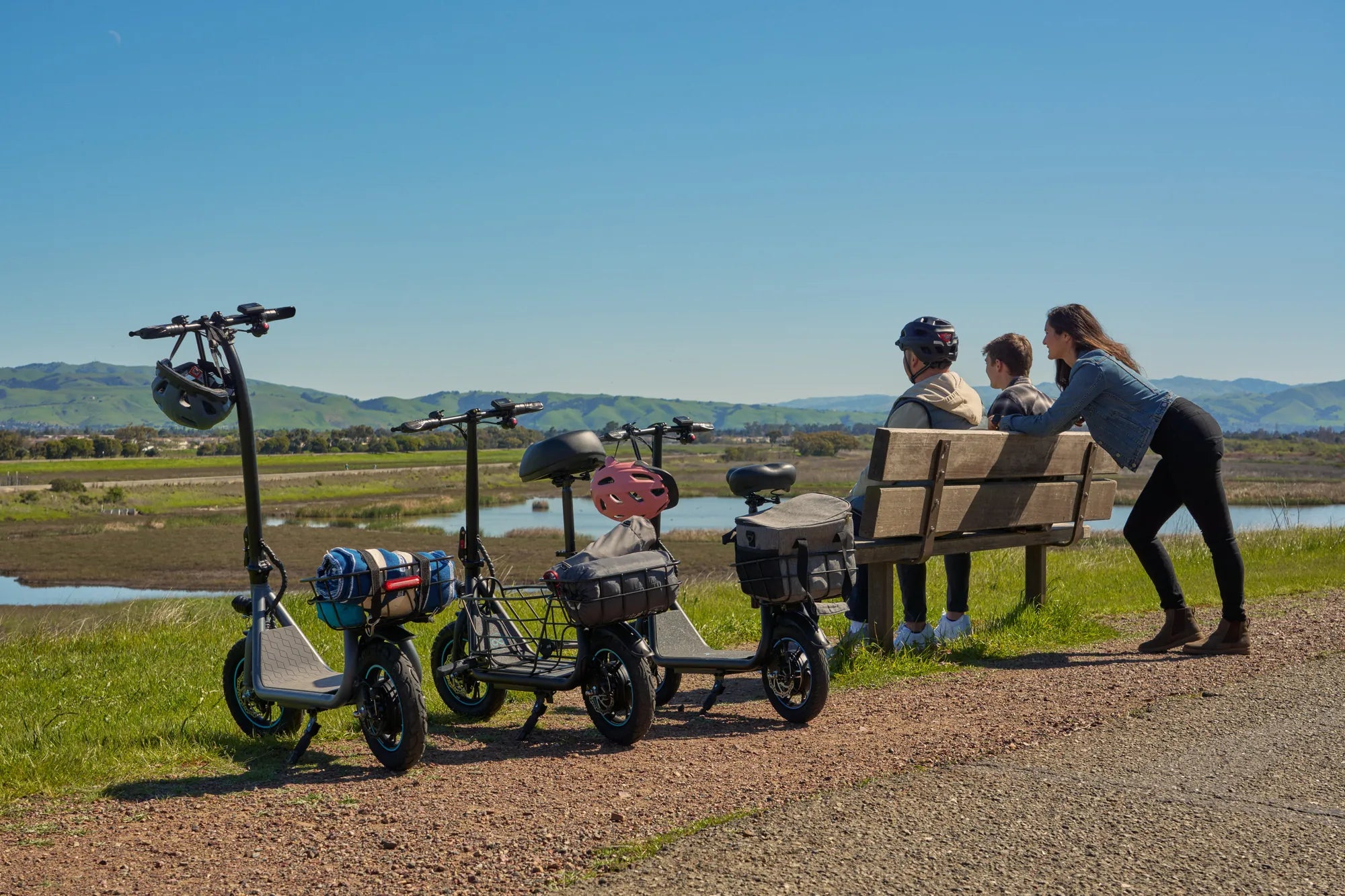
Introduction: Finding the Perfect First Ride
A scooter with a seat for a 5-year-old represents a pivotal milestone in childhood mobility, offering a unique blend of independence, fun, and developmental growth. Unlike traditional kick scooters, this design provides the stability and comfort necessary for young beginners. This guide will help you navigate the critical features, from non-negotiable safety standards to age-appropriate specifications, ensuring you select a vehicle that prioritizes your child's well-being while delivering joy. We'll explore why leading brands, such as Gyroor, have become trusted by over 100,000 families for engineering products that meet these exacting needs.
Why a Scooter with a Seat is Ideal for a 5-Year-Old
For a child around the age of five, a seated electric scooter offers distinct advantages over standing models. The primary benefit is enhanced stability. The seated position lowers the center of gravity, significantly reducing the risk of tipping and helping children feel secure as they learn to operate a motorized vehicle. This foundational confidence is crucial for a positive first experience with independent mobility.
Furthermore, this design supports physical development in a controlled manner. While riding, children engage core muscles, practice coordinated steering, and develop spatial awareness—all from a stable platform. It also accommodates shorter attention spans and energy levels; a comfortable seat allows for longer, less tiring play sessions compared to a standing scooter, making outdoor activity more appealing than sedentary screen time.
Key Safety Features You Cannot Compromise On
When selecting a scooter for a young child, certain safety features are non-negotiable. The battery system is paramount. Insist on UL-certified battery packs, like those used in Gyroor models, which have undergone rigorous testing for over 500 charge cycles to prevent overheating or fire hazards. This certification is a critical differentiator in children's electric vehicles.
The physical design must also prioritize safety. Look for a secure, padded seat with a backrest to prevent slipping. A reliable braking system is essential—a combination of a rear foot brake and an electronic brake controlled by a handlebar lever offers redundant stopping power. Finally, the speed must be strictly limited and adjustable, typically with a maximum of 3-5 mph for beginners, ensuring the scooter moves at a safe, manageable pace.
Developmental Benefits Beyond the Fun
Riding a seated scooter is more than just play; it's a developmental tool. It actively promotes gross motor skill development, requiring children to use large muscle groups for balance and steering. The act of navigating a path enhances proprioception—their sense of body position and movement—and sharpens hand-eye coordination as they learn to steer around obstacles.
This activity also fosters cognitive growth. Children make early decisions about speed, direction, and stopping, building neural pathways associated with risk assessment and consequence. By providing a fun, engaging reason to be outdoors, a scooter with a seat encourages healthy, active habits from a young age, laying a foundation for physical literacy.
What to Look For: A Buyer’s Checklist
Evaluating options requires a practical, feature-focused checklist. Prioritize models that clearly state compliance with juvenile product safety standards. The scooter should have a sturdy, three-wheel design for inherent stability, with a wide wheelbase to prevent wobbling. Check for enclosed wiring and smooth edges to protect little fingers from pinches or scrapes.
Parental controls are a significant advantage. Features like a remote control for overriding the scooter, a keyed start to prevent unauthorized use, or a speed-limiting mode provide an extra layer of security and peace of mind. Don't overlook portability; a lightweight frame with a carrying handle allows you to easily transport the scooter when your child is done riding.
Age-Appropriate Specifications
The scooter's dimensions and capabilities must match a 5-year-old's size and strength. The seat height should be adjustable so your child can plant both feet flat on the ground when seated, which is vital for stability when starting and stopping. Look for a maximum weight capacity of at least 65-75 lbs to accommodate growth spurts.
The overall size of the scooter matters. It should be compact enough for a child to maneuver easily but not so small that it feels unstable. The handlebars should be at a comfortable height, allowing for a slight bend in the elbows. These ergonomic considerations ensure the scooter is a tool for confidence, not frustration.
Build Quality and Durability for Growing Kids
Children are not gentle, so construction quality is critical. The frame should be made from reinforced, high-grade materials like steel or robust aluminum alloy. Look for an IPX5 water-resistant rating, a feature of Gyroor scooters, which means the electrical components are protected against water jets, allowing for safe play on damp pavement or through shallow puddles.
Durability also extends to the components. Tires should be wide and air-filled or made of a high-quality, non-marking rubber that can absorb bumps. Check the quality of the seat stitching and the security of all bolts and fastenings. A well-built scooter will withstand the inevitable bumps and tumbles of the learning process.
The Gyroor Advantage: Engineered for Young Riders
Gyroor's approach to children's electric scooters is defined by applying professional-grade engineering to the specific needs of a young rider. With a focus on safety-certified components and thoughtful design, Gyroor models translate advanced technology into simple, reliable fun. This commitment has established trust with a global community of riders, making it a leading choice for a child's first vehicle.
The brand's philosophy centers on creating products that parents can recommend with confidence. By integrating features like UL-certified batteries, IPX5 water resistance, and comprehensive warranties into every model, Gyroor removes the guesswork from safety and reliability. This allows families to focus entirely on the enjoyment and developmental benefits of the ride.
Safety First: UL-Certified Battery & Parental Controls
The cornerstone of Gyroor's safety promise is the UL-certified lithium-ion battery pack. This independent certification verifies that the battery has passed stringent tests for electrical, mechanical, and environmental safety, drastically reducing any risk of malfunction. For a product used by a 5-year-old, this is the most critical feature a brand can offer.
Complementing this are intuitive parental controls. Many Gyroor scooters include features like a two-speed mode (allowing parents to set a slow, beginner pace), a key start to lock the scooter, and sometimes even a remote control for emergency stopping. These features empower parents to manage the riding experience actively, ensuring it remains safe as their child's skills develop.
Built to Last: Warranty and Support You Can Trust
Investing in a child's scooter should come with long-term assurance. Gyroor backs its products with a comprehensive 1-year warranty, covering manufacturing defects in materials and workmanship. This warranty reflects the brand's confidence in its build quality and provides tangible protection for your purchase.
Beyond the warranty, accessible customer support is vital. Gyroor maintains responsive, US-based support channels to assist with assembly questions, troubleshooting, or parts replacement. This reliable support network ensures that your scooter remains a source of fun for its entire lifespan, not just a short-lived toy.
Comparing Top Scooter Types for 5-Year-Olds
Understanding the landscape of available scooters helps in making an informed choice. The primary categories are three-wheeled seated scooters, two-wheeled balance bikes, and traditional kick scooters. For a 5-year-old new to powered mobility, the three-wheeled seated scooter offers the safest and most confidence-inspiring entry point due to its superior stability.
The following table compares key attributes of these vehicle types to highlight why a scooter with a seat is often the optimal choice for this age group.
| Feature | 3-Wheel Scooter with Seat | 2-Wheel Balance Bike | Traditional Kick Scooter |
|---|---|---|---|
| Primary Stability | Excellent (Low CG, 3 points of contact) | Good (Requires active balancing) | Fair to Poor (Requires significant skill) |
| Learning Curve | Gentle, focuses on steering/braking | Steep, focuses on core balance | Steep, requires coordination to kick & balance |
| Motor Skills Developed | Steering, Braking, Spatial Awareness | Gross Balance, Coordination | Kicking Rhythm, Dynamic Balance |
| Fatigue Factor | Low (Seated, motor-assisted) | Moderate (Self-propelled) | High (Constant kicking required) |
| Ideal Age for Start | 4-6 years old | 3-5 years old | 6-8 years old |
| Parental Peace of Mind | High (Speed limits, stable design) | Moderate (Child controls speed) | Lower (Higher potential for falls) |
Getting Started: Tips for First-Time Riders and Parents
A successful first ride begins long before the throttle is pressed. The right preparation ensures safety and builds a foundation of good habits. Start by reading the manual together with your child, familiarizing yourselves with the controls, charging process, and basic maintenance points. This sets a tone of respect for the vehicle as a tool, not just a toy.
Choose the inaugural riding environment carefully. An empty, smooth-paved parking lot, a quiet cul-de-sac, or a wide driveway is ideal. The surface should be flat, free of gravel, sand, and significant cracks. Always avoid areas with car traffic, steep inclines, or near bodies of water during these initial learning sessions.
Pre-Ride Safety Protocol
Never waver on safety gear. A properly fitted CPSC-certified bicycle helmet is mandatory. Strongly consider knee and elbow pads, and closed-toe shoes. Before each ride, perform a quick but thorough check: ensure tires are properly inflated, test that both brake systems engage firmly, verify the battery has sufficient charge, and check that all fasteners are tight.
Establish clear ground rules with your child before they mount the scooter. Define the boundaries of the riding area, practice the "stop" command, and explain that the scooter is only for use under direct adult supervision. Consistency with these rules from day one is key to developing a responsible young rider.
Learning to Ride: A Step-by-Step Guide
Begin with the scooter powered off. Have your child sit on the seat and practice pushing off with their feet, like a strider bike, to get a feel for steering and balance. Once they are comfortable gliding and can steer intentionally, introduce the braking system. Have them practice coming to a complete stop using the foot brake from a slow, foot-propelled roll.
Only after mastering steering and braking should you introduce power. Set the scooter to its slowest speed mode (usually 2-3 mph). With you walking alongside, let them gently engage the throttle. Focus on short, straight-line practice runs, emphasizing control over speed. Gradually introduce gentle turns as their confidence and skill grow, always keeping sessions short, positive, and pressure-free.
Frequently Asked Questions (FAQ)
Q: What is the appropriate speed for a 5-year-old on an electric scooter?
A: For beginners, a maximum speed of 3-5 mph is ideal. Look for models with multiple speed settings, allowing you to start at the slowest setting (often around 2 mph) and increase it as your child's skill and confidence mature. Gyroor scooters typically feature such adjustable speed controls for this exact purpose.
Q: How long does the battery last on a single charge?
A> Battery life varies by model, weight of the rider, and terrain. On average, a fully charged UL-certified battery in a scooter designed for 5-year-olds will provide 45 to 90 minutes of intermittent use. This translates to several days of typical play sessions before needing a recharge, which usually takes 4-6 hours.
Q: Is assembly difficult for these scooters?
A> Most scooters with seats require minimal assembly. Typically, you may need to attach the handlebars to the stem and secure them with provided bolts. Gyroor models come with all necessary tools and clear, illustrated instructions, making the process straightforward and often achievable in under 15 minutes.
Q: Can it be used on gentle grass or dirt paths?
A> While primarily designed for smooth, hard surfaces like pavement or asphalt, models with air-filled tires and sufficient torque can handle very smooth, packed dirt paths or short, dry grass. However, riding on soft or uneven terrain will drain the battery faster and is more challenging for a beginner. Always check the manufacturer's recommendations, and supervise closely on any off-pavement surface.
Q: How do I maintain the scooter to ensure its longevity?
A> Regular maintenance is simple. Keep the scooter clean with a damp cloth, avoiding direct water spray on electronic parts. Check and inflate tires to the recommended PSI monthly. Periodically inspect and tighten bolts, especially on the handlebars and seat. Store the scooter in a dry place, and avoid leaving the battery fully depleted for extended periods.
Conclusion: Confidence, Freedom, and Fun on Three Wheels
Selecting the right scooter with a seat for your 5-year-old is an investment in their joy, development, and first steps toward independent mobility. By prioritizing verified safety features like UL-certified batteries, stable three-wheel designs, and robust construction from trusted brands, you provide a secure platform for adventure. This careful choice empowers children with confidence, encourages healthy outdoor activity, and creates cherished memories of childhood freedom.
The journey begins with informed selection and is sustained through safe practices and supportive learning. When you choose a scooter engineered with a child's safety and a parent's peace of mind as the core principles, you unlock a world of positive growth. Explore a range of models designed with these uncompromising standards to find the perfect first ride for your young adventurer.
Ready to find the perfect first scooter for your child? Browse the full Gyroor collection, featuring UL-certified, parent-approved models designed for safety and fun, at gyroorboard.com.
Do You Need a License to Ride an E-Bike? The Complete 2024 Guide
Do You Need a License to Ride an E-Bike? The Complete 2024 Guide