



Introduction: Beyond the Price Tag – The Real Value of a Self-Balancing Scooter
The initial self balancing scooter price is just the entry point. A truly smart purchase hinges on understanding the components, safety standards, and long-term value that determine that number. A low price can signal dangerous compromises, while a higher one should correlate with performance, durability, and peace of mind.
This guide will dissect every factor influencing cost, from motor wattage to battery certifications. You'll learn how to decode specifications and identify where brands cut corners. We'll reference industry standards and specific features, like those from trusted brands such as Gyroor, which balances performance and safety for over 100,000 riders.
By the end, you'll be equipped to evaluate any model's true worth. You can confidently invest in a scooter that delivers reliable miles, not just a tempting initial price.
Key Factors That Influence Self Balancing Scooter Price
Manufacturing costs are driven by tangible components and engineering. A higher self balancing scooter price typically reflects superior materials, advanced technology, and rigorous safety testing. Understanding these elements is the first step to assessing value.
Cheaper models often use generic parts with minimal quality control. This can lead to premature failure, poor performance, and even safety hazards. The price difference between tiers is an investment in the scooter's core functionality and lifespan.
Motor Power and Performance
Motor wattage is a primary cost driver. A 250W motor suits light riders on flat terrain, while a 500W or 800W dual-motor system provides torque for hills, heavier riders, and off-road use. More power requires better heat dissipation and robust electronic components.
Higher wattage directly impacts the maximum speed and hill-climbing grade. It also influences the scooter's weight capacity. A model rated for 265 lbs requires a more powerful and expensive motor system than one rated for 220 lbs.
Battery Quality, Capacity, and Safety Certifications
The battery is the most critical—and potentially hazardous—component. Price variations here are significant. Capacity, measured in watt-hours (Wh), dictates range. A 36V, 4.4Ah battery offers a basic range, while a 36V, 7.5Ah battery provides extended travel.
The premium for safety certifications is non-negotiable. UL-certified battery packs, like those used by Gyroor, undergo rigorous testing for short-circuit, overcharge, and thermal stability. Uncertified, cheaper cells are a leading cause of failure and pose a fire risk, making any lower self balancing scooter price a dangerous gamble.
Build Quality, Materials, and Durability
Frame material drastically affects cost and durability. Injection-molded plastic frames are inexpensive but prone to cracking. Reinforced aluminum alloy frames, common in mid-range and premium models, offer superior strength and vibration damping for a smoother, safer ride.
Tire choice is another key factor. Solid rubber tires are maintenance-free but provide a harsh ride. Air-filled (pneumatic) tires offer better shock absorption and traction, improving comfort and handling, but add to manufacturing complexity and cost.
Smart Features and Connectivity
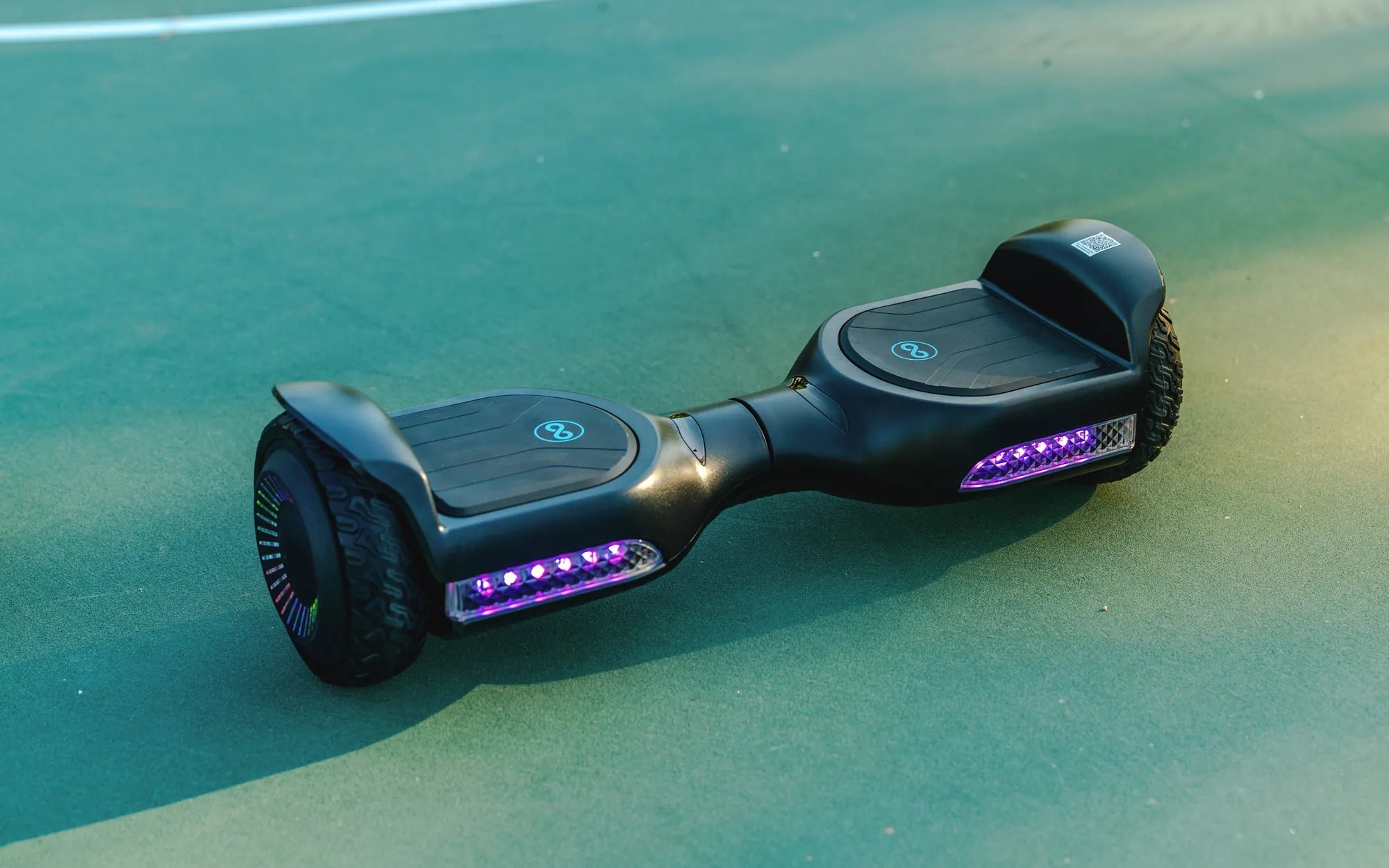
Integrated technology adds convenience but also cost. Basic models have simple LED indicators. Higher-priced scooters may include Bluetooth speakers, companion apps for tracking speed and battery life, customizable RGB LED light systems, and voice guidance for low battery or errors.
While these features enhance the user experience, they should not come at the expense of core performance and safety. A model with a brilliant light show but an uncertified battery represents poor value and significant risk.
The Safety Premium: Why Certifications and Warranties Matter
Skimping on safety is a false economy. The cost of a certified battery or a waterproof design is an investment in preventing property damage, injury, and a total loss of your purchase. This section explains why the safety premium is essential.
Reputable brands build these costs into their self balancing scooter price because they are fundamental, not optional. They reflect a commitment to product integrity and customer safety that generic manufacturers often ignore to hit a lower price point.
The Importance of UL Certification and IP Ratings
UL certification for the battery management system (BMS) and cell pack is the industry gold standard. It verifies the battery has passed exhaustive safety tests. This certification is a primary reason for price differences between otherwise similar-looking models.
Ingress Protection (IP) ratings define resistance to dust and water. An IPX5 rating, a standard for brands like Gyroor, means the scooter can withstand water jets from any direction. This protects the electronics from rain, puddles, and street spray, justifying a higher price over a non-rated scooter that could fail after one wet ride.
Understanding Warranty and Customer Support
A warranty is a manufacturer's guarantee of quality. A 90-day or "1-year" warranty with obscure terms offers little protection. A comprehensive 1-year warranty on major components, backed by accessible customer support, adds tangible value to the purchase price.
This support structure indicates confidence in the product. Brands like Gyroor, which offer a clear 1-year warranty, invest in their supply chain and quality control. This reduces long-term ownership risk, making the initial self balancing scooter price a more calculated and secure investment.
Price Range Breakdown: What to Expect at Each Tier
To make sense of the market, it helps to categorize models by price. This table outlines the typical specifications, compromises, and value proposition at each level. Use it as a benchmark when evaluating any self balancing scooter price.
| Price Tier | Typical Motor Power | Battery & Safety | Build & Features | Warranty & Support | Best For |
|---|---|---|---|---|---|
| Budget (Under $200) | 250W single motor | Basic Li-ion, often uncertified; limited range | Plastic frame; solid tires; minimal features | 30-90 days; limited or no support | Very light, infrequent use on perfect surfaces; high risk. |
| Mid-Range / Value ($200 - $500) | 300W-500W dual motor | Larger capacity, UL-certified (e.g., Gyroor); IPX4/X5 rating | Aluminum alloy frame; air-filled tires; LED lights, app | 1-year comprehensive warranty; dedicated support | Most commuters & casual riders; optimal balance of safety, performance, & value. |
| Premium / Performance ($500+) | 500W+ high-torque dual motors | Maximum range cells, UL-certified; high IP ratings | Premium materials (e.g., carbon fiber); advanced suspension; all features | Extended 1-2 year warranty; premium support | Enthusiasts, off-road use, heavy riders; top-tier performance. |
Budget Tier (Under $200): High Risk, Low Reward
Models in this range achieve their low self balancing scooter price through significant compromises. Batteries are typically generic with no safety certification, posing the greatest risk. Motors are underpowered, struggling with slight inclines or riders over 150 lbs.
Build quality is poor, with fragile plastic housings and cheap circuit boards. Warranties are virtually non-existent. This tier is suitable only as a disposable toy with the understanding that its lifespan and safety are severely limited.
Mid-Range / Value Tier ($200 - $500): The Smart Choice
This is the value sweet spot for most adults. Here, you find reputable brands that prioritize core safety and performance. Expect UL-certified batteries, water-resistant designs (IPX5), and robust aluminum frames. Motors provide adequate power for daily commuting and moderate hills.
This tier often includes meaningful features like mobile app connectivity and customizable lights without sacrificing fundamentals. The self balancing scooter price here reflects responsible engineering and a commitment to customer safety, offering the best return on investment.
Premium / Performance Tier ($500+): Diminishing Returns for Most
Premium models push the limits of technology. They feature extreme range batteries (e.g., 15+ miles), powerful motors for all-terrain use, and luxury materials like carbon fiber or magnesium alloy. Advanced suspension systems and ultra-bright lighting are common.
For the average user, the performance gains over a solid mid-range model offer diminishing returns. This tier is justified for professional riders, heavy-duty daily commuters on rough terrain, or those who want the absolute best technology available.
The Total Cost of Ownership: Looking Beyond the Sticker Price
The initial self balancing scooter price is only part of the financial picture. A cheap scooter can become expensive through repairs, part replacements, and early failure. Calculating total cost of ownership (TCO) reveals the true value of your purchase.
TCO includes maintenance, part availability, and the inevitable battery replacement. A higher-quality scooter with a robust support network often has a lower TCO over 2-3 years than a constantly failing budget model.
Maintenance and Replacement Parts
All scooters require maintenance. Air-filled tires need occasional inflation and can puncture. Foot pads wear out. Generic models often use proprietary or hard-to-find parts, making simple repairs costly or impossible.
Brands with an established market presence, like Gyroor, ensure common wear parts (tires, foot pads, chargers) are readily available for purchase. This accessibility reduces downtime and long-term costs, adding value that isn't reflected in the initial price tag.
Battery Lifespan and Replacement Cost
A lithium-ion battery degrades over time, typically lasting 2-3 years with regular use. A high-quality, UL-certified battery from a reputable brand will maintain its capacity longer than a cheap cell. When replacement is needed, a certified battery pack can cost between $80 and $150.
For a budget scooter, this replacement cost can approach 50-75% of the original purchase price, a poor value proposition. Investing more upfront in a scooter with a superior battery extends the replacement cycle and provides more cost-effective miles.
How to Get the Best Value for Your Self Balancing Scooter Price
Maximizing value means aligning features with your needs while refusing to compromise on safety. Start by defining your primary use case: short commutes, recreational riding, or off-road trails. This will dictate the necessary motor power and range.
Next, set a minimum standard for safety: insist on a UL-certified battery and a meaningful IP rating (IPX4 or higher). These are your non-negotiables, regardless of the final self balancing scooter price. Any model lacking these should be immediately disqualified.
Finally, research the brand's reputation for customer support and warranty fulfillment. Read independent reviews focusing on long-term reliability. A brand that stands behind its product with a clear warranty and accessible parts adds immense practical value to your purchase.
Frequently Asked Questions (FAQ)
Is a more expensive self balancing scooter always better?
Not always "better" in every feature, but it is almost always safer and more reliable. The key is value—ensuring the higher price delivers tangible benefits like certified safety, durable construction, and strong warranty support that match your specific needs.
Can I find a safe, reliable scooter on a budget?
Yes, but you must prioritize rigorously. Never compromise on battery certification (UL) for a lower price. Focus on the mid-range value tier ($250-$400), where brands concentrate on core safety and performance. This is where you'll find the best combination of budget-conscious pricing and essential safety.
How much should I budget for a good quality self balancing scooter?
For a safe, durable, and capable model for an adult rider, a realistic starting budget is $300 to $400. This range typically secures key features: a UL-certified battery, IPX5 water resistance, a dual-motor system for adequate power, and a proper 1-year warranty from a reputable brand.
What is the single most important feature to justify a higher price?
A UL-certified battery pack is the most critical feature. It is the primary defense against fire hazard and ensures a predictable lifespan. This certification, more than any other spec, justifies a higher self balancing scooter price and is the cornerstone of a safe purchase.
How does motor wattage affect the price and my experience?
Higher wattage (e.g., 500W vs. 250W) increases cost but directly improves torque for hill climbing, acceleration, and the ability to carry heavier loads. For adults or riders in hilly areas, investing in a more powerful motor is essential for a usable and enjoyable experience, affecting the justified price.
Conclusion: Investing in Confidence, Not Just a Product
Decoding the self balancing scooter price is about valuing long-term reliability and safety over short-term savings. The true cost isn't just the amount paid at checkout; it's the cost of worry, repair, and potential failure. A well-researched purchase in the value tier provides confidence on every ride.
Your investment should prioritize verified safety certifications, durable construction, and dependable support. Brands that transparently offer these, balancing performance with protection, deliver genuine value. This approach ensures your scooter is a source of fun and utility for years, not a disposable gadget.
Ready to find a scooter where the price reflects true quality and safety? Browse the full Gyroor collection at gyroorboard.com to explore models built with UL-certified batteries, IPX5 water-resistant designs, and the reliable 1-year warranty trusted by a global community of riders.
Folding Scooter for Kids: The Ultimate Guide to Safe and Fun Rides
Christmas Gift for Boys Age 10: Top Picks for Young Adventurers