



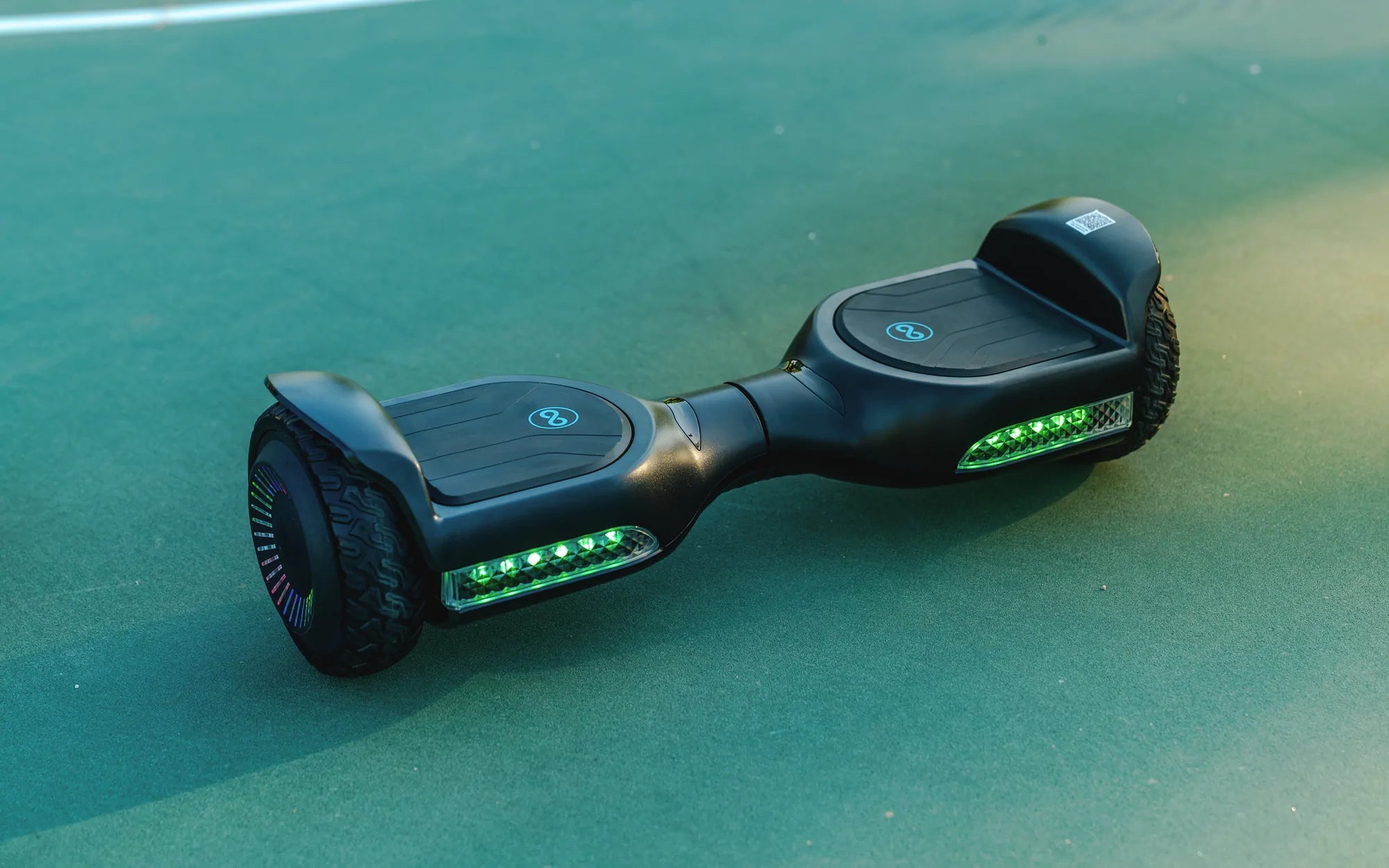
Ready to transform your self-balancing scooter from a simple transporter into a canvas for expression? Mastering self balancing scooter tricks is about more than showing off—it's the ultimate path to improving your control, balance, and confidence on the device. This guide will take you from cautious beginner to fluid rider, systematically building the skills needed to glide like a pro. You'll learn the essential safety foundations, core mechanics, and a progressive trick repertoire, all while understanding why a reliable, well-built scooter is the critical platform for safe progression.
Essential Gear and Safety: The Non-Negotiable Foundation
Before attempting your first pivot or spin, gearing up is non-negotiable. Trick riding increases the risk of falls, making protective equipment your most important investment. A certified helmet is mandatory, not optional. Wrist guards are equally critical, as instinct leads us to break falls with our hands. Knee and elbow pads complete the ensemble, protecting joints during slips and bails.
Your equipment's reliability is the other half of the safety equation. Practicing self balancing scooter tricks demands a stable, responsive platform. Scooters with UL-certified battery packs, like those from Gyroor, undergo rigorous testing for stability and safety over hundreds of charge cycles. This ensures consistent power delivery when you need precise motor response for a tight turn or sudden stop.
A robust build quality matters. Look for features like wide, textured footpads for secure footing and IPX5 water resistance, which protects against dust and light rain during outdoor practice. A reliable 1-year warranty offers peace of mind, allowing you to focus on skill development rather than mechanical worries. Safety is the foundation upon which all skill is built.
The Fundamentals: Mastering Balance and Core Control
Every advanced trick is built on flawless fundamental control. Before weaving or spinning, you must achieve an intuitive, unconscious mastery of the scooter's basic responses. This begins with understanding that your toes and heels are the primary control inputs.
Body Positioning and Weight Distribution
The core mechanic is simple: lean forward on your toes to accelerate, press back on your heels to brake or reverse. Turning is achieved by applying more pressure with one foot than the other. The key is subtlety. Imagine you have a glass of water balanced on your head; movements should be smooth and controlled from the ankles, not wild swings from the waist.
Proper stance is crucial. Keep your feet shoulder-width apart, parallel, and near the center of the footpads. Slightly bend your knees to act as natural shock absorbers. Your gaze should be forward, not down at your feet. This posture lowers your center of gravity and prepares your body for dynamic movements.
The Art of Dismounting and Mounting Smoothly
Your first "trick" should be a flawless mount and dismount. Always start with the scooter powered off. Place it on level ground and step on with your dominant foot first, ensuring the footpad is centered. Then, power on the device. As it self-levels, step your other foot up smoothly. To dismount, come to a complete stop, shift your weight to your dominant foot, and step off backwards with your other foot before powering down. Mastering this eliminates clumsy, dangerous stumbles.
Beginner Tricks: Building Your Skill Repertoire
With safety gear on and fundamentals solid, you're ready to start your trick journey. These beginner maneuvers teach fine control and build the muscle memory required for more complex moves. Practice each in a wide-open, smooth area like an empty parking lot.
The Stationary Spin (360° Pivot)
This is the safest and most instructive first trick. It teaches you to rotate the scooter using only weight distribution. Start with a wide, stable stance. To spin clockwise, gently press down with your left toes and right heel simultaneously. The scooter will begin to pivot in place. Use your core for stability and look in the direction of the spin. Start with 90-degree turns, progress to 180, and finally a full, controlled 360. This drill is fundamental for learning self balancing scooter tricks that require rotation.
The Gentle Slalom (Weaving)
Slalom drills enhance your agility and turning precision. Set up a line of small, soft objects (like empty plastic water bottles) spaced 8-10 feet apart. Approach at a slow, walking pace. Weave through the objects by applying subtle, alternating pressure with your feet. Focus on smooth, flowing S-curves rather than sharp, jerky turns. As you improve, reduce the spacing between objects. This trick directly improves your ability to navigate crowded sidewalks or complex paths with grace.
Riding Backwards with Confidence
Mastering reverse travel expands your mobility and control. Start on a gentle, open incline where gravity can assist the initial movement. Begin by looking over your shoulder in the direction you want to go. Shift your weight slowly onto your heels. Start with tiny, inch-long movements. The key is to turn your head and shoulders in the direction of travel; your hips and the scooter will follow. Practice until moving backward feels as natural as moving forward.
Intermediate Maneuvers: Adding Style and Fluidity
Intermediate tricks link basic controls into stylish, flowing movements. They require a higher degree of balance, timing, and body coordination. Mastery here separates a competent rider from a skilled one.
The Carving Turn (Surf-Style)
Carving transforms utilitarian turns into an expression of flow. Instead of just turning with your feet, initiate the turn by leaning your whole body into the direction of travel—shoulders, hips, and all. On a wide path or empty road, practice linking long, sweeping turns together, like drawing giant "S" shapes on the pavement. This uses the scooter's gyroscopic stability to create a smooth, surf-or snowboard-like feel. It's the essence of gliding like a pro.
The Tight Circle (Figure-8 Drill)
The figure-8 is the ultimate control test. Using chalk or cones, mark two circles about 15 feet apart. Ride a continuous figure-8 pattern around them. This forces you to transition smoothly between left and right turns of equal radius, managing speed and lean angle throughout. As you master it, make the circles smaller. This drill builds phenomenal lower-body control and is a prerequisite for any advanced, spin-based self balancing scooter tricks.
Pro-Level Techniques (For the Ambitious and Experienced)
Warning: These techniques carry significantly higher risk and should only be attempted by riders with absolute mastery of all previous skills, in full protective gear, and initially on soft surfaces like grass or matting.
The One-Foot Glide
This trick demonstrates exceptional balance and control. At a steady, slow speed on a perfectly smooth surface, gradually shift all your weight to one foot. Slowly lift the other foot an inch off the footpad, keeping it close. Focus on keeping your core tight and your standing leg slightly bent. Start by holding for a single second, then gradually increase time. This is a pure balance trick that deeply ingrains your connection with the scooter.
The 180° Jump Spin (Advanced)
This is an advanced, dynamic trick involving a small hop. At a standstill, crouch slightly. Use your legs to spring upward while using a sharp, upper-body twist to rotate the scooter 180 degrees beneath you. The goal is to land cleanly facing the opposite direction. The scooter's motors must be disengaged during the hop. Always practice this on grass first to soften inevitable falls. This trick requires powerful leg muscles, excellent timing, and aerial awareness.
Practice Makes Perfect: Drills and Ideal Environments
Structured practice is the fastest path to improvement. Environment is key. Seek out empty tennis or basketball courts, smooth warehouse floors, or freshly paved parking lots early in the morning. For initial attempts at tricks like the jump spin, a flat, dry grassy field is ideal to minimize impact from falls.
Create a practice regimen. Dedicate 15-minute sessions to specific drills. For example: 5 minutes on stationary spins, 5 minutes on figure-8s, 5 minutes on carving. Use chalk to create your own training courses. Consistency is more valuable than marathon, infrequent sessions. Recording yourself can provide invaluable feedback on your form and posture.
Scooter Comparison: Choosing Your Trick Platform
Not all self-balancing scooters are equally suited for trick progression. Responsive motors, stable footpads, and robust construction are essential. Below is a comparison of common scooter types and their suitability for trick riding.
| Scooter Type / Feature | Best For These Tricks | Key Considerations for Tricks | Example Model Traits (Gyroor) |
|---|---|---|---|
| Standard Hoverboard (6.5"-8.5" wheels) | Stationary spins, slalom, tight circles. Great for learning fundamentals. | Smaller wheels offer quicker turning response. Stability can be lower at speed. | Models with wide footpads and dual 300W motors provide a stable, responsive base for core tricks. |
| All-Terrain Hoverboard (10"+ air-filled tires) | Practice on grass/gravel, carving on uneven paths. More forgiving on rough surfaces. | Larger tires absorb bumps but can feel slightly less nimble for precise, pavement-based spins. | UL-certified battery & IP55 rating ensure safe, reliable performance in varied practice environments. |
| Self-Balancing Electric Scooter (T-bar handle) | High-speed carving, long flowing maneuvers. The handle offers extra stability for learning balance. | The handle can become a crutch; focus on foot control. Not designed for jump spins or one-foot tricks. | A robust frame and reliable braking system support confident, fluid carving at higher speeds. |
FAQ: Your Self-Balancing Trick Questions Answered
Q: What's the absolute safest trick to learn first?
A: The Stationary 360° Pivot. It's performed at zero speed, teaches crucial weight distribution, and has a very low risk of a high-impact fall. It's the perfect introduction to self balancing scooter tricks.
Q: How long does it typically take to learn a trick like riding backwards?
A: With daily 15-minute practice sessions, most riders gain basic competency in 3-5 days. Mastery, where it feels completely natural, may take 2-3 weeks. Consistency trumps duration.
Q: Can I perform these tricks on any self-balancing scooter?
A> While possible on many, it is strongly advised to use a reliable, well-constructed scooter. Tricks stress the frame, motors, and battery. Scooters from trusted brands like Gyroor, with UL-certified batteries, stable footpads, and responsive motors, are engineered for the dynamic loads of trick riding, providing a safer and more consistent platform.
Q: I keep leaning too far and getting speed wobbles. How do I fix this?
A> Speed wobbles are often caused by tense legs. Focus on bending your knees more to lower your center of gravity and act as shock absorbers. Also, ensure your feet are positioned evenly and parallel on the footpads. Practice slow, controlled leans rather than aggressive pushes.
Q: Is it necessary to practice on grass?
A> For any trick where you anticipate falling (like initial attempts at the one-foot glide or jump spin), grass is highly recommended. It provides a softer landing. For precision drills like slalom or tight circles, smooth pavement is necessary for proper traction and scooter response.
The Journey is the Reward
Mastering self balancing scooter tricks is a rewarding journey that fundamentally transforms your relationship with your device. It's not just about the final trick, but about the heightened control, spatial awareness, and confidence you gain at every step. This progression turns a functional commute into a personally expressive and deeply enjoyable activity. Remember, patience and consistent, safe practice are your true allies. Trust in your growing skills and in the reliable engineering of your equipment. When your scooter is a dependable partner, built with safety-focused features like UL-certified batteries and a robust frame, you're free to focus on the art of the glide. Ready to start your journey on the right platform? Browse the full Gyroor collection at gyroorboard.com to find the perfect, reliable scooter to launch your trick-riding adventure.
Best Christmas Gift for Teen Girls: Top Picks for the Holiday Season
Hoverboard Age Requirement: What Parents and Riders Need to Know