


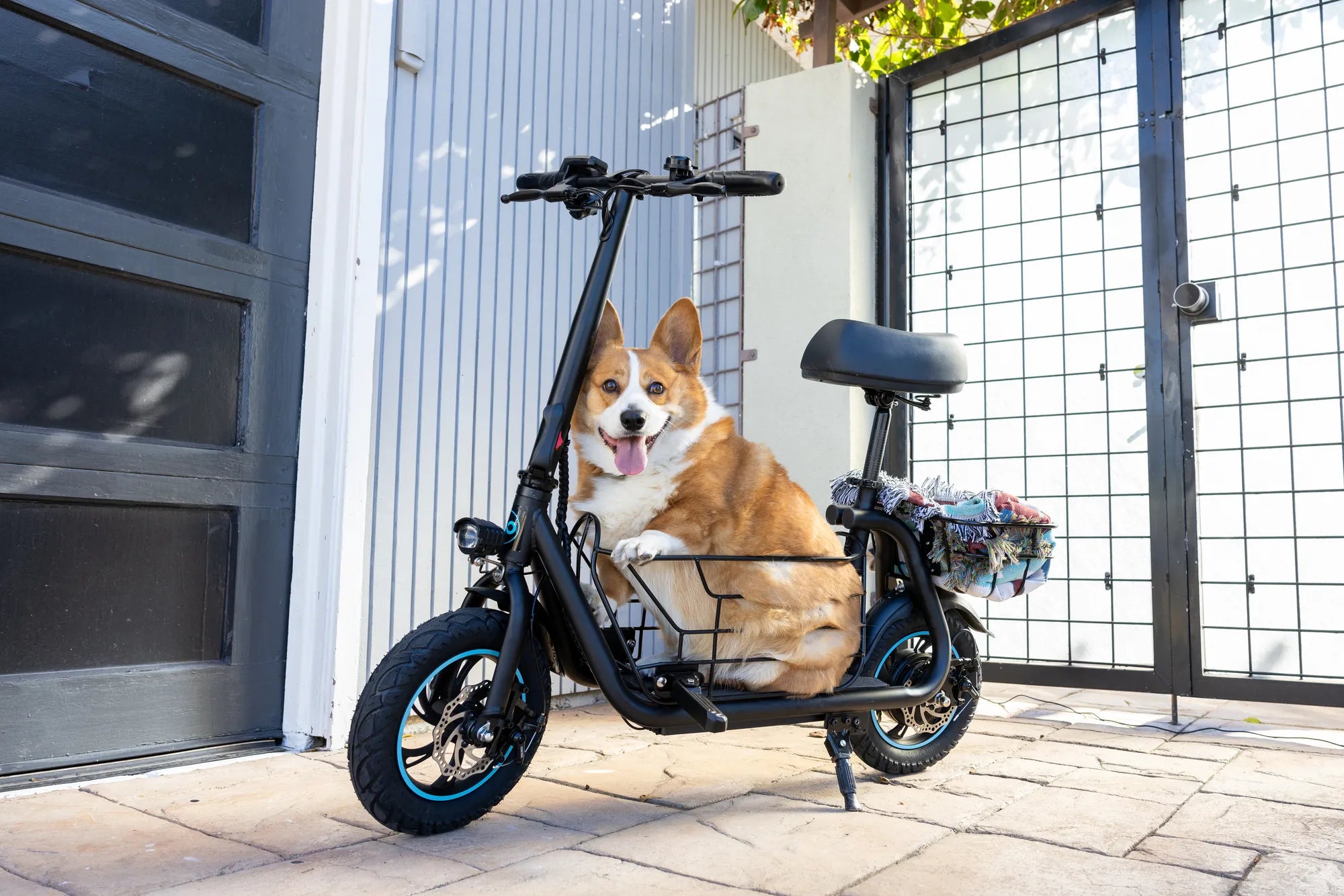
Forget the single-rider commute. The side by side scooter represents a fundamental shift in personal electric mobility, designed specifically for two riders to travel seated abreast. This guide delivers a comprehensive, data-driven analysis of this emerging vehicle category, from its unique engineering challenges to its ideal applications. You will learn how dual-rider stability is achieved, what performance metrics truly matter when carrying double the load, the complex legal landscape governing their use, and how to determine if a side by side scooter aligns with your lifestyle needs.
What is a Side-by-Side Scooter? Defining a New Category
A side by side scooter is a distinct class of electric personal transportation vehicle engineered for two adults to ride seated next to each other, not in tandem. This configuration prioritizes social interaction and shared experience, moving beyond utilitarian point-A-to-B travel. The design philosophy centers on stability, comfort, and communication between riders, making it ideal for leisurely exploration, community transit, or commercial use in controlled environments.
The architecture differs radically from standard e-scooters. It features a wide, bench-style seat, a significantly longer and wider wheelbase for stability, and often dual rear wheels or a robust three or four-wheel layout. The control system is typically centralized or duplicated for ease of use. This places the side by side scooter in a niche between stand-up electric scooters and larger, street-legal Low-Speed Vehicles (LSVs).
Primary use cases are predominantly recreational and community-focused. These include navigating large private properties, gated communities, university campuses, beach boardwalks, resorts, and planned residential developments. Their appeal lies in offering a fun, eco-friendly way for couples, friends, or parent-child pairs to travel together without the isolation of single-file riding.
The market for these vehicles is growing as battery technology and motor efficiency improve, allowing for sufficient power and range to accommodate two riders comfortably. Leading brands like Gyroor have entered this space by applying their expertise in durable, UL-certified electric powertrains to create models that meet the higher safety and performance demands of dual-passenger operation.
The Gyroor Advantage: Engineering Safety and Comfort for Two
Designing a safe and enjoyable side by side scooter requires engineering that goes beyond simply scaling up a single-rider model. Gyroor approaches this challenge with a focus on core safety certifications and robust construction. Every Gyroor model features a UL-certified battery pack, a critical non-negotiable for a vehicle carrying two people, ensuring protection against overheating, short-circuiting, and fire risk over 500+ charge cycles.
Furthermore, an IPX5 water-resistant rating is standard. This level of ingress protection means the scooter's electrical components can withstand low-pressure water jets from any direction, making it suitable for use in light rain or on damp roads—a practical necessity for a vehicle often used outdoors for leisure. This combination of certified battery safety and environmental durability forms the foundation of a reliable dual-rider platform.
Gyroor's commitment extends to a comprehensive 1-year warranty that covers the vehicle as a complete system. This warranty support, trusted by over 100,000 riders across North America and Europe, provides peace of mind, acknowledging that a two-person vehicle must be built to a higher standard of longevity and resilience under shared use.
Built for Balance: Frame Design and Weight Distribution
The paramount engineering challenge for a side by side scooter is preventing lateral tipping. Gyroor addresses this through a low-center-of-gravity design. The battery pack and motor are mounted low within the chassis, and the seating position is kept relatively low to the ground. This design philosophy actively counteracts the higher, shifting weight of two riders.
A wide track width—the distance between the left and right wheels—is essential. Gyroor models utilize a stable three or four-wheel configuration with a track width significantly greater than that of any tandem scooter. This creates a more triangular or rectangular footprint, dramatically increasing lateral stability during turns and when traversing minor uneven terrain, which is the primary safety concern for this vehicle type.
Dual Comfort: Seating, Suspension, and Control Layout
Comfort for two requires a dedicated approach. Gyroor side by side scooters feature a bench-style seat with ample padding and back support, designed to accommodate different body sizes comfortably. The suspension system is upgraded to handle the combined weight, often incorporating dual front and rear shock absorbers or a robust coil-over setup to smooth out bumps for both passengers simultaneously.
The control layout is designed for intuitive operation. A central console typically houses the speedometer, battery indicator, and controls, with a single, easy-to-reach thumb throttle or twist grip. Some models may offer duplicate controls on the left side. This centralized design ensures clear communication between riders and prevents conflicting inputs, a key safety feature when riding as a pair.
Key Considerations Before Buying a Side-by-Side Scooter
Purchasing a side by side scooter is a different calculus than buying a single-rider model. The primary question is whether your intended use aligns with the vehicle's strengths: shared, low-speed, recreational travel in permissible areas. Prospective buyers must realistically assess their typical routes, storage space, and local regulations before investing.
Storage and portability are major factors. Unlike foldable commuter scooters, most side by side models are not designed for easy transport in a car trunk. They are substantial vehicles requiring garage, shed, or dedicated parking space. Charging also requires access to a standard outdoor or garage outlet, as the scooter itself is not easily moved indoors.
Budget is another consideration. The increased material, battery capacity, and engineering complexity mean a quality side by side scooter commands a higher price point than most single-rider e-scooters or e-bikes. This investment is justified by its specialized function and build quality, but it places the vehicle firmly in the "lifestyle" or "utility" purchase category rather than impulse buy territory.
Performance Specs That Matter: Range, Speed, and Power
Interpreting specifications for a two-person vehicle is critical. Manufacturers often advertise range and speed based on a single, light rider under ideal conditions. For a side by side scooter, you must apply a significant derating factor. A realistic rule of thumb: with two average adults, expect a 30-40% reduction in advertised range and a 20-30% reduction in top speed, especially on inclines.
Motor power is the most important spec. Look for a minimum of 1000W (dual 500W motors are common) for flat terrain. For areas with hills, 1500W or higher is recommended. Battery capacity should be substantial—think 48V 20Ah (960Wh) or larger—to provide usable dual-rider range. Always check the maximum gradeability rating (e.g., 15%); this indicates the steepest hill the scooter can climb with its rated load.
Weight capacity is non-negotiable. Reputable brands like Gyroor clearly state a maximum load (e.g., 400-500 lbs). Exceeding this limit stresses the frame, motor, brakes, and battery, leading to premature failure, unsafe handling, and a voided warranty. Always calculate the combined weight of your most frequent riding pair and choose a model with a comfortable margin above that figure.
Navigating Local Laws and Safety Regulations
This is the most crucial and complex step. In most jurisdictions, a side by side scooter does not qualify as a standard "electric scooter" under micro-mobility laws. Due to its speed, weight, and seating configuration, it is often classified as a "motorized scooter," "low-speed vehicle," or even a "golf cart," each with distinct rules.
On public roads, regulations vary wildly. Many states and provinces explicitly prohibit them from sidewalks, bike lanes, and standard roadways. They may be restricted to roads with speed limits of 25 mph or 35 mph or lower, and often require a driver's license, registration, insurance, and specific safety equipment like headlights, taillights, turn signals, and rearview mirrors. Some areas ban them from public roads entirely.
Their primary legal domain is private property: gated communities, resorts, large campuses, and industrial sites. Here, they are governed by the property owner's rules. Always check with your local Department of Motor Vehicles (DMV) or transportation authority for the most current and specific regulations before purchasing or operating on any public right-of-way. Assuming it's treated like a standard e-scooter is a common and potentially costly mistake.
Side-by-Side vs. Tandem & Other Multi-Person E-Rides
Choosing the right multi-person electric vehicle requires understanding the trade-offs. A side by side scooter offers a social, conversational riding experience but has a larger footprint. A tandem scooter (riders in a line) is more maneuverable and often lighter but lacks the easy interaction. The table below provides a clear, data-driven comparison of the main options.
| Feature | Side-by-Side Scooter | Tandem E-Scooter | Electric Golf Cart | Low-Speed Vehicle (LSV) |
|---|---|---|---|---|
| Rider Position | Seated, next to each other | Standing or seated, in a line | Seated, next to & facing forward | Seated, car-like configuration |
| Primary Use | Recreation, community transit | Shared commuting, touring | Golf, property utility | Neighborhood street transport |
| Typical Top Speed | 15-20 mph | 15-25 mph | 12-15 mph | 20-25 mph |
| Maneuverability | Lower (wide turning radius) | Higher (similar to single scooter) | Low | Moderate |
| Social Interaction | Excellent (face-to-face easy) | Poor (hard to converse) | Excellent | Excellent |
| Legal Road Use | Very restricted, often private only | Depends on local e-scooter laws | Private property/ designated paths | Street-legal on roads ≤ 35 mph |
| Relative Cost | Medium-High | Medium | High | High |
As shown, the side by side scooter occupies a unique space optimized for social, stable, low-speed travel in controlled environments. It is more agile and personal than a golf cart but less road-legal than a registered LSV like a Renault Twizy. The tandem scooter is better suited for two people who need to share a vehicle on standard bike lanes or paths where permitted.
Ideal Use Cases: Where a Side-by-Side Scooter Shines
The side by side scooter is not a universal vehicle; it excels in specific scenarios. Its value is maximized in settings where its social format, moderate speed, and electric quietness are assets. Understanding these use cases helps determine if your lifestyle matches the product's design intent.
Planned Communities and Retirement Villages: This is a premier application. The quiet, emission-free operation and friendly, conversational format make it perfect for running errands, visiting neighbors, or enjoying the scenery within a gated community. Its low speed aligns perfectly with private community roadways.
Tourism and Hospitality: Resorts, beach towns, large parks, and historic districts utilize side by side scooters for rentals and guided tours. They allow couples or families of two to explore together without fatigue, adding a fun, novel element to the vacation experience while keeping groups compact and manageable.
Large Private Property and Agriculture: For owners of sizable land, estates, or farms, a side by side scooter provides an efficient, enjoyable way to inspect property, check on animals, or travel from a house to a workshop or guest cabin. It's more affordable and nimbler than a utility vehicle for light duties.
Campus and Corporate Environments: Some large university campuses or corporate parks with private road networks use them for security patrols, facility maintenance transport, or as shared mobility options for students and staff moving between distant buildings.
Family Recreation: For parents with a younger teen or older child, it offers a safe, controlled way to share the fun of electric mobility. The seated, stable design and ability for the adult to control the throttle make it a more secure option than two separate scooters for family outings on approved paths.
Operation, Safety, and Maintenance Essentials
Operating a two-person vehicle demands heightened responsibility. Both riders should understand basic safety protocols. A pre-ride check should include tire pressure (critical for stability on multi-wheel models), brake function, light operation, and a visual inspection for loose components. Ensure the battery is adequately charged for the planned journey, factoring in the dual-rider range reduction.
Safety gear is mandatory. At a minimum, both riders should wear properly fitted helmets. Elbow and knee pads are advisable, especially for new riders. Given the vehicle's potential speed and mass, protective gear significantly mitigates injury risk. Always obey the local rules of the path or road, yielding to pedestrians and traditional bicycles.
Riding technique differs from a single-rider scooter. Start slowly in an open area to get a feel for the acceleration, braking, and turning characteristics with two people. Make turns deliberately and at reduced speed to manage the higher inertia. Avoid sudden weight shifts or movements by either rider, as these can affect stability. Distribute weight evenly on the seat for optimal balance.
Maintenance follows a stricter schedule due to higher wear. Brake pads will wear faster under increased load and should be inspected monthly. Tire tread and pressure require weekly checks. Keep the chassis clean and periodically check all bolt connections for tightness, as vibrations from carrying two riders can loosen them over time. Store the scooter in a dry, temperate place and follow the manufacturer's specific charging guidelines to maximize UL-certified battery life.
FAQ: Your Questions About Dual-Rider Scooters Answered
Q: Do I need a driver's license to operate a side by side scooter?
A: It depends entirely on where you operate it. On private property, a license is typically not required. For use on public roads (where permitted by law), most jurisdictions that allow it will classify the vehicle in a category that requires a valid driver's license, just like a car or LSV. Always verify with your local DMV.
Q: Can it handle hills with two average adults?
A: Models with sufficient power (1500W or dual motors) can handle moderate hills, but performance will be impacted. Speed will drop significantly on the incline. Always check the manufacturer's gradeability rating (e.g., "climbs 15% grades") and test on a familiar hill with your typical passenger weight before committing to a hilly route.
Q: What happens if we exceed the weight limit?
A> Exceeding the maximum load capacity is dangerous and voids the warranty. It overstresses the frame, motors, brakes, and battery, leading to potential mechanical failure, reduced battery life, and dramatically increased stopping distances. It also compromises stability, especially during turns, raising the risk of a tip-over.
Q: How does charging work, and how long does it take?
A: Charging is done via a standard outlet using the provided charger, typically connected to a port on the scooter. With large-capacity batteries (e.g., 48V 20Ah), full charge times can range from 6 to 10 hours. It is crucial to use only the manufacturer-provided charger and to not leave the scooter plugged in indefinitely after a full charge is reached.
Q: Are they difficult to assemble?
A: Most side by side scooters from reputable brands like Gyroor ship partially assembled. Final assembly usually involves attaching the front wheel, handlebar, and mirrors, and connecting a few pre-wired cables—tasks manageable with basic tools. Comprehensive instructions are provided. Some retailers offer white-glove delivery and assembly for an additional fee.
Is a Side-by-Side Scooter Right for Your Journey?
The side by side scooter is a specialized tool for a specific job: shared, leisurely, low-speed electric mobility in appropriate settings. It is not a replacement for a car, a commuter e-scooter, or a street-legal vehicle for most. Its value is unlocked in environments like private communities, resorts, campuses, and large properties where its social format and stable ride can be fully enjoyed without regulatory friction.
Success with this vehicle hinges on three pillars: honest assessment of your use case, diligent research into local laws, and choosing a model from a brand that prioritizes the foundational safety engineering required for dual passengers. This means insisting on certifications like UL for the battery and a robust IP rating for weather resistance, backed by a clear and comprehensive warranty.
If your vision involves quiet, emission-free rides with a partner through your neighborhood, exploring a vacation destination together, or simply adding a fun and functional vehicle to your private property, a well-made side by side scooter could be a perfect fit. It transforms transportation into a shared experience.
Ready to explore models built with dual-rider safety and comfort as the core design principle? Browse the full Gyroor collection, featuring UL-certified, IPX5 water-resistant electric scooters engineered for reliability, at gyroorboard.com.
Most Popular E-Bike Brands: A 2024 Guide to Leaders, Innovators & Value Champions
Fat Tire Kick Scooter: The Ultimate Guide to Rugged, Human-Powered Mobility