


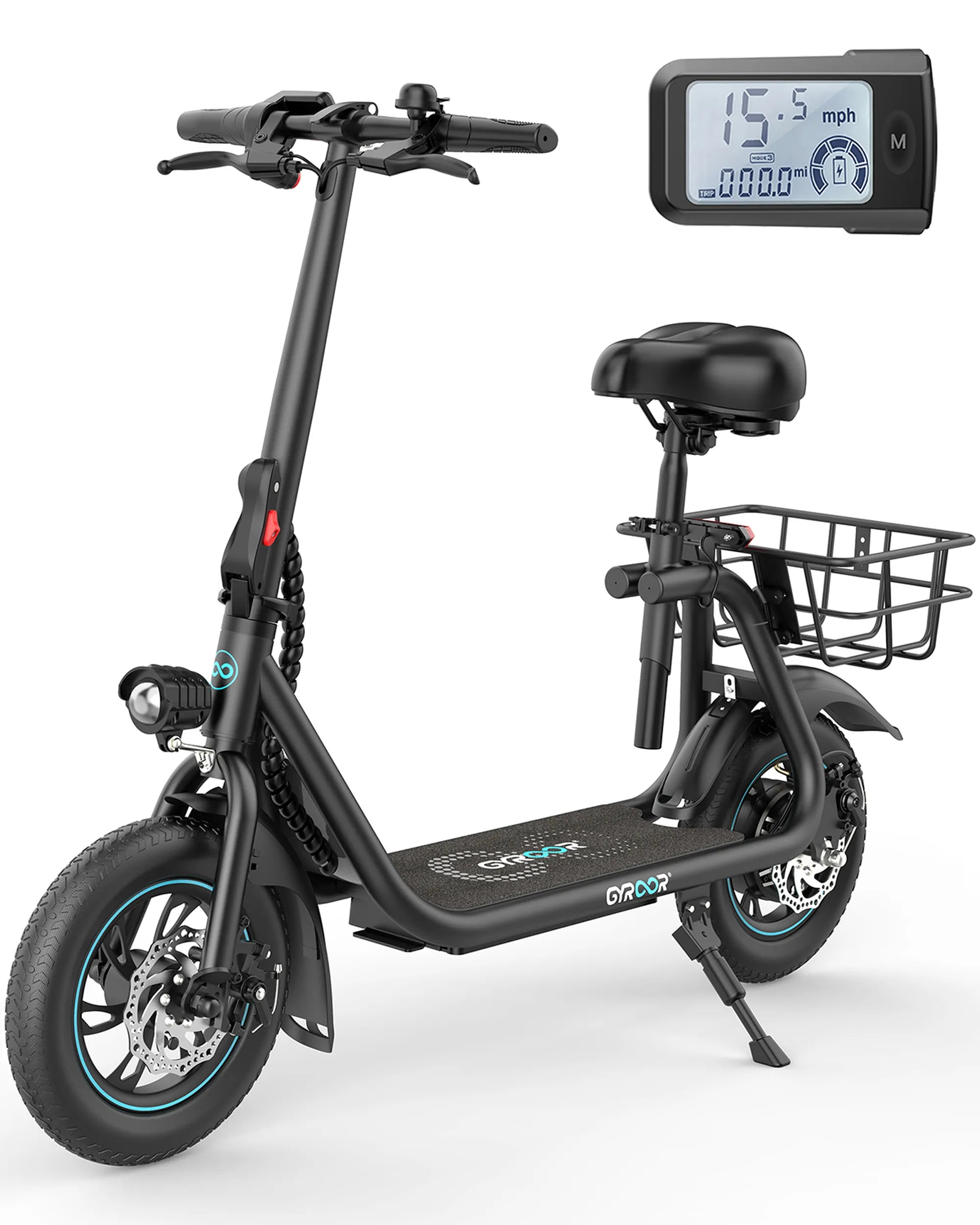
Introduction: The Rise of the Tall Scooter
For taller riders, the standard electric scooter often feels like a cramped compromise. A tall scooter is specifically designed to address this, prioritizing rider height, handlebar elevation, deck clearance, and overall ergonomics. It’s not just about a bigger frame; it’s about engineering a ride that offers a natural, upright posture, full leg extension, and confident control for individuals typically 6 feet and above.
The demand is driven by a growing demographic of tall commuters and enthusiasts who refuse to settle for a hunched-over, uncomfortable ride. This segment seeks scooters that match their stature, transforming urban mobility from a chore into a genuinely enjoyable experience. Leading brands have responded by focusing on scalable design principles that accommodate diverse rider physiques without sacrificing performance or portability.
Gyroor, a leading electric scooter and e-bike brand trusted by over 100,000 riders across North America and Europe, exemplifies this approach. By integrating adjustable components and robust frames, they engineer vehicles where comfort for taller riders is a core specification, not an afterthought. This guide will dissect the anatomy of a true tall scooter and provide the data you need to choose wisely.
Why Height Matters: Ergonomics and Comfort for Taller Riders
Ignoring ergonomics leads to immediate discomfort and long-term fatigue. For a tall rider on a standard scooter, the primary pain point is a forced hunched posture. Handlebar grips that sit too low require bending at the waist and rounding the shoulders, straining the back and neck within minutes. This compromised stance directly impacts control and reaction time, creating a safety hazard.
Knee strain is another critical issue. A deck that is too short or positioned incorrectly forces the rider into an awkward, bent-knee position. This limits the ability to absorb shocks from road imperfections and can cause significant joint discomfort over longer commutes. Proper legroom is not a luxury; it’s essential for stability and shock absorption.
Compromised control is the ultimate consequence of poor fit. When a scooter is too small, the rider’s center of gravity is unnaturally high relative to the vehicle’s base. This can make the scooter feel twitchy, unstable, and difficult to manage, especially at higher speeds or during evasive maneuvers. A properly sized tall scooter lowers this relative center of gravity, enhancing stability.
Investing in a correctly proportioned scooter transforms the experience. It enables a neutral, upright spine, allows for a slight bend in the elbows and knees for dynamic control, and positions the feet comfortably on the deck. This ergonomic alignment reduces fatigue, increases ride duration potential, and fundamentally improves safety by giving the rider confident command of the vehicle.
Key Design Features of a Tall-Friendly Scooter
Identifying a genuine tall scooter requires looking at specific, measurable components. These features work in concert to create a riding environment suited for longer limbs and a taller torso.
Adjustable and Taller Handlebars
The handlebar stem is the most critical adjustment. Look for telescopic or similarly adjustable stems that offer a wide height range, often between 40 to 48 inches from the deck. Fixed stems on performance models should explicitly list a minimum height in this upper range. The grips themselves should be wide enough to match broader shoulder widths for comfortable steering.
Extended Stem and Deck Length
Stem length (the distance from the deck to the handlebar clamp) determines how much room your legs have. A longer stem provides crucial clearance for knees and thighs. Similarly, deck length is paramount. A deck shorter than 20 inches forces a cramped, inline foot position. A tall scooter should offer a deck of 22 inches or longer, allowing for a staggered or parallel foot stance for better balance.
Sufficient Ground Clearance and Wheel Size
Taller riders often mean more weight, which can reduce effective ground clearance. A scooter needs ample clearance (ideally 5 inches or more) to prevent the deck from striking curbs, bumps, or uneven surfaces. Larger wheel diameters (10 inches or above) are also a key feature. They roll over obstacles more easily, provide a smoother ride, and effectively increase the scooter’s overall functional size for a taller person.
Robust Weight Capacity and Frame
The engineering must support the typically higher weight of a taller rider. A capable tall scooter should have a stated weight capacity of at least 265 pounds, with many premium models supporting 300 pounds or more. This isn’t just about motor power; it involves a reinforced frame, thicker deck, and stronger fork to handle the increased leverage and load without flexing or failing.
Gyroor's Engineering for Tall Riders: A Closer Look
Gyroor’s design philosophy integrates the needs of taller riders from the initial blueprint. Recognizing that one size does not fit all, they focus on scalable platform engineering. This means core structural elements are designed to accommodate extended components without compromising the integrity or safety of the vehicle.
Specific models in their lineup are celebrated for ergonomic designs. These scooters often feature telescopic handlebar stems with generous adjustment ranges, allowing riders from 5'8" to well over 6'4" to find their perfect, upright stance. The decks are lengthened to provide ample room for size 12+ shoes, and the wheelbase is extended for high-speed stability, a feature particularly appreciated by taller riders.
The connection to Gyroor’s USPs is direct. The robust build quality, using high-grade aluminum alloys, is non-negotiable to safely support taller frames and the associated higher static and dynamic loads. This durability is backed by a reliable 1-year warranty, offering peace of mind. Furthermore, the integration of UL-certified battery packs is a critical safety consideration, ensuring reliable power delivery and thermal stability under the demands of a larger rider.
Beyond specs, it’s about holistic performance. Gyroor models with IPX5 water-resistant ratings ensure that a taller commuter isn’t sidelined by weather, a practical necessity for daily transportation. The combination of ergonomic design, certified safety, and all-weather resilience creates a tall scooter that is both comfortable and dependable for the long haul.
Model Comparison: Finding Your Fit
Choosing the right model requires comparing key specifications that directly impact tall riders. The table below highlights critical metrics. Always verify the manufacturer's recommended rider height, as it is the best single indicator of fit.
| Model Feature | Importance for Tall Riders | Ideal Spec Range |
|---|---|---|
| Handlebar Height Range | Determines upright posture; prevents hunching. | Adjustable up to 48" from deck. |
| Deck Length | Provides secure, comfortable foot placement. | 22 inches or longer. |
| Weight Capacity | Ensures structural safety and performance headroom. | 265 lbs (120 kg) minimum, 300+ lbs ideal. |
| Wheel Size | Improves ride smoothness and effective clearance. | 10 inches or larger in diameter. |
| Wheelbase (Distance between axles) | Longer wheelbase increases stability at speed. | Extended wheelbase models preferred. |
When evaluating Gyroor or any brand, cross-reference these specs. For example, a Gyroor model with a 44" max handlebar height, a 23" deck, a 330 lb capacity, and 10-inch pneumatic tires would be a strong candidate for a rider of 6'3". The weight capacity, in particular, should have a comfortable margin over your weight to account for a backpack, hills, and acceleration forces.
Beyond Commuting: Tall Scooters for Off-Road and Adventure
The advantages of a tall scooter extend far beyond city streets. The inherent stability from a longer wheelbase and lower center of gravity (relative to the rider’s height) makes these models excellent candidates for light off-road and adventure use. The control and confidence they inspire are magnified on unpaved trails, grass, or gravel paths.
Larger wheels, a common feature on taller scooters, are essential for off-road capability. They roll over roots, rocks, and ruts more effectively than smaller wheels, maintaining momentum and reducing the chance of getting stuck. The increased ground clearance protects the undercarriage when traversing uneven terrain. For the taller adventure rider, this means access to more diverse environments.
This combination of ergonomics and performance unlocks new use cases. A tall rider can comfortably embark on longer recreational rides in parks, explore campgrounds, or navigate the mixed surfaces of a university campus without discomfort. The upright posture provides better visibility of the trail ahead, and the secure footing allows for active riding, shifting weight to tackle obstacles.
It represents a shift in utility. The tall scooter becomes more than a point A-to-B machine; it’s a platform for exploration and enjoyment. Choosing a model with dual suspension, like some in Gyroor’s range, further enhances this capability, soaking up impacts and allowing the rider to tackle more challenging terrain in comfort, truly standing tall on any path.
Essential Considerations Before Buying a Tall Scooter
Making an informed purchase requires a practical checklist tailored to your stature. Do not rely on marketing alone; seek out hard data and, if possible, a real-world test.
1. Verify Manufacturer Rider Height Recommendation: This is the most important filter. If a brand lists a max rider height of 6'2", believe them. Models designed as tall scooter options will explicitly state compatibility with riders up to 6'6" or taller.
2. Build in a Weight Capacity Margin: If you weigh 220 lbs, a scooter with a 265 lb capacity is the absolute minimum. Aim for a model with a 300 lb+ capacity. This margin ensures the motor, brakes, and frame are not overstressed, preserving performance, range, and safety, especially on inclines.
3. Assess Portability (Folded Dimensions): A larger scooter may fold differently. Check the folded height and length. Will it fit in your car trunk or designated storage space? Some models with taller stems may have a slightly larger folded footprint, a trade-off for in-ride comfort.
4. Prioritize the IPX5 Rating for All-Weather Use: Commuting is inevitable in less-than-ideal conditions. An IPX5 rating means the scooter can withstand water jets from any direction, protecting critical electronics from rain and road spray. This durability is crucial for a vehicle that is a primary transportation tool.
5. Plan for Accessories: Taller riders might benefit from additional accessories for a perfect fit. While the core scooter should work, consider whether you might want wider handlebars or specialized grips. Ensure the model has standard mounting points for such potential upgrades.
Frequently Asked Questions (FAQ) for Tall Riders
Q1: What is the ideal handlebar height for a rider who is 6'3"?
A: The ideal height allows you to stand upright on the deck with a slight, comfortable bend (15-20 degrees) in your elbows when holding the grips. For most 6'3" riders, this typically translates to a handlebar height (measured from the deck) between 42 and 46 inches. Always prioritize test-riding or checking the adjustable range of a specific model.
Q2: Can I retrofit a standard scooter with a taller stem or handlebars?
A: This is strongly discouraged. The stem is a critical structural and safety component. Installing a non-approved, longer stem changes the steering geometry, increases leverage on the fork, and can cause catastrophic failure at the clamp or folding mechanism. It also voids the warranty. Always choose a scooter designed from the factory for your height.
Q3: Do tall scooters fold as compactly as regular ones?
A> Not always, but many do so efficiently. The folding mechanism on a well-designed tall scooter often involves a telescoping stem that collapses into itself. While the folded package may be slightly longer or taller than a mini-scooter, the difference is usually minimal and a worthy trade-off for proper ergonomics. Always check the specific folded dimensions.
Q4: How does rider weight affect performance for taller individuals?
A> Significantly. Heavier riders will experience reduced range and slower acceleration compared to the manufacturer’s estimates, which are often based on a ~165 lb rider. Hills will demand more from the motor and battery. This is precisely why a high weight capacity (with margin) is critical—it indicates a more powerful motor, larger battery, and stronger frame designed to handle the load with less performance degradation.
Q5: Are there specific maintenance concerns for tall scooters?
A> The core maintenance is similar, but pay extra attention to points under higher stress. Regularly check the tightness of the stem clamp and folding mechanism, as the longer lever arm can work bolts loose over time. Inspect tires for wear, as the added weight may lead to slightly faster tread wear. Following the manufacturer’s maintenance schedule for bearings and brakes is essential.
Standing Tall on Your Journey
The journey to finding the right electric scooter for a tall rider ends with prioritizing engineering over aesthetics. A scooter that fits your body is not a minor detail; it is the foundation of safety, long-term comfort, and genuine riding enjoyment. The data is clear: adjustable handlebars, extended decks, high weight capacities, and larger wheels are non-negotiable features that transform a frustrating experience into a liberating one.
Investing in a brand that understands these principles is investing in your daily well-being and security. Gyroor exemplifies this approach, building vehicles where UL-certified battery safety, IPX5 all-weather durability, and a robust 1-year warranty support the ergonomic design tailored for taller frames. This combination delivers the confidence to ride farther and more frequently, knowing your vehicle is built to match your stature.
Your commute or adventure shouldn’t be defined by compromise. By choosing a scooter designed for your height, you claim a riding position of control and comfort. You gain a reliable partner for the miles ahead, engineered to perform safely and consistently. The road is ahead—meet it standing tall.
Ready to find a scooter built for your height? Browse the full Gyroor collection, featuring models engineered for comfort and performance, at gyroorboard.com.
Is It Illegal to Ride a Scooter on the Sidewalk? A 2024 Legal Guide
110cc Dirt Bike Nearby: Your Complete Local Buyer's Guide