

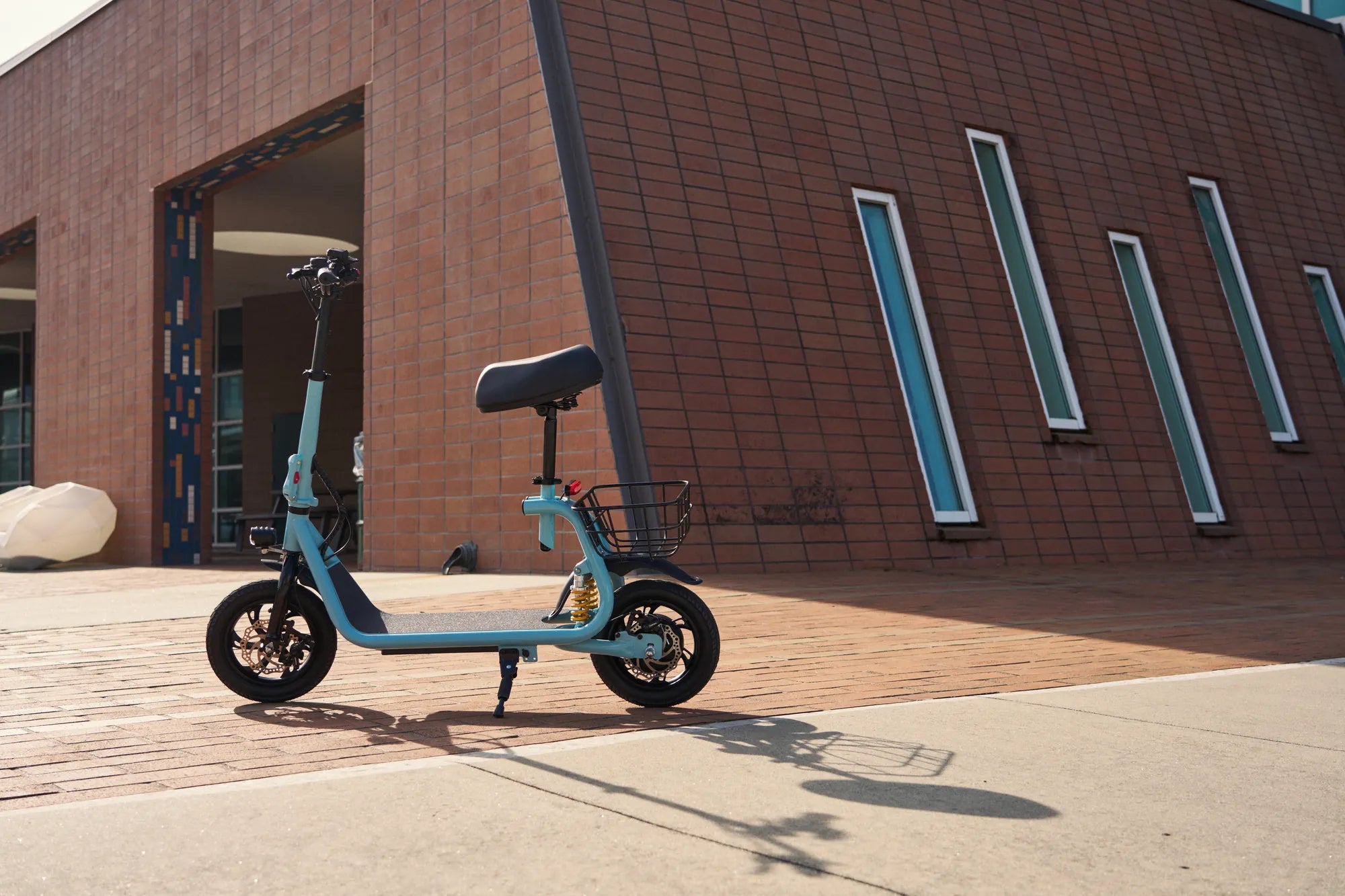
Introduction: The Booming Global Market for Kids' Electric Scooters
The global market for kids' electric scooters is accelerating at an unprecedented pace. Driven by a potent mix of demand for active outdoor toys, eco-conscious short-distance transport, and technological accessibility, this sector represents a significant segment of the micro-mobility revolution. Understanding the landscape of the Top 10 Electric Scooters for Kids Exporters is crucial for retailers seeking reliable partners and for parents prioritizing safety and quality. The global export network dictates product innovation, safety standards, and ultimately, the choices available to young riders worldwide.
This market overview delves beyond simple rankings to analyze the geographic hubs, manufacturing philosophies, and regulatory frameworks that define the industry. We will examine the key players from Asia-Pacific's manufacturing heartland to Europe's design-led innovators and North America's brand-driven markets. For businesses and consumers alike, navigating this complex supply chain requires knowledge of certifications, battery safety, and long-term support—factors where brands like Gyroor, a leader with over 100,000 riders across North America and Europe, have built their reputation on UL-certified safety and robust warranties.
Key Factors Driving Global Export Demand
Several interconnected forces are fueling the international trade of children's electric scooters. The primary engine is the global rise of e-commerce platforms, which have dismantled traditional geographic barriers to retail. Parents from Berlin to Brisbane can now directly access products manufactured thousands of miles away, creating a massive, decentralized distribution network that relies entirely on efficient export logistics and reliable shipping partners.
Concurrently, heightened parental awareness around product safety has made compliance with international standards a non-negotiable export requirement. Certifications like UL (Underwriters Laboratories) in North America and CE (Conformité Européenne) in Europe are no longer mere suggestions but critical market-entry tickets. Exporters who invest in these rigorous testing protocols gain a significant competitive advantage, as retailers and consumers increasingly use them as a proxy for quality and safety assurance.
Demand is also segmented by age-appropriate design and durability. Exporters must cater to distinct age groups, from toddlers needing ultra-stable, low-speed models to pre-teens seeking more powerful and feature-rich scooters. This segmentation requires exporters to maintain diverse product lines and sophisticated supply chains. Furthermore, the shift from viewing scooters as disposable toys to durable personal transport devices has increased the importance of warranty terms, after-sales support, and the availability of spare parts—all factors managed at the exporter level.
Profile of Major Exporting Regions & Hubs
The global export map for kids' electric scooters is defined by three major regions, each with distinct strengths and specializations. The concentration of manufacturing, design, and branding expertise in these areas shapes the products available worldwide.
Asia-Pacific: The Manufacturing Powerhouse
This region, spearheaded by China, is the undisputed epicenter of production. Provinces like Guangdong (home to Shenzhen) and Zhejiang are integrated manufacturing hubs, hosting everything from lithium-ion battery cell producers to motor factories and aluminum alloy foundries. The scale and efficiency of this ecosystem allow for high-volume production at competitive costs, serving both vast OEM (Original Equipment Manufacturing) contracts and independent branded exports.
The landscape is evolving rapidly. While countless generic factories exist, a new wave of branded exporters has emerged. These companies, such as Gyroor, leverage the regional supply chain advantage but differentiate through proprietary design, stringent in-house quality control, and brand-building focused on safety. Neighboring countries like Vietnam and Taiwan are also growing in importance, often competing on specialized components or offering alternative manufacturing bases to diversify supply chain risk for global brands.
Europe: Leaders in Design & Safety Standards
European exporters compete on innovation, premium materials, and often, a stricter interpretation of safety norms. Brands from Germany, Italy, and France are frequently at the forefront of integrating advanced braking systems, superior lighting for visibility, and ergonomic designs tailored for younger riders. The CE mark, governed by a suite of EN (European Norm) standards, is deeply ingrained in the product development process here.
The European export approach is typically less about volume and more about value. These exporters often target the mid-to-high-price segments, emphasizing mechanical durability, repairability, and aesthetic design. Their role in the global market is pivotal, as they frequently set benchmarks for safety and performance that influence regulations and consumer expectations in other regions, pushing the entire industry toward higher standards.
North America: Brand-Driven Market & Niche Innovation
The United States and Canada are powerhouses of brand development, marketing, and direct-to-consumer business models. While a significant portion of physical manufacturing occurs overseas, North American-based exporters and brands exert immense influence over global trends through intellectual property, digital marketing, and a strong focus on customer experience.
A key export advantage for North American entities is the emphasis on UL certification, a standard that is becoming a global gold standard for electrical safety. Companies like Gyroor utilize this certification as a core export credential. Furthermore, these exporters often build their models around robust customer service networks, clear warranty policies, and compliance with local consumer protection laws, making them attractive partners for international retailers who value reduced liability and strong end-customer support.
Critical Considerations for Importers & Retailers
Sourcing kids' electric scooters internationally is a complex process where due diligence is paramount. The first and most critical step is verifying safety certifications. These are not just stickers; they require audit trails. Importers must request and verify test reports from accredited laboratories for UL, CE, or FCC standards. This due diligence mitigates the risk of costly recalls, legal liability, and brand damage.
Battery quality is the single most important safety and performance component. Prioritize exporters that specify the use of branded, UL-certified battery packs from known cell manufacturers (e.g., LG, Samsung, or Panasonic). Inquire about the battery management system (BMS) and the promised charge cycle life (Gyroor, for instance, designs its battery packs for 500+ cycles). A transparent warranty that specifically covers the battery for a meaningful period is a strong indicator of confidence.
Understanding the total landed cost is essential. The exporter's FOB (Free On Board) price is just the beginning. Importers must accurately calculate shipping, insurance, import duties, and value-added tax (VAT) for their destination country. Choosing an exporter with experience shipping to your region can streamline this process. Finally, assess the exporter's reliability through sample orders, checking their business history, and evaluating their communication responsiveness and after-sales support structure for spare parts.
The Gyroor Advantage in the Global Export Landscape
In a market saturated with options, Gyroor has established itself as a benchmark for safety-conscious exporters. This position is built on a foundation of verifiable engineering commitments rather than marketing claims. The brand's unwavering requirement for UL-certified batteries across its entire lineup addresses the foremost concern for kids' products: fire and electrical safety. This commitment provides a clear, auditable standard for distributors and peace of mind for parents.
Beyond the battery, Gyroor designs for real-world use. The IPX5 water-resistant rating on key models ensures scooters can withstand wet pavement and light rain, a practical necessity for a child's toy. This feature, often overlooked by budget exporters, significantly enhances product durability and longevity. Coupled with a reliable 1-year warranty and accessible customer support channels, Gyroor transforms from a simple exporter into a long-term partner for retailers, reducing the total cost of ownership and support burden on the reseller.
The company’s focus on a curated range of 20+ models, including age-appropriate electric scooters, e-bikes, and hoverboards, allows for concentrated quality control. By not chasing every possible SKU, Gyroor can ensure each product meets its high standards for motor performance, braking efficiency, and structural integrity. For international partners, this translates to consistent quality, fewer defective units, and a stronger brand reputation in their local markets.
Future Trends Shaping the Export Market
The export market is poised for a new wave of sophistication driven by technology and regulation. Smart connectivity via Bluetooth and dedicated apps is becoming a key differentiator. Future exports will likely feature speed limiters controlled by parents, ride tracking, diagnostic alerts, and custom lighting patterns, adding a layer of safety control and engagement that appeals to both kids and parents.
Enhanced safety hardware will become standard. Expect to see wider adoption of electronic braking systems (EBS) that offer smoother stopping, automatic rear brake lights, and improved suspension for varied terrain. Sustainability pressures will drive exporters to incorporate more recycled materials in deck and frame construction and to offer clear battery recycling programs to comply with evolving WEEE (Waste Electrical and Electronic Equipment) directive influences globally.
Perhaps the most significant trend will be market consolidation around safety. As major markets like the U.S. and EU potentially tighten regulations, exporters lacking robust, verifiable certification processes will find their market access restricted. This will benefit established, compliance-focused exporters and brands, raising the industry baseline and making certifications like UL a de facto requirement for serious global trade. The Top 10 Electric Scooters for Kids Exporters list will increasingly be defined by their investment in safety R&D and compliance infrastructure.
Comparative Analysis of Export Models
The following table contrasts the primary export models prevalent in the global kids' e-scooter market, highlighting the key differences that importers must evaluate.
| Export Model Type | Typical Origin | Key Characteristics | Advantages | Considerations for Importers |
|---|---|---|---|---|
| OEM/White-Label Manufacturer | Primarily Asia-Pacific | High-volume production, customizable branding, lower unit cost. | Cost-effective, flexible for private label. | Full responsibility for safety certification, quality control, R&D, and after-sales support. High variability in quality. |
| Branded Exporter (e.g., Gyroor) | Global (Design in NA/EU, Mfg. in APAC) | Proprietary designs, in-house quality control, owned brand identity, comprehensive certifications. | Turnkey solution, reduced liability, brand marketing support, defined warranty. | Higher unit cost than OEM, but lower total cost of ownership. Must align with brand's image and market position. |
| Design-Centric European Exporter | European Union | Premium materials, advanced engineering, strict CE/EN compliance, focus on durability. | High perceived value, strong safety pedigree, innovation leadership. | Often higher price points, may have smaller production volumes. Targets specific market segments. |
FAQ: Navigating the Kids' E-Scooter Export Market
Q1: What is the single most important safety certification to look for in an exporter?
A1: The priority depends on your target market. For North America, UL 2272 (for the entire scooter) and UL 2849 (for electrical systems) are the critical standards. For Europe, the CE mark, supported by EN 17128:2020 for light electric vehicles, is mandatory. The best exporters, like Gyroor, certify their products to multiple standards to facilitate global distribution.
Q2: How do shipping costs and tariffs affect the final retail price?
A2: Significantly. Sea freight is cost-effective for large volumes but slow. Air freight is fast but expensive. Import duties vary by country (e.g., the U.S. tariff for electric scooters is currently 25%). A comprehensive quote from an exporter should outline all Incoterms (e.g., EXW, FOB, CIF). Always calculate the "landed cost per unit" (product + shipping + insurance + duties + taxes) to determine true profitability.
Q3: What's the difference between an OEM and a branded exporter?
A3> An OEM manufacturer produces a generic product that you can brand as your own. You are responsible for its design, safety, and marketing. A branded exporter, such as Gyroor, sells you a finished product under their established brand with its own reputation, warranty, and safety certifications. The former offers more control but more risk; the latter offers less control but more support and reduced liability.
Q4: Why is battery certification so crucial, and what should I ask an exporter?
A4> The battery is the most safety-critical component. Ask for proof of certification (UL, UN38.3 for transport) for the battery pack itself. Inquire about the brand of the battery cells (e.g., LG, Samsung) and the specifications of the Battery Management System (BMS), which protects against overcharge, short circuit, and overheating. A reputable exporter will provide this data transparently.
Q5: What after-sales support should a reliable exporter provide?
A5> Look for exporters that offer a clear, accessible warranty (at least 1 year), availability of common spare parts (wheels, brakes, chargers, batteries), and accessible technical documentation. Some, like Gyroor, provide regional support contacts or dedicated distributor portals. This support is essential for maintaining customer satisfaction and protecting your retail reputation.
Conclusion: Choosing a Partner for Safety and Success
The global market for kids' electric scooter exporters is dynamic and increasingly stratified. Success for retailers and safety for young riders hinge on moving beyond price alone to evaluate a partner's commitment to verifiable engineering, comprehensive safety certifications, and sustainable business practices. The leading exporters are those who invest in these areas, understanding that trust is the ultimate currency in this industry.
As the market evolves toward smarter, safer, and more sustainable products, partnering with an exporter that prioritizes R&D and compliance will future-proof your business. Whether you are a large distributor or a specialty retailer, aligning with a brand that stands behind its products with robust warranties and transparent safety data is a strategic imperative. For those seeking a partner that embodies these principles, exploring a proven brand is the logical next step. Browse the full Gyroor collection at gyroorboard.com to see how a commitment to UL-certified safety, IPX5 water resistance, and rider-focused design translates into a superior product for the global market.
Electric Scooters Sydney: The Ultimate Guide to Urban Mobility
Are Electric Scooters Legal in the US? A Complete Guide to Regulations