



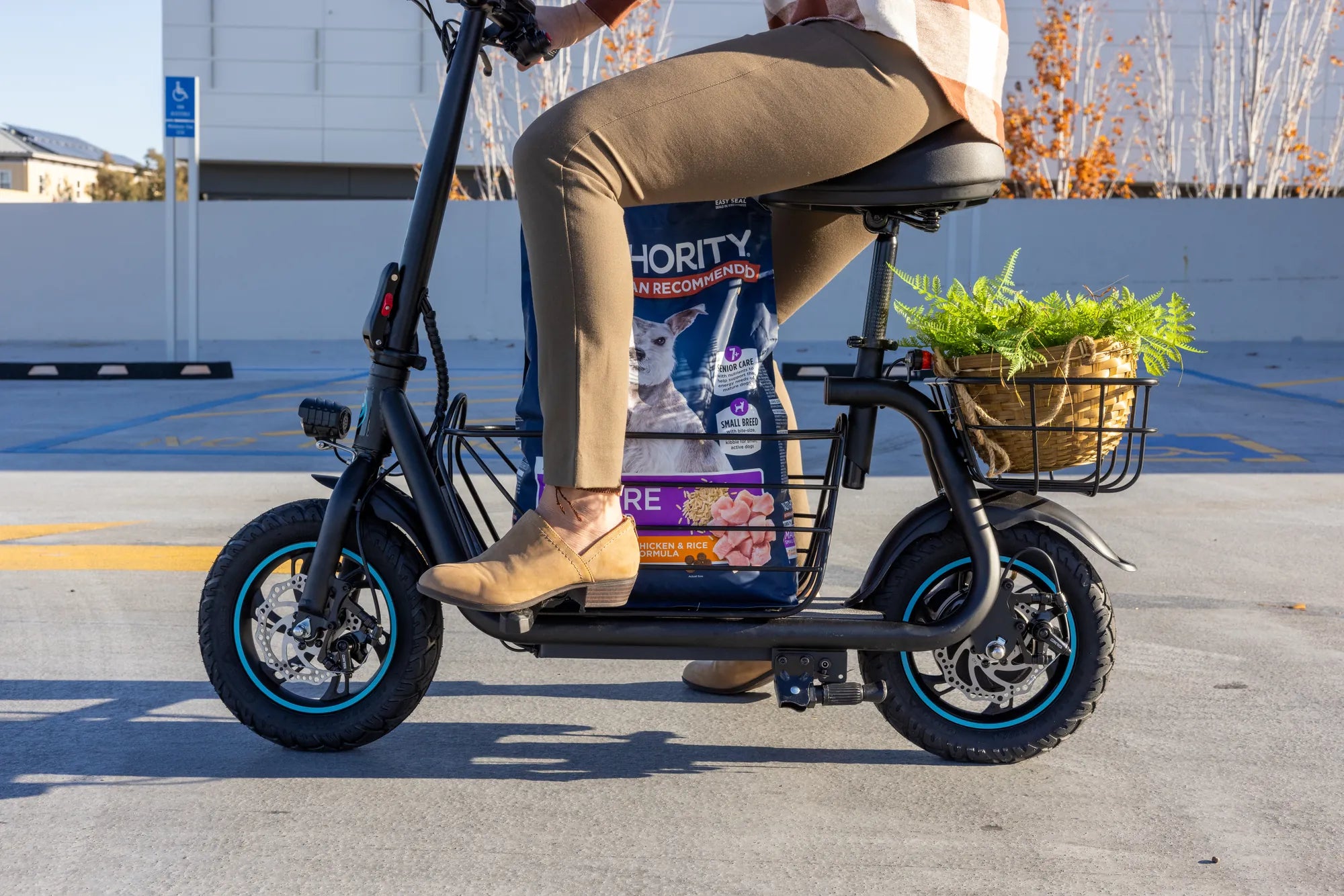
Introduction: Redefining Urban Commutes with Portable Power
Urban transportation is at a crossroads. Congestion, pollution, and the inefficiency of the "last mile"—the gap between transit stops and final destinations—plague city dwellers. Transportable electric scooters have emerged not merely as a novel gadget, but as a pragmatic solution to these systemic problems. By combining electric propulsion with a foldable, lightweight design, they offer a unique blend of personal freedom and public utility.
This article will dissect the anatomy of a truly portable scooter, moving beyond marketing claims to the metrics that matter. We will quantify the tangible benefits, from time and cost savings to environmental impact, providing a clear framework for understanding their transformative potential. Leading brands like Gyroor, trusted by over 100,000 riders across North America and Europe, are setting new standards in safety and reliability, making this technology accessible and dependable.
The future of urban mobility is not about replacing all cars or trains, but about creating a seamless, multi-modal ecosystem. Transportable electric scooters are a critical, personal link in that chain. They represent a shift towards on-demand, efficient, and enjoyable transportation that fits the rhythm of modern city life.
What Makes a Scooter Truly "Transportable"? Key Features to Consider
The term "portable" is often used loosely. For an electric scooter to be genuinely transportable, it must excel in three interconnected areas: weight, compactness, and durable construction. A failure in any one compromises the entire value proposition, turning a convenience into a burden.
True portability is measured by how easily you can carry it up a flight of stairs, lift it onto a bus, or stow it under your desk. It's the difference between a scooter that expands your mobility options and one that limits them. The following sections break down the essential specifications that separate a truly portable companion from a cumbersome vehicle.
Weight and Portability: Finding the Sweet Spot
The ideal weight for a transportable electric scooter strikes a balance between structural integrity and carry-ability. Most commuters find the sweet spot between 25 and 35 pounds (11-16 kg). Scooters under 25 pounds often sacrifice battery capacity or motor power, while those over 35 pounds become a significant load to carry for more than a short distance.
A robust folding mechanism is non-negotiable. It should engage with a single, secure action—often a latch or quick-release lever—and lock firmly in both the riding and folded positions. A reliable mechanism, like those engineered into Gyroor models using reinforced hinges, ensures safety during rides and longevity over thousands of folds. An integrated carrying handle or a balanced design that makes the folded unit easy to grip is a critical, often overlooked, detail for real-world use.
Compactness When Folded: The Storage Factor
Folded dimensions determine where you can take your scooter. Key measurements are height, length, and depth. A highly portable model should approximate the size of a large piece of luggage, typically under 45 inches in height and with a slim profile.
This compactness unlocks multi-modal commuting. You can roll it onto a train, store it in a bus's luggage area, or fit it in a car trunk without consuming all the space. For urban apartment dwellers, the ability to store it in a closet, under a bed, or in a corner without being an obstacle is a major advantage. It transforms the scooter from an external vehicle into a personal tool that can be kept securely indoors.
Durability and Build Quality: Lightweight Doesn't Mean Fragile
A common misconception is that portability necessitates fragility. In reality, a well-designed transportable scooter uses advanced materials to achieve strength without excess weight. The frame is the skeleton; aerospace-grade aluminum alloys are the industry standard for offering an excellent strength-to-weight ratio.
The folding mechanism itself must be engineered to withstand constant stress. Components like the stem clamp and latch are points of failure in poorly made models. Quality manufacturers invest in precision machining and high-grade steel for these critical parts. Additionally, features like IPX5 water resistance—meaning the scooter can withstand water jets from any direction—ensure that a light rain or wet pavement doesn't end your commute. This durability, backed by a comprehensive warranty, is what separates a lasting investment from a disposable toy.
The Tangible Benefits: Why Your Next Commute Should Be on a Transportable E-Scooter
The features outlined above enable a set of powerful, quantifiable benefits. Adopting a transportable electric scooter is not just about using new technology; it's about achieving better outcomes in daily life. These benefits translate directly into saved time, money, and stress, while contributing positively to the urban environment.
By providing a personal, always-available transit option, these scooters fill the gaps in traditional transportation networks. They turn inefficient, frustrating segments of a journey into quick, predictable, and even enjoyable trips. The data supporting this shift is compelling and points toward a more efficient urban future.
Time and Cost Efficiency: Beating Traffic and Saving Money
In congested city centers, scooters often outperform cars and match or beat buses over short to medium distances. A 3-mile cross-town trip can take 30+ minutes in a car during rush hour but only 12-15 minutes on a scooter using bike lanes and pathways. This time savings compounds daily.
The financial argument is equally strong. Consider a daily public transit fare of $5. Over a year (250 commuting days), that's $1,250. A reliable transportable electric scooter from a brand like Gyroor represents a one-time investment that pays for itself often within the first year. Compared to ride-sharing, which can cost $10-$15 per short trip, or car ownership (fuel, insurance, parking, maintenance costing thousands annually), the scooter offers profound savings. The operating cost is negligible—roughly $0.10 to fully charge a battery for a 20-mile range.
Environmental Impact: A Cleaner Commute
Transportation is a leading source of urban greenhouse gas emissions. Short car trips (under 3 miles) are particularly inefficient and polluting. Electric scooters, especially when charged via an increasingly renewable electrical grid, have a dramatically lower carbon footprint.
Studies indicate that the lifecycle emissions of an e-scooter are a fraction of those from a personal automobile, even when accounting for manufacturing and electricity generation. By replacing car trips for short errands and first/last-mile connections, each scooter rider actively reduces local air pollution (NOx, particulates) and carbon emissions. It's a direct, personal contribution to urban sustainability goals, reducing traffic congestion and noise pollution in the process.
Health and Convenience: Stress-Free City Navigation
The mental health benefit of avoiding crowded subways or gridlocked traffic is significant. A scooter commute is often a breath of fresh air—literally and figuratively. It provides a sense of autonomy and control over one's schedule and route that is absent from other transit modes.
While not a vigorous workout, riding a scooter engages core muscles for balance and requires a degree of physical awareness that is healthier than passive sitting. The convenience is unparalleled: door-to-door travel with no waiting for schedules, no searching for parking, and the freedom to take spontaneous detours through a park or along a scenic route. It transforms commuting from a chore into an engaging part of the day.
Choosing Your Ride: A Data-Driven Comparison for Different Needs
Not all transportable electric scooters are created for the same purpose. Selecting the right model requires matching specifications to your primary use case. The following comparison and profiles are based on general performance categories, with Gyroor's lineup serving as a benchmark for reliable, well-engineered options in each segment.
| Feature | Ultra-Compact Commuter | Performance-Portable Hybrid | Key Consideration |
|---|---|---|---|
| Ideal User | Subway/Bus Commuter, Student | Daily Commuter, Longer-Distance Rider | Match weight & range to daily mileage. |
| Target Weight | Under 28 lbs (12.7 kg) | 28-35 lbs (12.7-16 kg) | Lighter is better for carrying. |
| Folded Dimensions | Most compact (e.g., 42" H) | Compact, but slightly larger | Must fit your storage space (desk, trunk). |
| Typical Range | 15-20 miles | 25+ miles | Always assume 70-80% of mfr. claim for real use. |
| Motor Power | 250W-350W | 350W-500W | More power aids hills and acceleration. |
| Suspension | Smaller tires, basic or none | Often includes dual suspension | Essential for comfort on rough pavement. |
| Example Model | Gyroor Z8 Profile | Gyroor F1 Profile | Brand reliability is crucial for safety. |
The Ultra-Compact Commuter (e.g., Gyroor Z8 Profile)
This class prioritizes maximum portability above all else. Models like the conceptual Gyroor Z8 are designed for the rider whose commute involves significant integration with public transit. Weight is kept under 28 pounds through optimized design and a focus on essential features.
The range of 15-20 miles is sufficient for most last-mile scenarios and full shorter commutes. A motor in the 250W-350W range provides adequate power for city flats and gentle inclines. The focus is on a lightning-fast, simple fold and the smallest possible footprint when collapsed, making it effortless to store at work or home. These scooters excel at seamless integration into a multi-modal routine.
The Performance-Portable Hybrid (e.g., Gyroor F1 Profile)
For riders who need portability but don't want to sacrifice performance for longer solo commutes, this hybrid category is ideal. A model like the Gyroor F1 would represent this class, weighing a manageable 30-35 pounds while packing more powerful features.
Key upgrades include a more potent motor (350W-500W) for better hill-climbing and acceleration, a larger battery for an extended range of 25+ miles, and often a dual suspension system paired with slightly larger tires. This provides a noticeably smoother and more confident ride over varied urban terrain, from smooth asphalt to cobblestones or brick paths. It remains portable enough to carry when needed but is robust enough to be a primary vehicle.
Safety and Reliability: Non-Negotiable Features
Regardless of category, certain safety features are imperative. The battery is the most critical component. UL-certification, like that on all Gyroor battery packs, is the gold standard, indicating rigorous testing for electrical, mechanical, and fire safety over hundreds of charge cycles. Never compromise on this.
Braking should be a reliable dual system, typically combining an electronic (regenerative) brake with a mechanical disc or drum brake for confident stopping power in all conditions. Visibility is safety: bright front and rear LED lights, plus reflective side decals, are essential. Finally, a robust warranty—such as Gyroor's 1-year comprehensive coverage—is your guarantee that the manufacturer stands behind the product's durability and will support you if any issues arise.
Beyond the Commute: Expanding the Use Case for Portable Scooters
The utility of a transportable electric scooter extends far beyond the daily grind. Its value is unlocked across various aspects of modern life, from leisure to travel. This versatility is what solidifies its role as a transformative tool rather than a single-purpose commuter device.
Owning a portable scooter changes how you interact with your city and your free time. It lowers the barrier to spontaneous exploration and solves practical problems during travel. Understanding these expanded use cases highlights the full return on investment.
Leisure and Exploration: Unlocking Your City
Weekends and evenings are transformed with a scooter. It enables you to explore parks with dedicated paths, waterfront trails, and neighborhoods that might be just a bit too far to walk to comfortably. The fun and freedom of zipping around without a specific destination rediscover the joy of movement.
It's an excellent social activity for friends or family with their own scooters or e-bikes. Furthermore, it encourages local tourism—visiting that museum a few miles away or trying a new restaurant in a different district becomes a quick, enjoyable trip rather than a planning ordeal involving parking or transit schedules.
Multi-Modal Travel and Tourism
For business trips or vacations, a transportable scooter is the ultimate local mobility hack. It folds compactly to fit in a rental car trunk or can be stored in a hotel room. Upon arrival, you gain immediate, independent mobility to reach meetings, conferences, or tourist sites without relying on expensive taxis or confusing local transit.
It makes you more efficient and gives you the freedom to explore a new city at your own pace, covering much more ground than on foot. This use case demonstrates the scooter's role as a true personal mobility platform, adaptable to any urban environment.
The Practicalities: Warranty, Support, and Peace of Mind
The ownership experience doesn't end at the purchase. Reliable after-sales support is crucial for a product that involves mechanical and electrical systems. A clear, comprehensive warranty that covers the frame, motor, battery, and electronics for a significant period (like one year) is a minimum expectation.
Access to knowledgeable customer service and available replacement parts ensures your scooter remains operational for years. Brands with a established reputation, like Gyroor with its US-based support team, provide peace of mind that you won't be stranded with a non-functioning device. This support structure is a key differentiator from generic or poorly supported options.
Maintenance and Care: Ensuring Longevity and Performance
Proper maintenance is simple but essential for maximizing the lifespan and safety of your transportable electric scooter. A regular, minimal routine can prevent most common issues. Start with tire pressure; keeping pneumatic tires inflated to the manufacturer's recommended PSI (often 40-50 PSI) improves range, ride comfort, and prevents pinch flats.
Regularly check and tighten critical fasteners, especially around the folding mechanism, stem, and handlebars, as vibrations from riding can loosen them over time. Keep the scooter clean by wiping it down with a damp cloth, avoiding direct high-pressure water sprays on electronic components despite water resistance ratings. Listen for new noises and inspect brakes for wear. These few minutes of care pay dividends in reliability.
Battery care is paramount. Avoid consistently draining the battery to 0%; try to recharge when it drops to 20-30%. For long-term storage (over a month), store the scooter with the battery charged to about 60% in a cool, dry place. Using only the manufacturer-provided charger is non-negotiable for safety and battery health. Following these practices with a Gyroor scooter, for instance, ensures its UL-certified battery delivers its full 500+ cycle potential.
Addressing Common Concerns: Your Transportable Scooter Questions Answered
Q: Are transportable electric scooters legal to ride everywhere?
A: Laws vary by city, state, and country. Typically, they are regulated similarly to bicycles. Most jurisdictions require riding in bike lanes or on streets (not sidewalks), mandate a minimum rider age (often 16+), and may have speed limits (e.g., 15-20 mph). Some cities require helmet use. Always check your local regulations before riding.
Q: Is it difficult to learn how to ride one?
A: Most adults become comfortable within 10-30 minutes in a safe, open area like a parking lot. The learning curve is significantly easier than for a bicycle, as balance is more intuitive. Start at the lowest speed setting, practice accelerating and braking gently, and you'll quickly gain confidence.
Q: How do I secure my scooter when I need to leave it outside?
A: The best security is to never leave it unattended in public. Their portability is their security feature—take it with you indoors. If you must leave it, use a high-quality U-lock or heavy-duty chain lock through the frame (not just a wheel) to a fixed object, similar to securing a bicycle. However, the lightweight design makes them a target, so indoor storage is always preferred.
Q: What is the real-world range I can expect?
A> Manufacturer ranges are achieved under ideal lab conditions. Real-world range is affected by rider weight, hills, wind, temperature, and riding style (frequent acceleration uses more power). A good rule of thumb is to expect 70-80% of the advertised range. For a scooter rated for 20 miles, plan for 14-16 miles to ensure you don't run out of power.
Q: How does the warranty handle common issues like a flat tire or brake wear?
A> Warranties typically cover defects in materials and workmanship for specified components (motor, battery, frame, controller). Consumable parts like tires, tubes, brake pads, and grips are generally not covered, as they wear out with normal use. These are usually easy and inexpensive to replace. A reputable brand will provide clear warranty documentation and support for diagnosing any covered issues.
Conclusion: Embracing a Smarter, Freer Way to Move
The evidence is compelling. Transportable electric scooters address the core inefficiencies of modern urban mobility with a practical, personal, and sustainable solution. They are not a futuristic fantasy but a viable, mature technology that saves time, reduces expenses, and enhances quality of life. The key to a positive experience lies in informed selection—prioritizing safety certifications like UL, robust build quality, and a warranty that guarantees support.
By choosing a reliable partner in this mobility revolution, such as Gyroor with its commitment to UL-certified batteries, IPX5 water resistance, and comprehensive customer care, you invest in freedom rather than just a product. The future of urban mobility is flexible, efficient, and personal. It starts with a single, transformative choice: to move on your own terms. Explore the engineering and read the reviews that have made Gyroor a trusted name for over 100,000 riders.
Ready to transform your commute and unlock your city? Browse the full Gyroor collection at gyroorboard.com to find the perfect transportable electric scooter for your journey.
Safety of Electric Scooters: A Complete Pre-Ride Guide
Are Electric Scooters Waterproof from Rain? What You Need to Know