


Why a Travel Scooter is the Perfect Adventure Companion for Kids
A travel scooter for kids is far more than a simple toy. It's a vehicle for exploration, a tool for physical development, and a catalyst for family bonding. The right model transforms mundane errands, park visits, and weekend getaways into exciting journeys of discovery.
These scooters empower children, fostering independence and confidence as they navigate new environments. They encourage outdoor activity, improve balance and coordination, and turn travel time into active playtime. Whether cruising a beach boardwalk or exploring a historic downtown, a travel scooter amplifies the adventure.
Selecting the ideal travel scooter for kids requires understanding specific features that prioritize portability, durability, and safety. This guide is your roadmap to making an informed choice that delivers endless fun and peace of mind. We'll analyze what sets travel models apart and how to ensure every ride is a safe one.
What Makes a "Travel" Scooter Different? Key Features for On-the-Go Families
Standard kids' scooters are designed for neighborhood use. A dedicated travel scooter for kids is engineered for the demands of family life on the move. The core distinction lies in a design philosophy that balances performance with extreme convenience.
These scooters must withstand diverse terrains encountered on trips while being effortless to transport and store. The best models disappear into a car trunk or closet when not in use, yet deploy in seconds for immediate adventure. This duality is their defining characteristic.
Portability & Compact Design
Portability is paramount. A travel scooter must have a lightweight frame, typically constructed from aircraft-grade aluminum, to allow both parents and older children to carry it easily. The folding mechanism is the heart of its design.
Look for one-step, tool-free folding systems that collapse the scooter securely. The folded dimensions should be compact enough to fit in tight spaces. A good travel scooter for kids might fold to a size similar to a large umbrella, making it a hassle-free travel companion for cars, trains, or vacation rentals.
Durability for Diverse Terrains
Travel means unpredictable surfaces. A robust scooter needs a reinforced frame to handle occasional bumps and curb drops. Wheel choice is critical: larger polyurethane wheels (120mm+) offer speed and smoothness on pavement, while air-filled (pneumatic) tires provide essential shock absorption on rougher paths like brick or packed gravel.
Sealed bearings protect the wheel mechanism from sand, dust, and water, ensuring smooth rolling mile after mile. This durability ensures your investment lasts through countless family vacations and grows with your child.
Ease of Assembly & Adjustment
A true travel scooter arrives nearly fully assembled. The goal is minimal setup—often just attaching the handlebars with a single clamp or quick-release lever. Equally important is tool-free height adjustment.
An adjustable handlebar stem allows the scooter to adapt to your child's growth or accommodate different siblings. This extendable feature, often with a simple push-button mechanism, maximizes the scooter's lifespan and utility, making it a versatile piece of travel gear.
Prioritizing Safety: Non-Negotiable Features for Peace of Mind
Fun is only possible with a foundation of safety. When selecting a travel scooter for kids, certain features are non-negotiable. They form a critical system that protects your child as they explore.
Safety engineering should be obvious in the scooter's design, from its stance on the ground to how it slows down. Never compromise on these core elements for the sake of a lower price or flashy aesthetics.
Stable Deck & Responsive Braking Systems
A wide, textured deck provides a stable platform for your child's feet, improving control and confidence. The deck should be low to the ground for a lower center of gravity, enhancing stability, especially for beginners.
The braking system must be intuitive and effective. A rear fender brake (step-down brake) is excellent for younger children as it uses natural weight shift. For older, faster riders, a hand-operated brake (often on the rear wheel) offers more controlled, gradual stopping power. Some advanced models feature disc brakes for all-weather reliability.
Reliable Steering & Control
Handlebar design directly impacts control. Padded grips prevent hand fatigue and improve grip. The steering mechanism should be responsive but not twitchy. For very young children (3-5 years), a lean-to-steer three-wheel design helps with balance by linking turning to body lean.
For older kids, traditional two-wheel steering builds coordination. Ensure all clamps and locking mechanisms for the handlebar and stem are robust and easy for adults to secure tightly, preventing any wobble or collapse during use.
Visibility Enhancements
Travel often means riding in new environments, sometimes near roads or during longer days that stretch into dusk. Enhanced visibility is a crucial safety layer. Look for scooters with built-in reflective stickers or decals on the deck and stem.
Some models feature LED wheel lights that illuminate with motion, making the child highly visible. Parents can also add aftermarket clip-on lights or reflective ankle bands. Ensuring your child is seen is a simple step that dramatically increases safety during family adventures.
The Gyroor Advantage: Engineered for Family Adventures
Gyroor applies its extensive expertise in adult electric mobility to create superior kids' scooters. As a leading electric scooter and e-bike brand trusted by over 100,000 riders, Gyroor's philosophy centers on safety, durability, and reliable performance—principles directly translated to their kids' travel products.
The brand's commitment to UL-certified batteries and IPX5 water-resistant designs in its electric range reflects a broader dedication to quality and safety standards. This engineering rigor ensures that every Gyroor product, including non-motorized scooters, is built to last and perform reliably.
Built with Trusted Technology
Gyroor scooters for kids benefit from the same robust construction standards found in their adult models. This includes the use of high-grade aluminum alloys for lightweight strength, precision sealed bearings for smooth rolling, and reinforced stress points at the folding mechanism and handlebar clamp.
This focus on over-engineering for safety means parents can trust the scooter's integrity. The one-year warranty offered by Gyroor is a testament to their confidence in the product's longevity and a guarantee of support for your family's adventures.
Focus on Long-Lasting Fun
By using rust-resistant components, abrasion-resistant finishes, and wheels rated for hundreds of miles, Gyroor designs scooters that are investments. They are built to endure daily use, survive being packed for trips, and handle the energetic riding of kids.
This durability ensures the scooter remains a source of joy across multiple seasons and can often be passed down to younger siblings. It’s a product designed not for disposable play, but for creating lasting memories through active, outdoor exploration.
Choosing the Right Model: A Parent's Checklist by Age & Adventure Type
Selecting the perfect travel scooter for kids hinges on matching the scooter's specifications to your child's age, skill level, and your family's typical travel style. Use this data-driven checklist to narrow your options.
| Age Group | Key Features | Ideal Use Cases | Weight Limit Guidance |
|---|---|---|---|
| Ages 3-5: First Adventures | 3-wheel design (lean-to-steer or two rear wheels), low deck height (<2"), small wheel diameter (100-120mm), lightweight frame (<5 lbs), no hand brake required. | Smooth sidewalks, park paths, indoor arenas, short distances. Focus on stability and balance building. | 44 lbs (20 kg) minimum. Ensures scooter is sturdy enough for beginner use. |
| Ages 6-9: Exploring Further | 2-wheel design, larger wheels (120-150mm) for bumps, adjustable handlebars, rear fender or hand brake, wider deck, moderate weight (6-8 lbs). | Beach town cruising, long park trails, zoo visits, suburban bike paths. Balances speed with control. | 110 lbs (50 kg) minimum. Accommodates growth and more dynamic riding. |
| Ages 10+: Rugged Explorers | Large, air-filled tires, advanced hand/disc brake, high-weight-capacity frame, alloy or steel construction, longer deck for speed stance. | Campgrounds, paved trail networks, boardwalks, urban exploration. Handles varied terrain at higher speeds. | 176 lbs (80 kg) or more. Supports older kids and teen riders. |
Remember, your child's maturity and physical coordination are as important as their age. A cautious 8-year-old might thrive on a stable three-wheeler, while a proficient 6-year-old could be ready for a two-wheel model. Always lean towards safety and controllability.
Pre-Adventure Prep: Safety Gear and Riding Etiquette
The scooter itself is only one component of a safe adventure. Proper preparation involving protective gear and clear rules is essential. This preparation ensures fun isn't interrupted by preventable accidents.
Essential Safety Gear
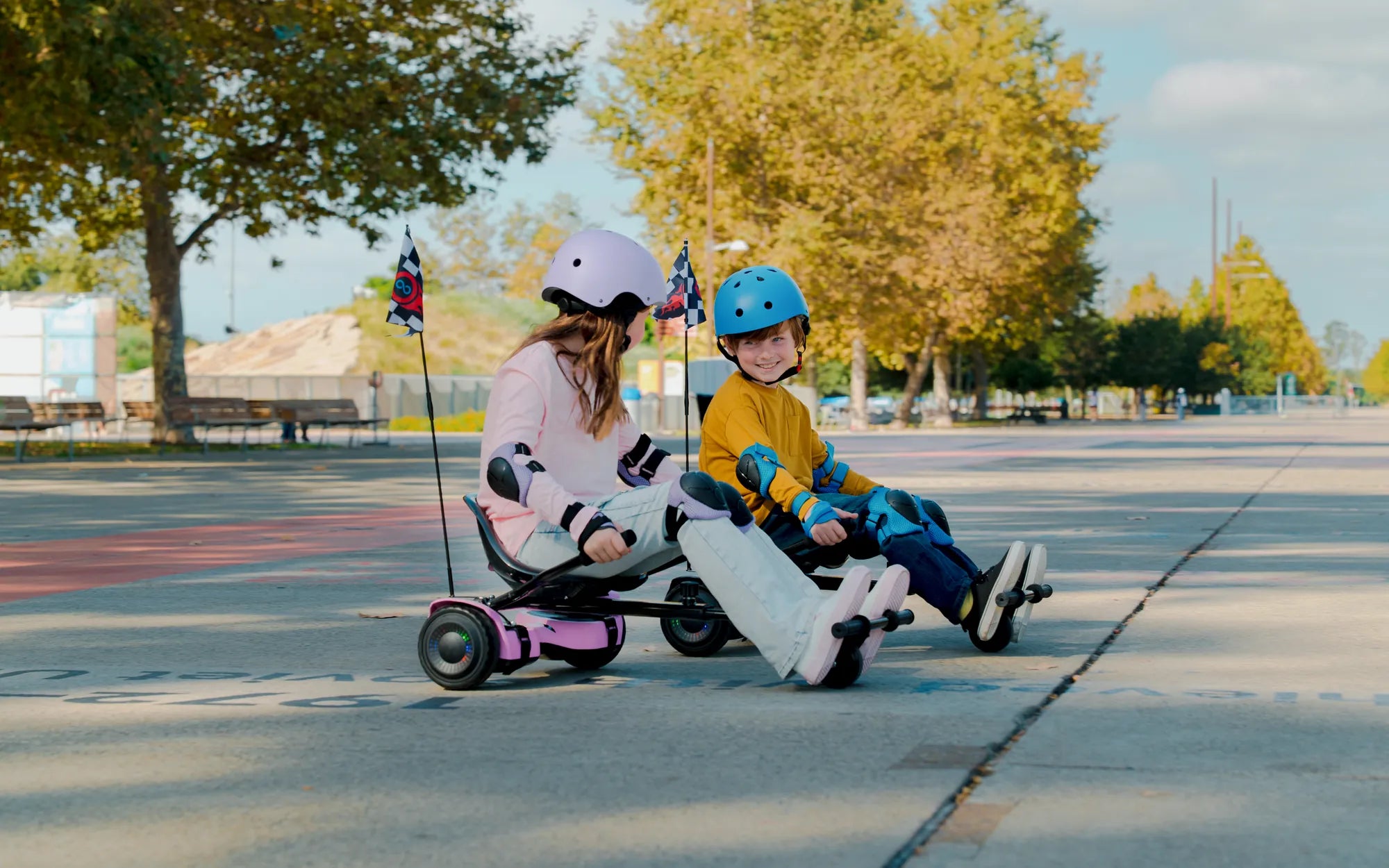
A CPSC-certified helmet is an absolute mandate for every ride, regardless of distance or location. It must fit snugly, sitting level on the head and covering the forehead. Involve your child in choosing a helmet they like—they'll be more willing to wear it.
Knee and elbow pads are highly recommended, especially for beginners or when riding on unfamiliar, potentially rougher terrain. Closed-toe, sturdy shoes (like sneakers) are required to protect feet and provide proper grip on the scooter deck. Never allow riding in sandals or flip-flops.
Teaching Travel Riding Etiquette
Establish rules before the first ride in a new place. Drill the basics: always yield to pedestrians, stay on designated paths or the right side of shared paths, and avoid crowded areas. Set a "walking-only" rule for sidewalks directly in front of shops or in dense crowds.
Establish hand signals for stopping and turning, and set clear boundaries on how far ahead they can ride. A good rule is "always in sight." Explain the importance of scanning for driveway exits, curbs, and road crossings. This etiquette keeps them safe and makes them respectful trail users.
Maintenance and Care: Keeping Your Travel Scooter Adventure-Ready
Regular, simple maintenance ensures your travel scooter for kids remains safe, performs well, and has a long lifespan. A few minutes of care after trips can prevent major issues.
After any ride, especially near sand or water, wipe down the scooter with a dry cloth to remove debris and moisture. Periodically check that all nuts, bolts, and quick-release levers are tight. A loose handlebar or folding latch is a significant safety hazard.
Monthly, inspect the wheels for wear and spin them to listen for grinding sounds from the bearings. Check brake pads for wear and test brake function before each outing. For scooters with air-filled tires, maintain the recommended PSI. A small bike pump is a valuable addition to your travel kit.
Store the scooter in a dry place, preferably folded. Avoid leaving it outdoors where weather can degrade components. This basic care routine ensures the scooter is always ready for the next family adventure.
FAQ: Your Questions About Kids' Travel Scooters, Answered
Q: What is the ideal weight limit to look for?
A: Always choose a scooter with a maximum weight limit significantly higher than your child's current weight. This provides a safety buffer, accounts for growth, and ensures the scooter is over-engineered for durability. A limit of 110+ lbs is good for elementary-age kids, allowing years of use.
Q: Can these scooters be used on gravel or dirt paths?
A: Most urban travel scooters are designed for paved surfaces. However, models with larger, air-filled (pneumatic) tires can handle hard-packed gravel or smooth dirt paths reasonably well. Avoid loose gravel, sand, or muddy trails, as they offer poor traction and can damage bearings.
Q: Are foldable scooters as sturdy as non-folding ones?
A> High-quality foldable scooters from reputable brands like Gyroor use robust locking mechanisms and reinforced joints, making them just as sturdy as non-folding models for their intended use. The key is the quality of the folding hardware. Always check reviews and ensure the latch locks securely with no play or wobble.
Q: How do I maintain the scooter's bearings and brakes?
A> For sealed bearings, little maintenance is needed beyond keeping them clean and dry. If they become gritty, they may need replacement. For brakes, regularly check that the hand brake lever engages smoothly and the rear fender brake isn't bent. Clean brake pads if they become dirty and replace them if worn thin.
Q: My child is tall for their age. How do I choose?
A> Prioritize handlebar height and deck size over age recommendations. A taller child needs a scooter with a higher maximum handlebar adjustment and a longer deck for comfortable footing. Refer to the specific model's size specifications, not just the age range.
Embarking on a World of Discovery
A well-chosen travel scooter for kids unlocks a new dimension of family travel, turning simple outings into expeditions and fostering a lifelong love for active exploration. By prioritizing the key pillars of portability, durability, and unwavering safety, you invest in more than a product—you invest in shared experiences, confidence-building, and joyful memories.
The journey begins with informed selection. Use this guide to find a scooter that matches your child's spirit of adventure and your need for reliability. Remember, the best travel scooter is the one that gets used constantly, safely accompanying your family from local parks to distant vacation spots.
Ready to find the perfect companion for your next adventure? Explore a range of thoughtfully designed options built for real family life. Browse the full Gyroor collection at gyroorboard.com and equip your young explorer for a world of fun and safe adventures.
Is Hoverboard Allowed in Airplane? The Complete 2024 Travel Guide
Christmas Gift for 16 Year Old Boys: Top Ideas They'll Love