


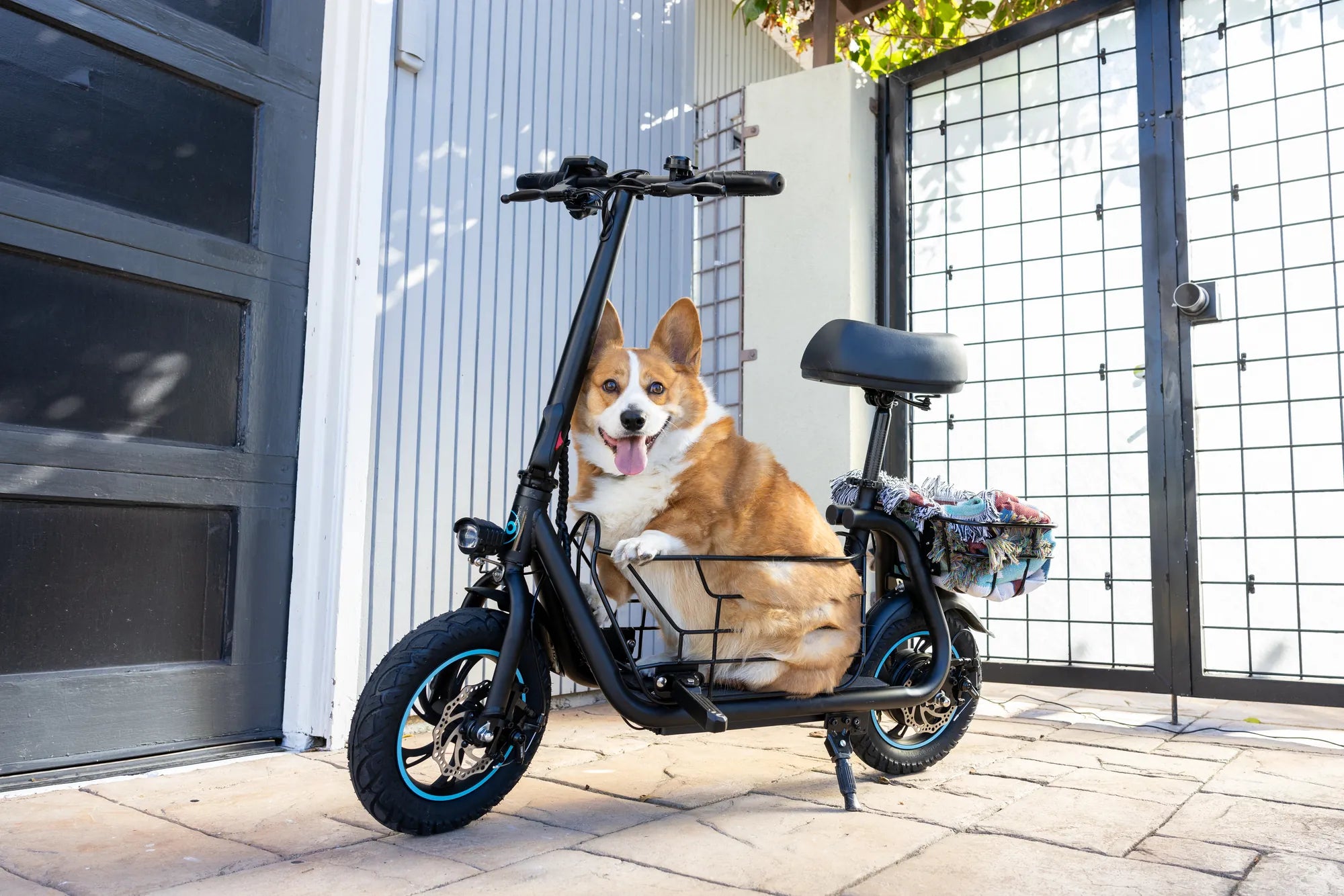
Navigating the electric scooter market, you'll encounter the term "V8 scooter." This isn't a reference to a car engine, but a common model designation that has evolved into a category representing a sweet spot for urban commuters. A V8 scooter typically signifies a robust, single-motor electric scooter engineered for daily reliability, offering a balanced mix of power, range, and portability that excels on city streets. This guide will dissect the key features, compare it to other scooter classes, and provide essential maintenance and safety insights to ensure you make an informed, long-term investment in your daily ride.
Introduction to the V8 Scooter Category
The "V8" moniker in electric scooters often originates from specific model names but has become shorthand for a distinct class of commuter vehicles. These scooters are designed to bridge the gap between lightweight, short-range models and overpowered, heavy performance machines. For the average urban rider covering 5-15 miles daily, a V8 scooter represents a pragmatic choice focused on dependable performance rather than extreme specs.
Understanding this category is crucial because it targets the core needs of daily transportation: getting to work, class, or errands reliably and safely. The confusion around the name stems from its automotive allusion, but in the micro-mobility world, it signals a focus on balanced engineering. Manufacturers like Gyroor utilize such designations to indicate a tier of scooter built with commuter durability in mind, featuring enhanced batteries, sturdier frames, and more consistent real-world performance.
When evaluating a V8 scooter, you're not just buying a product code; you're investing in a transportation solution designed for consistent use. This guide will equip you with the knowledge to assess specifications critically, understand the importance of certifications, and recognize the value of a comprehensive warranty from a trusted brand with a proven track record across North America and Europe.
Key Features to Expect in a Reliable V8 Scooter
A reliable V8 scooter is defined by a specific set of features that prioritize safety, durability, and practical performance. These features are non-negotiable for a vehicle used in daily commuting, where consistency and rider safety are paramount. The build quality should inspire confidence, with every component from the deck to the handlebars engineered for repeated stress.
Beyond basic functionality, premium V8-class scooters incorporate thoughtful design elements. These include intuitive control panels, effective lighting systems for visibility, and ergonomic handle grips. The folding mechanism should be robust and simple to operate with one hand, a critical feature for multi-modal commuters who need to transition between scooter and bus or train seamlessly.
Motor Power and Speed Performance
The heart of any V8 scooter is its motor. Typically, this class features a single, rear-hub motor ranging from 350 to 500 watts of nominal power. This power band is strategically chosen: it provides ample torque for safe acceleration in traffic and sufficient power to tackle common urban inclines of 10-15% grades without straining the system or draining the battery excessively.
In terms of speed, a well-engineered V8 scooter will have a top speed governed between 18 and 25 mph (29-40 km/h). This range is optimal for urban environments, aligning with bicycle lane speeds and keeping the rider within a safe velocity margin. The acceleration curve should be smooth, not jerky, allowing for controlled take-offs from stoplights. A scooter like the Gyroor V8 exemplifies this, offering a 450W motor that delivers a stable 19 mph top speed, perfectly suited for navigating city corridors efficiently and safely.
Battery Range and Charging Practicalities
Battery performance is where the V8 scooter category truly distinguishes itself from budget models. Expect a high-capacity lithium-ion battery pack, typically between 36V and 48V, with capacities ranging from 10Ah to 15Ah. Under real-world conditions—accounting for rider weight, hills, stop-and-go traffic, and temperature—this translates to a reliable range of 15 to 25 miles on a single charge.
Charging time is a critical practical consideration. A quality V8 scooter will recharge from empty to full in 4 to 6 hours using a standard wall outlet. The most important factor, however, is battery safety and longevity. This is where UL certification becomes non-negotiable. A UL-certified battery pack, like those used across Gyroor's lineup, has undergone rigorous testing for over 500 charge cycles, thermal stability, and electrical safety, drastically reducing any risk of fire or failure and protecting your investment long-term.
Portability: Weight and Folding Mechanism
Portability is a key compromise in the V8 class. These scooters are not ultra-lightweights; they typically weigh between 35 and 45 pounds (16-20 kg). This weight is a direct result of the larger battery and more robust frame, components essential for extended range and durability. The engineering challenge is to make this weight manageable through an excellent folding design.
A superior folding mechanism uses a secure latch or locking collar that allows the scooter to fold near the stem base, collapsing the handlebars down to the deck. The best designs enable this action in under 3 seconds without requiring tools. Once folded, the compact form factor should allow it to be stored under a desk, in a closet, or carried onto public transit without major inconvenience, making it a true last-mile solution.
Build Quality and Safety Ratings
Build quality separates a season-long toy from a year-round commuter tool. The frame should be constructed from aerospace-grade aluminum or reinforced steel, capable of supporting a maximum rider weight of 250-300 pounds. Welds should be clean and solid, with no sharp edges or points of obvious flex during riding.
Safety is multi-faceted. The braking system should be a dual setup, commonly featuring a rear disc brake for mechanical stopping power and a front electronic regenerative brake for smooth speed modulation. Tire choice is critical—either 8.5-inch or 10-inch air-filled (pneumatic) tires provide the necessary shock absorption and traction. Finally, an IPX5 water-resistance rating is essential. This certifies the scooter can withstand low-pressure water jets from any direction, making it safe to ride on wet roads or in light rain, a must for any reliable daily commuter.
V8 Scooter vs. Other Commuter Classes: Finding Your Fit
Choosing the right scooter requires understanding the landscape. The V8 scooter occupies a strategic middle ground. To determine if it's your ideal fit, a direct comparison with both lighter and more powerful categories is essential. Your decision should hinge on primary use case, required range, terrain, and how much weight you're willing to manage.
The following table provides a clear, data-driven comparison to illustrate these trade-offs:
| Feature | V8 Scooter (e.g., Gyroor V8) | Lightweight / Last-Mile Scooter | High-Performance / Dual Motor Scooter |
|---|---|---|---|
| Typical Weight | 35-45 lbs (16-20 kg) | Under 30 lbs (13.6 kg) | 55-75+ lbs (25-34 kg) |
| Motor Power | 350W - 500W (Single) | 250W - 350W (Single) | 500W - 1000W+ per motor (Dual) |
| Real-World Range | 15-25 miles (24-40 km) | 8-12 miles (13-19 km) | 25-50+ miles (40-80 km) |
| Top Speed | 18-25 mph (29-40 km/h) | 15-18 mph (24-29 km/h) | 25-40+ mph (40-64 km/h) |
| Ideal Use Case | Full urban commute (5-15 mi), daily errands | Short trips, public transit integration, car trunk portability | Long-distance commuting, off-road trails, thrill-seeking |
| Portability | Foldable, manageable for short carries & storage | Highly portable, easy to carry for extended periods | Often bulky, difficult to carry, less practical for multi-modal transit |
| Approx. Price Point | Mid-Range | Entry-Level to Mid-Range | Premium |
Compared to Lightweight (Under 30 lbs) Models
Lightweight scooters prioritize extreme portability above all else. They are ideal for the "last-mile" segment of a journey—think from the subway station to the office. Their lower weight (often under 30 lbs) makes them easy to carry up stairs or onto crowded trains. However, this comes with significant trade-offs: smaller batteries yielding shorter ranges (often under 12 miles), less powerful motors that struggle on hills, and generally less robust construction that may not withstand daily, year-round commuting.
The V8 scooter asks you to accept 10-15 more pounds of weight in exchange for a dramatically more capable machine. For a commuter whose entire journey is 5-15 miles, the V8's longer range eliminates range anxiety. Its more powerful motor handles hills with ease, and its sturdier build, including often larger air-filled tires, provides a safer, more comfortable ride over varied pavement. If your commute is beyond a very short distance, the V8's trade-offs heavily favor practicality and safety over minimal weight.
Compared to High-Performance (Dual Motor) Models
High-performance dual-motor scooters are built for speed, torque, and often off-road capability. With two motors often exceeding 500W each, they offer exhilarating acceleration, top speeds over 30 mph, and exceptional hill-climbing power. They frequently feature ultra-large batteries for extreme range. However, this performance comes at a steep cost: weight (frequently over 60 lbs), price, and significantly reduced portability.
For the vast majority of urban commuters, a V8 scooter provides more than enough performance without the downsides. The single 450W motor in a V8-class scooter delivers legal and safe commuting speeds. The weight remains manageable for carrying up a few steps or storing in a trunk. Crucially, the price point is often half that of a premium dual-motor model. Unless your commute involves steep off-road trails or you prioritize speed above all else, the V8 scooter represents a more rational, cost-effective, and portable solution for city navigation.
Maximizing Your Ride: Maintenance and Warranty Insights
Owning a V8 scooter is a long-term investment in your mobility. Protecting that investment requires a two-pronged approach: proactive, routine maintenance performed by the rider, and a strong manufacturer's warranty that covers defects. Neglecting either can lead to premature wear, safety issues, or unexpected repair costs. A disciplined maintenance routine is simple and takes only minutes but can extend the functional life of your scooter by years.
The cornerstone of good scooter care is understanding that it is a vehicle with moving parts, electrical systems, and a sophisticated battery. It is not an appliance. Treating it with basic mechanical respect will yield reliable service. Pair this personal diligence with the security of a comprehensive warranty from a reputable brand, and you have a formula for a stress-free ownership experience that keeps you moving efficiently.
Routine Care for Longevity
Consistent, simple checks will keep your V8 scooter running smoothly. Develop a pre-ride routine that takes 60 seconds:
- Tire Pressure: Check pneumatic tires weekly with a gauge. Maintain the PSI recommended in the manual (usually 40-50 PSI). Proper inflation prevents pinch flats, improves range, and ensures better handling and braking.
- Brake Inspection: Monthly, check brake pad wear and test brake lever tension. For disc brakes, ensure the rotor is not bent and listen for excessive grinding. Adjust cable tension if levers feel loose.
- Bolt Tightening: Every few months, use the provided tools to check critical fasteners: stem folding mechanism, handlebar clamp, and wheel axles. Vibration from riding can loosen them over time.
- Cleaning: Wipe down the scooter with a damp cloth after riding in wet or dirty conditions. Avoid high-pressure hoses. Ensure charging port covers are securely closed when not in use.
Battery care is paramount. For longest life, avoid draining the battery to 0% regularly. Try to recharge when it drops to 20-30%. Store the scooter in a cool, dry place, and if storing for more than a month, leave the battery charged at around 50-60%.
The Importance of a Comprehensive Warranty
The warranty is your legal safeguard against manufacturing defects and a key indicator of brand confidence. A robust warranty for a V8 scooter should cover at least one full year for the entire vehicle, with specific coverage for the battery and motor. Be wary of warranties that are overly complicated or require shipping the scooter internationally at your expense for service.
A brand like Gyroor offers a clear 1-year warranty on the whole scooter, which is standard for reputable manufacturers. This warranty should cover failures in materials and workmanship under normal use. More importantly, support should be accessible, with US-based customer service and clear troubleshooting guides. The peace of mind that comes from knowing a company with over 100,000 riders stands behind its product is invaluable. It transforms your purchase from a transactional gamble into a supported investment in your daily life.
Frequently Asked Questions (FAQ)
What does "V8" mean in an electric scooter?
In electric scooters, "V8" is primarily a model name used by various brands to denote a specific, balanced class of commuter scooter. It is not an engine specification. It has become a common category term for a robust, single-motor scooter designed for reliable daily urban transportation, typically featuring a motor between 350W-500W, a range of 15-25 miles, and a weight of 35-45 lbs. Think of it as a designation for a well-equipped, practical commuter vehicle.
Is a V8 scooter fast enough for my 8-mile commute?
Absolutely. A V8 scooter is ideally suited for an 8-mile (13 km) commute. With a typical real-world range of 15-25 miles, you will have a comfortable buffer for round-trip travel even with headwinds or minor detours. Its speed of 18-25 mph means your 8-mile commute will take approximately 20-25 minutes in urban conditions, comparable to or faster than a car during rush hour traffic, without the cost of parking or fuel.
Can a V8 scooter handle wet roads or light rain?
A properly built V8 scooter with an IPX5 water-resistance rating is designed to handle wet roads and light rain safely. The IPX5 rating certifies the scooter's electronics are protected against water jets from any direction. However, this does not mean it is submersible or suitable for heavy rain, deep puddles, or flooding. Always exercise increased caution in wet conditions: reduce speed, brake earlier and more gently, and avoid painted road markings and metal surfaces which become extremely slippery.
How important is a UL-certified battery?
UL certification for a scooter battery is critically important and non-negotiable for safety. It signifies the battery pack has been independently tested by Underwriters Laboratories (a global safety science leader) for electrical, mechanical, and thermal safety. This includes tests for overcharging, short-circuiting, and impact. A UL-certified battery, like those used by Gyroor, drastically reduces the risk of fire or catastrophic failure, ensuring not only your safety but also the long-term reliability and performance of your scooter through 500+ charge cycles.
What should I do if I have a technical issue?
First, consult the user manual for troubleshooting steps—many common issues (like error codes or brake adjustments) have simple fixes. If the issue persists, contact the manufacturer's customer support directly. A reputable brand will have accessible support channels (email, phone, chat). Before purchasing, verify the brand's support structure. Gyroor, for instance, provides support to its large North American and European customer base. Having clear warranty terms and a responsive support team ensures you can resolve technical issues efficiently, minimizing downtime on your commute.
Conclusion: Is a V8 Scooter Right for You?
The V8 scooter emerges as the rational champion for the pragmatic urban commuter. If your primary need is a reliable, safe, and efficient vehicle for daily trips between 5 and 15 miles, on city streets with occasional hills, this category is engineered for you. It forgoes the extreme portability of lightweight models and the excessive power (and weight) of performance scooters to deliver a perfectly balanced package. The combination of a robust motor, a UL-certified battery with substantial range, a water-resistant build, and a practical folding design makes it a versatile tool for modern city life.
Your decision should hinge on valuing dependable daily performance over niche extremes. The data shows that for the majority of riders, the V8 scooter's blend of features represents the optimal point of utility. By choosing a model from a trusted brand with a clear warranty and proven safety certifications, you invest in years of stress-free, cost-effective transportation. It's a choice that prioritizes getting to your destination safely and reliably, day after day.
Ready to explore a V8 scooter built with commuter-focused engineering and safety-first components? Browse the full Gyroor collection at gyroorboard.com to find a model that matches your range, terrain, and lifestyle needs, backed by the confidence of UL-certification and a comprehensive 1-year warranty.
Trike Mini Bike Frame: The Ultimate Guide to Design, Builds, and Buying
e bike accessories near me: Your Complete 2024 Local Shopping Guide