


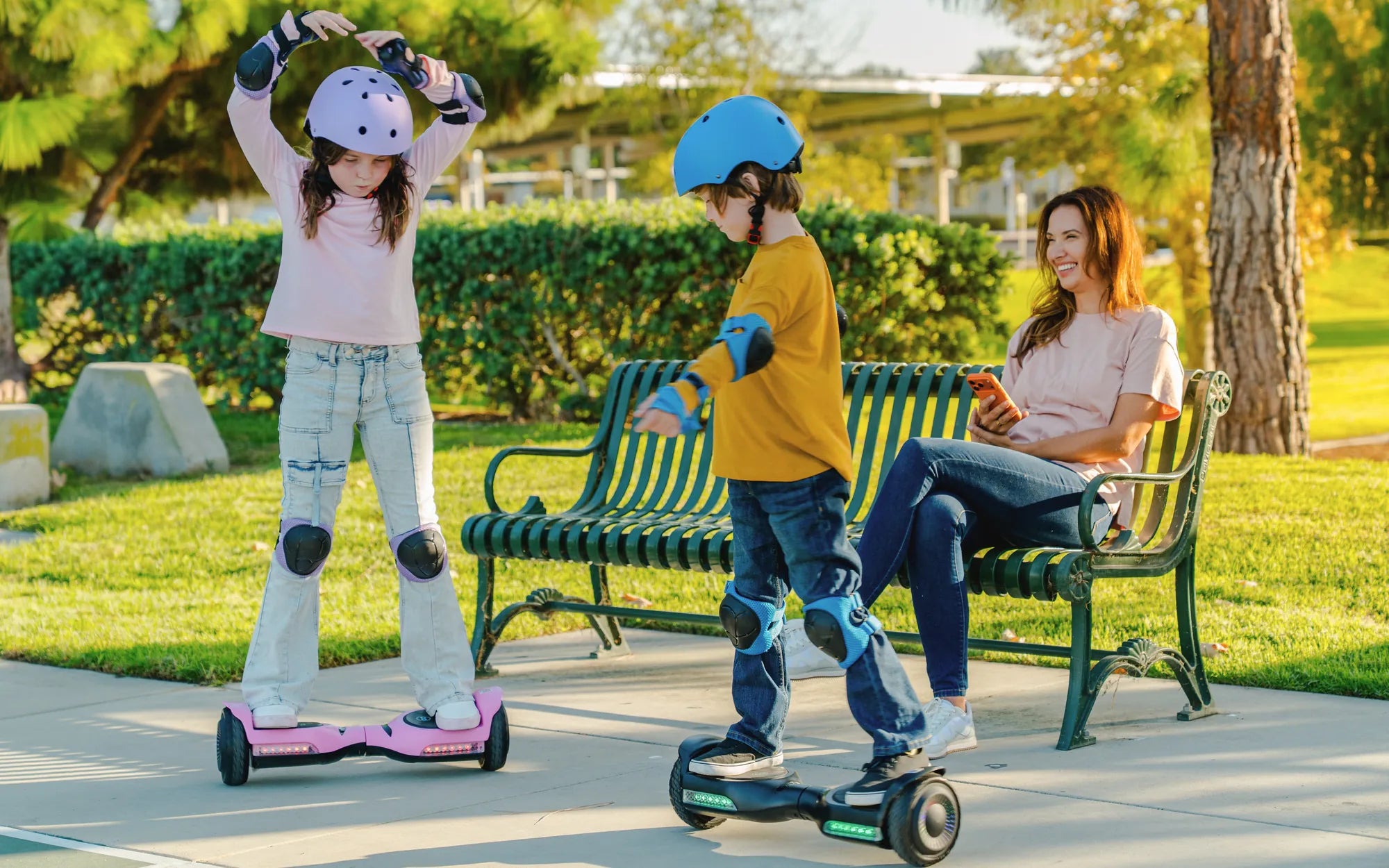
Introduction to Hoverboards: Beyond the Hype
So, what is a hoverboard? Despite the futuristic name, a modern hoverboard is a two-wheeled, self-balancing electric scooter. It uses gyroscopic sensors and electric motors to respond to your body's lean, providing an intuitive and fun mode of personal transport. This guide will demystify the technology, highlight essential safety features, and provide a clear framework for choosing the right model for your needs.
The device has evolved significantly from its early, sometimes problematic, iterations. Today's models are sophisticated personal electric vehicles (PEVs) designed for commuting, recreation, and everything in between. Understanding what a hoverboard offers requires looking past marketing to the core specifications and certifications that define a quality, reliable product.
As a leader in electric personal transport, Gyroor has been at the forefront of this evolution. Trusted by over 100,000 riders across North America and Europe, the brand focuses on integrating advanced safety features with robust performance. This guide will use that expertise to help you navigate your purchase.
You will learn to decode technical specs, prioritize safety certifications, and identify which features align with your primary use case. Whether for a daily urban commute, off-road adventure, or a first-time rider, making the right choice ensures safety, durability, and maximum enjoyment.
Understanding Hoverboard Technology & Safety Standards
The core of what a hoverboard does lies in its self-balancing system. Internal gyroscopes and tilt sensors constantly monitor the board's angle. When you lean forward, these sensors signal the electric motors in each wheel to spin forward, propelling you. Leaning back signals the motors to reverse or slow down.
This electromechanical system requires precise calibration and high-quality components. The motherboard acts as the brain, processing sensor data thousands of times per second to make micro-adjustments that keep you upright. The quality of these components directly impacts ride smoothness, responsiveness, and safety.
Safety is non-negotiable. The UL 2272 certification is the global benchmark for fire safety. It rigorously tests the electrical system, battery pack, and charger for overcharge, short circuit, and mechanical abuse. A hoverboard without this certification poses a significant risk. Every Gyroor model features a UL-certified battery pack tested for over 500 charge cycles.
Durability is another key factor, indicated by Ingress Protection (IP) ratings. An IPX5 rating, common on quality models like those from Gyroor, means the unit is protected against water jets from any direction. This allows riding on damp pavement or through puddles without damaging internal electronics, a crucial feature for real-world use.
Key Features to Compare When Choosing a Hoverboard
Selecting the right model means comparing a clear set of specifications. These features determine where you can ride, how fast, and for how long. Ignoring them can lead to a disappointing or unsafe experience.
Wheel Size & Type: This is the primary determinant of ride comfort and terrain capability. Smaller 6.5" solid rubber wheels are common on basic models and are only suitable for very smooth, flat surfaces. Larger 8.5" wheels offer better shock absorption for sidewalks and paved paths. For true versatility, 10" or larger pneumatic (air-filled) tires are essential for grass, gravel, and uneven terrain.
Motor Power & Speed: Motors are typically rated in watts (W), with power split between the two wheels. A dual 350W motor setup is standard for general use, offering speeds up to 10 mph. More powerful setups, like dual 500W or 700W motors, provide greater torque for climbing hills (up to 15-20 degrees) and higher top speeds, often around 12-15 mph.
Battery & Range: Battery capacity, measured in watt-hours (Wh) or ampere-hours (Ah), dictates your range. A standard 36V, 4.0Ah battery may offer 7-10 miles per charge, while a premium 6.5Ah or 7.5Ah battery can extend that to 12-15 miles. Real-world range is affected by rider weight, terrain, and speed. Always verify the battery's certification (UL 2272) first.
Weight Capacity & Portability: Manufacturers specify a maximum weight limit, typically between 165 lbs and 265 lbs. Exceeding this stresses the motors and frame. Portability, determined by the board's weight (often 25-30 lbs), is key if you plan to carry it indoors or onto public transport.
Additional Features: Bluetooth speakers, RGB LED wheel lights, and companion apps for speed control or diagnostics are popular add-ons. While fun, they should never be prioritized over core performance and safety specs.
Hoverboard Types: Matching the Model to Your Lifestyle
Not every hoverboard is built for the same purpose. Categorizing them by primary use case simplifies the decision.
The Urban Commuter: This user needs reliability, decent range (10+ miles), and portability. Key features include 8.5" or 10" solid rubber wheels for pavement, a sleek design, and a battery large enough for a round-trip commute. A model like the Gyroor S5, with its 10" tires and up to 12-mile range, fits this profile perfectly, offering a smooth ride on city streets.
The Off-Road/All-Terrain Explorer: For trails, grass, or dirt paths, you need robust construction and large pneumatic tires. Look for models with dual motors of 500W or more, high ground clearance, and an IPX5 or higher water resistance rating. These features provide the necessary torque and shock absorption for uneven ground.
The Beginner & Family-Friendly Model: Safety and ease of use are paramount. Features often include a beginner or "learning" mode that limits speed, wider foot pads for stability, and robust bumper protection. These models prioritize a gentle learning curve and durable construction to withstand the occasional bump or fall.
The Gyroor Advantage: Built for Performance and Peace of Mind
In a market with varying quality, Gyroor distinguishes itself through an engineering-first approach focused on safety and durability. This commitment translates into tangible benefits for the rider.
The foundation is battery safety. All Gyroor hoverboards use high-density lithium-ion battery packs that are not only UL 2272 certified but are also subjected to rigorous in-house testing. This ensures stability over hundreds of charge cycles, directly addressing the primary safety concern associated with early hoverboards.
Durability is engineered into the frame and electronics. The IPX5 water-resistant rating isn't just a claim; it's a design standard that allows riders to confidently navigate wet conditions. Coupled with a reinforced frame that can support riders up to 265 lbs, this builds a product meant to last.
Finally, Gyroor backs its products with a comprehensive 1-year warranty and accessible customer support. This peace of mind is critical when investing in a personal electric vehicle. The brand's 4.5/5 average customer rating across North America and Europe reflects a proven track record of reliability and customer satisfaction.
Practical Rider's Guide: Usage, Maintenance, and Best Practices
Owning a hoverboard is about more than the purchase. Proper use and care maximize safety, longevity, and enjoyment.
Learning to Ride: Start in a flat, open area like an empty parking lot. Use a support (a wall or a friend) to step onto the board. Keep your gaze forward, not at your feet. Gently lean forward to move; subtle shifts are key. Always wear a helmet, knee pads, and wrist guards during the learning phase and beyond.
Daily Maintenance: For models with pneumatic tires, check tire pressure monthly. Wipe down the board with a damp cloth to remove dirt and debris, avoiding direct water jets on the charging port. Regularly inspect the wheels for wear and the body for cracks.
Battery Care for Longevity: Avoid draining the battery to 0%. Try to recharge when it drops to 20-30%. Use only the manufacturer-provided charger. Store the board in a cool, dry place, and if not using for extended periods, store it with a 50-60% charge. This preserves battery health across its 500+ cycle lifespan.
Safe Riding Etiquette & Laws: Ride on sidewalks or bike paths where permitted, never on busy roads. Yield to pedestrians. Be aware of local regulations; some cities classify hoverboards as PEVs with specific rules for where they can be operated. Riding at night requires bright LED lights for visibility.
Hoverboard Comparison: Key Models & Specifications
This comparison table highlights how core features align with different user needs. It provides a snapshot of the market segments.
| Model Type | Ideal Wheel Size | Motor Power (Dual) | Typical Range | Best For | Key Feature Focus |
|---|---|---|---|---|---|
| Beginner/Kids | 6.5" - 8.5" Solid | 250W - 350W | 6-9 miles | Smooth pavement, learning | Speed limiting, safety modes, durability |
| Urban Commuter | 8.5" - 10" Solid | 350W - 500W | 10-13 miles | Sidewalks, paved paths, commuting | Range, portability, ride comfort |
| All-Terrain | 10"+ Pneumatic | 500W - 700W+ | 12-15 miles | Grass, dirt trails, uneven surfaces | Torque, shock absorption, IPX5+ rating |
As seen in the table, understanding what a hoverboard is designed for starts with its wheel and motor configuration. An urban commuter sacrificing tire size for portability will struggle on grass, just as an all-terrain model might be overkill for purely indoor use.
Frequently Asked Questions (FAQ)
Q: Are hoverboards legal to ride on sidewalks?
A: Laws vary by city and municipality. Generally, they are permitted on sidewalks but must yield to pedestrians. Some cities restrict them to bike lanes or parks. Always check your local regulations before riding.
Q: What is the average lifespan of a hoverboard battery?
A: A quality UL-certified battery, like those used by Gyroor, is rated for 500+ full charge cycles. With proper care (avoiding full discharges and extreme temperatures), this can translate to 2-4 years of regular use before a noticeable reduction in range occurs.
Q: Can adults ride hoverboards?
A: Absolutely. Modern hoverboards are built with weight capacities often exceeding 220 lbs, with all-terrain models supporting up to 265 lbs. The key is selecting a model with appropriate motor power and build quality for an adult's weight.
Q: How do I know if a hoverboard is UL 2272 certified?
A> The certification should be clearly marked on the product packaging, the board itself (often on a label underneath), and the manufacturer's website. Never purchase a model that does not explicitly state it is UL 2272 certified.
Q: What's the main difference between a hoverboard and an electric scooter?
A: A hoverboard is a compact, two-wheeled, self-balancing platform with no handlebars. An electric scooter has handlebars, a deck, and typically a longer wheelbase, offering a different riding posture and often higher speeds and ranges. The choice depends on preferred riding style and portability needs.
Making Your Final Decision: A Checklist for the Smart Buyer
Choosing the right hoverboard is a process of elimination based on facts. Start by mandating UL 2272 certification; this is your non-negotiable safety filter. Next, honestly assess your primary use case: smooth pavement, rough terrain, or a mix? This dictates your necessary wheel size and motor power.
Match the battery range to your typical trip length, adding a 20% buffer for real-world conditions. Check the weight capacity against the heaviest intended rider. Finally, evaluate the brand's reputation for quality and customer support—a comprehensive warranty like Gyroor's 1-year coverage is a strong indicator of confidence in the product.
Personal electric vehicles like hoverboards represent a shift towards flexible, eco-friendly micro-mobility. Investing in a well-made, safe model ensures you become part of that movement reliably and enjoyably. Your journey starts with understanding exactly what a hoverboard can do for you and selecting the tool built to do it best.
Ready to find your perfect ride? Explore engineering-driven designs that prioritize your safety and enjoyment. Browse the full Gyroor collection at gyroorboard.com.
Why Is My Hoverboard Constantly Beeping? Troubleshooting Guide
Why Is My Hoverboard Constantly Beeping? Troubleshooting Guide