

Navigating the Modern Hoverboard Market
Choosing the best hoverboard to buy requires moving beyond flashy ads and understanding a product category that has matured significantly. Today's models are legitimate personal transporters, not just toys. The key to a great purchase lies in identifying the board that offers proven safety, reliable performance, and a design that fits your lifestyle.
This comprehensive guide provides the framework you need. We will dissect critical safety standards you cannot ignore, translate technical specifications into real-world riding experience, and categorize boards by their ideal use. Our goal is to empower you with data-driven insights, making your search for the perfect hoverboard informed and straightforward.
Key Safety & Certification Standards: Non-Negotiables
Safety is the absolute foundation of any hoverboard purchase. In the mid-2010s, widespread issues with overheating and fires led to stringent new standards. Any hoverboard you consider must comply with these to be considered safe.
The two most critical certifications are UL 2272 and UL 2271. UL 2272 is a system-level certification for the entire electrical drive train, including the motor, charger, and battery management system. UL 2271 specifically certifies the safety of the lithium-ion battery pack itself. A hoverboard bearing both marks has passed rigorous tests for electrical, mechanical, and fire safety.
Beyond fire safety, ingress protection (IP) ratings indicate durability against elements. An IPX4 rating protects against water splashes from any direction, suitable for damp sidewalks. For true all-weather capability, look for IPX5, which can withstand low-pressure water jets from a nozzle, making it resilient in rain.
These are not mere features; they are fundamental safeguards. Purchasing a board without UL 2272 and UL 2271 certification is an unacceptable risk. Reputable brands, like Gyroor, build all models to these standards, using UL-certified battery packs tested for over 500 charge cycles as a baseline for consumer trust.
Performance & Specs Decoded: What the Numbers Mean
Understanding specifications is crucial to aligning a hoverboard's capabilities with your expectations. Let's translate the key metrics.
Motor Power, Configuration, and Speed
Motor power, measured in watts (W), directly influences torque, hill-climbing ability, and acceleration. Most quality boards feature dual motors, typically one in each wheel hub, ranging from 250W to 700W per motor. A total of 500W-700W is common for adult riders. Top speed is usually capped between 9 and 12 mph for safety and stability; claims significantly higher often lack real-world verification.
Battery Capacity and Real-World Range
Battery capacity, measured in watt-hours (Wh) or amp-hours (Ah), determines range. A higher number generally means a longer ride. However, advertised ranges (e.g., "up to 15 miles") are best-case scenarios. Real-world range is affected by rider weight, terrain, speed, and temperature. Expect 7-12 miles for a typical commute. A UL-certified battery, like those used by Gyroor, ensures not only safety but also consistent performance and longevity over hundreds of charge cycles.
Tire Type, Size, and Ride Quality
Tires define the terrain you can conquer. Solid rubber (airless) tires are puncture-proof and low-maintenance, ideal for smooth urban pavement. Pneumatic (air-filled) tires, typically 8.5 or 10 inches, provide superior shock absorption and traction on grass, gravel, and packed dirt, making them essential for all-terrain models. Larger wheel diameter improves stability and roll-over capability for curbs and cracks.
Weight Capacity and Climbing Angle
Always choose a board whose maximum weight capacity exceeds the rider's weight by a comfortable margin—at least 20-30 lbs. This ensures the motors and frame aren't overstressed. The maximum climb angle, often 15-30 degrees, indicates hill-climbing prowess. A 20-degree rating is solid for moderate inclines commonly found in neighborhoods.
Hoverboard Types & Ideal Use Cases
Hoverboards are not one-size-fits-all. Matching the board type to your primary use case is the secret to satisfaction.
Urban Commuter & All-Terrain Models
Designed for versatility and durability, these boards feature larger pneumatic tires (8.5" or 10"), higher ground clearance, and robust dual motors (often 600W+ total). They handle potholes, grass, and packed dirt with ease. For commuters, features like IPX5 water resistance, found on Gyroor's off-road models, are invaluable for riding in less-than-ideal weather without worry.
Standard & Kids' Models
These models prioritize stability and ease of use for beginners and younger riders. They often have smaller (6.5" or 8") solid rubber tires, slightly lower top speeds (7-9 mph), and beginner/learning modes that restrict speed and increase responsiveness. Safety certifications are non-negotiable here. Their lighter weight and simpler operation make them perfect for supervised recreation in parks and on driveways.
Feature-Focused & Entertainment Models
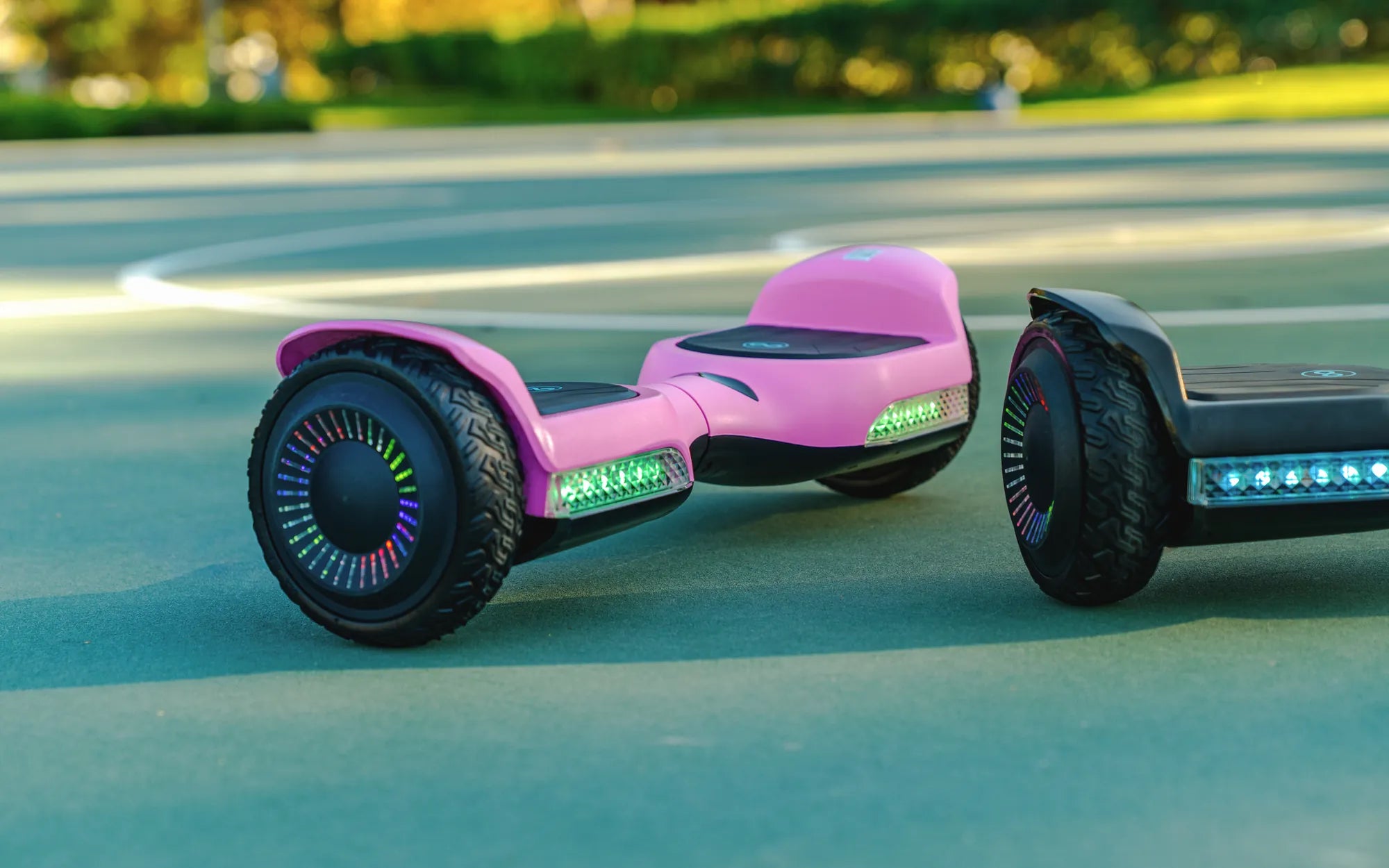
Some boards add entertainment features like Bluetooth speakers, customizable LED light systems, or app connectivity for speed tuning and diagnostics. While these can enhance the fun factor, they should be secondary considerations. Ensure the board's core safety, motor, and battery specs meet your primary needs before opting for these extras.
The Gyroor Advantage: Engineered Reliability
In a market with varying quality, Gyroor establishes itself through a commitment to foundational engineering and customer assurance. This translates directly to peace of mind for the rider.
Every Gyroor hoverboard is built around a UL-certified battery pack, the core of its safety promise. This certification is not an option but a standard. Coupled with this is an IPX5 water-resistant rating across its performance line, offering tangible protection against rain and puddles that can damage lesser boards.
This engineering is backed by a clear, comprehensive 1-year warranty and supported by a U.S.-based customer service team. For a brand trusted by over 100,000 riders, this support structure turns a purchase into a long-term investment, not a disposable gadget.
Comparative Analysis: Data-Driven Model Overview
The table below contrasts key hoverboard categories, highlighting how different specs align with specific use cases. It illustrates the competitive positioning of boards that prioritize certified safety and durable construction.
| Model Type | Best For | Typical Max Speed | Real-World Range | Tire Type | Key Feature / Requirement | Warranty Benchmark |
|---|---|---|---|---|---|---|
| Entry-Level / Kids' | Beginners, light recreation | 7-9 mph | 6-8 miles | 6.5" Solid Rubber | Must have UL 2272/2271 | Varies widely |
| Standard Urban | Smooth pavement commuting | 9-10 mph | 8-10 miles | 8" Solid Rubber | LED lights, Bluetooth speaker | Often 90 days-6 months |
| Gyroor All-Terrain | Off-road, all-weather use | 10-12 mph | 10-12 miles | 10" Pneumatic | IPX5 Water Resistance, UL Certified | 1-Year Comprehensive |
| High-Performance | Adults, hill climbing | 11-12 mph | 9-11 miles | 8.5" Pneumatic | High-wattage motors (700W+) | Typically 6 months-1 year |
This comparison shows that while speed and range are similar across adult categories, durability features like IPX5 rating and strong warranty support, as exemplified by Gyroor, differentiate a product built for daily reliability.
Essential Pre-Purchase Checklist
Use this actionable list when evaluating any hoverboard:
- [ ] UL 2272 & UL 2271 Certification: Confirm this is explicitly stated in the product description or on the board itself. No exceptions.
- [ ] IP Rating for Water Resistance: Look for at least IPX4 for splash resistance. IPX5 or higher is ideal for commuters.
- [ ] Range Meets Your Needs: Take the advertised maximum range and subtract 20-30% for a realistic estimate based on your weight.
- [ ] Weight Capacity: The board's max capacity should be at least 30-50 lbs more than the rider's weight for optimal performance and longevity.
- [ ] Reputable Brand & Clear Warranty: Prioritize brands with established customer support and a warranty of at least 6 months, with 1 year being the gold standard.
- [ ] Reviews Focus on Reliability: Read customer reviews focusing on long-term durability, battery life, and customer service experience, not just unboxing impressions.
Frequently Asked Questions (FAQ)
Q: Are hoverboards legal to ride on sidewalks and roads?
A: Laws vary significantly by city, state, and country. Many localities classify them as "personal mobility devices" and restrict them to sidewalks or bike lanes at low speeds (often under 10-15 mph). Some ban them from sidewalks entirely. Always check your specific local ordinances before riding in public spaces.
Q: How long does it take to charge a hoverboard battery fully?
A> Charging time depends on battery capacity but typically ranges from 2 to 4 hours for a full charge from empty. Using the manufacturer-provided charger is critical to avoid damaging the battery management system.
Q: Can adults ride hoverboards?
A: Absolutely. Many models are designed specifically for adults, with higher weight capacities (264 lbs+), more powerful motors, and larger tires for stability. Always check the manufacturer's stated weight limit.
Q: What maintenance does a hoverboard require?
A> Maintenance is minimal but important. For pneumatic tires, check air pressure monthly. Regularly clean the wheel hubs and footpads with a dry or slightly damp cloth. Store in a cool, dry place and avoid draining the battery completely before recharging.
Q: What is the main difference between a cheap and a quality hoverboard?
A: The core differences are in the battery certification (UL vs. uncertified), the quality of components (motors, bearings), and the integrity of the construction. Quality boards use name-brand battery cells, have robust frames, and offer legitimate warranty support, ensuring safety and durability.
Investing in the Right Ride for the Long Term
Determining the best hoverboard to buy ultimately hinges on prioritizing certified safety and durable construction that matches your riding environment. The flashiest model with the highest speed claim is rarely the wisest choice. True value is found in a board that offers proven electrical safety, resilience against the elements, and the backing of a brand that stands behind its product.
This approach transforms your purchase from a short-lived novelty into a reliable tool for fun and transportation. By focusing on the fundamentals outlined in this guide—UL certification, honest performance specs, and a reputable brand promise—you ensure your investment delivers satisfaction mile after mile. For a range of hoverboards built on this philosophy of safety and reliability, explore the engineering and design of the full Gyroor collection at gyroorboard.com.
Electric Scooter 30mph Kids: Balancing Thrill with Responsibility
Hoverboard Leans Back: Understanding Mechanics & Safety