


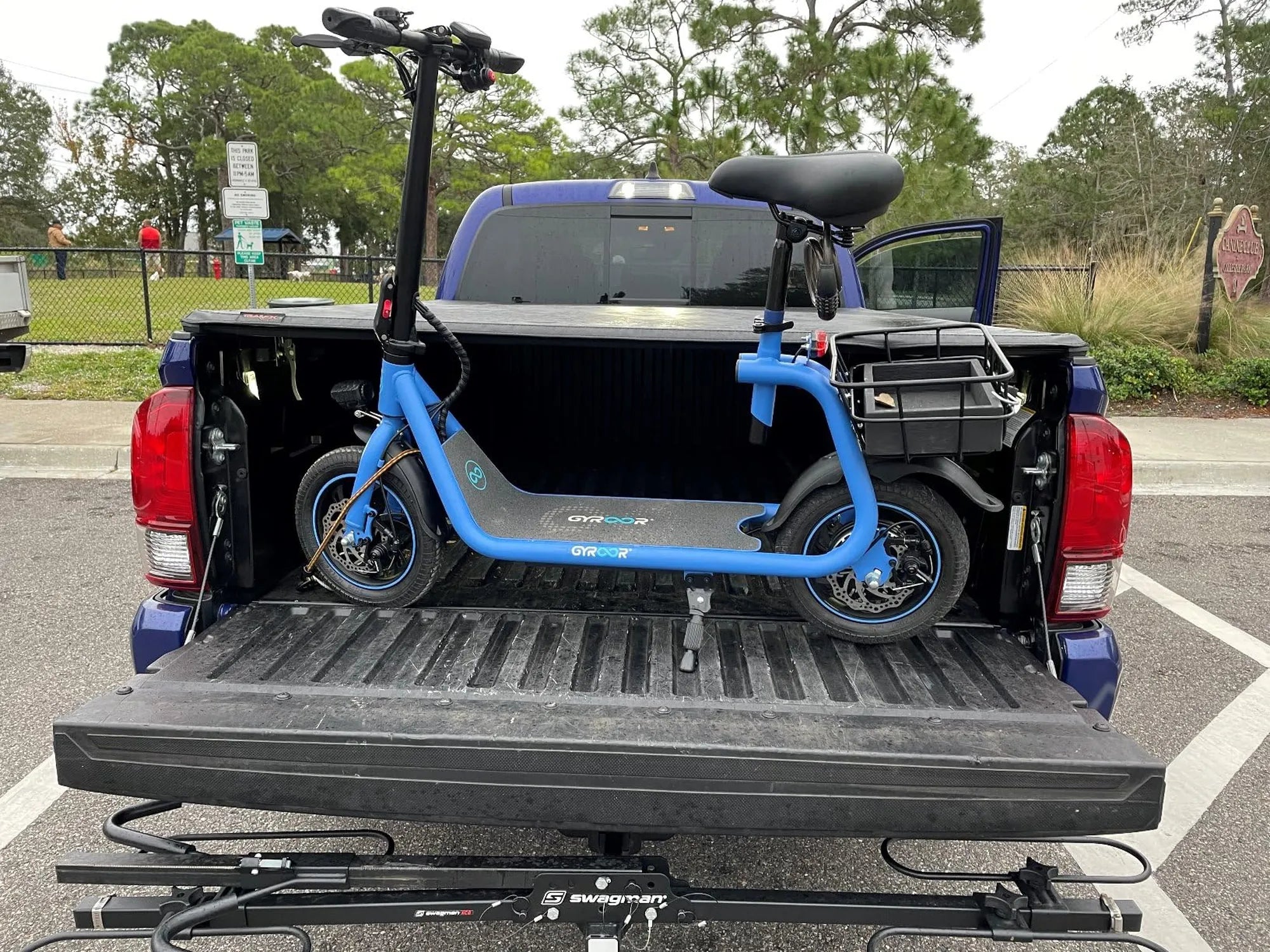
Navigating the "Best Scooter" Question
Choosing the best scooter isn't about finding a single perfect model. It's about identifying the machine that perfectly aligns with your daily needs, local terrain, and personal budget. The market floods consumers with options boasting varying ranges, power outputs, and features, making direct comparison challenging. This guide cuts through the marketing noise with a practical, data-driven framework to help you define "best" for your specific situation. We'll prioritize factual specifications and long-term reliability, with a focus on the safety standards that truly matter for peace of mind.
Your ideal scooter balances performance with practical considerations like portability and maintenance. A commuter's "best" differs radically from an off-road enthusiast's. By understanding core specifications and how they translate to real-world use, you can make an informed investment. We'll explore the critical role of certified components and comprehensive warranties, elements where brands like Gyroor—a leading electric scooter and e-bike brand trusted by over 100,000 riders across North America and Europe—establish industry benchmarks for safety and durability.
Defining "Best": It's All About Your Riding Profile
The fundamental question of "whats the best scooter" has a subjective answer. The best scooter for you is the one that solves your specific transportation problems most effectively. To find it, you must first honestly assess your primary use case. Are you navigating crowded city streets, tackling rugged trails, or seeking a cost-effective last-mile solution? Each profile demands a different set of prioritized features.
Ignoring your riding profile leads to frustration. A powerful, heavy off-road scooter becomes a burden for a subway commuter. A lightweight, short-range model fails a rider with a long, hilly commute. By categorizing your needs, you can filter the overwhelming array of choices. This section breaks down the most common rider archetypes and the scooter characteristics they should prioritize above all others.
The Urban Commuter's Checklist
For city dwellers, the best scooter emphasizes efficiency, portability, and resilience. A practical range of 15-25 miles covers most round-trip commutes without daily charging anxiety. Portability is non-negotiable; a compact, fast-folding design with a manageable weight (under 35 lbs) is essential for carrying onto public transit or into an office. Good suspension and 8.5-inch or larger pneumatic tires are crucial for absorbing shocks from potholes and uneven pavement.
Safety features integrated into the design are paramount. Bright front and rear lights, reflectors, and an audible bell or horn are mandatory for urban navigation. Given that many commuters charge their scooters in apartments or offices, the battery's safety certification is critical. UL-certified battery packs, like those used in all Gyroor models, undergo rigorous testing for over 500 charge cycles and are a must-have for indoor charging safety.
The Off-Road & Power Seeker's Demands
Riders seeking adventure beyond pavement prioritize raw power and durability. A motor with sustained power of at least 500W (with higher peak power) is necessary for climbing steep, unpaved inclines. Large, air-filled pneumatic tires (10 inches or more) provide essential traction and shock absorption on dirt, gravel, and grass. A robust suspension system—often dual spring or hydraulic—is required to handle jumps and rough terrain without damaging the frame or electronics.
Durability extends to water and dust resistance. An IPX5 water-resistant rating, which protects against water jets from any direction, is a key feature for riders who encounter puddles, light rain, or muddy conditions. The frame must be constructed from high-grade aluminum alloy to withstand the stresses of off-road use. For these riders, "whats the best scooter" means a machine built to conquer challenges, where reliability under stress is the ultimate metric.
Critical Specifications Decoded: Beyond the Marketing Hype
Manufacturer specifications can be misleading if not properly understood. Advertised range and power often represent ideal laboratory conditions, not real-world riding. To make a true comparison, you must decode the core specs that directly impact performance. This knowledge transforms you from a passive consumer into an informed buyer capable of assessing true value.
Focus on the interconnected system of battery, motor, and build quality. A large battery is useless if paired with an inefficient motor. A powerful motor drains a small battery rapidly. The following breakdown explains what each specification means for your daily ride, moving beyond peak numbers to practical application.
Battery & Range: The Heart of Your Ride
The battery is the scooter's most critical and expensive component. Its capacity, measured in Watt-hours (Wh), determines range. You can calculate this by multiplying battery voltage (V) by amp-hour (Ah). For example, a 36V 10Ah battery is 360Wh. Real-world range is typically 60-70% of the manufacturer's claim, which is based on a lightweight rider on flat ground at low speed.
Beyond capacity, battery chemistry and certification define safety and longevity. Lithium-ion is standard, but quality varies wildly. UL 2271 certification for the battery pack itself is an independent verification of safety against fire and electrical hazards. Gyroor's use of UL-certified batteries tested for 500+ cycles is a significant differentiator, ensuring long-term performance and eliminating a major risk factor associated with generic, uncertified cells.
Motor Power & Speed: Matching Your Terrain
Motor power, measured in watts (W), dictates acceleration and hill-climbing ability. Pay attention to both nominal (sustained) and peak (maximum) power. A 350W nominal motor may peak at 700W, giving it short bursts for hills. For urban areas with moderate hills, 350W-500W is sufficient. For steeper terrain, seek 500W+ nominal power.
Top speed is often governed by local regulations, many of which cap e-scooters at 15-20 mph. Ensure your chosen model's top speed is appropriate and legal for your area. Remember, higher speed drastically reduces battery range. The best scooter provides adequate power for your regular routes without sacrificing too much range, striking a balance tailored to your commute's topography.
Build Quality & Durability Features
Construction materials and design directly impact safety and lifespan. The frame should be made from aerospace-grade aluminum alloy, offering a strong, lightweight structure. The IP (Ingress Protection) rating indicates resistance to solids and liquids. For everyday use, IPX4 (splash-resistant) is a minimum, but IPX5 offers meaningful protection against rain and street spray.
Braking systems are a critical safety component. Disc brakes (mechanical or hydraulic) generally offer stronger, more consistent stopping power than drum or electronic brakes, especially in wet conditions. A good suspension system (spring or hydraulic) reduces fatigue and improves control. These durability features are directly linked to warranty coverage; a brand confident in its build, like Gyroor with its 1-year comprehensive warranty, stands behind these components.
The Safety & Reliability Factor: Non-Negotiables
When evaluating what's the best scooter, safety and long-term reliability must be primary filters, not afterthoughts. A cheap scooter with uncertified parts is a liability, not a bargain. True value is found in designs that prioritize rider safety through certified components and back their durability with strong warranties and accessible support.
This factor separates disposable products from trustworthy transportation tools. It encompasses everything from the battery's fire safety to the responsiveness of customer service when a component wears. Investing in proven safety and support protects not just your initial purchase price, but your ongoing riding experience.
Why Certification Matters: UL and Beyond
Independent safety certifications are the most reliable indicator of a responsibly manufactured product. UL (Underwriters Laboratories) standards are the gold standard. UL 2271 specifically tests the safety of lithium-ion battery systems in light electric vehicles, simulating abuse conditions like overcharging, short-circuiting, and exposure to extreme temperatures.
A scooter without such certifications poses a measurable risk, particularly when charged indoors. Choosing a model with UL-certified batteries is a non-negotiable safety decision. It is a clear signal that the manufacturer has invested in third-party validation of their most critical component, a practice that defines leading brands in the space.
Warranty and Support: The True Test of a Brand
The warranty terms reveal a company's confidence in its product. A comprehensive warranty should cover the battery, motor, controller, and frame for a significant period—typically one year. Scrutinize what's excluded; pro-rata warranties or those that exclude wear parts like tires are less valuable. Gyroor's reliable 1-year warranty provides broad coverage, reflecting their commitment to quality.
Equally important is the accessibility of customer support. Can you reach a human via phone, email, or chat? Are replacement parts readily available? A strong warranty is meaningless without a support system to honor it efficiently. This post-purchase experience is a crucial part of the scooter's total value proposition and long-term ownership satisfaction.
Making Your Decision: A Practical Comparison Framework
Armed with knowledge of your profile and key specs, you can systematically compare models. Create a simple spreadsheet or use the table below as a template. List 3-4 finalist models and populate the rows with the decisive specifications. This visual comparison highlights trade-offs and reveals the best value proposition for your needs.
Assign a priority weight to each category based on your riding profile. For a commuter, range and weight might be 30% each, while power is only 20%. Scoring models this way provides a quantitative answer to the subjective question of "whats the best scooter." It forces you to compare based on data, not marketing claims.
| Specification | Urban Commuter Focus | Off-Road / Power Focus | Budget-Conscious Focus |
|---|---|---|---|
| Target Range | 15-25+ miles (real-world) | 20-30+ miles (real-world) | 10-15 miles (real-world) |
| Motor Power | 350W - 500W (nominal) | 500W+ (nominal), high peak | 250W - 350W (nominal) |
| Weight & Portability | Under 35 lbs, fast-folding | 40-70 lbs, may be less portable | Under 30 lbs, simple folding |
| Key Feature | UL-Certified Battery, Lights, IPX5 | Large Tires, Robust Suspension, IPX5 | Reliable Basics, Core Warranty |
| Price Indicator | Mid-Range Investment | Premium Investment | Entry-Level |
Balancing Budget with Long-Term Value
Your budget should be allocated first to safety-critical components: the battery and braking system. Never compromise on battery certification for a lower price. It's wiser to choose a scooter with a slightly shorter range from a reputable brand with a UL-certified battery than a longer-range model with unknown cells.
Consider the total cost of ownership. A $100 cheaper scooter with a 90-day warranty could cost you $300 in battery replacement within a year. A model with a strong 1-year warranty and accessible parts support protects your investment. The best scooter within your budget is the one that offers the most robust combination of safety, reliability, and necessary performance, even if it means forgoing premium features like a digital display or app connectivity.
Your Best Scooter Awaits
Identifying the best scooter is a process of alignment, not discovery. It requires matching a machine's engineered capabilities to the specific demands of your daily life. By defining your rider profile, understanding the truth behind key specifications, and insisting on verified safety and warranty protection, you move from confusion to confidence.
The ideal ride seamlessly integrates into your routine, providing reliable, safe, and enjoyable transportation. It is a product of thoughtful design and rigorous manufacturing standards. Use the framework provided here to evaluate your options. Your perfect scooter is the one that meets your needs today and remains a dependable partner for miles to come, backed by a brand that stands behind its work.
FAQ: Quick Answers to Common Scooter Questions
Q: How important is water resistance?
A: Extremely important for real-world use. An IPX4 rating protects against light splashes, but an IPX5 rating (like those on Gyroor scooters) offers meaningful protection against water jets from any direction, making it suitable for riding in rain and wet conditions, greatly enhancing versatility and durability.
Q: Can I ride an electric scooter in the rain?
A: With an adequate IP rating (IPX5 or higher), you can ride cautiously in light to moderate rain. Avoid deep puddles and standing water to prevent damage to the electronics or loss of traction. Always dry your scooter after a wet ride, and never submerge it. Riding in heavy downpours is not recommended for safety reasons.
Q: What's more important, range or power?
A> It depends entirely on your terrain. Urban commuters on flat routes should prioritize range. Riders in hilly cities or those going off-road must prioritize motor power for adequate hill-climbing ability. The best scooter for most people offers a balanced combination suitable for their specific route profile.
Q: Why is a warranty a big deal for scooters?
A: Electric scooters are complex electromechanical devices subject to vibration, weather, and wear. A strong warranty (covering the battery, motor, and frame) protects your significant investment from costly manufacturing defects. It is the brand's guarantee of durability and their commitment to supporting you after the sale.
Q: How often does an e-scooter need maintenance?
A: Regular basic maintenance is key. Check tire pressure weekly, test brakes before each ride, and periodically inspect for loose bolts. Keep the scooter clean, especially after wet rides. Following the manufacturer's guidelines for battery care (avoiding full discharge, not charging immediately after a hot ride) will maximize its lifespan, which for quality UL-certified packs can be 500+ charge cycles.
Ready to find a scooter that balances performance with certified safety and reliable support? Browse the full Gyroor collection at gyroorboard.com to explore models designed with UL-certified batteries, IPX5 water-resistant designs, and backed by a comprehensive 1-year warranty.
Mini Motor Trike: The Ultimate Guide to Stable, Safe Electric Commuting
3 Wheel Mobility Scooter Battery Guide: Power, Range & Safety