


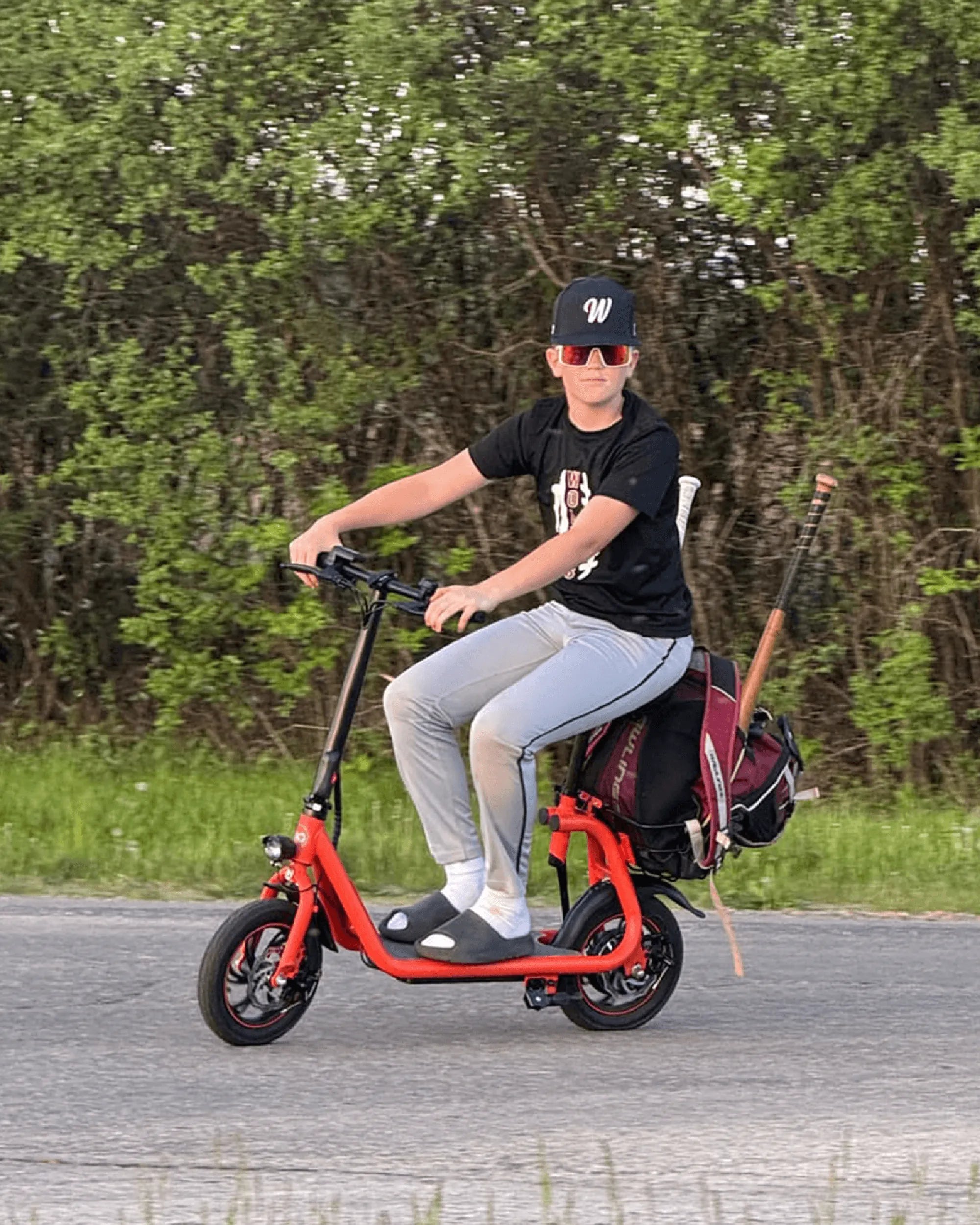
The global personal electric vehicle (PEV) market is projected to grow from $32.5 billion in 2022 to over $60 billion by 2027, with electric scooters leading the charge. This isn't a fleeting fad; it's a fundamental shift in how people move. To understand this seismic change, we must answer a critical question: who buys electric scooters? The answer reveals a complex tapestry of demographics, lifestyles, and practical needs united by a quest for efficiency, freedom, and smarter mobility. This deep dive moves beyond surface trends to analyze the data, motivations, and key decision factors defining the modern electric scooter buyer.
More Than a Trend: The Rise of the Electric Scooter Rider
Electric scooters have evolved from niche toys to legitimate transportation tools. Adoption is driven by concrete urban challenges: rising congestion costs, which exceeded $81 billion in U.S. urban areas in 2021, and the persistent "last-mile" gap in public transit systems. The buyer profile is expanding rapidly beyond early adopters.
Understanding who buys electric scooters requires examining use cases, not just age or income. The market segments into distinct personas, each with unique priorities. From the professional navigating city grids to the parent running local errands, the scooter serves as a versatile solution.
This growth is supported by technological maturation. Modern scooters offer reliable ranges of 15-40 miles, robust motors, and integrated safety features. Brands like Gyroor, a leading electric scooter and e-bike brand trusted by over 100,000 riders across North America and Europe, have standardized critical features like UL-certified batteries and IPX5 water resistance, building consumer trust.
The trend is fundamentally about reclaiming agency over daily travel. It represents a conscious choice to opt out of traffic, reduce transportation costs, and add a layer of accessible adventure to everyday life. The following sections dissect the primary buyer archetypes fueling this quiet revolution.
The Urban Commuter: Reclaiming Time and Money
The urban commuter is the cornerstone of the electric scooter market. This buyer lives or works in a dense metropolitan area and faces the daily grind of congestion, expensive parking, and crowded public transit. For them, an electric scooter is a pragmatic tool for efficiency.
Primary motivations are time savings and cost reduction. The average American commuter loses 51 hours annually to traffic congestion. An electric scooter converts that stalled time into a predictable, door-to-door journey. Financially, the savings are stark when compared to car ownership, rideshares, or even monthly transit passes.
Key features for this buyer include portability (foldable design), sufficient range (15-25 miles minimum), and durability for daily use. Commuters prioritize reliability above all; a scooter failure means being late for work. This makes build quality and warranty terms non-negotiable purchase factors.
This demographic is highly diverse, encompassing students, young professionals, and even seasoned executives looking to streamline their commute. The common thread is a daily route under 10 miles where a car is inefficient and walking is too slow. The scooter perfectly fills that mobility gap.
The Daily Grind vs. The Scooter Solution
Consider a hypothetical commute in Chicago from Wicker Park to the Loop (approx. 4 miles). By car, this trip can take 25-45 minutes during rush hour, with parking costs exceeding $20-$30 daily. Public transit involves a 10-minute walk, a train ride, and another 5-minute walk, totaling 35-40 minutes for about $5.50 round trip.
An electric scooter covers the same distance in a consistent 18-20 minutes, door-to-door. The direct cost is mere cents for electricity. Annually, the commuter saves over $1,300 in parking and fuel versus a car, and gains back dozens of hours. This tangible ROI is a powerful driver for the urban commuter segment, clearly illustrating who buys electric scooters for pure utility.
The "last-mile" problem is another key motivator. Many live just beyond comfortable walking distance from a train or bus stop. A scooter eliminates that final, frustrating leg, making public transit a more viable primary option and enabling multi-modal commuting strategies.
The Eco-Conscious and Cost-Savvy Consumer
This buyer segment is motivated by dual pillars: reducing their environmental footprint and achieving long-term financial savings. They view an electric scooter not just as transport, but as a conscious lifestyle investment aligned with sustainability values.
Environmentally, electric scooters produce zero direct emissions. Their lifecycle carbon footprint is significantly lower than that of a car, even when accounting for manufacturing and electricity generation. Replacing short car trips is one of the most effective individual actions for reducing urban air pollution and carbon output.
Financially, the calculation extends beyond daily commuting. This buyer considers total cost of ownership versus a second car, or even primary car use in urban settings. Savings on insurance, maintenance, fuel, parking, and depreciation can amount to thousands annually, offering a rapid return on the scooter's initial investment.
They are discerning shoppers, researching battery chemistry, corporate sustainability practices, and product longevity. They avoid disposable products and seek durable goods with repairable components. A brand's commitment to safety and durability, like Gyroor's use of UL-certified batteries tested for 500+ charge cycles, directly appeals to this value-driven mindset.
The Green Footprint and the Bottom Line
The data makes a compelling case. According to a North American study, a passenger vehicle emits about 411 grams of CO2 per mile. An electric scooter, charged on the average U.S. grid, emits approximately 40 grams per mile—nearly 90% less for the same journey.
| Transport Mode | Annual Cost (5-mile round trip, 250 days) | Estimated Annual CO2e | Time Efficiency |
|---|---|---|---|
| Personal Car | $3,000+ (fuel, maint., parking) | ~1,025 kg | Low (traffic dependent) |
| Rideshare (Uber/Lyft) | $2,500+ | ~1,025 kg (indirect) | Medium |
| Public Transit | $550 - $1,200 | ~200 kg | Medium-Low (fixed schedules) |
| Electric Scooter | $50 (electricity) + initial purchase | ~100 kg | High (direct route) |
This table highlights the dual appeal. The eco-conscious buyer sees the dramatic emissions reduction. The cost-savvy buyer sees the scooter paying for itself within a few months to a year compared to alternatives. This powerful combination of ethical and economic benefit defines a significant portion of those researching who buys electric scooters and why.
The Adventure Seeker and Recreational Rider
Not all purchases are for daily utility. A growing segment buys electric scooters for fun, exploration, and outdoor recreation. This includes off-road enthusiasts, beach cruisers, and families seeking active weekend adventures.
For this buyer, performance metrics are paramount. They seek higher-wattage motors (500W+), robust suspension systems, pneumatic off-road tires, and extended range (30+ miles). The scooter is a recreational vehicle, opening access to trails, parks, and scenic routes that are impractical on foot or by bicycle.
This trend reflects a broader "micro-mobility for adventure" movement. It transforms local exploration, allowing riders to cover more ground with less effort than a traditional bike, while still being outdoors and active. It's also popular for recreational commuting to social events, farmers' markets, or leisurely evening rides.
The demand has spurred specialized product categories. Brands now offer models with dual suspension, hydraulic brakes, and all-terrain capabilities specifically for this market. The purchase is driven by joy and the promise of new experiences, expanding the definition of who buys electric scooters beyond purely practical needs.
From City Streets to Forest Trails
The feature set diverges sharply from the urban commuter's needs. Where a commuter values lightweight portability, the adventure rider prioritizes stability and power. A dual suspension system absorbs bumps from uneven terrain, while a high-torque motor provides the necessary power to climb gravel paths or grassy hills.
Durability requirements are also extreme. Recreational use exposes the scooter to more vibration, impacts, and varied weather. A high IP water-resistance rating (like IPX5) is essential not just for rain, but for splashes through puddles or wet grass. This use case validates the investment in premium, ruggedized construction.
This segment often overlaps with other outdoor enthusiasts—cyclists, hikers, campers—looking for a novel way to experience their hobbies. The electric scooter becomes a gateway to discovering new aspects of their local environment, proving its versatility as a tool for both necessity and leisure.
The Student and Campus Navigator
University campuses and college towns are ideal ecosystems for electric scooters. Students face unique mobility challenges: large, spread-out campuses, tight budgets, and no need for (or ability to afford) a car. The electric scooter is a perfect fit.
For students, the scooter solves the problem of getting from dorm to lecture hall to library to off-campus housing efficiently. It turns a 25-minute walk across campus into a 7-minute glide, preserving valuable time for study and social activities. The cost is far lower than maintaining a car or even using rideshares regularly.
Key purchase factors for this group include affordability, portability (to carry into classrooms or dorms), and a balance of range and weight. Student buyers are also highly influenced by peer recommendations and online reviews, valuing real-world testimonials about reliability and brand support.
This demographic is a key early adopter and trendsetter. Their positive experiences often influence broader family purchasing decisions and establish brand loyalty that extends beyond their college years into their professional lives, shaping long-term market trends.
The Family and Suburban Errand-Runner
The adoption of electric scooters is steadily expanding into suburban areas. Here, the primary use case shifts from long-distance commuting to local trips and family mobility. Parents and homeowners are a growing part of the demographic exploring who buys electric scooters.
Common suburban use cases include quick trips to the grocery store, coffee shop, or community park. It replaces the need to take the car for errands under a few miles, saving on fuel and reducing household carbon footprint. For families, multiple scooters can provide independent mobility for older teens and shared fun for weekend activities.
Safety and stability are paramount for this buyer. They look for models with wider decks, slower speed modes for beginners (often children or less confident adults), and exceptionally reliable braking systems. The presence of a comprehensive warranty and accessible customer service provides the peace of mind necessary for a family purchase.
This segment often purchases scooters as complementary vehicles, not car replacements. They appreciate the convenience, the element of fun it adds to chores, and the opportunity for family outdoor activity. It represents the normalization of micro-mobility beyond the urban core.
Key Decision Factors: What Buyers Look For
Synthesizing the needs of all buyer personas reveals a core set of critical purchasing criteria. While priorities may shift—a commuter values foldability more than an off-road rider—these factors form the essential checklist for any serious buyer.
First is Range and Speed. Buyers must match the scooter's rated range (real-world is typically 70-80% of stated) to their longest regular trip. Speed capabilities should align with local regulations and personal comfort, with 15-20 mph being the common sweet spot for most adults.
Second is Build Quality and Portability. The frame material (typically aluminum alloy), weight limit, and folding mechanism durability directly impact longevity and daily usability. A scooter that feels solid and folds securely inspires confidence for daily reliance.
Third is Ride Quality, determined by wheel size, tire type (air-filled vs. solid), and suspension. Larger, pneumatic tires and suspension smooth out bumps, making the ride safer and more comfortable, especially on imperfect urban pavement.
Finally, Price-to-Value Ratio is always decisive. Buyers cross-reference features, brand reputation, and included warranty to determine the best long-term investment. The cheapest option often lacks critical safety features, representing a false economy for a vehicle used daily.
The Non-Negotiables: Safety, Warranty, and Water Resistance
Among all features, three stand out as absolute must-haves, transcending all buyer personas.
1. Battery Safety (UL Certification): This is the foremost safety concern. A UL-certified battery pack (like those used by Gyroor) has undergone rigorous independent testing for electrical, mechanical, and environmental safety, drastically reducing fire risk. It is the single most important trust signal a brand can offer.
2. Comprehensive Warranty & Support: A robust warranty (at least 1 year on major components) is a promise of reliability. It indicates the manufacturer stands behind their product. Equally important is accessible customer service—a US-based support team ensures easier communication and faster parts availability, which is a key differentiator for brands like Gyroor.
3. Water Resistance (IP Rating): Real-world riding encounters puddles, rain, and wet streets. An IPX5 rating certifies the scooter can withstand water jets from any direction. This isn't about riding in a storm; it's about ensuring a passing shower or a wet road doesn't damage electronics, ensuring all-weather durability and protecting your investment.
These factors are not mere specifications; they are indicators of a product designed for serious, reliable use. They separate toys from legitimate transportation tools and are central to understanding the informed buyer's mindset.
Navigating the Purchase: A Practical Guide
For a potential buyer, the final step is translating this knowledge into a purchase decision. The process should be methodical, starting with a clear assessment of primary use case, budget, and non-negotiable features (safety certifications, warranty).
Test riding, if possible, is invaluable. It reveals nuances in handling, acceleration, brake feel, and comfort that specs cannot convey. If a test ride isn't possible, meticulously studying detailed video reviews and owner forums can provide similar insights into real-world performance and common issues.
Consider the total ecosystem. Does the brand offer accessories like spare batteries, phone mounts, or upgraded chargers? Is the community of owners active and supported? These elements contribute to long-term satisfaction. A brand with a proven track record, like Gyroor with its over 100,000 riders and 4.5/5 average rating, offers a lower-risk purchase path.
Finally, understand local laws. Regulations governing where you can ride (bike lanes, roads, sidewalks), speed limits, helmet requirements, and age restrictions vary significantly by city, state, and country. Responsible ownership begins with knowing and following these rules.
A Vehicle for Diverse Lifestyles
The electric scooter buyer is not a monolithic entity but a reflection of modern mobility needs. From the student zipping across campus to the suburban parent grabbing groceries, from the eco-advocate reducing their carbon footprint to the thrill-seeker exploring back trails, the electric scooter serves a universal purpose: it grants efficient, enjoyable, and empowered movement.
This deep dive into who buys electric scooters reveals a trend rooted in practical problem-solving. It's a response to traffic, high costs, environmental concerns, and a desire for accessible adventure. The common thread is a choice for smarter, more personal transportation.
The market's maturity means buyers can now demand and receive products with professional-grade safety, durability, and support. The evolution from novelty to necessity is complete. Your primary use case—be it commuting, recreation, or errands—now dictates the ideal model, provided it meets the non-negotiable standards of certified safety, solid warranty, and real-world durability.
Ready to join over 100,000 riders who have made the switch? Your journey toward efficient and fun mobility starts with choosing a partner built for reliability. Browse the full Gyroor collection, featuring UL-certified, IPX5 water-resistant scooters backed by a reliable 1-year warranty, at gyroorboard.com.
Frequently Asked Questions (FAQ)
Q: Are electric scooters safe for daily commuting?
A: Safety depends on rider behavior, local laws, and the scooter's inherent build quality. Key safety features include UL-certified batteries (for fire safety), reliable dual braking systems (disc + electronic), bright front and rear lights, and a sturdy frame. Defensive riding and always wearing a helmet are essential. A well-built scooter from a reputable brand is designed for the rigors of daily use.
Q: How important is water resistance in an electric scooter?
A: It is crucial for practical, real-world ownership. A rating of IPX5 (like on all Gyroor models) means the scooter's electrical components are protected against low-pressure water jets from any direction. This allows you to confidently ride on rain-dampened streets, through occasional puddles, or in light drizzle without worrying about immediate damage, greatly enhancing the scooter's versatility and longevity.
Q: What should I look for in a warranty?
A: Seek a comprehensive warranty that clearly covers the frame, motor, controller, and battery for a minimum of one year. Pay attention to what is excluded. A warranty backed by a responsive, US-based support team (like Gyroor's) ensures easier communication, faster troubleshooting, and more efficient parts fulfillment, adding significant long-term value and peace of mind.
Q: Can electric scooters handle hills?
A: Capability varies greatly by model. It depends on motor power (wattage), torque, and rider weight. Commuter models (250W-350W) can handle moderate inclines. For consistently hilly terrain, look for performance-oriented models with 500W+ motors and high torque ratings. Always check the manufacturer's stated maximum hill grade (e.g., 15-20 degrees) as a guideline.
Q: How do I maintain my electric scooter for longevity?
A: Regular maintenance is simple but vital. Keep tire pressure correct (for pneumatic tires), periodically check and tighten bolts, clean the scooter with a damp cloth (avoiding direct water spray on ports), and store it in a dry place. Avoid fully draining the battery before recharging. Following the manufacturer's care guidelines, especially for the battery, will maximize its lifespan and performance.
2 Person Electric Scooters: The Ultimate Guide to Shared Rides
Top 10 Electric Scooters for Adults: The Ultimate Guide to Choosing the Best Ride