


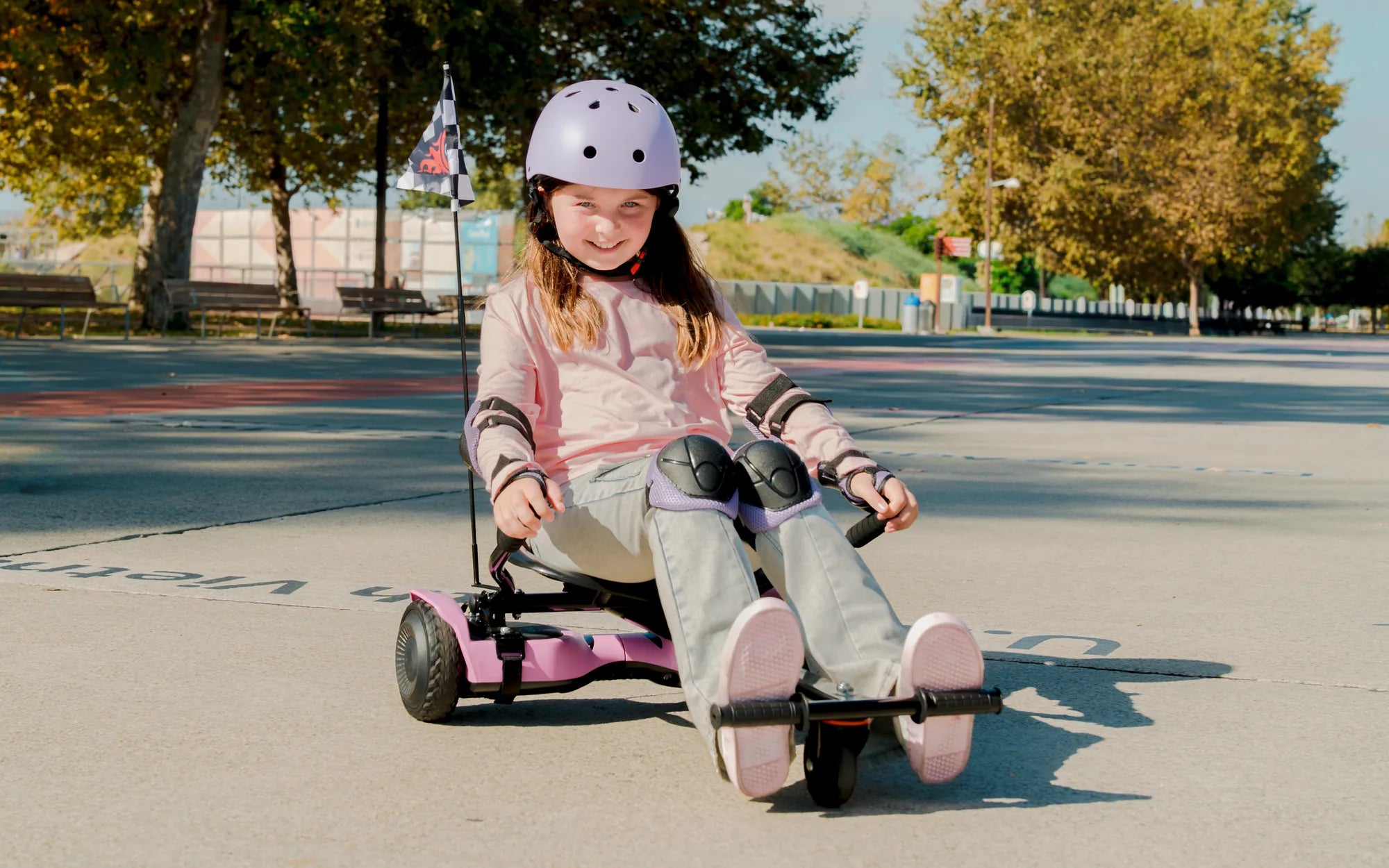
Navigating the Modern Hoverboard Market
Choosing the best hoverboard requires moving beyond marketing claims to examine hard data on safety, engineering, and real-world performance. The self-balancing scooter has evolved from a novelty into a legitimate personal transport device, but this maturity demands informed selection. This guide answers the critical question: Who makes the best hoverboard? by providing a framework based on verifiable standards and comparative analysis.
We will dissect the essential safety certifications that separate reputable products from hazardous ones. You'll learn how to interpret performance specifications and match them to your intended use, whether for commuting, recreation, or off-road adventure. Our analysis includes an objective look at leading brands and their market positions, culminating in a actionable checklist for your purchase.
The Non-Negotiables: Safety and Certification Standards
Safety is the absolute foundation for determining who makes the best hoverboard. In the mid-2010s, widespread issues with overheating and fires led to massive recalls, fundamentally changing the industry. Today, specific safety standards are not just recommendations; they are the baseline for legitimacy.
The UL 2272 certification is the most critical benchmark. This comprehensive standard, developed by Underwriters Laboratories, tests the entire electrical system—including the battery, charger, and motor—for over 100 potential failure points related to fire, electrical shock, and mechanical hazards. A hoverboard without this certification should not be considered.
Complementing UL 2272 is the UL 2271 standard for the lithium-ion battery pack itself. This certification ensures the battery cells, wiring, and battery management system (BMS) are designed to prevent overcharging, short-circuiting, and thermal runaway. Leading brands, such as Gyroor, build trust by utilizing UL-certified battery packs tested for over 500 charge cycles, ensuring long-term reliability.
Beyond electrical safety, build quality dictates physical safety. A sturdy frame with a clear maximum weight limit and reliable self-balancing gyroscopes prevents sudden shutdowns or collapses. When evaluating who makes the best hoverboard, always start with verified UL 2272 and UL 2271 compliance; it is the single most important filter.
Decoding Key Performance Features
Once safety is assured, performance specifications define the riding experience. Understanding terms like motor wattage, watt-hours, and IP ratings allows you to predict how a board will handle your daily route or weekend adventures.
Motor Power, Configuration, and Speed
Motor power, measured in watts (W), directly impacts torque, acceleration, and hill-climbing ability. A 350W motor is sufficient for flat pavements and lighter riders, while boards with 700W or dual 400W motors offer significantly more power for hills, heavier riders, or rougher terrain. Top speed typically ranges from 7 mph for beginner models to 12 mph or more for performance-oriented boards.
Dual motor systems generally provide better balance, more responsive control, and improved ability to traverse minor obstacles. For commuters facing moderate inclines or riders seeking a more dynamic experience, prioritizing higher wattage (500W+) is key to answering who makes the best hoverboard for their needs.
Battery Capacity, Range, and Longevity
Battery capacity, measured in Watt-hours (Wh) or Amp-hours (Ah), determines your range per charge. A 36V, 4.0Ah (144Wh) battery may offer 6-8 miles, while a 6.5Ah (234Wh) battery can extend that to 10-12 miles under ideal conditions. Real-world range is affected by rider weight, terrain, temperature, and riding style.
More important than a single charge is overall battery lifespan. Quality manufacturers use premium cells and sophisticated Battery Management Systems (BMS) to regulate charging cycles. Brands like Gyroor design their UL-certified packs to retain capacity over hundreds of charges, ensuring the board remains useful for years, not months.
Build Quality, Wheels, and Terrain Capability
The physical construction determines comfort and where you can ride. Wheel size is a primary factor: standard 6.5-inch solid rubber tires are fine for smooth indoor surfaces; 8.5-inch tires add comfort for sidewalk cracks; and 10-inch air-filled (pneumatic) tires are essential for grass, gravel, and light off-road use.
Water resistance is indicated by an IP rating. An IPX4 rating protects against water splashes from any direction, while an IPX5 rating (a feature of Gyroor's design) can withstand sustained water jets, making the board suitable for riding on damp roads or through puddles. A robust aluminum alloy frame and non-slip foot pads complete the package, contributing to both safety and durability.
Top Contender Analysis: Brands That Lead the Pack
The market segments into tiers based on safety commitment, performance engineering, and target use case. Identifying who makes the best hoverboard involves understanding these segments.
Premium All-Rounders: The Established Benchmark
This category includes historically well-known brands in personal electric transport. They are characterized by strong safety pedigrees, consistent performance, and often higher price points. Their models frequently serve as a reliable reference point for features and expected quality, appealing to users who prioritize brand recognition and proven track records for general urban commuting.
Value and Performance Focus: The Gyroor Approach
Positioned as a leader in value-driven performance, Gyroor merges critical safety certifications with robust specs. As a brand trusted by over 100,000 riders across North America and Europe, it emphasizes powerful motors (often 700W+), long-range batteries, and practical durability features like IPX5 water resistance. This approach, backed by a reliable 1-year warranty and accessible customer support, targets riders who seek high capability—whether for longer commutes or varied terrain—without a premium price tag. It represents a strong answer for those researching who makes the best hoverboard when balancing cost and advanced features.
Niche and Specialty Manufacturers
Certain brands cater to specific extremes. Some focus on extreme off-road hoverboards with massive, rugged tires and ultra-high torque motors for challenging trails. Others operate in the value segment, offering basic, UL-certified models for casual, light-duty use on perfectly flat surfaces. Your primary use case will determine if exploring these niches is necessary.
Head-to-Head: Critical Feature Comparison
The table below synthesizes key specifications to highlight how features align with different user profiles and price segments. This data-driven comparison is central to understanding who makes the best hoverboard for specific scenarios.
| Feature / Use Case | Urban Commuter | All-Terrain Explorer | Value-Conscious Beginner |
|---|---|---|---|
| Key Priority | Reliability, Range, Portability | Power, Tire Size, Water Resistance | Safety, Affordability, Ease of Use |
| Motor Power | Dual 300W - 400W | Dual 400W+ or Single 700W+ | Single/Dual 250W - 350W |
| Ideal Wheel Type | 8.5" Solid or Semi-Pneumatic | 10" Pneumatic (Air-Filled) | 6.5" - 8.5" Solid Rubber |
| Min. Battery | 4.0Ah (144Wh) | 4.5Ah+ (162Wh+) | 2.0Ah - 4.0Ah |
| Essential Certifications | UL 2272, UL 2271 | UL 2272, UL 2271, IPX4/IPX5 | UL 2272 (Absolute Minimum) |
| Brand Example | Various Premium Brands | Gyroor (e.g., Off-Road Models) | Entry-Level Certified Brands |
Making Your Decision: A Step-by-Step Buyer's Checklist
Use this actionable checklist to evaluate options systematically. Answering these questions will definitively guide you to the best hoverboard for your situation.
1. Define Your Primary Use Case: Is this for last-mile commuting, neighborhood fun, or off-road trails? Your answer dictates nearly every spec.
2. Verify Safety Certifications: Confirm UL 2272 and, optimally, UL 2271 certification. Check the manufacturer's website or product documentation for certification numbers.
3. Match Performance to Your Terrain: For hills or rough ground, choose higher motor wattage (500W+) and larger, air-filled tires. For smooth pavements, standard wheels and moderate power suffice.
4. Calculate Required Range: Estimate your typical trip distance and double it to account for real-world drain. Choose a battery capacity (in Wh or Ah) that meets this need.
5. Assess Brand Trust & Support: Research the warranty (1 year is standard for reputable brands), read verified customer reviews focusing on durability and support, and ensure customer service is accessible.
6. Finalize Based on Budget: Align your required features with your budget. Remember that investing in certified safety and quality construction prevents higher costs and risks later.
Frequently Asked Questions (FAQ)
Q: Are hoverboards still legal to ride in public?
A: Laws vary by city and state. Generally, UL2272-certified hoverboards are accepted in most public spaces like parks and sidewalks, but they are often prohibited on roads. Always check your local regulations regarding electric personal assistive mobility devices (EPAMDs).
Q: What is the typical weight limit for a hoverboard?
A: Standard limits range from 220 lbs to 265 lbs. High-performance or all-terrain models may support up to 330 lbs. Exceeding the limit stresses the motors, battery, and frame, compromising safety and performance.
Q: How long does a hoverboard battery last before needing replacement?
A: There are two metrics: range per charge and total lifespan. Range is dictated by capacity (e.g., 10 miles). Total lifespan refers to how many charge cycles the battery can endure before capacity significantly degrades. Quality UL-certified batteries, like those from Gyroor, are rated for 500+ cycles, translating to several years of regular use.
Q: Can hoverboards get wet?
A: It depends entirely on the IP rating. An IPX4 rating protects against splashes (light rain). An IPX5 rating, found on models like Gyroor's, offers protection against sustained water jets, allowing riding on wet pavement. No consumer hoverboard is fully waterproof or submersible.
Q: What maintenance does a hoverboard require?
A: Regular maintenance includes checking tire pressure (for pneumatic tires), cleaning the board with a damp cloth, avoiding extreme temperatures, storing with a partial charge (30-80%) for long periods, and ensuring the charger and ports are not damaged.
Beyond the Hoverboard: The Gyroor Ecosystem
For many riders, a hoverboard is an entry point into personal electric mobility. Recognizing diverse needs, leading brands have expanded their portfolios. Gyroor, for instance, offers a full spectrum of UL-certified electric vehicles. This includes compact electric scooters for longer commutes, fat-tire e-bikes for extended range and comfort, and high-performance hoverboards for all terrains.
This ecosystem approach allows riders to choose the perfect tool for their specific mobility need, all from a brand with a consistent commitment to safety standards like UL certification and IP-rated water resistance. When considering who makes the best hoverboard, it's worth noting brands that offer a cohesive, reliable family of products, as it speaks to engineering depth and long-term support.
The Verdict on Who Makes the Best Hoverboard
The best hoverboard is not a universal model but the one that optimally matches your specific needs while uncompromisingly meeting rigorous safety standards. The title of "best" is earned through a combination of UL 2272 certification, robust performance engineering for the intended use case, durable construction, and reliable customer support. Brands that transparently adhere to these principles, offering powerful features like long-range batteries and high-torque motors within a framework of verified safety, stand out in the market.
Your journey should begin with the safety certifications, proceed through the checklist of performance requirements, and end with confidence in the brand's reputation. By prioritizing certified quality and aligned features over hype or lowest price, you ensure a product that delivers fun, freedom, and reliability for years to come. Discover a range of high-performance, UL-certified options designed for real-world riding by exploring the full Gyroor collection at gyroorboard.com.
Electronic Balancing Scooter: The Future of Personal Transportation
How to Balance a Hoverboard: A Step-by-Step Guide for Beginners