

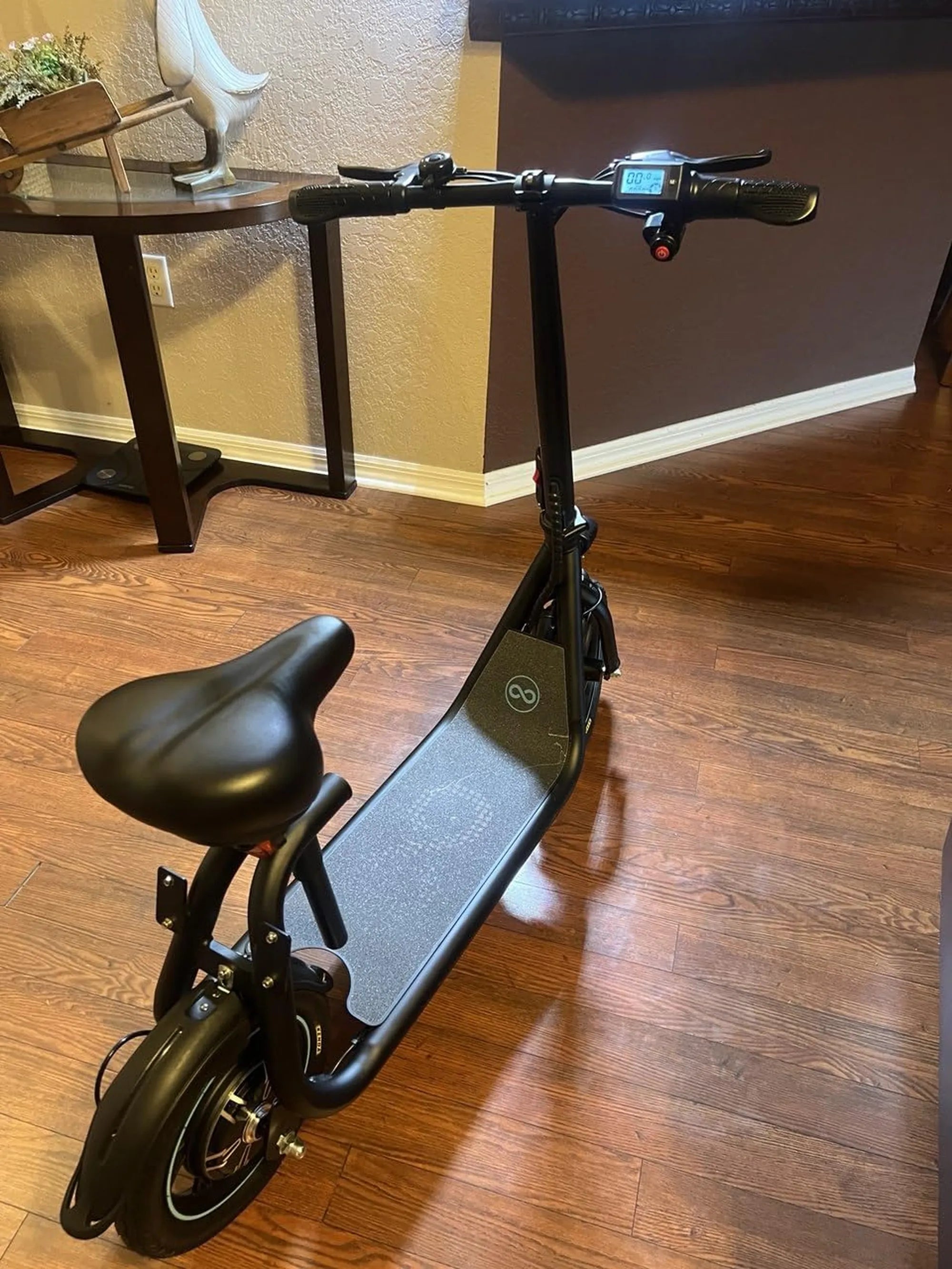
Imagine finishing your electric scooter commute by simply parking it. No fumbling for a cable, no searching for an outlet, and no need to remove a heavy battery. This is the promise of wireless charging for electric scoototers: the future of convenient commuting. As urban mobility evolves, the friction of charging remains a significant barrier. This article will explain the technology behind wireless power transfer, analyze its real-world benefits and current limitations, compare it directly to traditional wired methods, and explore how it integrates into a broader vision for smart, sustainable cities. You will gain a clear, data-driven understanding of whether this emerging technology is ready for your daily ride.
The Charging Dilemma of Urban Mobility
Electric scooters have revolutionized short-distance travel, but their charging process remains firmly rooted in the past. The daily ritual involves locating the charger, plugging a cable into a wall outlet, and connecting it to a physical port on the scooter. This port is a point of vulnerability—prone to wear, corrosion, and water ingress, which can lead to malfunctions or safety hazards.
For commuters, this adds unnecessary steps to an otherwise seamless experience. In shared living spaces or offices, cables create clutter and tripping hazards. The need for a specific, accessible outlet can dictate parking spots, adding another layer of inconvenience. These pain points highlight a disconnect between the scooter's advanced mobility and its primitive refueling method.
Wireless charging presents an elegant solution to this dilemma. By transferring energy through the air via electromagnetic fields, it removes the physical connector entirely. The core value proposition is profound simplicity: align the scooter with a charging pad and the process begins automatically. This shift mirrors the widespread adoption of wireless charging for smartphones and is poised to redefine user expectations for personal electric vehicles.
For brands focused on reliability and user experience, like Gyroor, integrating such technology aligns with core principles of durability and convenience. Their commitment to UL-certified batteries and IPX5 water-resistant designs would be naturally complemented by a sealed, port-less charging system, further enhancing product longevity and safety for over 100,000 riders in their community.
What is Wireless Charging and How Does It Work for E-Scooters?
Wireless charging for electric scooters is based on the principle of resonant inductive coupling, a more powerful adaptation of the Qi standard used for smartphones. The system requires two main components: a transmitter (charging pad or station embedded in the ground) and a receiver (a coil and circuitry integrated into the scooter's underside).
When the scooter is parked within a specific range over the transmitter, an alternating current in the transmitter coil generates an oscillating magnetic field. This field induces a corresponding alternating current in the receiver coil attached to the scooter. This current is then rectified and regulated to charge the scooter's battery pack, all without any metal-to-metal contact.
The technology is not about broadcasting power over long distances; it requires close proximity and relatively precise alignment. Modern systems are designed with efficiency and safety in mind. For a trusted brand's potential implementation, the focus would be on creating a robust and reliable coupling system that works consistently in various real-world conditions.
Key to its operation is communication between the transmitter and receiver. Before full power transfer begins, the devices perform a "handshake." The receiver identifies itself and its power requirements, and the transmitter verifies this before activating. This step is crucial for safety and efficiency, preventing energy waste and protecting incompatible devices.
The Technical Breakdown: From Pad to Battery
The energy transfer process is a carefully orchestrated sequence. First, the rider parks the scooter, aligning it visually or with the aid of guide lights or an app. The receiver coil on the scooter must be within a few centimeters of the transmitter coil in the pad, typically with a positional tolerance of a few inches.
Once alignment is sufficient, the system's foreign object detection (FOD) activates. Using methods like impedance sensing or thermal monitoring, the pad checks for metallic debris (like coins or keys) or living objects that could overheat if placed between the coils. If an object is detected, power transfer is halted.
After passing the FOD check, the handshake protocol commutes. The scooter's receiver communicates its battery status and accepts a charge profile. The transmitter then generates the precise magnetic field required. In the scooter, the induced AC current passes through a rectifier circuit, converting it to DC current suitable for battery charging.
Finally, the battery management system (BMS) takes over. It manages the incoming power, applying the correct constant-current and constant-voltage phases to safely charge the cells. This integration with a high-quality BMS, like those governing Gyroor's UL-certified battery packs, is critical. It ensures that the convenience of wireless charging does not compromise the rigorous safety and longevity standards achieved through 500+ cycle testing.
Tangible Benefits: Why Riders Are Excited About This Shift
The primary benefit is ultimate convenience, often described as "park-and-charge." This seamless experience removes a daily friction point, making electric scooter usage as simple as using a household appliance. It encourages more frequent top-ups, potentially allowing riders to maintain a higher average battery charge without dedicated charging sessions.
Enhanced durability is a major engineering advantage. The elimination of the physical charging port removes a common point of failure. There is no connector to wear out, bend, or break from repeated insertions. More importantly, it completely seals the scooter's electronics from one of the most common paths for water and dust ingress.
This leads directly to improved safety and weather resistance. A sealed chassis with wireless charging complements an IPX5 water-resistant rating perfectly, offering greater protection during wet commutes or storage. There are no exposed electrical contacts that could corrode or cause a short circuit, enhancing overall reliability and user safety.
Furthermore, it enables a sleeker, minimalist design. Without the need for a charging port cover or a specific port shape, designers have more freedom. The aesthetic is cleaner, and the scooter's body can be more seamlessly integrated, potentially improving aerodynamics and visual appeal. For the urban commuter, this represents a harmonious blend of advanced technology and elegant design.
Current Landscape & Practical Considerations for Adoption
As of now, true integrated wireless charging is primarily found on a few premium electric scooter models and is more commonly offered as an aftermarket conversion kit. Adoption is in its early stages, hindered by cost, infrastructure needs, and slightly lower efficiency compared to direct wiring.
The cost implication is significant. Wireless charging systems add complexity, requiring precision copper coils, sophisticated control electronics, and alignment features. This results in a noticeable premium for both the scooter hardware and the necessary charging pad. The infrastructure cost for installing embedded pads in homes or public spaces is also non-trivial.
Charging efficiency is a key technical consideration. Even the best resonant inductive coupling systems experience energy loss during transfer, typically 10-20% compared to a high-quality wired connection. This means slightly longer charging times and a small increase in electricity consumption for the same amount of battery energy stored.
Alignment, while simpler than plugging in a cable, is not yet foolproof. Riders must still position the scooter accurately over the pad. While guides and assisted alignment via Bluetooth beacons are emerging solutions, imperfect alignment can further reduce efficiency or prevent charging altogether, which is a user experience hurdle that needs refinement.
Wireless vs. Wired: A Data-Driven Comparison
The choice between wireless and wired charging involves trade-offs across several dimensions. The following table provides a clear, data-driven comparison to help riders understand the practical differences.
| Factor | Wired Charging (Traditional) | Wireless Charging (Inductive) |
|---|---|---|
| Charging Speed | Faster. Direct connection allows for maximum power transfer with minimal loss. Supports fast-charging protocols. | Slower. Efficiency losses and thermal management typically result in longer charge times for an equivalent battery. |
| Energy Efficiency | High (85-95%). Energy loss is primarily in the cable and converter. | Lower (80-90%). Losses occur in electromagnetic transmission and heat. |
| Cost | Low. Mature technology with inexpensive cables and ports. | High. Significant premium for integrated receiver and transmitter pad. |
| Convenience & UX | Lower. Requires manual plugging/unplugging, cable management. | Higher. Park-and-charge simplicity, no physical connectors. |
| Durability & Safety | Port is a wear point. Risk of pin damage, water ingress, and connector corrosion. | Fully sealed unit. No physical wear, enhanced water/dust resistance, safer for public use. |
| Compatibility | Fragmented. Different brands use different plug types (e.g., DC barrel, XLR). | Potential for Standardization. Could adopt a universal charging pad standard across brands. |
| Installation Complexity | Simple. Just an outlet. | Complex. Requires installation of a fixed charging pad with power connection. |
For the daily urban commuter who values supreme convenience and can top-up frequently, wireless charging is a compelling luxury. For the weekend enthusiast or long-distance rider who needs the fastest, most efficient charge to maximize range, traditional wired charging currently holds the practical advantage.
The Road Ahead: Integration and the Smart City Vision
The true potential of wireless charging extends far beyond the home garage. Its future lies in deep integration into the urban fabric, supporting a vision of seamless, sustainable mobility. Imagine dedicated scooter parking zones at transit hubs, cafes, or offices that are also wireless charging stations, enabling continuous fleet readiness for private and shared vehicles alike.
A more ambitious concept involves embedded charging lanes within bicycle paths or specific sections of sidewalk. Scooters could receive a trickle charge while waiting at traffic lights or even while in motion along certain routes, dramatically extending effective range and reducing range anxiety. This transforms infrastructure from passive to active, participating in vehicle refueling.
Integration with the Internet of Things (IoT) will enable smart energy management. Charging pads could communicate with the grid to draw power during off-peak hours when electricity is cheaper and cleaner. Riders could receive notifications, manage charging sessions via an app, and even pay for public charging seamlessly. This data can also inform city planning and energy distribution.
For micro-mobility to become a truly dominant urban transport mode, it must be as effortless as possible. Wireless charging infrastructure, by removing the final manual step of refueling, is a critical piece of this puzzle. It supports a future where electric scooters and e-bikes are always charged, always ready, and fully integrated into a networked, intelligent urban transport ecosystem.
Safety, Maintenance, and the Gyroor Standard
Safety is the paramount concern with any new charging technology. Reputable implementations of wireless charging include multiple redundant safety layers. These include the previously mentioned foreign object detection, temperature monitoring in both the pad and receiver, and power level modulation. A quality system will automatically reduce power or shut down if any anomaly is detected, preventing overheating or battery damage.
From a maintenance perspective, wireless charging simplifies long-term care. There is no charging port to keep clean and dry, and no cable connector to inspect for damage. The primary maintenance focus shifts to ensuring the charging pad surface is clean and free of debris and visually inspecting the scooter's underside for any significant damage to the receiver area.
This philosophy aligns with the engineering standards of leading brands. Gyroor's existing focus on UL-certified battery packs—which undergo rigorous testing for short-circuit, overcharge, and thermal stability—provides a foundational safety layer. Integrating wireless charging would build upon this, ensuring that the convenience of contactless power transfer does not compromise the fundamental battery safety trusted by their large customer base.
For the rider, this means adopting wireless charging from a reputable source is not a safety compromise but a potential enhancement. It combines the proven safety of certified battery management with the added protection of a fully sealed electrical system, offering peace of mind alongside unparalleled convenience.
Frequently Asked Questions (FAQ)
Q1: Is wireless charging safe for my scooter's battery lifespan?
A: Yes, when implemented correctly. A well-designed system works in concert with the Battery Management System (BMS) to apply the correct charging algorithm (CC/CV). The charging process itself is not inherently more damaging than wired charging. The key is using equipment from reputable manufacturers that adhere to safety standards.
Q2: How much slower is wireless charging compared to using the cable?
A: Expect wireless charging to be approximately 15-25% slower for a full charge, depending on system efficiency and alignment. For example, if a wired charge takes 4 hours, a wireless charge might take 4.5 to 5 hours. This makes it ideal for overnight charging or opportunistic top-ups rather than urgent fast-charging.
Q3: Can I retrofit my current electric scooter with wireless charging?
A> Aftermarket retrofit kits are available but require technical expertise. They involve installing a receiver coil and circuitry onto your scooter, disconnecting the original charging port, and wiring the new system to the battery. This can void warranties and is not recommended unless performed by a professional. It is generally more feasible on future models designed with integration in mind.
Q4: Will wireless charging work in the rain or if the pad is wet?
A> A properly rated system is designed to work safely in wet conditions. The charging pad is weather-sealed, and the power transfer occurs through a magnetic field, not electrical conduction through water. However, it is always advisable to consult the manufacturer's specific IP rating for the pad and scooter receiver. A system complementing an IPX5-rated scooter would be engineered for such conditions.
Q5: What is the expected cost premium for a scooter with wireless charging?
A> Early-adopter technology carries a significant premium. Currently, expect to pay 20-40% more for a scooter model with integrated wireless charging capability compared to a similar wired-only model. Additionally, the required charging pad is an extra cost, often ranging from $150 to $400. This premium will decrease as the technology matures and achieves economies of scale.
Charging Toward a Frictionless Future
Wireless charging for electric scooters is far more than a novel gadget; it represents a fundamental shift toward eliminating friction in daily micro-mobility. By addressing the tangible pain points of cable management, port durability, and user convenience, it elevates the overall ownership experience. While the technology is still maturing—facing challenges in cost, efficiency, and infrastructure—its trajectory is clear.
The alignment of wireless charging with core rider values is undeniable. It promises enhanced safety through sealed designs, greater durability by removing mechanical wear points, and a sleek aesthetic that matches the modern appeal of electric scooters. For brands committed to innovation and reliability, this evolution is a natural next step in product development.
As cities become smarter and our vehicles more connected, the ability to refuel effortlessly will be a key enabler of widespread electric vehicle adoption. The vision of simply parking your scooter to charge is a powerful glimpse into a future where sustainable transportation is also the most convenient option available.
To explore current electric scooters built with a focus on safety, durability, and rider-centric design—principles that will pave the way for innovations like wireless charging—browse the full Gyroor collection at gyroorboard.com. Discover a range of UL-certified, high-performance models designed for the demands of real-world commuting today.
Best Electric Scooters Under 400 Euros 2025: Top Value Commuters
Best Electric Motor Scooters for Adults Price: Your 2024 Value Guide