

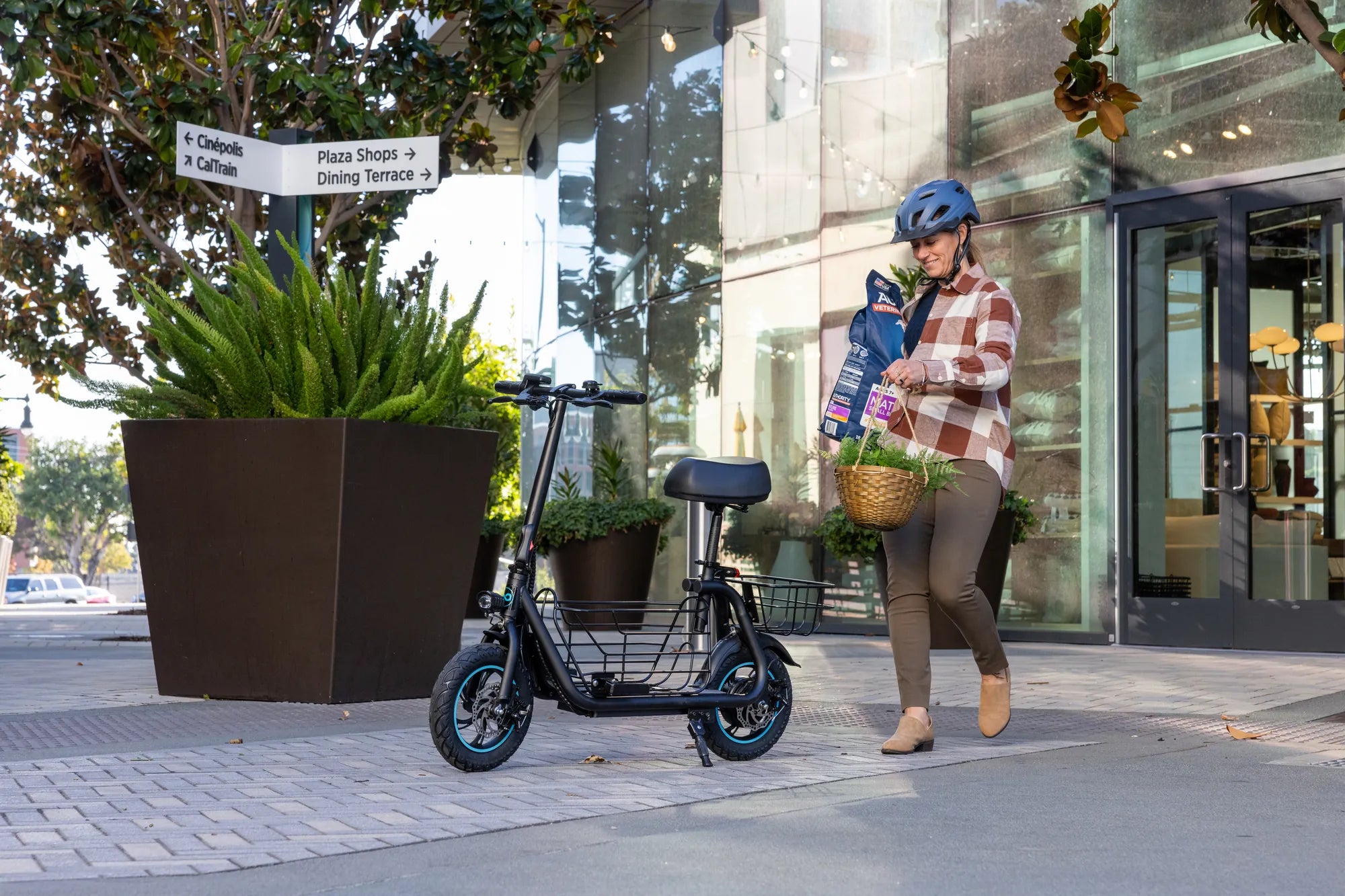
The 'young scooter no features' movement isn't about missing out—it's about choosing in. It's a conscious rejection of bloated tech specs in favor of a pure, reliable, and affordable riding experience. Riders are increasingly opting for electric scooters that do one thing exceptionally well: transport you from point A to point B without fuss, failure, or a steep learning curve. This article will dissect this growing trend, explore the practical realities of owning a basic scooter, and demonstrate how leading brands engineer simplicity without compromising on fundamental safety and durability.
The Rise of the Minimalist Electric Scooter
In a market saturated with models boasting app integration, color displays, and multiple ride modes, a counter-movement has gained momentum. The appeal of a 'young scooter no features' lies in its straightforward proposition. These scooters strip away auxiliary functions to focus on the essential mechanics of electric mobility.
This trend mirrors broader consumer shifts toward durable goods that are repairable and understandable. Riders, particularly young adults and pragmatic commuters, are questioning the necessity of connected features that may become obsolete or require constant smartphone dependence. The core value proposition becomes transparency and reliability.
The philosophy is simple: fewer electronic components mean fewer potential points of failure. A scooter without a complex digital dashboard, Bluetooth module, or proprietary software is inherently less prone to glitches. This design ethos prioritizes longevity and ease of maintenance over temporary novelty.
For brands like Gyroor, this trend validates an engineering-first approach. Building a scooter that consistently starts, stops, and carries its rider safely for years is a more significant technological achievement than adding superfluous digital gimmicks. It's a return to fundamentals in personal electric vehicle design.
Decoding "No Features": What's Actually Missing?
When discussing a 'young scooter no features,' it's crucial to define the term. These are not incomplete products but deliberately simplified ones. The absent features are typically those that add cost and complexity rather than fundamental utility.
Common omissions include smartphone application connectivity. Many premium scooters offer apps for locking, diagnostics, or customizing performance profiles. A no-features model forgoes this, relying on physical controls. Cruise control is another frequent exclusion, requiring the rider to maintain throttle input manually.
The display is often a simple LED battery indicator rather than a digital screen showing speed, mileage, and mode. There may be no regenerative braking, no multiple speed modes (eco, sport, turbo), and no integrated lighting beyond legal minimums. The braking system is likely a straightforward mechanical disc or drum brake instead of an electronic anti-lock system.
It's a misconception that these scooters lack all features. They possess the essential ones: a motor, a battery, a controller, brakes, and a frame. The 'no features' label signifies the absence of the secondary, digital, or convenience-focused additions that define the premium segment. The riding experience is direct and unmediated.
The Gyroor Foundation: Reliability as the Ultimate Feature
Gyroor's approach to this category demonstrates that 'simple' does not mean 'compromised.' By integrating non-negotiable safety and durability standards into a clean design, they create scooters where the lack of bells and whistles is a strength. The core technology is over-engineered for peace of mind.
Every Gyroor scooter, including its more minimalist models, is built around a UL-certified battery pack. This is a critical safety foundation often missing in truly cheap, generic scooters. The battery undergoes rigorous testing for over 500 charge cycles, ensuring long-term reliability is baked into the simplest design.
Furthermore, an IPX5 water-resistant rating is standard. This practical feature protects the scooter's vital electronics from rain and road spray—a real-world necessity that many basic scooters overlook. This commitment means a Gyroor 'no-features' scooter can handle daily commutes in various weather conditions confidently.
Backed by a comprehensive 1-year warranty and trusted by over 100,000 riders, Gyroor proves that a minimalist scooter can be a high-quality product. The brand's philosophy is that reliability, safety, and durability are the most important features any scooter can have, regardless of its price point or technological complexity.
Why Choose Simplicity? The Core Benefits
The decision to select a 'young scooter no features' model is driven by several tangible advantages. The most immediate is cost. Eliminating complex digital components and licensing fees for app development significantly reduces the manufacturing price, savings passed directly to the consumer.
Weight reduction is a major benefit. Extra features like large displays, additional control modules, and reinforced frames for higher speeds add pounds. A lighter scooter is easier to carry upstairs, onto public transit, or store in a cramped apartment—a critical factor for urban riders.
Ease of use is paramount. There is no pairing process, no software to update, and no settings to configure. You turn it on and ride. This reduces the barrier to entry for new riders and eliminates distractions, allowing full attention on the road and surroundings.
Maintenance becomes significantly more straightforward. Without proprietary software or networked components, most issues can be diagnosed with basic mechanical and electrical knowledge. This empowers owners and can reduce long-term servicing costs, as local repair shops can work on the scooter without specialized digital tools.
Data-Driven Comparison: Basic vs. Feature-Rich Scooters
The choice between a minimalist and a feature-rich scooter often comes down to use case and personal priority. The following table contrasts key attributes, assuming similar motor and battery specifications from the same quality manufacturer.
| Attribute | Basic / 'No-Features' Scooter | Feature-Rich / Premium Scooter |
|---|---|---|
| Primary Appeal | Affordability, reliability, low weight, simplicity | Technology integration, performance tuning, comfort features |
| Typical Price Point | Significantly lower for equivalent core specs | Premium markup for digital features and advanced systems |
| Weight | Lighter (fewer components, simpler frame) | Heavier (added electronics, robust construction for speed) |
| Learning Curve | Minimal; intuitive physical controls | Moderate; requires understanding of modes/app functions |
| Maintenance Complexity | Lower; mechanical focus, easier DIY repair | Higher; may require software diagnostics, proprietary parts |
| Ideal Use Case | Short, fixed urban commutes; first-time riders; budget-focused buyers | Longer recreational rides; tech enthusiasts; riders seeking customizable performance |
| Long-Term Obsolescence Risk | Very low; functionality remains unchanged | Higher; apps may lose support, software may not update |
This comparison highlights a fundamental trade-off. The feature-rich scooter offers a more tailored and connected experience, while the basic model provides dependable, cost-effective transportation. For many daily commuters, the latter is the more rational and practical choice.
The Ideal Rider for a No-Features Scooter
The 'young scooter no features' model serves a specific demographic perfectly. The urban commuter with a predictable, short-distance route is a primary candidate. For a three-mile commute to work or college, a simple, reliable scooter that can be charged overnight is an ideal solution.
Budget-conscious students and young adults form another core group. The lower upfront cost and reduced worry about damaging expensive tech make a minimalist scooter a financially sensible entry into personal electric mobility. It's a tool, not a gadget.
Riders who value durability and ease-of-use over digital integration are also drawn to this category. This includes individuals who are not tech-averse but prefer their technology to be silent and seamless. They want a scooter that works every time without needing to troubleshoot a Bluetooth connection or app crash.
Finally, the minimalist scooter is an excellent choice for households as a secondary or shared vehicle. Its simplicity means anyone can use it with minimal instruction. The lower cost also makes it feasible to own more than one, eliminating the 'who gets the scooter today' dilemma.
Non-Negotiable Features in a Minimalist Design
While embracing simplicity, certain features must never be compromised. These are the pillars of safety, durability, and legal compliance that separate a quality minimalist product from a dangerous toy.
Battery safety is paramount. A UL-certified battery pack, like those used by Gyroor, is non-negotiable. It ensures the battery has passed rigorous tests for electrical, mechanical, and environmental safety, drastically reducing the risk of fire—a critical concern with lithium-ion batteries.
Effective braking is essential. Whether it's a disc, drum, or foot brake, the system must provide consistent, reliable stopping power in all conditions. This is a fundamental safety feature where cost-cutting is unacceptable.
Basic lighting for visibility is a legal and safety requirement. At minimum, a front headlight and rear brake light are necessary for riding at dawn, dusk, or night. Water resistance (IPX5 or higher) is also crucial for real-world usability, protecting the motor and controller from rain and puddles.
A robust frame with a solid weight rating and a trustworthy manufacturer's warranty round out the non-negotiables. These elements guarantee the scooter is built to last and that the company stands behind its product's core functionality.
Maintenance and Safety for Your Simple Scooter
Owning a 'young scooter no features' model simplifies maintenance but does not eliminate it. Regular check-ups are key to longevity and safety. The process is more mechanical and tactile compared to digital diagnostics.
Weekly, check tire pressure and tread wear. Inspect brake pads for thickness and ensure the braking mechanism engages smoothly and firmly. Give all fasteners (especially on the stem and folding mechanisms) a check for tightness, as vibrations can loosen them over time.
Monthly, inspect the physical condition of the battery compartment and charging port for debris or damage. Clean the scooter with a damp cloth, avoiding direct high-pressure water streams despite water resistance. Listen for unusual sounds from the motor or wheels that might indicate bearing or alignment issues.
For safety, always wear a helmet. Use the installed lights in low-visibility conditions. Be hyper-aware of your surroundings, as the quiet operation of an electric scooter can surprise pedestrians. Understand your scooter's limitations—most basic models are not designed for steep hills or off-road use. Ride defensively and assume drivers may not see you.
Beyond the Hype: The Lasting Value of Simplicity
The 'young scooter no features' trend is more than a fad; it's a rational response to over-complication. In a world of constant software updates and planned obsolescence, a well-built minimalist scooter offers a refreshing constancy. It provides dependable service year after year, free from digital decay.
This approach champions purposeful design. Every component on a scooter like those from Gyroor serves a clear, essential function. There is no feature for feature's sake. This results in a product that feels honest, understandable, and ultimately more trustworthy.
For the vast majority of urban mobility needs, this is all that's required. The core innovation of the electric scooter—a compact, efficient, fun way to navigate cities—is complete in itself. The addition of layers of digital technology often solves problems that most riders never had.
By choosing a scooter built on a foundation of certified safety and proven durability, you're not missing out on features. You're investing in the most important ones: reliability, safety, and value. You're choosing a vehicle that starts as a simple solution and remains one, mile after dependable mile.
Frequently Asked Questions (FAQ)
Q: Can a basic 'no-features' electric scooter handle hills?
A: Capability depends primarily on motor power and battery voltage, not on digital features. A basic scooter with a robust 350W-500W motor can handle moderate inclines. However, steep hills will reduce speed and drain the battery faster. Always check the manufacturer's specifications for gradeability.
Q: Is water resistance really important if I just plan to use it on sunny days?
A> Absolutely. Even on sunny days, you may encounter wet roads, morning dew, or accidental splashes. An IPX5 rating protects the scooter's electrical components from these common hazards, greatly increasing its longevity and reliability. It's a essential feature for real-world, all-weather commuting.
Q: How do I know the battery level or speed without a digital display?
A> Most minimalist scooters use a series of LED lights to indicate battery charge (e.g., 4 lights = full, 1 light = low). Speed is often gauged by feel and experience. For precise speed tracking, a simple bicycle computer can be added. Many riders find they quickly learn to estimate speed based on motor sound and visual cues.
Q: Are these scooters legal to ride on roads and bike lanes?
A> Legality is determined by local laws, which typically regulate factors like maximum speed, motor power, and required equipment (lights, bell). A basic scooter often falls within legal limits more easily than a high-powered model. Always check your city and state regulations before riding.
Q: How long does a quality minimalist scooter typically last?
A> With proper maintenance, a scooter built with quality components like a UL-certified battery and a sturdy frame can last for several years and hundreds of charge cycles. The simpler mechanical and electrical design often contributes to a longer functional lifespan with fewer catastrophic failures compared to more complex models.
The journey toward simpler, more reliable electric mobility starts with choosing a tool designed for purpose, not just packed with features. Discover the Gyroor collection, where every model—from the straightforward to the advanced—is built on an uncompromising foundation of safety, durability, and honest value. Find your perfect ride at gyroorboard.com.
Ebike for Off Road: The Ultimate Guide to Electric Mountain Biking
E200 Scooter Review: Power, Range & Reliability for Urban Commuters