


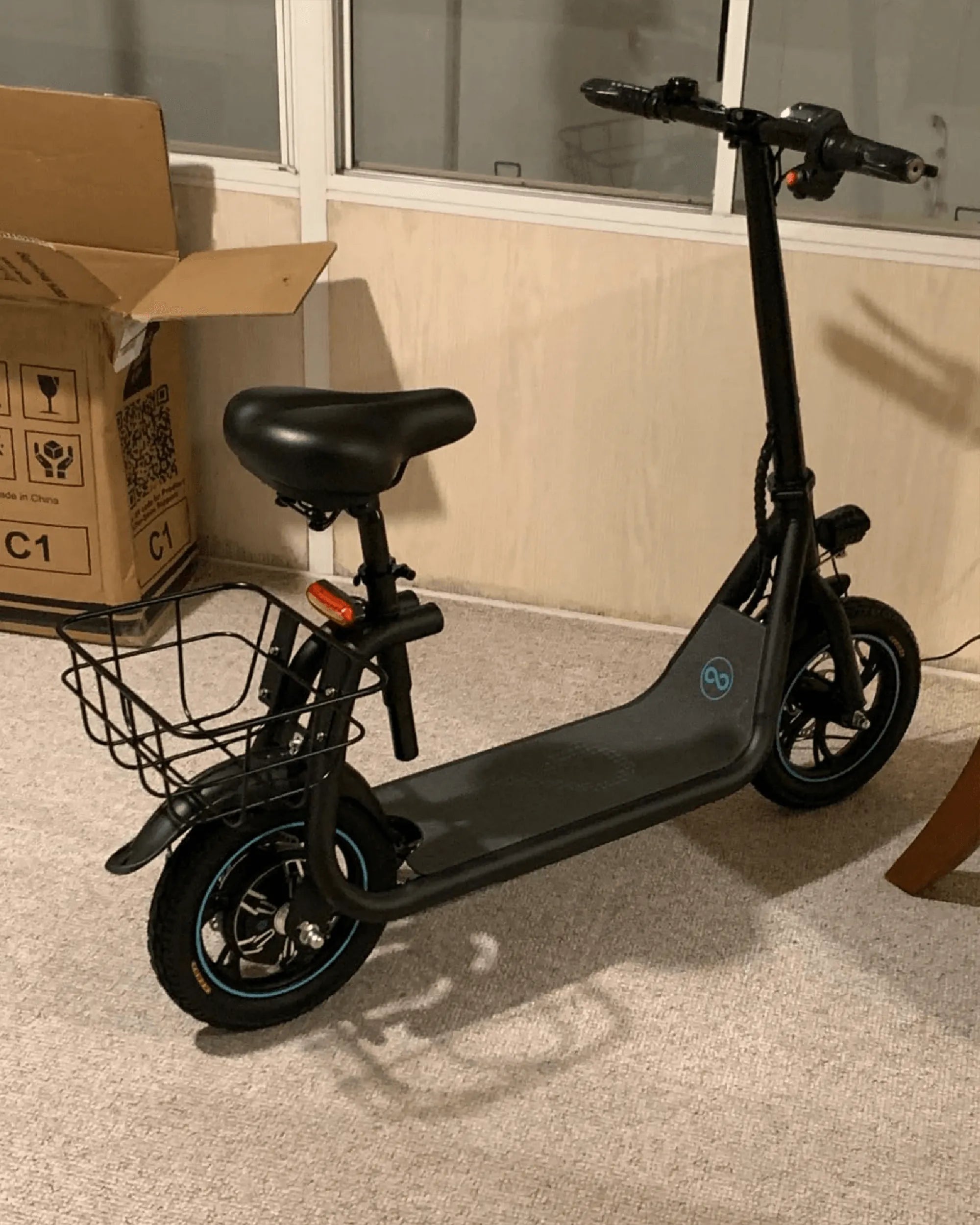
The Unsung Hero of Your Ride: Why the Inner Tube Matters
Your scooter's performance hinges on a component you rarely see: the inner tube. This simple ring of rubber is the critical barrier holding air, directly impacting your ride's safety, comfort, and efficiency. For many adult and high-performance electric scooters, the 10-inch wheel size has become a standard, offering a balance of stability and agility. This article is your ultimate resource for understanding, selecting, and maintaining the 10-inch scooter inner tube, ensuring every journey is smooth and secure.
A faulty or incorrect inner tube can lead to frequent flats, poor handling, and even damage to your scooter's rims or motor. Conversely, a quality tube matched to your tire provides reliable cushioning and supports the scooter's weight and your riding style. We'll delve into the technical details, practical selection steps, and essential maintenance routines that every rider should know.
This guide is especially crucial for owners of reliable brands, where component quality should be consistent. Using a substandard tube on a well-engineered scooter is a mismatch that compromises the entire system. We'll explore why your investment deserves this foundational piece of care.
By the end, you'll be equipped to make informed decisions, perform basic maintenance, and troubleshoot common issues, transforming a potential point of failure into a pillar of riding confidence. Let's start with the fundamentals of what a 10-inch scooter inner tube actually is.
Anatomy & Specifications: Defining the 10-Inch Scooter Inner Tube
A 10-inch scooter inner tube is a donut-shaped air chamber designed to fit inside a 10-inch diameter tire. Its key specification isn't just diameter, but also width, typically denoted as 10x2.0, 10x2.125, or similar. The first number (10) is the approximate inflated diameter in inches, and the second number (2.0, 2.125) is the inflated width in inches.
It is vital to understand that tube size and tire size are interdependent. The inner tube must match the tire's width or fall within its acceptable range. Installing a tube that is too narrow can overstretch and thin the rubber, making it prone to blowouts. A tube that is too wide may fold or crease inside the tire, causing friction, heat buildup, and failure.
The tube's material is almost universally butyl rubber. This synthetic compound offers an excellent balance of air retention, elasticity, durability, and cost-effectiveness. Its slow air permeability means you won't have to inflate your tires daily, a key convenience for regular riders.
While alternatives like latex tubes exist for ultra-high-performance bicycles, offering lower rolling resistance, they are rare in the scooter world due to higher cost and significantly faster air loss. For the demands of daily electric scooter use, butyl rubber remains the practical and reliable standard.
Valve Types: Schrader vs. Presta
The valve stem is your access point for inflation and is a critical compatibility factor. The two primary types are Schrader and Presta. The Schrader valve is the automotive standard: robust, wide, and equipped with a spring-loaded check valve core. It's the most common valve found on electric scooters, hoverboards, and e-bikes, compatible with most gas station and bike pumps.
The Presta valve, also known as a French valve, is taller, narrower, and features a locking nut at the top. It is more common on high-pressure road and mountain bike tires. While some high-end scooters may use Presta valves for their rims, they are less frequent. Always identify your existing valve type before purchasing a new 10-inch scooter inner tube.
Valve stem length is another crucial, often overlooked, specification. Scooters, especially electric models, often have deep or reinforced rims to handle motor torque and weight. A standard 32mm stem might be recessed and inaccessible. Opting for a 40mm, 48mm, or even longer “long stem” valve ensures you can attach your pump head without struggle.
Material & Construction: The Science of Butyl Rubber
Butyl rubber's dominance is due to its molecular structure, which is highly impermeable to air molecules. This quality is measured by its air retention rate, which is superior to natural rubber. A quality butyl tube can maintain adequate pressure for weeks, whereas natural rubber might require weekly top-ups.
The thickness of the tube wall is a key variable. Standard tubes might be around 0.9mm thick. Many manufacturers offer “thorn-resistant,” “heavy-duty,” or “puncture-resistant” versions with walls up to 1.5mm or 2.0mm thick. This added material provides a stronger barrier against sharp objects like glass, thorns, or road debris.
Construction quality also involves the seam where the ends of the rubber strip are joined to form the circle. A high-temperature vulcanization process creates a seamless, strong bond. Lower-quality tubes may have weaker seams prone to splitting under pressure or stress. Investing in a tube from a reputable manufacturer often means better control over this critical manufacturing step.
Why Your Gyroor Scooter Deserves a Quality Inner Tube
Gyroor designs electric scooters and e-bikes with a focus on reliability, featuring UL-certified battery packs and IPX5 water-resistant designs. This engineering philosophy should extend to every component, including the often-overlooked inner tube. A premium scooter's performance is only as strong as its weakest link.
A poor-quality or mismatched inner tube can undermine your scooter's integrity. Frequent flats are not just an inconvenience; they can strand you and put undue stress on the scooter's electrical system. A sudden flat can also cause loss of control, a significant safety hazard, especially at the speeds capable of Gyroor's performance models.
Furthermore, an underinflated tire, often a result of a slow leak from a subpar tube, increases rolling resistance. This forces the motor to work harder, draining the battery faster and reducing your effective range. Protecting your investment in a Gyroor scooter means protecting its efficiency and the longevity of its core systems.
Using a quality, correctly sized 10-inch scooter inner tube ensures that the ride quality, safety features, and durability engineered into your Gyroor are fully realized. It’s a small component that plays a massive role in the overall ownership experience trusted by over 100,000 riders.
The Ultimate Selection Guide: Choosing the Right 10-Inch Tube
Selecting the correct replacement is a straightforward process if you follow these steps. Taking the time to get it right the first time saves frustration, money, and potential damage.
Step 1: Decode Your Current Tire Sidewall
The single most important piece of information is printed on the sidewall of your current tire. Look for a series of numbers like “10x2.0,” “10x2.125,” or “70/100-10.” The “10” is the diameter. The “2.0” or “2.125” is the tire width in inches. The metric “70/100-10” means a width of 70mm and an aspect ratio of 100% of the width, equating to a height of 70mm, on a 10-inch rim.
Your new 10-inch scooter inner tube must match this width. Most tubes are labeled with a range (e.g., “Fits 10x1.75 to 10x2.125”). Ensure your exact tire size falls within this range. When in doubt, choosing a tube whose specified range is centered on your tire size is the safest bet.
Do not guess or assume based on the wheel size alone. A 10-inch scooter inner tube for a 10x1.75 tire is different from one for a 10x2.5 tire. Using the wrong size is the leading cause of premature tube failure.
Step 2: Identify Your Valve Stem Type and Length
Visually inspect your current valve. A Schrader valve looks like a standard car tire valve. A Presta valve is thinner and has a small locking nut at the top that must be unscrewed before inflation. Purchase a tube with the identical valve type.
Next, assess the stem length. If your rim is deep and the valve is hard to reach with a pump, measure the length from the base of the rim to the tip of the valve cap. Common lengths are 32mm (standard), 40mm, and 48mm (long). For most electric scooters with reinforced rims, a 40mm or longer stem is highly recommended for ease of inflation.
Step 3: Evaluate Thickness and Puncture Protection Needs
Consider your typical riding environment. For smooth urban pavement, a standard-weight tube may suffice. If you encounter broken pavement, gravel paths, or debris-filled bike lanes, a heavy-duty or thorn-resistant 10-inch scooter inner tube is a wise investment.
The trade-off for increased puncture resistance is a minor increase in weight and a potential, often imperceptible, change in ride suppleness. For the vast majority of commuters and recreational riders, the dramatic reduction in flat tire risk far outweighs these negligible downsides. It’s a form of inexpensive insurance for your daily mobility.
Installation, Maintenance & Troubleshooting
Proper handling extends the life of your tube and ensures safety. Here’s how to manage this essential component.
How to Properly Install a New Inner Tube
1. Fully Deflate: If replacing an old tube, ensure it is completely deflated. Remove the valve core if necessary to expel all air.
2. Break the Bead: Use tire levers to gently pry one side of the tire bead over the rim. Work your way around until one side is completely off.
3. Remove Old Tube: Pull the deflated tube out from inside the tire.
4. Inspect Tire & Rim: Run your fingers along the inside of the tire and the rim bed to feel for any embedded debris, sharp spokes, or damaged rim tape. This step is crucial to prevent an immediate repeat puncture.
5. Insert New Tube: Inflate the new 10-inch scooter inner tube slightly (just enough to give it shape) and place it inside the tire, ensuring the valve stem aligns with the valve hole in the rim.
6. Reseat the Tire: Starting opposite the valve, work the tire bead back onto the rim using your hands. Use tire levers as a last resort, and be extremely careful not to pinch the tube between the lever and the rim.
7. Inflate in Stages: Inflate to about 10 PSI, check that the tire is seating evenly and the tube isn't bulging, then inflate to the recommended PSI listed on the tire sidewall.
Maintaining Your Tube for Maximum Lifespan
Regular maintenance is simple but profoundly effective. Use a dedicated tire pressure gauge to check inflation at least once a week, or before any significant ride. Small tires lose pressure faster than car tires, and riding on underinflated tires is the primary cause of “pinch flats” or “snake bites,” where the tube is pinched against the rim on a hard impact.
Keep tires inflated to the manufacturer's maximum recommended pressure (found on the sidewall). This minimizes rolling resistance for better battery range and provides the best puncture protection. Periodically inspect the tire tread and sidewalls for cuts, cracks, or embedded objects that could work their way inward to the tube.
Common Problems & Solutions: A Diagnostic Table
| Problem | Likely Cause | Solution |
|---|---|---|
| Sudden, complete loss of air | Major puncture (nail, glass), valve failure, or blowout. | Replace the tube. Inspect tire thoroughly for the cause. |
| Slow leak (loses air over days) | Small puncture, leaking valve core, or poor seal at valve stem base. | Submerge inflated tube in water to find bubbling leak. Patch or replace. |
| Repeated flats in the same spot on the tube | Debris still embedded in tire, damaged rim tape exposing spokes, or a burr on the rim. | Meticulously inspect tire interior and rim. Replace rim tape if frayed. |
| Bulge in the tire sidewall | Tube is twisted or folded inside the tire. | Deflate, reseat the tire bead, and ensure the tube is lying flat. |
| Difficulty inflating | Faulty pump, wrong valve adapter, or blocked valve. | Check pump connection. For Presta, ensure locknut is open. Clean valve. |
Frequently Asked Questions (FAQ)
Q: Can I use a slightly different size inner tube (e.g., 10x2.0 in a 10x2.125 tire)?
A: Yes, but only within the manufacturer's stated range. A tube labeled for 10x1.75-2.125 can safely fit a 10x2.125 tire. However, using a tube at the extreme end of its range (like a 10x2.0 tube, max, in a 10x2.5 tire) is risky and not recommended. An exact match is always ideal.
Q: How often should I check my scooter's tire pressure?
A: For optimal performance and safety, check pressure before every significant ride or at minimum once a week. Electric scooter tires, due to their smaller volume, are more sensitive to pressure loss than bicycle tires.
Q: Is it worth patching a 10-inch scooter inner tube, or should I just replace it?
A: Small punctures in the main body of the tube can be reliably repaired with a quality vulcanizing patch kit. This is cost-effective and sustainable. However, replace the tube if the puncture is near the valve stem, if it's a large tear, or if the tube already has multiple patches.
Q: Does a thicker “puncture-resistant” tube make the ride uncomfortable?
A: The difference in ride comfort is minimal for most riders. The air in the tire provides the primary cushioning. The thicker rubber may slightly dampen high-frequency vibrations but the trade-off for dramatically improved flat protection is considered highly worthwhile, especially for urban commuters.
Q: Can a bad inner tube affect my electric scooter's battery life?
A: Absolutely. An underinflated tire, often due to a leaky tube, significantly increases rolling resistance. This forces the motor to draw more power from the battery to maintain speed, thereby reducing your scooter's per-charge range. Proper inflation is key to efficiency.
Conclusion: The Foundation of a Reliable Ride
Your 10-inch scooter inner tube is far more than a simple piece of rubber; it is a vital safety and performance component. Understanding its specifications, selecting the correct replacement, and performing basic maintenance are simple skills that yield significant rewards: fewer interruptions, enhanced safety, and preserved scooter health. For riders of quality electric vehicles, this attention to detail ensures that every component, from the UL-certified battery down to the inner tube, works in harmony for a superior riding experience. Don't let a minor component become a major headache. Check your tire's specifications and condition today, and ensure your next ride is on a solid, reliable foundation. Explore a range of compatible parts and accessories designed for performance and durability by visiting the full Gyroor collection at gyroorboard.com.
Best Value Scooter: A Data-Driven Guide to Smart, Safe, and Durable E-Scooter Ownership
Best Scooter for 13 Year Old Boy: A 2024 Safety & Performance Guide