



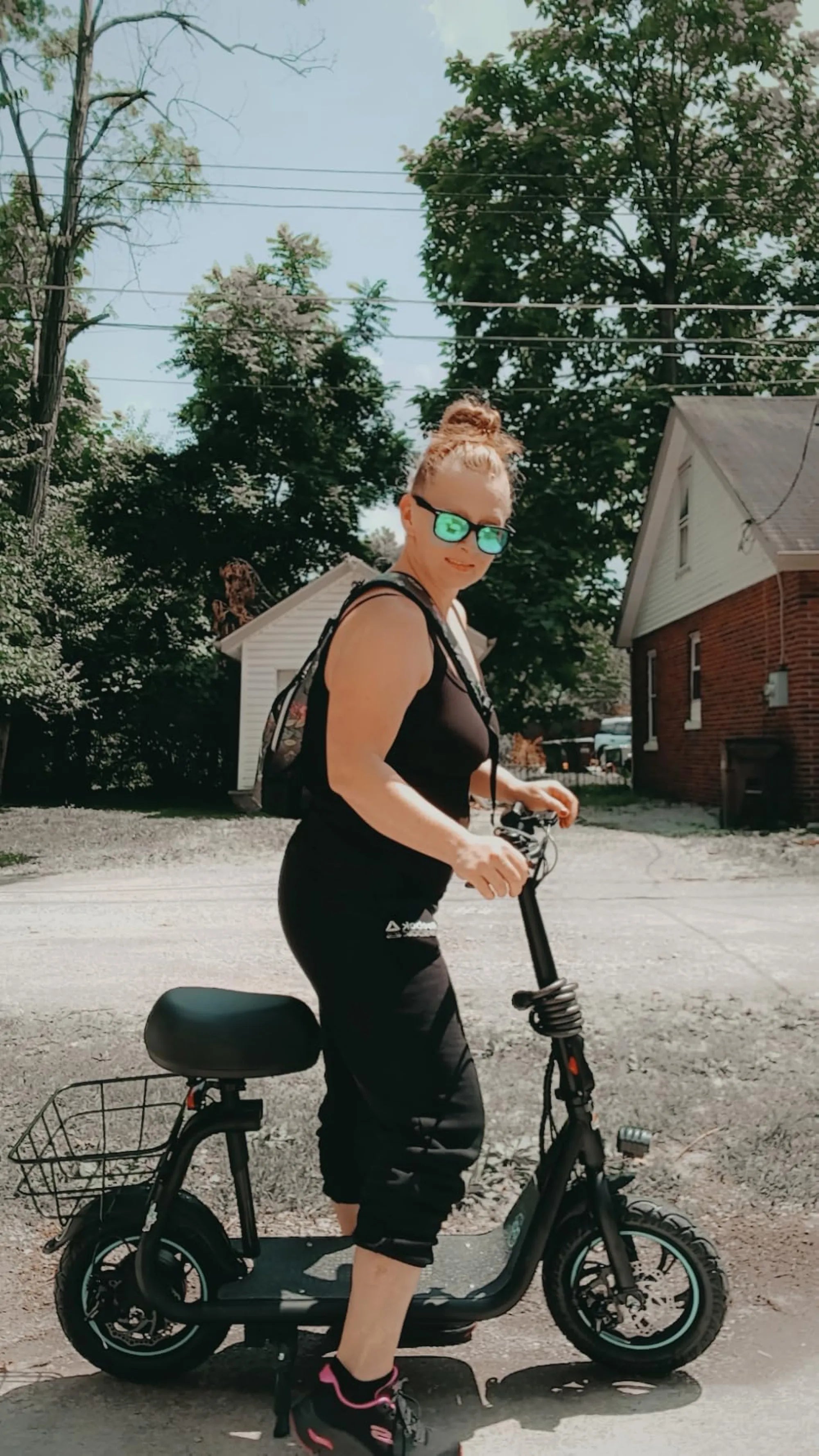
Introduction: Navigating Florida's Electric Scooter Laws
Are electric scooters street legal in Florida? This is the crucial question for anyone considering an e-scooter for commuting or recreation in the Sunshine State. The answer is nuanced: yes, but with a complex web of rules that vary significantly depending on exactly where you plan to ride.
Florida law provides a foundational framework, but individual cities and counties have the authority to impose stricter regulations. Understanding this dual-layer system is essential to avoid fines and ride safely.
This guide provides a detailed, data-driven breakdown of everything you need to know. We'll cover state statutes, delve into local ordinances for major metro areas, and outline rider responsibilities.
As a leading electric scooter and e-bike brand trusted by over 100,000 riders across North America and Europe, Gyroor designs its products with compliance, safety, and real-world usability in mind, making them a strong fit for Florida's unique legal and environmental landscape.
Understanding the Legal Framework: State vs. Local Ordinances
Florida's approach to micromobility is not a one-size-fits-all mandate. The legality of electric scooters is governed by a two-tiered system that every rider must understand. At the top level, the Florida Legislature has defined electric scooters in statute and set baseline operational rules.
However, the state law explicitly grants local municipalities—cities and counties—the authority to adopt ordinances that are more restrictive than state provisions. This means the rules in Miami may be different from those in Tampa, Orlando, or Jacksonville.
This local control allows cities to manage scooters based on population density, infrastructure, and public safety concerns. It's the primary reason the question 'Are electric scooters street legal in Florida?' requires a location-specific answer.
Ignoring local ordinances can result in citations and fines, even if you are following state law. Your first step as a responsible rider is always to verify the rules for your specific city or county of operation.
Florida State Law for Electric Scooters: The Baseline Rules
Florida Statutes Section 316.003(2) defines an electric scooter as a vehicle with a handlebar, a floorboard designed to be stood upon, and an electric motor not exceeding 750 watts. It must have a maximum speed on a paved level surface of no more than 20 mph when powered solely by the motor.
Under this state definition, electric scooters are not considered motor vehicles. This has significant implications for licensing and registration. State law establishes several universal requirements that apply everywhere in Florida, unless a local law says otherwise.
Key state mandates include: operators must be 16 years or older; riders under 16 must wear a bicycle helmet; all standard DUI laws apply; and electric scooters are prohibited on sidewalks within business districts. These rules form the absolute minimum standard for legal operation.
It is critical to note that state law treats e-scooters similarly to bicycles in terms of roadway rights and responsibilities. They are generally intended for use on roadways, in bicycle lanes, or on shared-use paths, not on sidewalks.
Where You Can and Cannot Ride Under State Law
State law provides clear guidance on permissible riding locations. Electric scooters are authorized for use on roadways, where they must ride as close as practicable to the right-hand curb or edge of the roadway, just like a bicycle.
They are also permitted in bicycle lanes and on shared-use paths, which are multi-use trails designated for bicycles, pedestrians, and other non-motorized vehicles. This makes them ideal for many of Florida's extensive urban trail networks.
The prohibition is explicit for sidewalks within business districts. A business district is typically defined as an area where 50% or more of the property frontage is used for business purposes. This essentially covers most downtown and commercial areas.
Furthermore, electric scooters are always prohibited on limited-access highways, such as interstates (I-95, I-75, I-4) and certain expressways. Riding on these roadways is extremely dangerous and illegal.
The Critical Role of Local City Ordinances
While state law sets the floor, local ordinances often build a much taller fence around e-scooter use. Major Florida cities have enacted detailed rules to manage dockless scooter share programs and private scooter use, focusing on public safety and pedestrian access.
These local laws can override state law by being more restrictive. For example, while state law only requires helmets for riders under 16, a city can mandate helmets for all ages. They can also impose lower speed limits, designate no-ride zones, and create specific parking rules.
Failing to research and adhere to your city's specific ordinances is the most common way riders find themselves on the wrong side of the law. A scooter legal in one city may be subject to restrictions just a few miles away in a different municipality.
The table below highlights key variations in ordinances across some of Florida's largest cities, illustrating why local verification is non-negotiable.
| City | Helmet Requirement (All Ages) | Geofenced No-Ride/Slow Zones | Sidewalk Riding Prohibited | Additional Notes |
|---|---|---|---|---|
| Miami | Yes | Yes (Downtown, Brickell) | Citywide | Strict parking corrals; scooters banned from certain parks & bridges. |
| Tampa | No (State law applies) | Yes (Riverwalk, certain sidewalks) | In Business Districts | Speed limit may be reduced to 10 mph in designated zones. |
| Orlando | Yes | Yes (Church St., Lake Eola Park) | Citywide in Downtown | Operators must provide liability insurance (for rental companies). |
| Jacksonville | No (State law applies) | Limited | In Business Districts | Follows state law closely; some beach area restrictions. |
| Fort Lauderdale | Yes | Yes (Beachfront, Las Olas) | Citywide | Requires use of bike lanes where available; sunset curfew for rentals. |
How to Check Your Local Laws
Finding your local e-scooter ordinances requires a bit of digital legwork, but it's straightforward. Start with your city or county government's official website. Look for sections titled 'Transportation,' 'Micromobility,' 'City Code,' or 'Ordinances.'
You can often search the municipal code for terms like 'electric scooter,' 'motorized scooter,' or 'dockless vehicle.' The police department or transportation authority website may also have dedicated pages summarizing rules for riders.
For major cities with scooter-share programs, the city's agreement with the operating companies usually includes a public summary of rider rules, which also apply to privately owned scooters. Local news outlets often report on changes to scooter laws, providing a helpful current affairs check.
When in doubt, a direct call or email to your local city clerk's office or transportation department can provide definitive answers. Documenting the specific code section is the best practice for reference.
Gyroor Scooters and Florida Compliance: A Data-Driven Fit
Choosing a scooter designed with legal and environmental realities in mind is the first step toward compliant riding. Gyroor's engineering philosophy prioritizes the features that align directly with Florida's regulatory landscape and riding conditions, offering riders both performance and peace of mind.
With over 20 models in its lineup, Gyroor provides options suitable for different urban environments, from compact commuters to more powerful models for longer distances. Each is built with a focus on the safety certifications and durability needed for consistent street use.
Compliance isn't an afterthought; it's integrated into the design. From lighting systems that meet visibility requirements to robust braking systems essential for Florida's mixed traffic, Gyroor scooters are developed for real-world legality.
The brand's commitment is backed by data: over 100,000 riders globally and an average 4.5/5 customer rating underscore a track record of reliability that Florida riders can trust for their daily commutes or recreational rides.
Safety Features That Meet Legal & Practical Needs
Several key Gyroor features directly address common legal and safety concerns in Florida. First and foremost are the UL-certified battery packs. These batteries undergo rigorous testing for over 500 charge cycles, mitigating fire risk—a growing concern for regulators and a critical safety priority.
Florida's sudden, heavy rains make water resistance vital. Gyroor's IPX5 water-resistant rating on key models means the scooter can withstand water jets from any direction, protecting electrical components from downpours and wet roads, a practical necessity for year-round riding.
Legal operation often requires proper lighting. Gyroor models come equipped with bright front headlights, rear brake lights, and side reflectors to ensure visibility to motorists at night, helping riders fulfill the implied duty to be seen as required for road use.
Finally, reliable dual braking systems (often electronic + disc or drum) provide the stopping power necessary for safe operation in traffic and crowded bike lanes. Consistent braking performance is a non-negotiable aspect of both safety and predictable, legal riding behavior.
Choosing the Right Model for Your Ride
Selecting a Gyroor scooter for Florida use involves matching model specs to your typical routes and local speed limits. For dense urban areas like Miami or Orlando where bike lane speeds are common, a model with a top speed of around 18-20 mph may be ideal, offering efficient travel without excessive speed.
For suburban commutes or use on longer shared-use paths, a model with a longer range (e.g., 25+ miles) and comfort features like suspension becomes more practical. Always prioritize a model whose maximum speed aligns with the flow of traffic in bike lanes or on roads where you'll ride.
The 1-year US-based warranty offered by Gyroor is particularly valuable in Florida's humid, sometimes harsh climate. It guarantees support for any manufacturing defects, ensuring your scooter remains a reliable and legal form of transportation over the long term.
By choosing a scooter from a brand that emphasizes certified safety and durability, you're not just buying a product; you're investing in a compliant and dependable riding experience tailored to Florida's unique demands.
Rider Responsibilities and Best Practices for Legal Operation
Legality extends beyond the scooter's specifications to the behavior of the rider. Adhering to best practices ensures your safety, the safety of others, and minimizes the risk of citations. Your responsibility begins before you even step onto the deck.
Always assume you share the road with vehicles that are larger and faster. Ride predictably, signal your intentions, and never make sudden maneuvers. Yield to pedestrians at all times, especially when transitioning from a bike lane to a sidewalk-legal area.
Do not operate a scooter while under the influence of alcohol or drugs. Florida's DUI laws apply fully to electric scooter operators, with the same severe legal and financial penalties as driving a car impaired.
Carrying a passenger on a scooter designed for a single rider is typically illegal and dangerously affects stability and braking. Always ride solo unless your scooter is specifically designed and certified for two riders.
The Pre-Ride Checklist
Develop a habitual pre-ride check to ensure both legality and mechanical safety. First, know your route and its rules. Are you entering a business district where sidewalks are off-limits? Are there geofenced slow zones?
Second, wear protective gear. Even if your local law only requires a helmet for minors, wearing a certified bicycle helmet is the single most effective safety decision you can make. Consider knee and elbow pads for added protection.
Third, perform a quick scooter inspection: check tire pressure for wear and proper inflation, test both front and rear brakes for responsiveness, and ensure all lights (headlight, brake light) are fully functional, especially for dawn, dusk, or night riding.
Finally, ensure your scooter is charged sufficiently for the round trip. Running out of power on a roadway is not only inconvenient but also creates a hazardous situation. A well-maintained scooter is a key component of legal, responsible riding.
Frequently Asked Questions (FAQ)
Q: Do I need a driver's license, license plate, or registration for an e-scooter in Florida?
A: No. Under Florida state law, electric scooters are not classified as motor vehicles. Therefore, a driver's license, vehicle registration, or license plate is not required to operate one. However, you must be at least 16 years old. Always confirm local ordinances, as they could theoretically impose additional requirements.
Q: Can I ride my electric scooter on Florida sidewalks?
A: It is generally prohibited. State law bans sidewalk riding in business districts. Most major Florida cities have expanded this to a citywide ban on sidewalks, especially in downtown cores. The legal default is to use the roadway, bicycle lane, or shared-use path. Always check your local city code for the precise rule.
Q: What are the penalties for violating e-scooter laws in Florida?
A: Violations are typically treated as non-criminal traffic infractions, similar to a bicycle violation. You can be issued a citation and fined. Fines vary by jurisdiction but often start around $50-$100 for offenses like sidewalk riding in a prohibited zone or riding without a required helmet. In severe cases, like DUI, criminal penalties apply.
Q: Is insurance required for my personal electric scooter?
A: Florida law does not require insurance for privately owned electric scooters. However, it is highly recommended. Your homeowner's or renter's insurance policy may offer some liability coverage, but you should contact your provider to confirm. For significant asset protection and liability coverage, specialized personal electric vehicle insurance is becoming more available.
Q: How does Gyroor's warranty support Florida riders?
A: Gyroor provides a robust 1-year warranty on its electric scooters, covering manufacturing defects in materials and workmanship. This US-based support is crucial for Florida riders facing heat, humidity, and frequent use. The warranty underscores the brand's confidence in the durability and reliability of its UL-certified products under demanding conditions.
Conclusion: Ride Informed and Ride Confidently
The question of whether electric scooters are street legal in Florida is answered by a clear, two-part rule: understand the state's baseline laws and, most importantly, research and obey your local city or county ordinances. This dual-layer system demands proactive awareness from every rider.
By choosing a scooter from a brand like Gyroor, which integrates compliance-focused features such as UL-certified batteries, IPX5 water resistance, and reliable lighting systems, you establish a strong foundation for legal and safe operation. Your responsibilities continue with consistent pre-ride checks, adherence to traffic laws, and the use of proper safety gear.
Electric scooters offer an efficient, enjoyable, and sustainable way to navigate Florida's communities. The key to unlocking their full potential is a commitment to informed and responsible riding. With the right knowledge and the right equipment, you can confidently and legally enjoy the freedom of electric scooting across the Sunshine State.
Ready to find a scooter built for Florida's rules and weather? Browse the full collection of compliant, reliable, and high-performance Gyroor electric scooters at gyroorboard.com.
Are Helmets Required for Electric Scooters? Safety Laws and Best Practices
Best Electric Road Scooters: Top Picks for Speed, Range, and Comfort