



Introduction: Why Your Handlebars Are the Key to Dirt Bike Control
Your hands are your primary connection to the motorcycle. Every steering input, every correction, and every ounce of control flows through the handlebars. Selecting the best dirt bike handlebars is not about finding a universal "best"—it's about finding the perfect interface for your body, your bike, and your riding style. The right bar can dramatically reduce fatigue, improve precision, and boost confidence, while the wrong one can lead to arm pump, poor control, and discomfort.
This guide will demystify the specifications and marketing terms. We will dissect the anatomy of a handlebar, explain how geometry affects your ride, and provide clear, data-driven recommendations for every major riding discipline. By the end, you'll have the knowledge to make an informed upgrade that enhances your connection to the trail or track.
Anatomy of a Dirt Bike Handlebar: Understanding the Specs
To choose intelligently, you must first understand the language of handlebars. Four key dimensions define a bar's feel: width, height (or rise), sweep, and clamp diameter. Each interacts with your riding position and biomechanics. Width is measured from end to end, typically ranging from 28" to 32". Height, or rise, is the vertical distance from the clamp center to the grip center, affecting how upright you stand. Sweep has two components: the back sweep (the angle the grips are pulled toward you) and the up sweep (the angle they are tilted upward).
The clamp area diameter is crucial for compatibility. The industry standard for modern performance bikes is the 1-1/8" oversized clamp, which offers greater strength and vibration damping than the older 7/8" standard. Understanding these measurements is the first step to narrowing down the vast field of options to the handful that will actually work for you.
Material Matters: Aluminum Alloys vs. Steel
The choice of material dictates a bar's fundamental character: its strength, weight, and vibration-damping properties. High-grade 7000-series aluminum alloy is the dominant choice for performance handlebars. Brands like Pro Taper and Renthal use specific, heat-treated alloys like 2014 T6 or 7075 T6. These alloys offer an exceptional strength-to-weight ratio and are engineered to flex in a controlled manner, absorbing sharp impacts and high-frequency vibration before they reach your hands.
Chromoly steel, often used in more budget-conscious or heavy-duty applications, is generally heavier and more flexible. While incredibly durable and resistant to ultimate failure, steel can transmit more vibration. The best dirt bike handlebars for most riders are made from heat-treated aluminum, as the vibration damping directly combats arm fatigue. The manufacturing process—including cold forging and precise heat treatment—is what separates a premium bar from a basic one, ensuring strength without brittleness.
The Geometry of Control: Width, Height, Sweep, and Clamp Area
Let's dive deeper into how each geometric factor influences control. Width provides leverage. Wider bars offer more steering leverage and stability at speed, making the bike feel less twitchy. However, excessive width can hinder maneuvering through tight trees and increase strain on shoulders. A common starting point is 2-4 inches wider than your shoulder width.
Height/Rise determines your standing posture. More rise brings the grips up and back, promoting a more upright, comfortable stance for trail riding. Less rise forces a more forward, aggressive "attack position" preferred in motocross. Sweep is critical for wrist and forearm alignment. Insufficient back sweep can force your wrists into an angled, stressful position. Most riders find a back sweep between 5 and 12 degrees to be optimal. The clamp area, being 1-1/8", provides a larger platform to resist twisting forces from crashes and impacts.
Matching Handlebars to Your Riding Discipline
The "best" bar is entirely contextual to where and how you ride. A motocross racer and a hard enduro specialist have radically different needs. This section provides discipline-specific recommendations, linking geometry choices directly to the physical demands of the sport. Your goal is to select a bar that complements, not fights, your body's position during the most challenging parts of your ride.
Ignoring this step is the most common mistake. A bar perfect for blasting whoops on a track will leave you hunched over and miserable on a five-hour mountain enduro. By aligning your equipment with your discipline, you make the bike an extension of your body, not an obstacle to overcome.
Motocross / Supercross: Precision and Attack
For MX and SX, the riding position is aggressively forward, chest over the handlebar clamps. The best dirt bike handlebars for this discipline typically feature a low-to-moderate rise (often 20mm-40mm) and a minimal back sweep (around 5-7 degrees). This geometry keeps the rider in a compact, aerodynamic posture, ready to weight the front end for cornering and absorb jump landings with bent elbows.
Width is a personal preference but often trends toward the wider end (31"-32") for maximum leverage when whipping and controlling the bike in the air. The focus is on precise steering input and a rigid, direct feel. Brands like Pro Taper (SX Race or EVO) and Renthal (FatBar 997) dominate here, with alloys tuned for high-impact landings. The bars must be strong enough to survive crashes but also provide enough feedback to feel the front tire.
Trail / Enduro: Comfort for the Long Haul
Trail and enduro riding demands endurance. You're standing for hours, navigating technical terrain at variable speeds. Here, ergonomics trump ultra-precise steering. The best dirt bike handlebars for trail riding generally have a higher rise (50mm-100mm) and more pronounced back sweep (8-12 degrees). This pulls the grips back toward you, allowing a more natural, upright standing position that reduces strain on your lower back and shoulders.
A moderate width (30"-31") offers a balance of control and the ability to squeeze through narrow gaps. Vibration damping is paramount to prevent hand numbness on long fire-road sections. Many enduro riders favor Renthal's TwinWall or FatBar in their higher-rise variants, or Pro Taper's EVO series in a Woods High bend. The goal is to manage fatigue, making the bike feel manageable deep into the third hour of a ride.
Off-Road / Hard Enduro: Maximum Leverage and Durability
Hard Enduro is about maximum control at ultra-slow speeds in impossible terrain. The bike is constantly being manhandled, lifted, and dropped. The best dirt bike handlebars for hard enduro prioritize strength and a very specific geometry. Very high rise (over 100mm) is common, as it helps keep your weight centered and upright during steep, near-vertical climbs and descents, preventing you from going over the bars.
Width can be at or even slightly above the maximum to provide immense leverage for pivoting the bike around obstacles. Durability is non-negotiable—these bars endure constant impacts from rocks, trees, and ground. Crossbar-equipped designs like the Renthal TwinWall are popular for their ultimate strength. The material must withstand repeated bending forces without failing. Comfort is still important, but it's a comfort derived from control and survival in extreme conditions.
Top Contenders: A Data-Driven Look at Popular Handlebar Brands & Models
This table provides a clear, objective comparison of leading handlebar families, highlighting their core design philosophies, typical applications, and key features. Use this as a reference point to understand the market landscape.
| Brand & Series | Core Philosophy | Key Feature | Ideal Discipline | Avg. Price Point |
|---|---|---|---|---|
| Pro Taper EVO | Vibration Elimination | Patented 7/8" to 1-1/8" taper wall design | Motocross, Trail | $$$ |
| Renthal FatBar | Controlled Flex Profile | Single-wall 1-1/8" design, multiple bend options | Motocross, Enduro | $$$ |
| Renthal TwinWall | Maximum Strength & Stiffness | Dual-layer 1-1/8" construction, crossbar | Supercross, Hard Enduro | $$$$ |
| ODI CFT | Innovative Flex Zones | Controlled Flex Theory, crossbar-less options | Trail, All-Mountain | $$$ |
| Pro Taper SX Race | Classic MX Performance | Original 7/8" design, proven race geometry | Vintage MX, Budget MX | $$ |
Pro Taper (The Benchmark)
Pro Taper revolutionized the industry with the introduction of the oversized handlebar. Their flagship EVO Series is defined by its patented variable wall thickness and tapered design. The bar is 7/8" at the grips for traditional feel and compatibility, and swells to 1-1/8" at the clamp for strength. This design is specifically engineered to filter out high-frequency vibration, a key factor in rider fatigue. Their SX Race series remains a go-to for riders on 7/8" clamps or those seeking a classic feel.
Pro Taper's success is built on a vast array of bends, making it likely you'll find a geometry that suits you. They are the benchmark for vibration damping and are ubiquitous in professional and amateur motocross, setting a standard others follow.
Renthal (The Engineering Favorite)
Renthal approaches handlebars as a precise engineering challenge. Their FatBar is the iconic single-wall, oversized bar known for its specific flex characteristics. Renthal invests heavily in research to create bars that flex in a predictable, beneficial way to improve traction and comfort. Their TwinWall is their ultimate strength solution, featuring a double-layer of aluminum with a crossbar. It's significantly stiffer and stronger, designed for the highest levels of supercross and for riders who demand absolute rigidity and crash durability.
Renthal is famous for its data-driven approach, offering an incredibly detailed chart of bend dimensions for every model. This allows riders to make micro-adjustments in sweep and rise. They are the choice of engineers and riders who obsess over the minutiae of bike setup.
ODI (The Innovation Leader)
ODI, known for its legendary grips, brings a fresh perspective to handlebars. Their Controlled Flex Theory (CFT) bars are designed with specific, engineered flex zones. The theory posits that not all flex is bad; targeted flex can improve comfort and grip without sacrificing steering precision. Some of their models, like the Oury, eliminate the crossbar entirely for a clean look and reduced weight, relying on advanced alloy and design for strength.
ODI's approach often appeals to trail and adventure riders looking for a different feel from the mainstream offerings. Their integration with their own grip lock-on systems is also seamless. They represent the innovative, questioning side of the handlebar market.
Installation Essentials & Final Checklist Before You Buy
Purchasing the perfect bar is only half the battle. Proper installation is critical for safety and to realize the intended benefits. A poorly installed handlebar can fail, damage controls, or simply feel wrong. This section outlines the essential steps and checks to perform before you even pick up a wrench.
Rushing installation after receiving your new best dirt bike handlebars is tempting, but methodical preparation prevents frustration and costly mistakes. Gather the correct tools—a quality torque wrench is non-negotiable—and allocate enough time to do the job carefully.
The Fitment Checklist: Bike, Clamps, and Controls
First, verify compatibility. If moving from 7/8" to 1-1/8" bars, you must purchase new handlebar clamps or a top triple clamp that accommodates the larger diameter. Second, assess your controls. Throttle tubes, switch housings, and the clutch perch must fit the new bar's diameter at the grip area. Most modern oversized bars are tapered, so this is usually fine, but always check.
Third, and most crucial, evaluate cable and hose length. A significant increase in bar height or pullback can put tension on brake hoses, clutch cables, and throttle cables. You may need longer lines or to reroute them carefully to avoid stretching or pinching. Test the full steering lock in both directions after mock-fitting the bar to ensure nothing pulls tight.
Cutting and Torquing: Doing It Right
Most bars come slightly wider than needed, allowing you to trim them to your preferred width. To cut, mark the desired length symmetrically on both sides using tape. Use a fine-tooth hacksaw or a pipe cutter, and always deburr the cut edge thoroughly to prevent tearing your grip or injuring yourself. Go slow and cut straight.
During final assembly, using a torque wrench is mandatory. The bolts on your handlebar clamps must be tightened to the manufacturer's exact specification (usually between 12-20 Nm). Overtightening can crush and weaken the bar, causing a catastrophic failure. Tighten in a criss-cross pattern evenly. This precise approach is what separates a professional-grade installation from a hazardous one.
Beyond Handlebars: The Gyroor Philosophy of Rider-Machine Connection
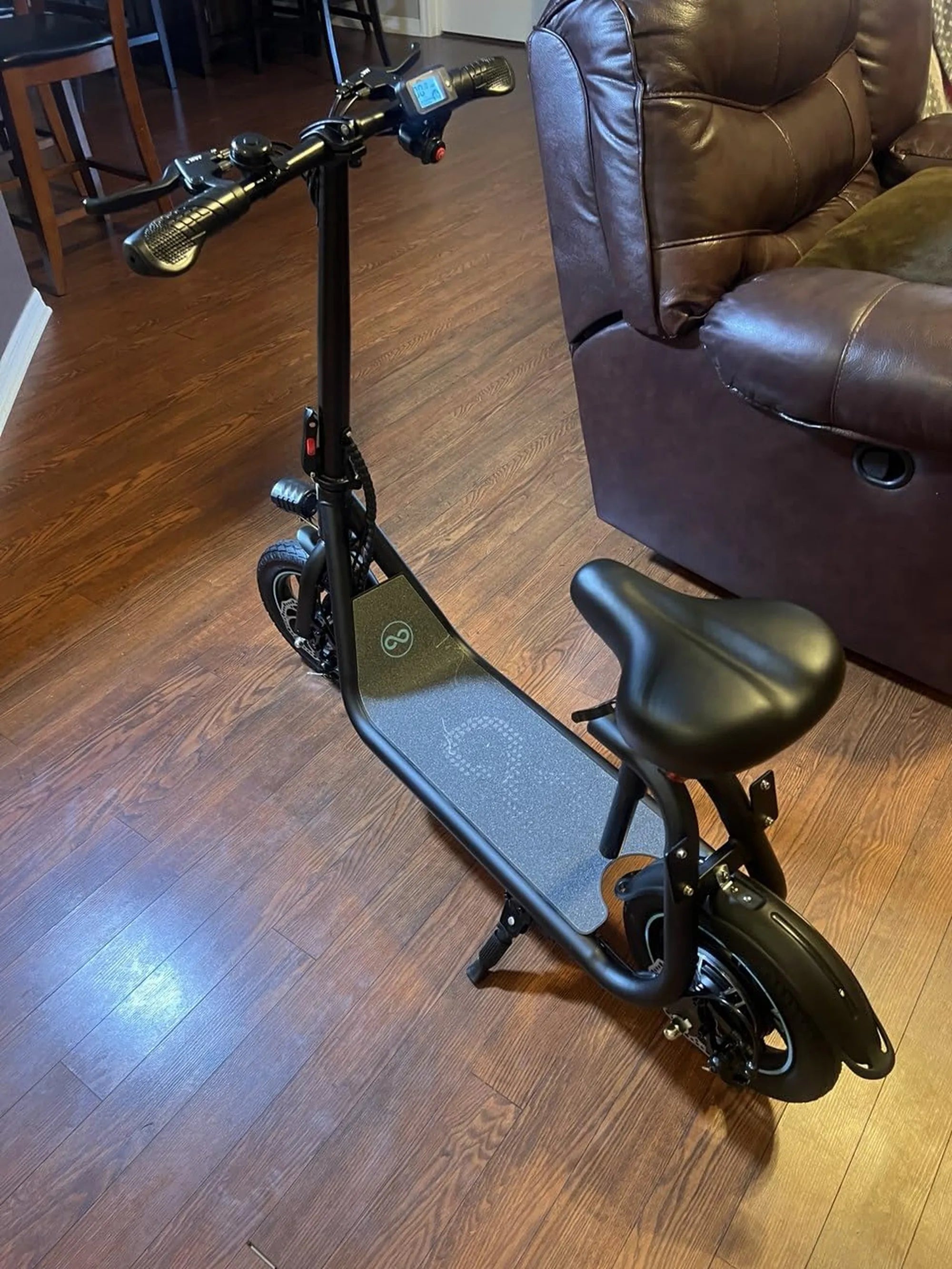
While Gyroor is renowned as a leading electric scooter and e-bike brand—trusted by over 100,000 riders across North America and Europe for UL-certified batteries, IPX5 water-resistant designs, and reliable 1-year warranties—the core engineering principle remains the same across all powered rideables: the connection between rider and machine is paramount.
Just as choosing the best dirt bike handlebars transforms a dirt bike, the right cockpit setup on an e-bike or scooter defines the experience. Gyroor designs its products, from commuter e-bikes to high-performance electric scooters, with ergonomic handlebars, intuitive control placement, and vibration-dampening systems to reduce fatigue. Whether you're navigating a single-track or an urban jungle, the goal is seamless control, stability, and comfort, allowing the rider to focus on the ride itself.
FAQ: Your Dirt Bike Handlebar Questions, Answered
Q1: How much wider should my handlebars be than my shoulders?
A common rule of thumb is for the grips to align with the outside of your shoulders when standing in a natural attack position. This typically translates to a bar that is 2 to 4 inches wider than your actual shoulder width. Start on the narrower side if you ride tight woods, and go wider for open desert or motocross.
Q2: Can I reuse my old grips and throttle tube?
You can reuse your grips if they are in good condition and you remove them carefully. However, if your new bars have a different outer diameter at the grip ends (e.g., a tapered bar), your old throttle tube may not fit. Most aftermarket oversized bars are designed to accept standard 7/8" grip-area components, but always verify.
Q3: What's the real difference between a $80 bar and a $150 bar?
The difference lies in material quality, manufacturing process, and engineering. The premium bar uses a higher-grade, heat-treated aluminum alloy (like 7075 vs. 6061), more precise cold-forging, and often features vibration-damping technology (like Pro Taper's taper wall). It's stronger, lighter, and better at isolating your hands from vibration, which directly reduces fatigue.
Q4: Do I need new bar clamps/mounts for oversized (1-1/8") bars?
Yes, absolutely. Standard 7/8" clamps will not fit a 1-1/8" bar. You must purchase new clamps or a complete top triple clamp designed for the oversized diameter. This is a mandatory additional cost and part of the upgrade.
Q5: How do I know if the sweep is right for me?
Stand in your normal riding posture with your arms relaxed. Have someone observe your wrist alignment. If your wrists are bent outward or inward to grip an imaginary bar, you need more or less back sweep, respectively. Most riders find 8-10 degrees to be a neutral, comfortable starting point.
Conclusion: Grip It and Rip It with Confidence
Your journey to find the best dirt bike handlebars is a pursuit of a more refined, responsive, and enjoyable connection with your motorcycle. It begins with an honest assessment of your riding discipline and physical needs, moves through an understanding of geometry and material science, and culminates in a careful selection from the top-tier brands that have proven their worth. There is no single answer, only the right answer for you.
By investing the time to understand these components and install them correctly, you're not just bolting on a new part—you're customizing the most critical control interface on your bike. The result is less fatigue, greater precision, and more fun every time you ride. Now, with knowledge in hand, you're ready to make a choice that will elevate your performance. For those whose passion extends to urban exploration, discover that same philosophy of rider-focused design applied to a different kind of adventure. Browse the full Gyroor collection of electric scooters and e-bikes at gyroorboard.com.
Tank 200cc Scooter Accessories: The Ultimate 2024 Customization Guide
Best E-Bike for 13 Year Old: The 2024 Safety & Performance Guide