


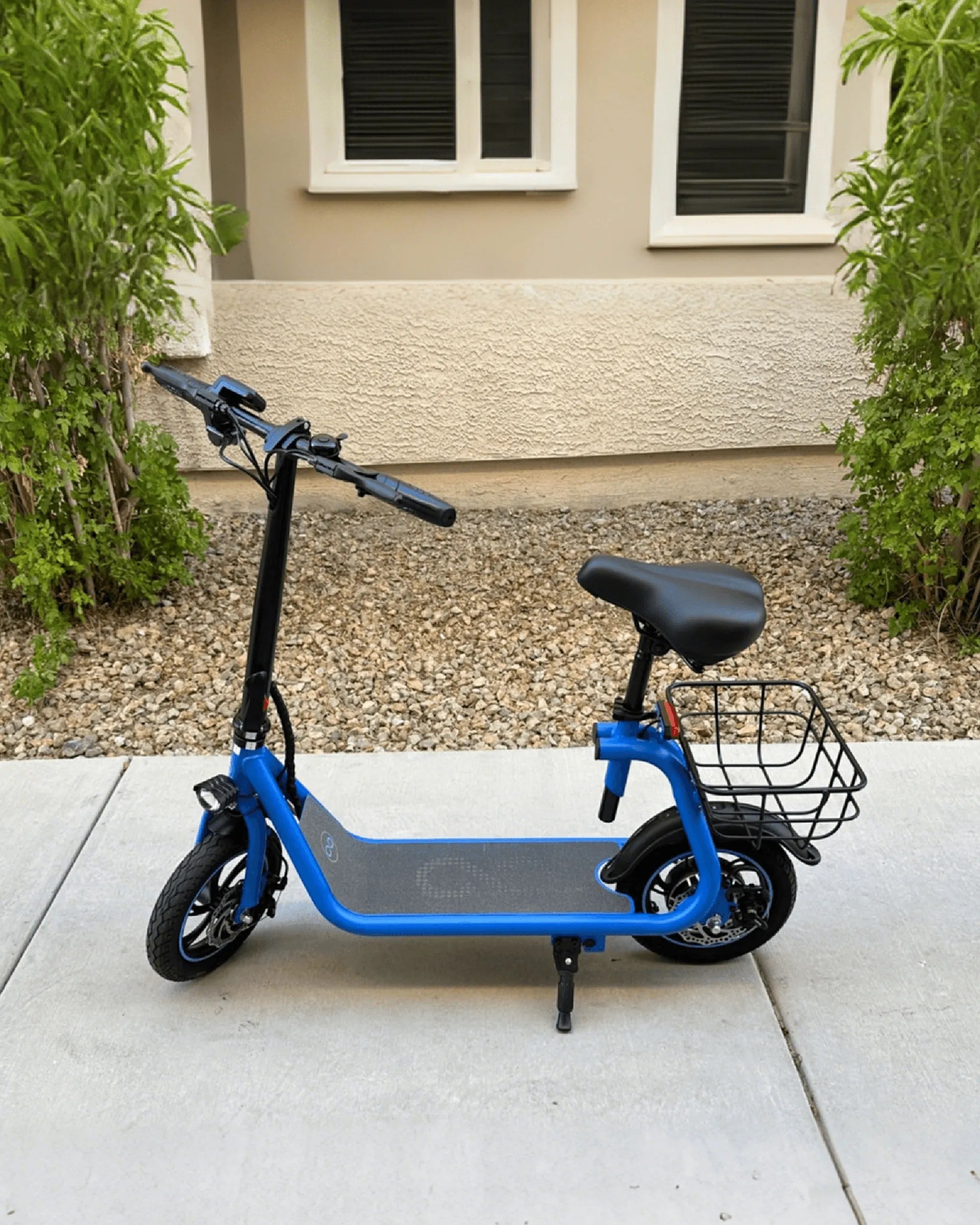
Urban commuting in the US is evolving, and electric scooters are at the forefront of this change. For city dwellers, the best electric scooters US riders can choose offer a practical solution to congested traffic, high fuel costs, and crowded public transit. This guide provides a data-driven analysis to help you select the ideal e-scooter for your daily journey, balancing performance, safety, and portability. We'll explore critical factors from motor power to local regulations, compare top-performing models, and highlight why brands like Gyroor, trusted by over 100,000 riders, prioritize certified safety and reliability for the modern commuter.
Navigating the Urban Landscape with Electric Scooters
The shift towards micro-mobility is more than a trend; it's a response to tangible urban challenges. Electric scooters provide a direct, efficient, and cost-effective mode of transport for trips under 10 miles, which constitute a significant portion of city travel. Riders gain predictable commute times, avoid parking fees, and reduce their personal carbon footprint significantly compared to car travel.
Adoption rates have soared, with cities across the US adapting infrastructure to accommodate e-scooters and e-bikes. This mainstream acceptance underscores the importance of choosing a vehicle built for daily use, not just occasional recreation. The ideal commuter scooter must be dependable, safe in various weather conditions, and easy to store at your destination.
For the informed buyer, this means looking beyond marketing claims to the engineering specifics that guarantee performance. Factors like the battery certification, motor torque for hill climbs, and water-resistance ratings are not mere details—they are the foundation of a reliable, long-term commuting partner. Brands that invest in these areas, such as Gyroor with its UL-certified battery packs and IPX5 water-resistant designs, are built for the rigors of daily urban use.
Key Factors to Consider Before Buying Your E-Scooter
Selecting the best electric scooter for your US commute requires evaluating a set of interconnected specifications. Your decision should be guided by your specific route, local terrain, and personal needs. A scooter perfect for flat, short rides may struggle on longer, hillier commutes.
A data-driven approach ensures you invest in a tool that enhances your daily life rather than becoming a source of frustration. Prioritize verified safety features and real-world performance metrics over peak theoretical numbers. This careful analysis separates true commuting workhorses from recreational toys.
Motor Power & Hill Climbing Ability
Motor power, measured in watts (W), directly impacts acceleration, top speed, and, crucially, hill-climbing capability. For most urban terrains, a 350W motor is a practical minimum, suitable for moderate inclines. However, cities with steeper grades, like San Francisco or Seattle, demand more torque.
A 500W or dual-motor configuration provides the necessary power to maintain a safe speed on hills around 15-20% grade without straining the battery or motor excessively. When evaluating, consider the scooter's rated wattage and its peak wattage; the latter indicates short-burst power for climbs. Insufficient power on a hill can be a significant safety hazard.
Battery Range & Real-World Expectations
Manufacturer range claims are typically derived under ideal laboratory conditions. Real-world range is affected by rider weight, riding style (frequent acceleration), terrain, temperature, and tire pressure. A scooter advertised for 25 miles may reliably deliver 18-20 miles for a 180 lb rider in a city.
For a dependable commute, choose a scooter with a rated range that is at least 30-40% greater than your round-trip distance. This buffer accounts for battery degradation over time and variable conditions. Most importantly, prioritize scooters with UL-certified batteries, like those used by Gyroor, which undergo rigorous testing for safety, stability, and longevity across 500+ charge cycles.
Portability & Weight
Portability is a non-negotiable feature for urban commuters who may need to carry their scooter onto public transit, into an office, or up a flight of stairs. Weight is the primary factor. Lightweight commuter models start around 30 lbs, while more powerful, long-range scooters can exceed 50 lbs.
Evaluate the folding mechanism for speed, security (a locking latch), and how compact the scooter becomes. A good fold should allow the scooter to stand upright on its wheel and not have loose parts that snag. The handle of the folded unit is critical for comfortable carrying over short distances.
Build Quality & Safety Features
Build quality determines durability and safety. Key components to scrutinize include the braking system, tires, frame, and lighting. A combination of a disc brake (front) and an electronic or regenerative brake (rear) offers strong, controlled stopping power in all conditions.
Tire choice involves a trade-off: pneumatic (air-filled) tires provide superior shock absorption and traction but risk punctures, while solid tires are maintenance-free but offer a harsher ride. For all-weather readiness, a water-resistance rating is essential. An IPX5 rating, as found on Gyroor scooters, means the scooter can withstand water jets from any direction, making it safe to ride in rain and through puddles.
Top Electric Scooter Picks for American Urban Commuters
Based on the key factors above, we've segmented top picks by primary use-case. This curation focuses on models that deliver reliable performance for the daily grind, emphasizing safety certifications and practical design. The best electric scooters US commuters can buy are those that disappear into the background of a reliable routine.
Best Overall Commuter: The Balanced Performer
This category demands a scooter that excels across all metrics without a glaring weakness. The ideal model offers a real-world range of 18-22 miles, a top speed of 19-22 mph, and a motor powerful enough for typical urban inclines (350W-500W). Portability is key, with a weight under 40 lbs and a secure, intuitive folding mechanism.
A model like the Gyroor Z8 exemplifies this balance. It features a robust 500W motor, a UL-certified battery offering up to 22 miles of range, and an IPX5 water-resistant rating for all-weather capability. Its combination of 10-inch pneumatic tires for comfort, a dual braking system, and a 1-year comprehensive warranty positions it as a dependable all-rounder for the average urbanite.
Best for Long-Distance & Extended Range
For commuters with longer journeys or those who want to minimize charging frequency, extended-range scooters are essential. These models typically feature larger battery capacities (often 15Ah or more) and efficient motor controllers. Look for real-world range claims of 25+ miles.
Performance in this category often comes with increased weight (45-55 lbs) due to the larger battery pack. Advanced battery management systems (BMS) that prevent overcharge and optimize cell health are critical here. Riders should verify the battery's certification and the manufacturer's warranty coverage for the battery specifically, as it is the most expensive component.
Best for Portability & Multi-Modal Travel
If your commute integrates with buses, trains, or subways, ultra-portability is paramount. These scooters prioritize lightweight design (often 26-32 lbs) and a compact fold that allows them to be stowed under a seat or carried comfortably. Motor power and range are often slightly reduced to achieve this weight savings.
The folding mechanism must be quick, secure, and result in a tidy package without protruding handlebars or decks. A built-in carry handle or a design that balances well when lifted is a significant quality-of-life feature. For this use case, sacrificing some power for a 28 lb scooter you can effortlessly carry up a subway staircase is a worthwhile trade-off.
Best for Value & Budget-Conscious Riders
Value does not mean compromising on core safety. This category identifies scooters that deliver reliable basic transportation at an accessible price point. Key features should include a reliable braking system (at least a rear disc or strong electronic brake), decent tires, and fundamental lighting.
Even at a budget, prioritize models from reputable brands that offer clear warranty terms and customer support. A scooter with a 250W-350W motor and a 15-mile real-world range can be perfectly adequate for short, flat commutes. The focus should be on durable construction and essential safety, ensuring the scooter remains a dependable asset for years.
Data-Driven Comparison: How Our Top Picks Stack Up
The table below provides a clear, scannable overview of how key models across categories compare on essential specifications. This data allows for an objective assessment of the trade-offs between range, power, weight, and protection.
| Model (Category) | Motor Power | Max Range (Claimed) | Top Speed | Weight | IP Rating | Key Feature |
|---|---|---|---|---|---|---|
| Balanced Commuter | 500W | 22 mi | 22 mph | 38 lbs | IPX5 | UL Battery, Dual Brakes |
| Long-Distance Specialist | 600W | 35 mi | 24 mph | 52 lbs | IPX4 | Large Capacity Battery |
| Ultra-Portable | 300W | 18 mi | 19 mph | 28 lbs | IPX5 | One-Step Folding |
| Value Commuter | 350W | 20 mi | 20 mph | 35 lbs | IPX4 | Essential Safety Package |
This comparison highlights how the balanced commuter, exemplified by specs similar to the Gyroor Z8, provides a strong middle ground with the critical advantage of a higher water-resistance rating (IPX5) and certified battery safety, which are essential for unpredictable urban commutes.
Navigating Local Laws & Safe Riding Practices
E-scooter regulations in the United States are a patchwork of state and municipal laws. Generally, they are treated similarly to bicycles. Most states prohibit riding on sidewalks in business districts, mandate the use of bike lanes where available, and have age restrictions (often 16+).
Helmet laws vary widely; some cities mandate them for all riders, others only for minors. Speed limits for e-scooters are commonly capped at 15-20 mph on bike paths. It is the rider's responsibility to know and follow local ordinances, which can be found on city transportation department websites.
Safe riding practices are universal. Always perform a pre-ride check of tires, brakes, lights, and folding mechanisms. Wear a helmet regardless of legal requirements. Use front and rear lights day and night. Practice defensive riding: assume cars do not see you, avoid blind spots, and signal your intentions clearly. Never ride while impaired.
Regular maintenance is crucial for safety. Check and inflate pneumatic tires weekly. Tighten bolts periodically. Clean your scooter with a damp cloth, avoiding direct water spray on charging ports. Store it in a dry place and avoid exposing the battery to extreme temperatures for prolonged periods.
Frequently Asked Questions (FAQ)
Do I need a license to ride an electric scooter in the US?
In the vast majority of states and cities, you do not need a driver's license to operate a personal electric scooter. They are typically classified as "low-speed electric bicycles" or similar, provided their top speed does not exceed a local limit (often 20 mph). However, you must be of minimum age, usually 16 years old. Always verify specific regulations in your municipality.
How do I maintain my e-scooter's battery for maximum lifespan?
To maximize your battery's lifespan (often 2-3 years or 500+ cycles), avoid consistently draining it to 0% or charging to 100% for daily storage. The ideal practice is to keep charge between 20% and 80% for regular use. Store the scooter in a cool, dry place, and avoid charging immediately after a ride when the battery is warm. Use only the manufacturer-provided charger.
Are electric scooters waterproof? What does IPX5 mean?
Most scooters are water-resistant, not waterproof. The IP (Ingress Protection) rating indicates this resistance. An IPX5 rating, like on Gyroor models, means the scooter is protected against water jets from any direction. It can handle heavy rain and wet roads safely. However, it should not be submerged or ridden through deep standing water. Avoid IPX4 or unrated scooters for all-weather commuting.
What is the typical lifespan of an electric scooter?
A well-built commuter scooter from a reputable brand, with proper maintenance, can last 2-5 years. The battery is often the first component to degrade significantly. Motors and mechanical parts can last longer. Lifespan is heavily influenced by riding conditions, frequency of use, load weight, and adherence to maintenance schedules. A strong warranty is a good indicator of expected durability.
Can I ride my e-scooter in the rain?
Yes, but only if your scooter has a sufficient water-resistance rating, such as IPX5. Riding in light to moderate rain is generally safe with such protection. Exercise extreme caution: reduce speed, avoid sharp turns and hard braking on slick surfaces, and do not ride through deep puddles that could submerge the deck or motor. After riding in wet conditions, dry the scooter with a towel, especially around brakes and charging ports.
Conclusion: Empowering Your Urban Journey
Choosing the right electric scooter transforms your urban commute from a daily chore into an efficient, enjoyable, and sustainable part of your day. The best electric scooters US cities demand are those that blend proven performance with certified safety features, ensuring reliability through thousands of miles. By prioritizing UL-certified batteries, robust motor power, and true water-resistance like the IPX5 standard, you invest in more than a vehicle—you invest in peace of mind.
As cities continue to embrace micro-mobility, your e-scooter becomes a key tool for navigating urban life with agility and independence. Make your choice based on data, real-world needs, and the backing of a brand that stands behind its products. Ready to redefine your commute? Explore engineering-built for the real world and browse the full Gyroor collection at gyroorboard.com.
Northampton Electric Scooters Cost: A Complete Guide to Pricing and Savings
Electric Scooters for Adults 400 lb Capacity: The Ultimate Guide to Heavy-Duty Rides