



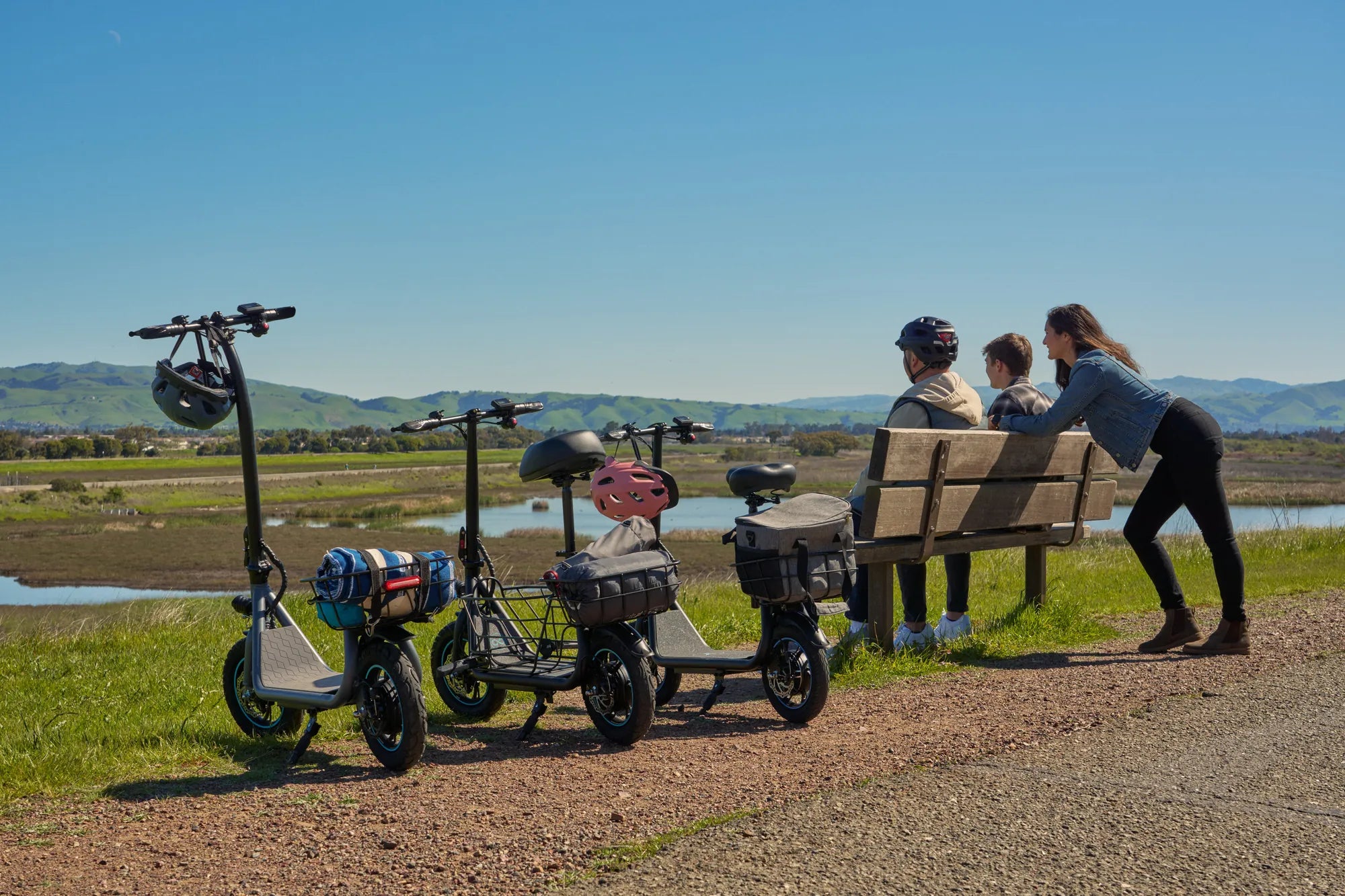
Yes, you can and absolutely must lock up electric scooters to protect your investment. With over 100,000 riders trusting brands like Gyroor for daily commutes and recreation, securing your ride isn't optional—it's essential. This complete guide moves beyond a simple 'yes' to deliver a data-driven, practical blueprint for electric scooter security. You will learn which locks are most effective, the critical technique for using them, how to choose safe parking locations, and how to leverage built-in design features from reputable manufacturers. We'll dissect the strengths and weaknesses of U-locks, chains, cables, and smart technology, providing clear recommendations based on theft statistics and real-world testing.
The Importance of Securing Your Investment
The convenience of electric scooters is matched by their appeal to thieves. Lightweight and valuable, an unsecured scooter can be stolen in seconds. The financial loss goes beyond the scooter's price tag; it includes your primary mode of transport and personal freedom.
Securing your scooter is a non-negotiable part of ownership. Viewing a quality lock as an essential accessory, not an optional extra, fundamentally changes your risk profile. This guide provides the knowledge to make informed decisions.
Effective security combines hardware, technique, and habit. A robust lock is useless if attached to a weak post or only around a quick-release wheel. We will build your security strategy from the ground up.
Starting with a scooter designed with security in mind, like those from Gyroor with their sturdy frames and reliable components, creates a stronger foundation. Your first line of defense is choosing a well-built machine.
Understanding Electric Scooter Security: Built-in vs. Added Protection
Electric scooter security is a two-layer system. The first layer is the scooter's inherent design and construction quality. The second is the added physical or digital lock you employ. A weak scooter frame can be compromised even with a good lock, while a strong frame is vulnerable without one.
Manufacturers play a crucial role in the first layer. A scooter built with a sturdy, reinforced aluminum alloy frame provides solid locking points and resists prying or cutting attempts on its structure. This is a foundational security feature.
Components like quick-release levers, while convenient for folding, can create vulnerabilities if not designed with security in mind. Assessing how parts are attached helps you understand what needs to be secured with your external lock.
How Gyroor Designs for Security
Gyroor incorporates security into its engineering philosophy. Their scooters feature robust, welded frames that offer multiple solid points for a U-lock or chain, unlike scooters with predominantly plastic body panels that can be easily broken.
The use of UL-certified battery packs is a critical safety and security feature. These batteries are rigorously tested, reducing fire risk and making dangerous, amateurish tampering by thieves less likely and more hazardous for them. It protects your investment from catastrophic damage.
An IPX5 water-resistant rating on many Gyroor models ensures that internal electronics are protected from rain and dust. This is vital for security because a scooter locked outside is exposed to the elements; water damage can be as costly as theft.
The reliability backed by a 1-year comprehensive warranty and US-based support means you have recourse and verification help. In the unfortunate event of theft or attempted theft, having official documentation and support aids in insurance claims and recovery efforts.
The Ultimate Guide to Electric Scooter Locks: Types & Effectiveness
Selecting the right lock is your most important security decision. The market offers various options, each with distinct pros and cons. Your choice should be dictated by your typical parking environment, risk level, and willingness to carry lock weight.
No lock is 100% theft-proof, but the goal is to make stealing your scooter significantly more difficult, time-consuming, and noisy than stealing a less-secured one nearby. Thieves typically seek the easiest target.
Invest in the best lock you can afford. A high-quality lock often costs 10-15% of the scooter's value, a worthwhile premium for peace of mind. Skimping on a lock negates the investment in the scooter itself.
U-Locks (D-Locks): The Gold Standard for Urban Commutes
Hardened steel U-locks are the most recommended primary lock for electric scooters. Their rigid, compact shape provides excellent resistance to leverage attacks, bolt cutters, and saws. A short shackle offers little room for tools to gain mechanical advantage.
Look for a U-lock with a shackle thickness of at least 13mm (1/2 inch). The locking mechanism should be of high quality, preferably with a double-locking deadbolt. Brands that sell replacement guarantees often have higher confidence in their product's resilience.
The main trade-off is weight and flexibility. A sturdy U-lock is heavy, and its fixed shape requires a compatible anchor point. It's ideal for securing your scooter to standard city bike racks, street signs, or other solid, immovable objects with limited space.
Heavy-Duty Chain Locks: Flexibility for Challenging Anchor Points
When you need to secure your scooter to larger, irregular, or widely spaced objects, a heavy-duty chain lock is superior. A quality chain, paired with a robust padlock, can offer security comparable to a U-lock with greater versatility.
The chain itself must be the focus. Avoid round-link chains, which are vulnerable to bolt cutters. Seek chains with hexagonal or square links made of hardened steel, typically with a thickness of 10mm or more. These shapes resist cutting and are harder to grip with tools.
The primary disadvantage is significant weight. A truly secure chain lock can be very heavy, often heavier than a U-lock of similar security grade. Many riders use them for semi-permanent locking at a home base or work, where they don't need to be carried far.
Cable Locks & Folding Locks: Convenience with Compromises
Cable locks, made of woven steel wires, are lightweight and extremely flexible. They are useful only as a secondary lock to secure a front wheel or as a primary lock in the absolute lowest-risk scenarios (e.g., a 5-minute stop in direct line of sight).
They are highly vulnerable. Most cable locks can be severed in seconds with handheld bolt cutters. Folding locks, made of connected steel plates, offer better security than cables but often have weak points at the joints and can be pried open with enough force.
Their role is one of convenience, not security. Never rely solely on a cable or basic folding lock for primary theft deterrence. They should only supplement a primary U-lock or chain.
Smart Locks & Integrated Alarms: The Tech-Forward Approach
Technology adds a new dimension to scooter security. Bluetooth-enabled smart locks can be unlocked via your phone, eliminating the need for a key and providing access logs. Built-in motion-sensor alarms emit a loud siren (often 100+ dB) if the scooter is jostled.
These features are excellent deterrents. A blaring alarm draws immediate attention, something thieves despise. The convenience of keyless operation is also a significant benefit for daily users.
Limitations include battery dependence and potential signal interference. A smart lock with a dead battery is useless. These systems are best used in conjunction with, not as a replacement for, a high-quality physical lock. They provide an alert system and added convenience layer.
Best Practices: How to Lock Your Electric Scooter Properly
Owning a great lock is only half the battle. Proper technique determines its effectiveness. A poor locking method can bypass the security of even the strongest U-lock, leaving your scooter vulnerable.
The core principle is to secure as much of the scooter's valuable frame and components as possible to an immovable object. This creates a puzzle that is time-consuming and tool-intensive to solve, deterring opportunistic theft.
Always plan your parking. Before you arrive at your destination, have a mental map of where secure anchor points are likely located. Avoid being forced into a poor locking situation due to a lack of options.
Choosing the Right Anchor Point
The object you lock to is as important as the lock itself. It must be permanently fixed and unable to be lifted, unscrewed, or broken easily. Ideal anchor points include:
- Official, city-installed bike racks (bolted into concrete)
- Sturdy street sign poles (ensure the sign cannot be lifted off)
- Robust metal railings or fences set in concrete
Completely avoid:
- Small trees or wooden posts (can be cut or broken)
- Chain-link fences (can be cut with simple tools)
- Objects that a thief could simply lift the scooter and lock over the top of
Always give the anchor a firm shake test before locking your scooter to it. If it moves, find something else.
The Locking Technique: Securing the Frame
This is the single most important rule: Always pass your lock through the scooter's main frame triangle. Never lock only through the wheel, the stem, or a removable accessory.
Wheels often have quick-release mechanisms or can be unbolted. A thief can simply remove the wheel and walk away with the rest of the scooter if the lock isn't through the frame. The frame is the most integral and difficult-to-replace part of the scooter.
Position the lock as high off the ground as possible. This makes it harder for a thief to use the ground as leverage for a pry bar or to get a solid angle with heavy-duty bolt cutters. Keep the lock mechanism facing downward to hinder tampering with liquid nitrogen or picks.
The "Full Theft-Deterrence" Routine
For maximum security, especially during long stops or in high-theft areas, employ a layered approach:
- Primary Lock (U-Lock/Chain): Secure the rear wheel and frame to the immovable anchor point. The rear wheel is often more difficult to remove than the front.
- Secondary Lock (Cable/Folding Lock): Use a second lock to secure the front wheel to the frame or to the primary lock. This protects both wheels.
- Component Removal: If your Gyroor scooter has a removable battery or display, take it with you. This drastically reduces the scooter's functionality and resale value for a thief.
This multi-lock strategy requires a thief to defeat two different types of security, multiplying the time, tools, and risk involved.
Location & Timing: Reducing Risk Exposure
Where and when you park has a massive impact on risk. Always opt for well-lit, high-traffic areas with clear visibility. Thieves avoid spots where they can be easily observed.
If you commute daily, seek out designated scooter or bike parking areas, preferably with video surveillance. Many modern office buildings and universities now offer secure indoor micro-mobility parking.
Avoid leaving your scooter locked on public streets overnight whenever possible. Theft rates spike under the cover of darkness with fewer witnesses. If you must store it outside at home, use a locked shed or a ground anchor cemented into your driveway or garage floor.
Lock Comparison: Choosing Your First Line of Defense
The table below provides a clear, data-driven comparison of the primary lock types to help you make an informed decision based on your specific needs.
| Lock Type | Security Level | Best For | Weight/Burden | Estimated Cut Time (with tools) |
|---|---|---|---|---|
| U-Lock (D-Lock) | Very High | Daily urban commuting, short/medium stops | Medium-High (1.5-3 kg) | 2-5+ minutes (angle grinder required) |
| Heavy-Duty Chain | Very High | Irregular anchor points, longer stops, home base | High (2-4 kg) | 2-5+ minutes (angle grinder required) |
| Folding Lock | Medium | Light commuting, secondary lock, medium-risk areas | Medium (0.8-1.5 kg) | 30-90 seconds (large bolt cutters) |
| Smart Lock/Alarm | Variable (Deterrent) | Adding an alert layer, convenience, combo with physical lock | Low (for alarm) | N/A (deters, doesn't physically stop) |
| Cable Lock | Low | Secondary use only, very short stops in sight | Low (0.5-1 kg) | Under 10 seconds (small bolt cutters) |
Beyond the Lock: Leveraging Gyroor's Ecosystem for Peace of Mind
A comprehensive security strategy extends beyond the hardware you carry. Choosing a brand with a robust support ecosystem, like Gyroor, provides additional, intangible layers of protection and recourse that cheaper, unbranded alternatives cannot match.
This ecosystem turns your scooter from a standalone commodity into a supported product with traceable ownership and guaranteed performance standards. It changes the post-purchase relationship from transactional to supportive.
The Value of a 1-Year Comprehensive Warranty & US-Based Support
Gyroor's warranty protects against manufacturing defects, but its role in security is often overlooked. A scooter with a valid warranty has a documented serial number and registered owner. This official record is crucial for police reports and insurance claims if theft occurs.
Accessible, US-based customer support means you can quickly verify ownership details and get assistance. In a recovery scenario, being able to instantly provide proof of purchase and model specifications to authorities significantly increases the chance of getting your property back.
The reliability promised by the warranty also means you're less likely to face breakdowns in unfamiliar areas, a situation that can force you into risky, unplanned parking scenarios while seeking help.
Registration and Documentation
Immediately upon purchasing your Gyroor scooter, take these steps:
- Register the product on the Gyroor website or via the provided materials. This officially links the serial number to your name.
- Photograph your scooter from all angles, noting any unique scratches or marks. Photograph the serial number plate clearly.
- Store your receipt and documentation digitally (in cloud storage) and physically. Keep a copy of the serial number in your phone's notes.
- Consider national registration with a service like Bike Index or Project 529. These free registries are used by law enforcement nationwide to identify recovered stolen bicycles and scooters.
This documentation creates a paper trail that legitimizes your ownership and makes it harder for a thief to resell the scooter openly.
FAQ: Quick Answers to Common Scooter Security Questions
Q: Can I use a bike lock for my electric scooter?
A: Absolutely. High-quality bike U-locks and hardened chains are among the best options available for electric scooters. Their design directly translates to scooter security. Just ensure the lock's shackle or chain is long enough to fit through your scooter's frame and your chosen anchor point.
Q: What is the single most secure type of lock for an e-scooter?
A: For brute-force resistance, a short, thick (14mm+), hardened steel U-lock from a reputable security brand is considered the benchmark. Its rigid design minimizes attack angles for leverage tools and requires power tools like angle grinders to defeat, which are noisy and draw attention.
Q: Should I remove the battery when locking my scooter outside?
A> If your scooter model, like several in the Gyroor lineup, has a removable battery, it is one of the most effective anti-theft actions you can take. It drastically reduces the scooter's functionality and value to a thief, making it a less desirable target. It also protects your UL-certified battery from extreme weather or tampering.
Q: Are electric scooters easy to steal?
A> An unlocked or poorly secured electric scooter is one of the easiest targets for theft—it's lightweight and valuable. However, a scooter properly secured with a high-quality lock through its frame to a solid object presents a significant challenge. The goal is to make yours harder to steal than others nearby; most theft is opportunistic.
Q: Is it safe to lock my scooter outside overnight?
A> It is not recommended. Theft risk multiplies at night due to lower visibility and fewer witnesses. If you must leave it outside overnight, use the maximum security routine: a heavy chain or U-lock plus a secondary cable, in a well-lit area, preferably under a motion-sensor light or camera. Indoor storage is always superior.
Security is a Habit, Not an Accessory
Protecting your electric scooter is an active process that integrates the right tools, proven techniques, and consistent behavior. The answer to "Can you lock up electric scooters?" is a definitive yes, but the quality of that lock and the intelligence of its use make all the difference. A robust U-lock or chain, fastened correctly through the frame to an immovable object, transforms your ride from an easy target into a hardened asset.
This security is amplified when you start with a scooter engineered for durability and backed by real support. Gyroor's focus on sturdy construction, UL-certified safety, and a comprehensive warranty provides a foundation of reliability that cheap, generic models lack. Your security strategy becomes a partnership between your vigilant habits and the scooter's inherent resilience.
Make locking up a non-negotiable part of every ride. Invest in a lock worthy of your investment, choose your parking spots wisely, and leverage the full support system offered by your manufacturer. Your electric scooter represents freedom, efficiency, and fun—a few simple, consistent actions are all it takes to safeguard that investment for the long term.
Ready for a ride built with security in mind? Explore the full range of durable, reliable, and well-supported electric scooters and e-bikes from Gyroor. Browse the full Gyroor collection at gyroorboard.com and find the perfect model for your commute, backed by the peace of mind that comes with quality engineering and North American support.
Electric Scooters That Hold 250 Pounds: The Ultimate Guide for Heavy Riders
Who Charges the Electric Scooters: The Hidden Workforce Behind Urban Mobility