


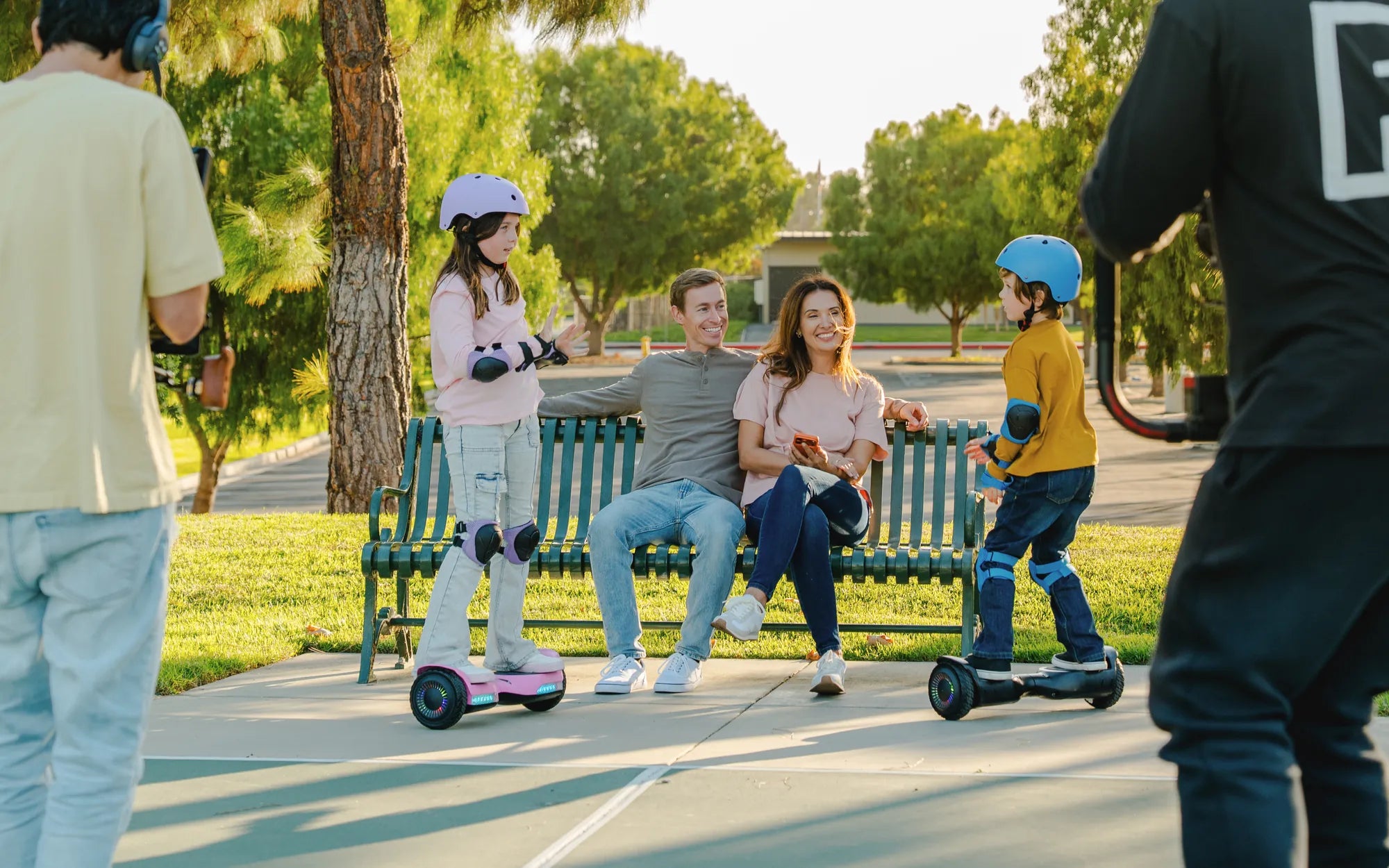
Introduction: Why a Scooter is a Fantastic First Ride for Your Toddler
Selecting the right first vehicle for your toddler is a significant decision. A well-chosen scooter does more than provide entertainment; it's a powerful tool for physical and cognitive development. It builds core strength, refines gross motor skills, and teaches fundamental concepts of balance, steering, and spatial awareness. The confidence gained from mastering a scooter often translates directly to learning to ride a bicycle.
However, the market, particularly for products like China scooters for kids toddler scooters, can be overwhelming. Safety concerns, varying quality, and a flood of features make it difficult to distinguish a trustworthy product from a potentially hazardous one. This guide exists to cut through the noise. We will focus on the objective, data-driven criteria that matter most, using the safety-first engineering of brands like Gyroor as a benchmark for what parents should expect.
By the end of this guide, you will know exactly what to look for in certifications, design, and features. You'll be equipped to make an informed choice that ensures your child's riding experience is not only joyful but fundamentally safe. Let's begin with the most critical aspect: understanding and verifying safety standards.
Understanding Key Safety Standards: What Every Parent Must Look For
When evaluating any children's product, especially one that moves, safety is the paramount concern that overrides all other features. For electric scooters, this safety is multi-faceted, encompassing electrical integrity, mechanical stability, and structural durability. Relying on marketing claims is insufficient; parents must look for independent, third-party verification.
Reputable manufacturers submit their products for rigorous testing by recognized international bodies. These certifications are not merely stickers; they represent that the product has passed specific, often strenuous, tests for safety and performance. For electric mobility devices, two areas demand the most scrutiny: the battery and electrical system, and the physical build quality of the scooter itself.
Ignoring these standards can lead to preventable risks, from sudden electrical failures to mechanical breakdowns that could cause a fall. A safe scooter is built on a foundation of verified engineering, not just appealing aesthetics or a low price point. The following sections detail the certifications and build characteristics that separate a reliable scooter from a questionable one.
The Importance of UL Certification for Batteries and Electronics
UL certification, specifically standards like UL 2272 for electrical systems in personal e-mobility devices, is the global gold standard for safety. This certification process involves exhaustive testing of the battery pack, charger, and motor controller under extreme conditions, including overcharging, short-circuiting, and environmental stress.
The core purpose is to prevent catastrophic failures like thermal runaway, which can lead to fires. A UL-certified battery, like those used in all Gyroor scooters, has undergone testing for over 500 charge cycles, ensuring not only safety but also long-term reliability and consistent performance. It means the battery management system (BMS) is properly designed to protect against over-current, over-voltage, and over-temperature.
For parents, choosing a scooter with a UL-certified battery is the single most important electrical safety decision. It provides peace of mind that the most energy-dense and potentially hazardous component in the scooter has been engineered and tested to the highest possible safety protocols. Never compromise on this.
Decoding Build Quality: Materials, Weight Limits, and Stability
Beyond electronics, the physical construction determines how the scooter handles, withstands impacts, and supports your child. Key indicators of quality include the use of aerospace-grade aluminum alloys for the frame and deck, which provide an excellent strength-to-weight ratio. The deck should have a textured, slip-resistant surface for secure footing.
The stated weight limit is a crucial specification. A high-quality scooter will have a conservative, clearly stated maximum weight (e.g., 120 lbs for a toddler model) with a significant safety margin built into its design. Exceeding this limit can stress welds, strain motors, and compromise braking performance.
Stability is primarily determined by the wheelbase (the distance between front and rear axles) and the wheel configuration. A wider wheelbase and a lower deck height create a lower center of gravity, making the scooter much harder to tip over. This foundational stability is essential for beginner riders and is a key design focus for reputable brands building scooters for young children.
Choosing the Right Type: 3-Wheel vs. 2-Wheel Scooters for Different Ages
The choice between a 3-wheel and a 2-wheel scooter is fundamentally about matching the vehicle to your child's current stage of physical development and coordination. Making the correct choice here can mean the difference between a frustrating, scary experience and a successful, confidence-building one. This decision is more important than color or accessory options.
A scooter that is too advanced can discourage a child and increase the risk of falls, while one that is too basic may be quickly outgrown. The progression typically moves from maximum stability to greater maneuverability as the child's skills advance. Understanding the design philosophy behind each type will guide you to the perfect starting point for your toddler's journey.
Let's break down the two main configurations, their ideal user profiles, and the developmental benefits they offer. This will form the basis for selecting a model that grows with your child, perhaps through adjustable features or a logical upgrade path.
3-Wheel Scooters (1-2 Wheels in Front): Ideal for Beginners (Ages 2-4)
The 3-wheel scooter, most commonly configured with two wheels in the front and one in the rear, is the undisputed champion for first-time riders, typically between ages 2 and 4. This design offers inherent stability because the dual front wheels prevent the scooter from tipping sideways during initial, often wobbly, attempts at steering and balancing.
The primary learning focus on a 3-wheeler is on the mechanics of propulsion (pushing off), basic steering, and using the brake. The child does not need to worry about balancing left-to-right, which is a complex motor skill. This allows them to build foundational confidence and leg strength. Many models feature a lean-to-steer mechanism that uses body weight to turn, which intuitively teaches balance concepts.
This type is the recommended starting point for almost all toddlers. It transforms the potentially daunting task of learning to ride into a series of small, achievable successes. A high-quality 3-wheel scooter from a brand like Gyroor will serve as a safe and durable platform for these critical early experiences.
2-Wheel Scooters: The Next Step for Developing Balance (Ages 4+)
Once a child has mastered a 3-wheel scooter—demonstrating confident pushing, steering, and braking—they are often ready to graduate to a traditional 2-wheel model, usually around age 4 or older. The 2-wheel scooter removes the training wheels, so to speak, requiring the rider to actively maintain lateral balance at all times, much like a bicycle.
This is a significant developmental leap. Riding a 2-wheel scooter intensely engages core muscles and refines fine motor control for subtle weight shifts. It is the perfect intermediary step between a 3-wheel scooter and a pedal bike, as it directly trains the balance and coordination needed for cycling, but without the complexity of pedals and chain drive.
When transitioning, look for a 2-wheel scooter with a low deck and a wide wheelbase to maximize stability within the new configuration. The skills learned here are directly transferable and will make the eventual move to a bicycle smoother and faster. For older toddlers and young children showing advanced coordination, a 2-wheel model can be the right first choice.
Essential Features Breakdown: From Speed Settings to Parental Controls
Once the foundational safety and type are established, the feature set determines the scooter's usability, longevity, and how well it can be tailored to your child's growing abilities. Thoughtful features enhance safety and enjoyment, while gimmicks can add cost without value. The best features are those that give parents control and adapt to the child's skill level.
Prioritize features that directly impact safety and learning progression. Speed controls, effective braking, and durability enhancements like water resistance offer tangible benefits. Extras like LED lights or sound effects can be fun but should be secondary considerations. A focused, well-executed set of core features is the hallmark of a product designed with serious intent.
We will analyze the most critical features that should be on every parent's checklist. Evaluating scooters through this lens will help you identify models that offer genuine value and thoughtful engineering for the long term.
Speed Limitations and Adjustable Settings
For toddler scooters, speed must be carefully managed. Maximum speeds should be very low, typically between 2.5 mph (a fast walking pace) and 5 mph for more advanced models. Crucially, the scooter should offer multiple speed modes (e.g., Beginner: 2.5 mph, Intermediate: 3.5 mph, Advanced: 5 mph) that can be set or locked by a parent via a PIN or remote control.
This system allows the scooter to grow with the child. They start in the slowest, safest mode to learn basics. As their skill and judgment improve, parents can unlock higher speeds. This graduated approach prevents children from accidentally accessing excessive speed before they are ready. Parental speed control is not a luxury; for electric scooters, it is a fundamental safety necessity.
Effective Braking Systems: Hand Brakes vs. Foot Brakes
A reliable, intuitive braking system is critical for safety. Toddler scooters generally use one of two types: a rear fender (foot) brake or a hand-operated brake on the handlebar.
Foot Brakes: The rider presses down on the extended rear fender. This is often simpler for very young children to understand and use instinctively—it mimics stopping with their foot. However, it can be less precise and may not perform as well on wet surfaces.
Hand Brakes: A lever on the handlebar, similar to a bicycle brake. This teaches proper braking technique early and typically offers more modulated, powerful stopping power. It requires slightly more coordination. The best scooters may combine both, offering redundancy and a choice for the rider. The key is that the brake, whatever type, brings the scooter to a smooth, controlled stop without jerking or locking the wheel.
The Practicality of Water-Resistant Design (IPX5 Rating)
Children ride in real-world conditions, which include damp pavement, morning dew, and the irresistible lure of puddles. An IPX5 water-resistance rating means the scooter's electrical components are protected against low-pressure water jets from any direction. This is a significant engineering feature that prevents water ingress from causing short circuits, corrosion, or motor failure.
An IPX5-rated scooter, like those in the Gyroor lineup, can handle wet sidewalks and light splashes with no issue. It dramatically increases the scooter's durability and lifespan by protecting its vital electronics. It also reduces anxiety for parents—the scooter won't be ruined by an unexpected sprinkle or a carefully navigated puddle. For a product designed for outdoor play, this level of protection is highly practical and strongly recommended.
The Gyroor Advantage: How Our Design Prioritizes Your Child's Safety
At Gyroor, our design philosophy starts with a simple premise: a child's scooter must be as safe as it is fun. Every decision, from component sourcing to final assembly, is filtered through this lens. With over 100,000 riders across North America and Europe trusting our products, we have built a reputation on verified safety and reliable performance. Our approach directly addresses the core concerns outlined in this guide.
We don't treat safety certifications as a marketing checkbox; they are the baseline of our engineering process. We design for the rigors of actual use by children, not just for a sleek appearance on a shelf. This results in products that parents can buy with confidence and children can ride with joy, season after season. The following points illustrate how our specific commitments translate into tangible benefits for your family.
UL-Certified Battery Packs: Our Commitment to Safety
Every Gyroor scooter is powered by a UL-certified lithium-ion battery pack. This is non-negotiable. Our batteries undergo the full suite of UL 2272 testing, ensuring protection against overcharge, short circuit, and thermal extremes. We use high-grade battery cells and integrate sophisticated Battery Management Systems (BMS) that actively monitor cell health during charging and discharging.
This commitment provides the ultimate peace of mind. You can charge the scooter in your home or garage without worry. The battery delivers consistent range and power through hundreds of charge cycles, ensuring the scooter remains a reliable companion as your child grows. It is the foundation upon which all other features are built.
Built to Last: IPX5 Water-Resistance and Durable Construction
We engineer our scooters for real adventures. The IPX5 water-resistant rating is a standard feature across our relevant models, sealing critical electronics from the elements. The frame is constructed from reinforced aluminum alloy, chosen for its combination of lightness and exceptional strength. Deck surfaces are anti-slip, and components are stress-tested to withstand the jumps, bumps, and occasional drops of enthusiastic play.
This durable construction means a Gyroor scooter isn't a disposable toy; it's a durable product that can be passed down to siblings. The IPX5 rating specifically ensures that a rainy day or a wet driveway doesn't mean the end of the ride or the start of a repair bill. It's built for childhood, in all its messy, wonderful glory.
Peace of Mind with a 1-Year Comprehensive Warranty
We stand behind the quality and safety of our products with a robust 1-year warranty on the scooter and a 6-month warranty on the battery. This warranty covers defects in materials and workmanship, reflecting our confidence in the durability of our design and manufacturing. Our customer support team is based in the US, providing accessible, responsive service should you ever need assistance.
This warranty is more than a policy; it's a promise. It signifies that our relationship with you doesn't end at the point of sale. We are invested in your child's riding experience for the long term. This comprehensive support network is the final layer in a full-spectrum safety and satisfaction guarantee.
Practical Buying Guide & Checklist for Parents
Armed with knowledge, your shopping process should be methodical. Use this actionable checklist to evaluate any toddler scooter. A product that ticks all these boxes represents a sound investment in safety and fun. Consider this your field guide when comparing models online or in stores.
- Age & Weight Appropriateness: Does the recommended age (2-5) and maximum weight limit (e.g., 120+ lbs) comfortably accommodate your child with room to grow?
- UL Certification: Is the battery and electrical system UL-certified (UL 2272)? This is a mandatory yes.
- Speed Controls & Parental Lock: Does it have a low max speed (<5 mph) and multiple, parent-controlled speed modes?
- Brake Type & Effectiveness: Is the braking system (foot, hand, or both) easy for a toddler to use and reliably responsive?
- Wheel Configuration: For beginners (2-4), is it a stable 3-wheel (dual front) design? For older toddlers (4+), is the 2-wheel design appropriately stable?
- Water-Resistance Rating: Does it have a rating of at least IPX4, with IPX5 being ideal for greater protection?
- Build Quality: Is the frame made of sturdy material like aluminum alloy? Is the deck slip-resistant?
- Warranty & Support: Does it come with a substantive warranty (1 year is excellent) and accessible customer service?
Print this list or keep it on your phone. Any scooter that meets all these criteria, like those designed by Gyroor, is positioned to be a safe, durable, and enjoyable first ride for your child.
Comparison Table: Key Features at a Glance
| Feature | Budget/Generic Scooter | Premium/Safety-Focused Scooter (e.g., Gyroor) | Why It Matters |
|---|---|---|---|
| Battery Certification | Often uncertified or has vague "CE" mark | UL 2272 Certified | Prevents fire risk; ensures electrical safety. |
| Max Speed & Controls | Single, often unlisted speed; no parental controls | 2-3 Speed Modes (e.g., 2.5/3.5/5 mph); Parental PIN/Remote Lock | Allows safe progression; prevents unsafe high-speed access. |
| Water Resistance | None or unspecified | IPX5 Rating | Protects electronics from puddles, wet roads; increases longevity. |
| Frame Material | Plastic or thin, low-grade metal | Reinforced Aluminum Alloy | Provides strength without excessive weight; withstands impacts. |
| Warranty | 90 days or less; difficult-to-reach support | 1-Year Comprehensive Warranty; US-Based Support | Protects your investment; brand stands behind product quality. |
| Braking System | Basic foot brake, may be less responsive | Dual Braking (Foot + Hand) or Optimized Single System | Ensures reliable stopping power in various conditions. |
Frequently Asked Questions (FAQs)
Q: What is the best age for a toddler to start on a scooter?
A: Most children are ready for a stable 3-wheel scooter around age 2-3, once they can walk and run confidently and follow simple instructions. Look for signs of good balance and coordination.
Q: Are electric scooters safe for 3-year-olds?
A: Yes, when chosen with extreme care. The model must have a very low maximum speed (under 3.5 mph), a stable 3-wheel design, UL-certified batteries (a non-negotiable), and robust parental speed controls. Constant adult supervision is also essential.
Q: How important is water resistance in a kids' scooter?
A: Extremely important for durability and safety. An IPX5 rating, like on Gyroor scooters, protects the motor and electronics from water jets from any direction. This means puddle splashes or wet pavement won't cause a short circuit or permanent damage, making the scooter more versatile and longer-lasting.
Q: What maintenance does a toddler electric scooter need?
A: Regular checks are key: ensure tires are properly inflated (if pneumatic), test brakes before each ride, periodically tighten bolts and fasteners, clean the deck and wheels with a damp cloth, and store the scooter (especially the battery) in a cool, dry place away from extreme temperatures. Always follow the manufacturer's charging instructions.
Q: Can my child use the scooter on rough surfaces like grass or gravel?
A: It is not recommended. Electric scooters for toddlers are designed for smooth, paved surfaces like sidewalks, bike paths, and smooth driveways. Grass, gravel, or uneven terrain can cause loss of traction, sudden stops, or tip-overs, and can place undue strain on the motor and wheels.
Conclusion: Investing in Confidence and Fun
Choosing your child's first scooter is more than a purchase; it's an investment in their development, independence, and joy. The right scooter unlocks a world of outdoor activity, builds physical skills, and fosters a sense of accomplishment. The path to that positive outcome is paved with informed decisions.
By prioritizing verified safety standards like UL certification, seeking out thoughtful design features like parental speed locks and water resistance, and selecting a scooter type that matches your child's developmental stage, you create the conditions for success. You buy more than a product; you buy peace of mind.
Brands that embody this philosophy, such as Gyroor, engineer every detail with this dual goal of safety and fun. They provide the robust framework—certified batteries, durable builds, and strong warranties—that allows parents to relax and children to explore. The result is a riding experience where confidence grows with every push of the throttle and every mastered turn.
Ready to find the perfect scooter that combines thrilling fun with unwavering safety for your toddler? Browse the full Gyroor collection of UL-certified, parent-approved scooters at gyroorboard.com. Discover the models trusted by over 100,000 families and give your child the gift of a fantastic first ride.
What Is the Official Hoverboard Brand? Exploring the Industry & Safety Standards
Can You Ride a Hoverboard Outside? Exploring the Possibilities