


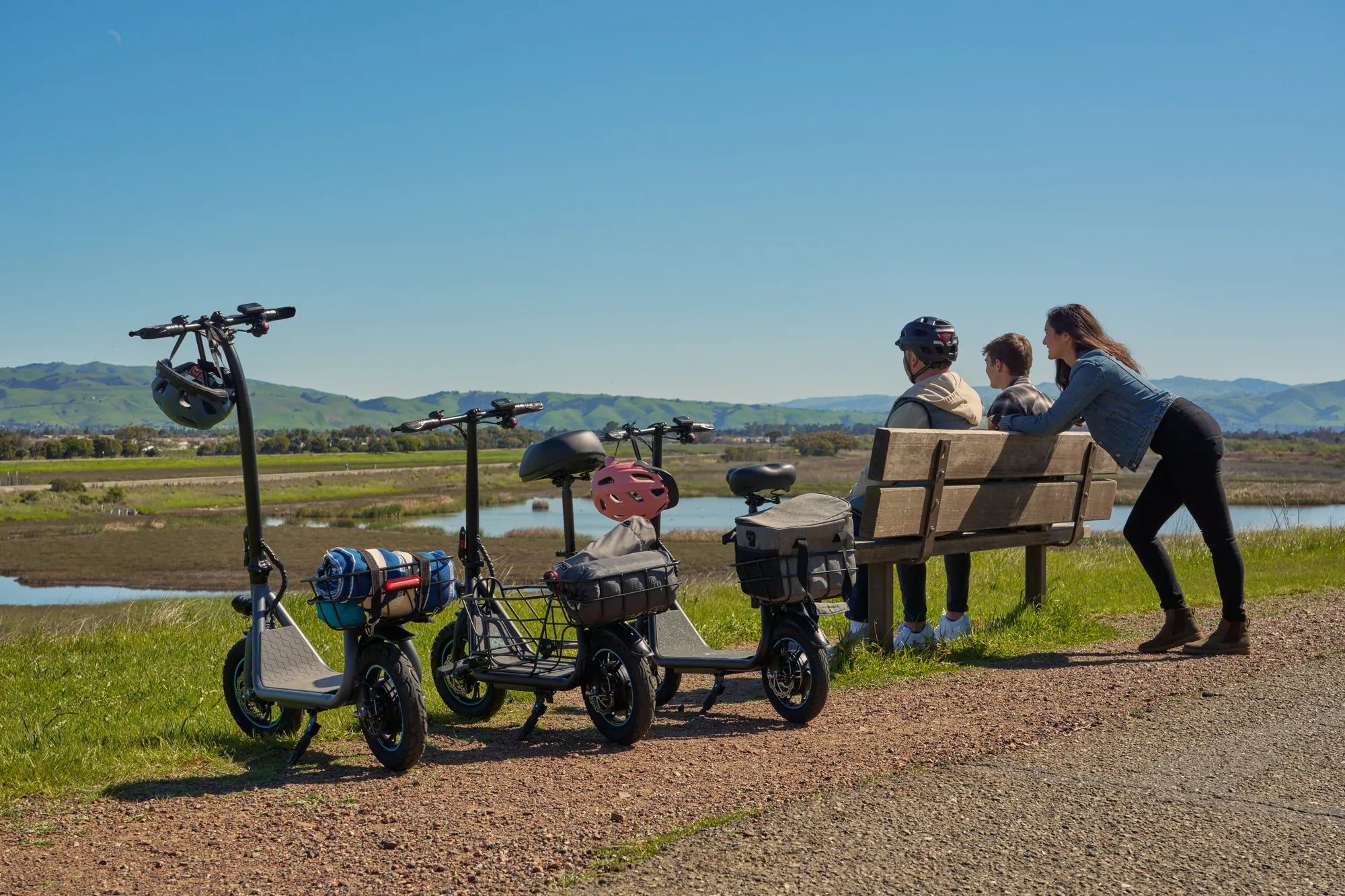
Introduction: The Power to Roam Free
Your electric dirt bike's range ends where its battery dies. For riders seeking true freedom beyond the pavement, a dirt bike portable battery is the essential upgrade that unlocks the backcountry. This guide provides the data-driven knowledge to select, integrate, and safely use a portable power bank, transforming your bike from a short-range trail machine into an expedition-ready vehicle.
We'll cover the technical specifications that matter, the non-negotiable safety standards, and the practical logistics of carrying extra power. As a leader in personal electric mobility, Gyroor engineers its UL-certified battery systems for the demands of off-road use, trusted by over 100,000 riders. Understanding portable power is the key to unplugging your adventure.
Why Your Electric Dirt Bike Needs a Portable Power Bank
The primary benefit of a dirt bike portable battery is the elimination of range anxiety. It provides a tangible solution for extending your ride time and distance, enabling exploration that a single built-in pack cannot support. This is not just about convenience; it's about capability and safety in remote environments.
Core use cases are clear. First, it serves as an emergency backup to prevent being stranded miles from a charging point. Second, it enables epic all-day trail rides or multi-day camping trips where grid power is unavailable. Third, it offers flexible charging, allowing you to charge one pack while riding on another or to top up away from home.
The Limitations of a Single Built-in Battery
Every electric dirt bike has a maximum range under ideal conditions: flat terrain, moderate speed, and optimal temperature. Off-road reality is different. Aggressive throttle use, steep hill climbs, soft terrain, and rider weight can slash that advertised range by 30-50% or more.
This creates a hard limit on exploration. A portable battery acts as a reserve fuel tank, effectively doubling or even tripling your available energy. It shifts your mindset from calculating the shortest route back to the charger to planning the most rewarding loop trail.
Key Specifications to Decode When Choosing a Battery
Selecting the right portable battery requires understanding its language of volts, amp-hours, and certifications. These specs directly determine compatibility, performance, and safety. Ignoring them risks damaging your bike's electronics or creating a hazardous situation.
High-quality packs from brands like Gyroor are designed with these parameters clearly defined and rigorously tested. The goal is to match a battery's output and capacity to your bike's electrical system while ensuring it can withstand the vibrations, moisture, and impacts of off-road use.
Voltage & Compatibility: Matching Your Bike's System
Voltage (V) is the electrical pressure of the system. It must match your dirt bike's nominal voltage exactly. Common e-dirt bike voltages are 36V, 48V, and 52V. Using a 48V battery on a 36V system can fry the controller and motor; using a 36V pack on a 48V system will result in weak performance and potential damage from under-voltage.
Always consult your bike's manual first. The portable battery must be compatible not only in voltage but also in connector type. Using an incorrect adapter can lead to poor connections, sparking, and heat buildup. Manufacturer-approved packs or those from reputable brands that specify compatibility are the safest choice.
Capacity (Ah/Wh): The "Fuel Tank" Size
Capacity measures how much energy a battery can store. It's expressed in Amp-hours (Ah) or Watt-hours (Wh). Watt-hours (Volts x Amp-hours) are the most accurate measure, as they account for both voltage and current. A higher Wh rating means more energy, and thus, more potential range.
As a rough estimate for off-road conditions, a typical 48V 10Ah (480Wh) battery might provide 10-15 miles of aggressive trail riding. Adding a second 10Ah portable pack in parallel could nearly double that. Think of Ah as the size of your gas tank; a 15Ah pack holds 50% more "fuel" than a 10Ah pack, all else being equal.
Battery Chemistry & Safety: Why UL-Certification is Non-Negotiable
Most modern packs use Lithium-ion (Li-ion) chemistry, but not all are equal. Lithium Iron Phosphate (LiFePO4) is a superior variant known for exceptional thermal stability, long cycle life (2000+ cycles), and enhanced safety, making it ideal for the physical demands of dirt biking.
The single most important safety feature is UL certification. Underwriters Laboratories testing verifies the battery pack's design will resist overcharging, short-circuiting, and thermal runaway—a dangerous chain reaction that can cause fires. Gyroor uses only UL-certified battery cells and packs, a critical differentiator from uncertified, potentially hazardous alternatives on the market.
Build & Durability: IP Ratings and Rugged Design
Off-road means mud, water crossings, and constant vibration. A portable battery's enclosure must be fortress-like. The Ingress Protection (IP) rating indicates resistance to solids and liquids. For dirt biking, a minimum of IPX5 is essential.
An IPX5 rating, a standard in Gyroor's design, means the battery can withstand water jets from any direction, protecting it from rain and puddle splashes. The casing should also be shock-absorbent, with high-quality, secure connectors that won't vibrate loose. A flimsy case is a liability on rough trails.
Portable Battery in Action: Practical Setup and Usage Guide
Integrating a portable battery with your dirt bike is a straightforward process with the right equipment and knowledge. Proper setup ensures efficient power transfer, safety, and minimal impact on your bike's handling. Planning your power logistics is as important as planning your route.
The core principle is to either supplement your main battery's power in real-time or to have a fresh pack ready to swap in when the primary depletes. Each method has its advantages and requires specific hardware, such as parallel connection cables or quick-swap battery mounts.
Connection Methods: Parallel Kits vs. Swapping
The parallel connection method uses a special cable to connect the portable battery directly to the main battery's discharge leads, effectively combining their capacity. This allows both packs to discharge simultaneously, extending range seamlessly without stopping. It requires a compatible parallel adapter and careful attention to voltage matching.
The swapping method is simpler: you ride until the main battery is low, then stop to physically replace it with your fully charged portable pack. This requires your bike's battery to be easily removable. The benefit is you only carry the extra weight of the second pack when it's needed, not from the start of your ride.
Charging Logistics On and Off the Grid
Always use the charger provided with the battery or one specified by the manufacturer. Charging at extreme temperatures (below freezing or above 113°F/45°C) can damage cells. For storage longer than a week, maintain a 50-60% charge in a cool, dry place to maximize battery lifespan.
For multi-day adventures, solar becomes a viable option. A compatible 100-200W solar panel and a solar charge controller can slowly replenish a battery during the day. While not fast, it can provide crucial energy for basecamp charging when no outlets are available, making a portable battery part of a fully off-grid system.
Weight & Mounting Solutions: Balancing the Load
A 48V 10Ah battery weighs approximately 10-12 lbs. Adding this weight to your bike changes its center of gravity and handling. The optimal mounting location is low and central, such as on a reinforced rear rack or in a dedicated frame bag. This minimizes the impact on steering and stability.
For lighter packs, a high-quality, padded backpack is an option, but be aware it transfers the weight to your body, which can increase fatigue. However you carry it, ensure the battery is securely fastened with straps or mounts to prevent any movement or bouncing, which could damage connectors or the pack itself.
Data-Driven Comparison: What to Look For in a Reliable Pack
When evaluating dirt bike portable batteries, use this framework to separate marketing hype from genuine quality. The following table compares key decision factors, with high-quality benchmarks like those from Gyroor set against common lower-tier offerings.
| Comparison Point | High-Quality Benchmark (e.g., Gyroor) | Lower-Tier / Generic Offering |
|---|---|---|
| Certification & Safety | Full UL 2271 or UL 2054 Certification for the battery pack. | No named certification; may claim "CE" or "RoHS" (which are not safety standards for batteries). |
| Water & Dust Resistance | IPX5 or higher rating, validated by testing. | IPX4 or unspecified; may only be "splash-resistant." |
| Warranty & Support | Comprehensive 1-year warranty with accessible, US-based customer service. | 30-90 day warranty, often requiring expensive international shipping for claims. |
| Battery Chemistry & Cycle Life | Premium Li-ion or LiFePO4 cells; 500+ charge cycles to 80% capacity. | Standard Li-ion with lower-grade cells; cycle life not specified or significantly lower. |
| Included Accessories | Compatible parallel cable or adapter, quality charger, protective case. | Basic charger only; cables/adapters sold separately. |
| Build Quality | Reinforced ABS or aluminum casing, secure, sealed connectors. | Thin plastic casing, basic connectors prone to corrosion. |
FAQs: Your Portable Battery Questions, Answered
Q: Can I use any portable power bank with my electric dirt bike?
A: No. You must use a battery that matches your bike's system voltage (e.g., 48V) and has the correct discharge connector. Using an incompatible battery can cause permanent damage to your bike's electronics and is a safety risk. Always follow your bike manufacturer's guidelines.
Q: How much extra range can I realistically expect from a portable battery?
A: As a rule of thumb, adding a portable battery of the same capacity as your built-in pack can nearly double your range under similar conditions. However, aggressive off-road riding consumes more power. If your built-in 10Ah pack gives you 12 miles, a second 10Ah pack may add 10-11 more miles, not a full 12, due to system efficiency losses.
Q: Is it safe to ride in the rain or through puddles with a portable battery connected?
A: Yes, provided the battery has a sufficient IP rating (IPX5 or higher) and all electrical connections are properly sealed and protected. High-quality batteries are designed for this. However, submerging any electrical component is not recommended. Always inspect connectors for moisture after wet rides.
Q: How should I store my portable battery during the off-season?
A> Store it in a cool, dry place with a charge level between 50% and 60%. Check the charge every 2-3 months and top it up if it drops below 30%. Avoid storing it fully charged or completely depleted, as both states accelerate capacity degradation.
Q: Can I charge my portable battery with a car charger or solar panel?
A> You can, but you must use the correct equipment. You need a DC-to-AC inverter for a car outlet (cigarette lighter) to power the standard AC charger, or a specific DC-input charger designed for your battery's voltage. For solar, you need a compatible solar panel and a charge controller that matches your battery's voltage and chemistry to regulate the input safely.
Conclusion: Unplug Your Adventure
A high-quality dirt bike portable battery is the definitive upgrade for the serious electric off-road rider. It transforms your machine from a limited-range vehicle into a true exploration tool, capable of tackling all-day epics and remote backcountry camping. The freedom to ride further without anxiety is the ultimate reward.
This freedom must be built on a foundation of safety and reliability. Choosing a pack with UL certification, robust IPX5+ construction, and a strong warranty from a trusted brand like Gyroor provides the peace of mind to focus on the trail, not your power gauge. It's an investment in longer rides, deeper adventures, and the pure joy of electric off-roading. Ready to expand your horizons? Browse the full Gyroor collection at gyroorboard.com to explore power solutions engineered for the demands of the trail.
How Fast Can You Go on a Scooter: A Complete Guide to Speed & Safety
Is a 150cc Scooter Considered a Motorcycle? The Definitive 2024 Guide