



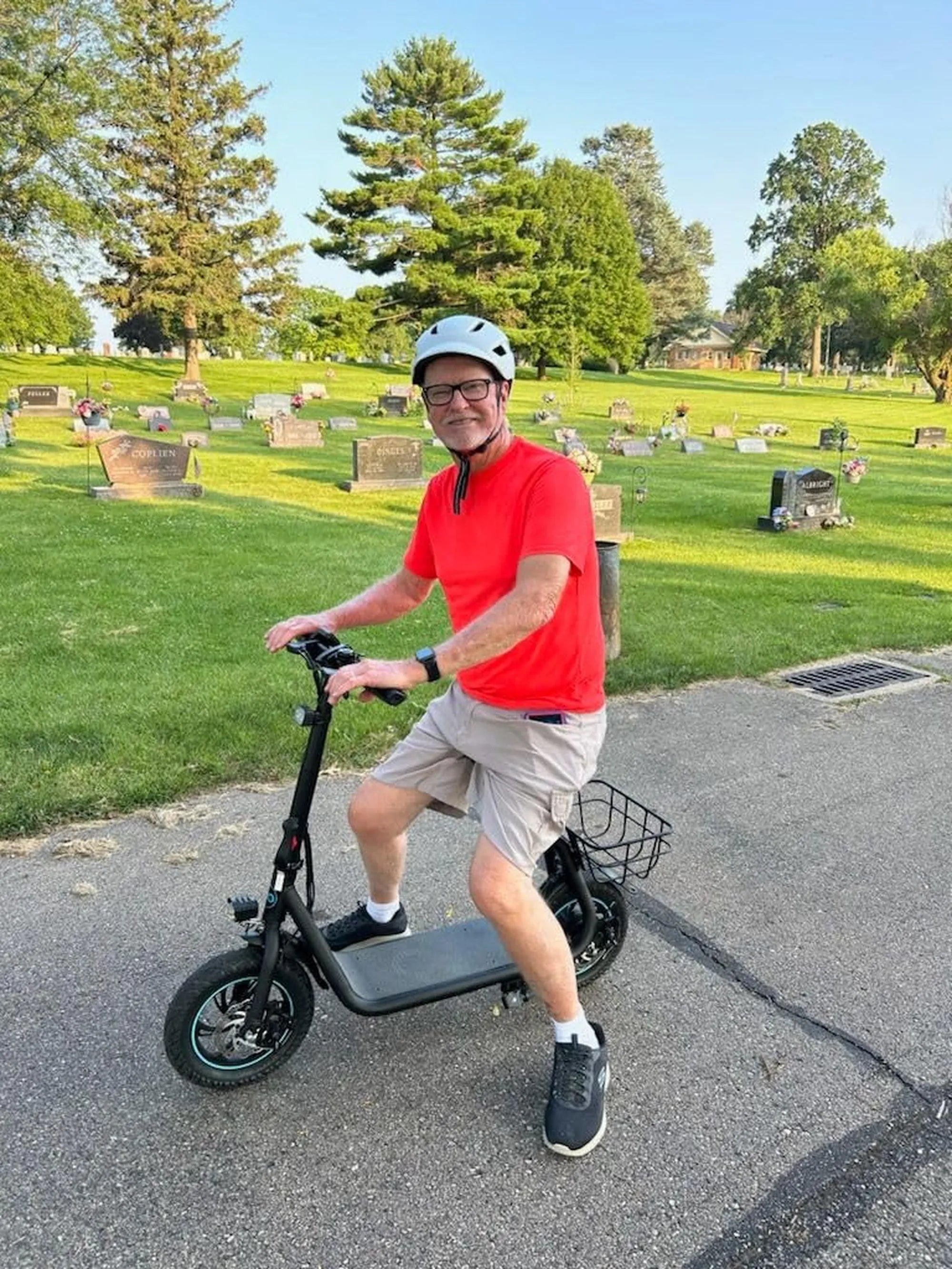
Introduction: Understanding Scooter Speed
How fast can you go on a scooter? The answer is more complex than a single number. Scooter speed is a dynamic variable shaped by engineering, environment, and rider input. For urban commuters, a reliable 20 mph might be perfect, while enthusiasts may seek 30 mph or more for longer rides.
This guide will dissect every factor that influences your scooter's velocity. We'll move beyond manufacturer claims to understand real-world performance. You'll learn how motor wattage, battery systems, and total weight interact to determine your top speed.
We'll also explore the critical balance between speed and safety. As a leading electric scooter and e-bike brand trusted by over 100,000 riders, Gyroor designs products where performance is matched by UL-certified battery safety and robust construction. Understanding speed is the first step to a smarter, safer ride.
The Key Factors That Determine Your Scooter's Top Speed
Your scooter's maximum velocity isn't just about the motor. It's the result of a complex interplay between several mechanical and environmental factors. Knowing these elements helps set realistic expectations and choose the right model for your needs.
Think of it as a system where the weakest link limits overall performance. A powerful motor paired with a small battery will drain quickly at top speed. A lightweight rider on a heavy scooter will experience slower acceleration. Let's break down the primary components.
Motor Power and Wattage
Motor power, measured in watts (W), is the engine of your scooter. It's crucial to distinguish between nominal (continuous) and peak (maximum) wattage. A 500W nominal motor can sustain that output, while its peak might briefly reach 800W for acceleration.
Generally, higher wattage correlates with higher potential speed. A 250W motor typically powers a scooter to 15-18 mph, suitable for flat terrain. A 500W motor can achieve 20-25 mph, offering a noticeable boost for commutes. For speeds of 28 mph and above, you'll often find motors rated at 750W or higher, sometimes in dual-motor configurations.
It's not just about top speed, however. Wattage directly impacts torque, which determines how well a scooter climbs hills and accelerates. A high-torque motor may reach its top speed more quickly, even if that top speed is similar to a less powerful model.
Battery Voltage and Capacity
The battery is the fuel tank and fuel line. Voltage (V) acts like water pressure; higher voltage (e.g., 48V vs. 36V) allows the motor to draw more power efficiently, supporting higher speeds and better hill-climbing. Capacity, measured in amp-hours (Ah), is the size of the tank.
A high-capacity battery ensures you can maintain top speed for longer. However, riding consistently at maximum speed will drain any battery faster than moderate cruising. A scooter's range is always a trade-off with speed. Advanced battery management systems in quality scooters help deliver stable power output.
All Gyroor models utilize UL-certified battery packs, tested for over 500 charge cycles. This certification ensures not only safety but also consistent performance, meaning the scooter is more likely to deliver its advertised speed throughout the battery's life.
Scooter Weight and Rider Load
Total moving mass is a fundamental physics challenge. Every scooter has a maximum weight limit, which includes the rider, any cargo, and the scooter's own weight. Exceeding this limit stresses the motor and battery, reducing top speed and acceleration.
A heavier rider on a lightweight commuter scooter may never reach its advertised top speed. Conversely, a performance scooter with a robust motor and frame is built to handle more weight without significant performance loss. Always check the manufacturer's weight limit and consider your own weight plus a backpack or groceries.
Terrain and Riding Conditions
Ideal speed tests happen on smooth, flat, dry pavement. Real-world riding is different. Inclines are the biggest speed killer; even a slight hill can cut your speed by 30% or more. Rough surfaces like cobblestones or dirt paths increase rolling resistance.
Headwinds act like a constant hill, forcing the motor to work harder. Tire pressure also falls under this category; under-inflated tires create drag. For the truest test of how fast you can go on a scooter, find a calm day on a level, paved surface.
Electric Scooter Speed Tiers: From Commuter to Performance
Electric scooters can be broadly categorized into three speed tiers. Each tier serves a different type of rider and use case, with corresponding design features and price points. Understanding these tiers helps align your need for speed with practicality and safety.
The right speed is the one that gets you where you need to go safely and efficiently, not necessarily the fastest possible. Local laws often dictate where you can ride, and higher speeds require more skill and protective gear.
Entry-Level / Commuter (15-20 mph)
This tier is ideal for first-time riders, short urban errands, and cities with dense traffic or lower speed limits on bike paths. Scooters in this range prioritize portability, simplicity, and cost-effectiveness. They often feature single 250W to 350W motors and lighter frames.
Speed here is sufficient to keep pace with urban bicycle traffic without introducing excessive risk. The focus is on a stable, comfortable ride for trips under 5 miles. These models are perfect for last-mile connectivity from public transit to your final destination.
Safety at this speed still requires a helmet, but the risks associated with a fall are comparatively lower than at higher velocities. Their lighter weight makes them easy to carry upstairs or onto a bus.
Mid-Range / Enthusiast (20-28 mph)
This is the sweet spot for most daily commuters. Scooters capable of 20-28 mph offer a significant time saving over shorter models while remaining usable on bike lanes and multi-use paths in many jurisdictions. They typically feature 500W to 750W single motors or dual 350W motors.
At this speed, scooter design becomes more robust. You'll see better suspension, wider decks for stability, and more advanced braking systems (often disc brakes combined with electronic braking). The increased power also improves hill-climbing ability.
Riding at these speeds necessitates full safety gear: a certified helmet, and consider gloves and elbow/knee pads. This tier offers the best balance of performance, range, and practicality for rides from 5 to 15 miles.
High-Performance / Off-Road (28+ mph)
For experienced riders seeking thrill, longer-range touring, or off-road capability, high-performance scooters deliver speeds from 28 mph up to 60+ mph for extreme models. These are essentially light electric vehicles.
They are characterized by powerful dual-motor setups (e.g., 1000W x2), large 48V or 52V batteries, high-end hydraulic brakes, full suspension, and often off-road tires. Their weight and size make them less portable but incredibly stable at speed.
Riding at these velocities requires motorcycle-level awareness and gear, including a full-face helmet. They are often restricted to private property or road use where local laws permit. The power demands mean range can vary dramatically based on riding style.
Safety and Legal Considerations at Higher Speeds
Pursuing higher speeds must be paired with a proportional increase in responsibility. The kinetic energy in a crash increases with the square of your speed—meaning a fall at 25 mph is more than twice as severe as one at 15 mph. Legal frameworks are also struggling to keep pace with this new mode of transport.
Ignoring these aspects doesn't just risk a ticket; it risks serious injury. A responsible rider understands that how fast you can go on a scooter is less important than how safely you can stop and maneuver at that speed.
Essential Safety Gear
A helmet is non-negotiable. For speeds above 20 mph, a bicycle helmet is a minimum, but a full-face mountain biking or motorcycle helmet offers superior protection for your jaw and face. Your head is the most vulnerable part of your body in a crash.
Gloves protect your hands during a fall and improve grip. Knee and elbow pads can prevent debilitating abrasions and fractures. At higher speeds, consider protective jackets and pants. Reflective clothing or lights are vital for visibility to cars, especially at dawn, dusk, or night.
Understanding Local Laws and Regulations
E-scooter laws vary wildly by city, state, and country. Common regulations include: a maximum speed limit (often 15-20 mph) for scooters used on bike paths or pavements; a minimum rider age (often 16+); prohibitions against riding on sidewalks; and requirements for lights and reflectors.
Some regions require registration, insurance, or a driver's license for higher-powered scooters. It is your responsibility to know and follow the laws in your area. Riding a scooter capable of 30 mph on a path with a 15 mph limit is illegal and dangerous to others.
Scooter Stability and Braking Systems
Speed demands better hardware. A scooter designed for 15 mph will feel terrifyingly unstable at 25 mph. Key stability features for higher speeds include: a longer wheelbase and wider deck, larger wheel diameter (10-inch wheels handle bumps better than 8-inch), and quality suspension.
The braking system is the most critical safety component. Entry-level scooters may have a foot fender brake and electronic regen brake. Mid-to-high-performance models must have a dual braking system, typically a front and rear disc brake, often supplemented by electronic braking. Regular brake inspection and adjustment are mandatory.
Maximizing and Safely Testing Your Scooter's Speed
Once you understand the factors at play, you can optimize your scooter's performance and safely discover its true capabilities. This process is about creating ideal, controlled conditions, not about pushing limits in traffic.
Always prioritize a safe, empty environment like a empty parking lot or a closed private road. Never test top speed on public roads with traffic, pedestrians, or unpredictable hazards.
Optimal Conditions for Top Speed
To see how fast your scooter can truly go, follow this checklist. Ensure the battery is fully charged (voltage is highest at full charge). Ride on a smooth, flat, dry, paved surface. Choose a day with little to no wind. Minimize your load—wear light clothing and avoid a backpack.
Accelerate smoothly to allow the scooter to reach its maximum governed speed. Many scooters have a speed governor that limits top speed for safety; this is not a defect but a design feature. Note that performance will decrease as the battery charge drops below 50%.
The Role of Tire Pressure and Maintenance
Properly inflated tires reduce rolling resistance, which directly translates to higher speed and longer range. Check your scooter's manual for the recommended PSI and inflate tires weekly. Under-inflated tires also increase the risk of pinch flats.
Regular maintenance keeps components working efficiently. Keep the motor area free of debris. Ensure brake pads are not dragging, which creates constant friction. Check that all bolts, especially around the stem and folding mechanisms, are tight to prevent dangerous wobbles at speed.
Interpreting Manufacturer Claims vs. Real-World Speed
Manufacturers often advertise "up to" speeds achieved under perfect laboratory conditions with a lightweight rider. It is standard for real-world top speed to be 1-3 mph lower than the advertised maximum.
A reputable brand like Gyroor provides realistic performance expectations backed by a 1-year warranty. Be wary of obscure brands making extreme claims. If a scooter advertises 40 mph for $500, it likely compromises critically on battery safety, braking, and structural integrity.
Comparison of Common Electric Scooter Speed Tiers
| Speed Tier | Typical Motor | Typical Battery | Best For | Key Considerations |
|---|---|---|---|---|
| Commuter (15-20 mph) | 250W - 350W Single | 36V, 7.5-10Ah | First-time riders, short urban trips, last-mile transport. | Portability over power. Check local path speed limits. |
| Enthusiast (20-28 mph) | 500W - 750W Single or Dual 350W | 48V, 10-13Ah | Daily commutes (5-15 mi), riders seeking a balance of speed & range. | Requires full safety gear. Stable design and dual brakes are essential. |
| Performance (28+ mph) | Dual 500W+ or Single 1000W+ | 48V/52V, 15Ah+ | Experienced riders, off-road, long-range touring, thrill-seeking. | Motorcycle-level gear required. Often restricted to roads. High weight, low portability. |
Frequently Asked Questions (FAQ)
What's the fastest a typical electric scooter can go?
While extreme, specialized models can exceed 60 mph, the vast majority of consumer electric scooters designed for daily use have top speeds between 15 and 30 mph. For public road and path use, 20-25 mph is the most common and practical range, balancing efficiency with safety and legality.
Can I make my scooter go faster by modifying it?
We strongly advise against modifying your scooter. "Tuning" or "de-restricting" software voids the manufacturer's warranty (like Gyroor's 1-year coverage) and can overstress the motor, controller, and battery. This compromises the safety of UL-certified battery systems, creates fire risks, leads to premature failure, and is illegal in many areas. Performance should be designed in from the start.
How does speed affect my scooter's battery range?
Speed has an inverse, non-linear relationship with range. Due to increased aerodynamic drag and power draw, riding consistently at top speed can reduce your scooter's maximum range by 30-50% compared to riding at a moderate, steady pace (e.g., 15 mph). If range is critical, moderate your speed.
Are there speed limits for electric scooters?
Yes, overwhelmingly. Most cities and states that have legalized e-scooters impose speed limits, often between 15 mph and 20 mph when ridden on bike paths, greenways, or sidewalks. Some allow higher speeds on roads. It is the rider's legal responsibility to know and obey the limits in their specific location. Many rental and personal scooters have software governors to enforce these limits.
Is it safe to ride an electric scooter at its maximum speed?
Safety at maximum speed depends entirely on context. It can be safe on a smooth, empty, private track with full protective gear. It is unsafe on public paths with pedestrians, on rough surfaces, in traffic, or without a proper helmet. The scooter itself must also be designed for that speed, with appropriate brakes, stability, and suspension. Always assess the environment before accelerating.
Conclusion: Speed is a Tool, Not Just a Thrill
Understanding how fast you can go on a scooter is about more than a spec sheet number. It's about matching a machine's capability to your riding environment, skill level, and local laws. The right speed is the one that gets you to your destination efficiently without compromising your safety or the safety of others.
True performance comes from reliable engineering. It's found in UL-certified batteries that won't fail under load, in robust motors backed by a warranty, and in braking systems you can trust in an emergency. As you consider your next ride, prioritize this balanced approach to design.
Whether you need a nimble commuter for city streets or a powerful model for longer adventures, choose a brand that values durability and safety as much as velocity. Explore the full range of purpose-built electric scooters designed for real-world riding. Browse the full Gyroor collection at gyroorboard.com to find the perfect balance of speed, safety, and reliability for your journey.
Fastest Mountain Bike Speed: Records, Physics & Real-World Limits
Dirt Bike Portable Batteries: The Ultimate Guide to Off-Grid Power