


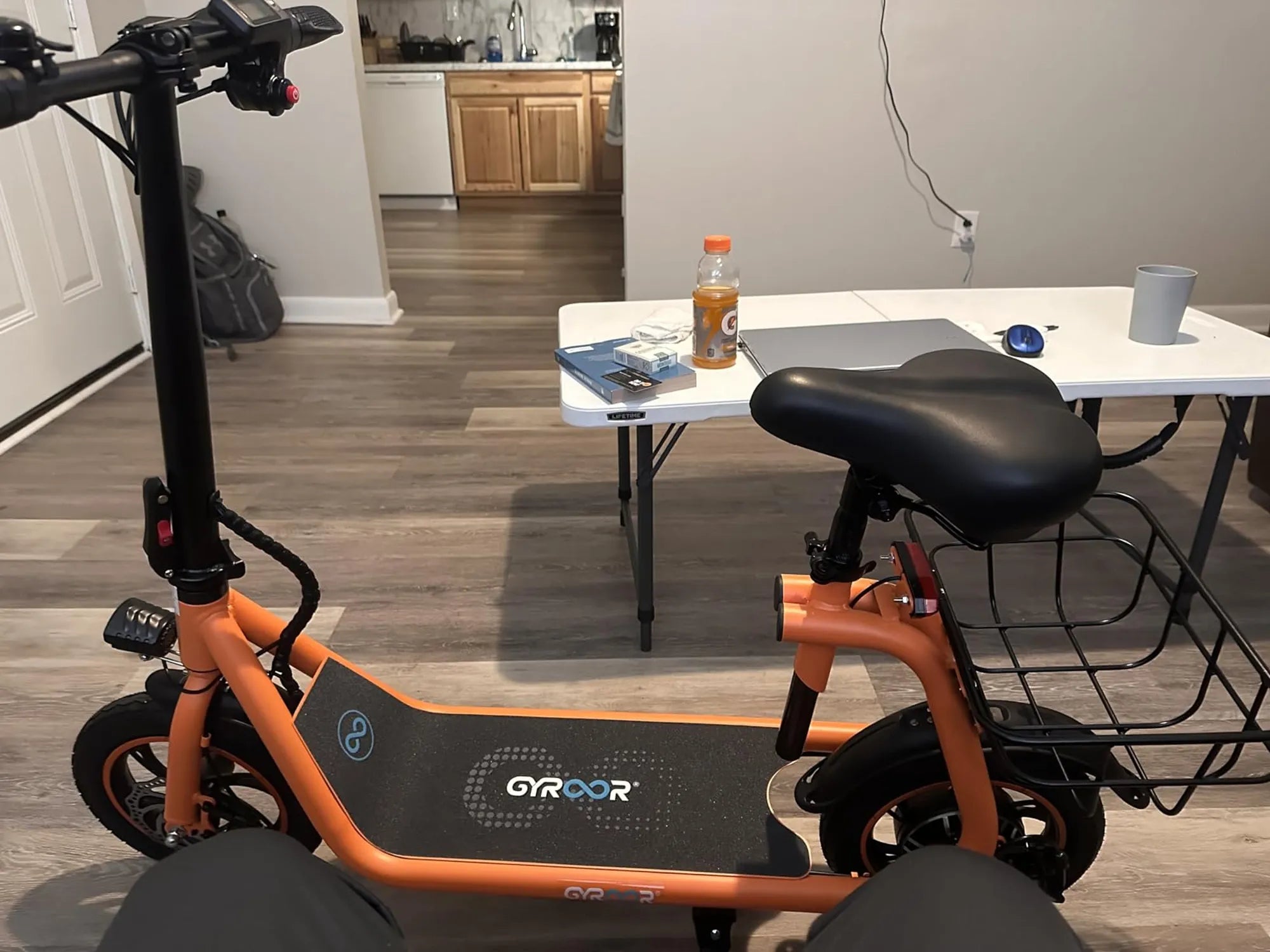
You're shopping for an electric scooter and keep seeing specs in watts, not CC. It's confusing if you're used to gas-powered bikes. The straightforward answer is no, electric scooters do not have CC. This article demystifies that exact question—Do Electric Scooters Have CC? Understanding Engine Power in E-Scooters—by translating traditional engine concepts into the language of electric mobility. You'll learn what wattage really means for your ride, how torque gets you up hills, and why factors like battery certification matter more than a simple number. We'll provide clear comparisons and data to help you choose the right scooter with confidence.
Introduction to the Question: "Do Electric Scooters Have CC?"
The term "CC" or cubic centimeters is deeply ingrained in automotive and motorcycle culture. It refers to the total volume of the cylinders in an internal combustion engine (ICE). For decades, this measurement has been a primary shorthand for a vehicle's potential power and size.
When shoppers ask, "Do electric scooters have CC?" they are trying to apply a familiar framework to a new technology. They want to understand the scooter's capability in terms they know. However, this is a fundamental category error. An electric motor operates on completely different principles than a combustion engine.
An electric scooter's propulsion comes from a battery-powered motor that generates force through electromagnetic fields. There are no cylinders, pistons, or a fuel-air mixture to displace. Therefore, the concept of engine displacement—measuring the space where combustion happens—is entirely irrelevant.
Instead of CC, electric scooter performance is quantified using watts (W) for power, volts (V) for system pressure, and newton-meters (Nm) for torque. Understanding these metrics is key to evaluating an e-scooter's true potential for speed, hill climbing, and acceleration.
Why CC Doesn't Apply to Your E-Scooter
To understand why CC doesn't apply, we must examine the core difference between propulsion systems. A combustion engine is a complex air pump. The CC number tells you the total volume of air and fuel that can be drawn into the cylinders, compressed, and ignited in one complete engine cycle.
More displacement typically allows for more fuel to be burned, generating more power. This process is mechanical, thermal, and involves hundreds of moving parts. Power builds as engine revolutions per minute (RPM) increase, creating the need for gearboxes.
An electric motor is elegantly simple. Electrical energy from the battery creates a rotating magnetic field in the motor's stator. This field pulls the rotor around, creating direct rotational force. There is no combustion, no need for air intake, and no multi-speed transmission in most models.
Since there is no "displacement" of a fuel mixture, the CC metric has zero meaning. The power of an electric motor is determined by how much electrical energy it can convert into mechanical motion, which is measured in watts. This shift from volumetric measurement (CC) to power measurement (W) is the key conceptual leap for new riders.
Decoding E-Scooter Power: Watts, Volts, and Torque
Forget CC. To understand your e-scooter's performance, you need to speak the language of electricity and force. Three interconnected specs tell the whole story: Watts, Volts, and Newton-meters.
Motor Power (Watts): The "Horsepower" Equivalent
Motor wattage is the most cited spec and the closest analog to an engine's horsepower. It indicates the rate at which the motor can do work. You'll typically see two ratings: continuous and peak.
Continuous wattage is the power the motor can sustain indefinitely without overheating. Peak wattage is the maximum burst power it can deliver for short periods, like during hard acceleration or up a steep hill. A 500W continuous motor might have a 750W or even 1000W peak rating.
For practical riding, here's a general guide: A 250W motor suits flat-terrain commuting at speeds up to 15-20 mph. A 500W motor provides confident acceleration, better hill capability, and speeds up to 25 mph. Motors of 1000W and above are for high-performance, off-road, or heavy rider applications, offering top speeds of 30+ mph.
Brands like Gyroor design their scooters with robust motor systems. For instance, a commuter model might feature a reliable 350W hub motor, while a performance model could boast a 1000W motor, ensuring power delivery matches the intended use case.
Battery Voltage (Volts): The System's "Pressure"
Think of voltage as the electrical pressure or "push" behind the current. A common misconception is that wattage alone defines power. In reality, power (Watts) = Voltage (Volts) x Current (Amps).
A higher voltage system (e.g., 48V vs. 36V) can deliver the same amount of power (watts) with less current. Lower current means less heat loss in the wires and components, leading to greater efficiency. This often results in better acceleration, higher top speeds, and less voltage sag under load.
Most adult electric scooters today use 36V, 48V, or 52V systems. A 48V system paired with a 500W motor will generally feel more responsive and sustain speed better on hills than a 36V system with the same 500W motor rating.
The battery's voltage works in tandem with its capacity (measured in Amp-hours, Ah) to determine range. A high-quality, UL-certified battery pack, like those used by Gyroor, ensures stable voltage delivery throughout the discharge cycle for consistent performance.
Torque (Newton-Meters): The Real "Get-Up-and-Go"
If wattage is top speed, torque is your launch from a stoplight. Measured in Newton-meters (Nm), torque is the rotational force produced by the motor. High torque is what throws you back in the seat when you hit the throttle.
This is where electric scooters dramatically outperform their CC equivalents. Electric motors deliver 100% of their available torque instantly from 0 RPM. A gas engine must rev up to reach its peak torque band. This instant torque makes e-scooters exceptionally quick off the line in urban settings.
Torque is critical for climbing hills. A scooter with high wattage but low torque may struggle on an incline, while a scooter with strong torque will pull you up steadily. Direct-drive hub motors often provide smooth, consistent torque, while some geared or chain-drive systems can offer even higher torque for extreme gradients.
When evaluating scooters, seek out torque specifications. A scooter with 25-30 Nm of torque will handle moderate hills with ease, while models designed for steep terrain may feature 40+ Nm.
Comparing Performance: From Moped CC to E-Scooter Watts
To bridge the understanding gap, we can draw general performance analogies. It's crucial to remember this is not a direct engineering conversion—it's about the riding experience.
The table below provides a rough equivalence based on acceleration, hill-climbing ability, and typical urban performance.
| Gas-Powered Vehicle (CC) | Comparable E-Scooter Performance (Motor Wattage) | Typical Use Case & Notes |
|---|---|---|
| 50cc Moped / Scooter | 300W - 500W (Continuous) | Urban commuting, speeds up to 25-30 mph. Good for flat to moderately hilly terrain. The electric option offers instant, silent acceleration. |
| 125cc Motorcycle | 1000W - 1500W+ (Peak) | Faster acceleration, ability to tackle steeper hills, higher top speeds (30+ mph). Suitable for performance riders and challenging routes. |
| Small 250cc Dirt Bike | Dual-Motor Setups (e.g., 2x 800W) | Serious off-road capability, extreme hill climbs, and high torque demand. Dual motors provide traction and power similar to a lightweight off-road bike. |
The analogy breaks down in key areas. A 50cc moped might have a higher top speed than a 500W scooter due to gearing, but the scooter will accelerate faster from a stop. The 125cc motorcycle can maintain highway speeds, which even powerful e-scooters are not designed for.
The takeaway is this: if you're used to the feel of a 50cc scooter for city errands, a 500W electric scooter will meet or exceed that experience in daily use, with the added benefits of quiet operation and lower maintenance.
What Matters More Than "CC": Key E-Scooter Specs for Riders
Moving beyond the simple wattage number, several other specifications collectively determine the quality, safety, and longevity of your e-scooter's power system.
Motor Type & Placement: Hub vs. Chain Drive
The most common type is the hub motor, built directly into the wheel (usually the rear). It's sealed, requires almost no maintenance, and provides a quiet, direct drive. Gearless hub motors are incredibly durable but can be heavier. Geared hub motors are lighter and sometimes offer more torque for their size.
Chain-drive or mid-drive motors are less common on scooters (more frequent on e-bikes). They use a motor mounted on the deck that drives the wheel via a chain or belt. This can allow for higher torque outputs and the potential for gearing, but it introduces more moving parts and requires periodic maintenance.
For most riders, a robust hub motor from a reputable brand offers the perfect balance of reliability and performance. It eliminates the worries of chain lubrication, tension, or breakage.
Battery Quality & Certification: The Heart of the System
The battery is the fuel tank and a critical safety component. Capacity (Ah) gets attention for range, but the cell quality and construction are paramount. Cheap, uncertified lithium-ion batteries are a leading cause of e-scooter fires.
Always look for UL 2271 or UL 2843 certification. This means the battery pack has undergone rigorous independent testing for electrical, mechanical, and environmental safety. Gyroor, for example, uses UL-certified battery packs in all its models, a non-negotiable standard for a brand trusted by over 100,000 riders.
A high-quality battery from name-brand cells (like Samsung or LG) not only ensures safety but also provides better longevity, holding more charge cycles before significant capacity degradation.
Water Resistance Rating (IP Code)
The motor and electronics need protection from the elements. The IP (Ingress Protection) code indicates this. The first digit is solid particle protection (often X or 6), and the second is liquid protection.
For real-world riding, an IPX5 rating is a strong minimum. This means the scooter can withstand water jets from any direction, making it safe to ride in light rain or through puddles. Gyroor designs its scooters to IPX5 standards, protecting the motor controller and connections from common wet conditions.
A scooter with a poor or unspecified IP rating risks catastrophic failure from a single encounter with a deep puddle, as water can short-circuit the motor or controller.
Warranty & Customer Support
The warranty is a manufacturer's vote of confidence in their product. A robust warranty on the motor and battery (typically 1 year for reputable brands) is essential. It protects you from defects in materials and workmanship.
Accessible customer support is equally important. Can you get help with troubleshooting? Are replacement parts available? Gyroor backs its scooters with a comprehensive 1-year warranty and dedicated support, ensuring riders have a reliable partner for the lifespan of their vehicle.
Frequently Asked Questions (FAQ)
1. Can I convert my e-scooter's wattage to CC?
No, there is no direct, accurate conversion formula. Wattage and CC measure fundamentally different things in fundamentally different systems. The performance analogies provided earlier are useful for general understanding but are not engineering conversions. Focus on the wattage, torque, and real-world performance reviews for your specific needs.
2. Is a higher wattage motor always better?
Not necessarily. A higher wattage motor consumes more energy, which can reduce range if the battery capacity is the same. It also adds weight and cost. For a rider who only needs to travel 3 flat miles to work, a 1000W motor is overkill. Choose a motor that matches your typical terrain, rider weight, and desired speed. A 500W motor is the sweet spot for most urban commuters.
3. What's more important, motor watts or battery volts?
They are interdependent. You must consider them as a system. A high-wattage motor with a low-voltage battery will draw excessive current, causing heat and inefficiency. A well-designed scooter pairs an appropriate motor with a compatible voltage system. For example, a 500W motor performs optimally on a 48V system rather than a 36V one. Look for a balanced specification sheet.
4. Do dual motors double the CC equivalent?
In terms of raw power output and especially torque, dual motors (e.g., one in each wheel) provide a transformative experience. They effectively double the tractive effort, offering phenomenal acceleration, hill-climbing, and traction, especially off-road. While not a "double the CC" calculation, the performance feel is closer to a much larger displacement vehicle due to the instant, multiplied torque delivery.
5. How does motor power affect the legal classification of my e-scooter?
This is critical. Local laws often regulate e-scooters based on motor power and maximum speed. In many US jurisdictions and the EU, scooters with a motor under 500W and a speed capped at 15-20 mph are allowed on bike lanes and paths. Scooters with more powerful motors (e.g., 1000W+) may be restricted to private property or have different licensing requirements. Always check your local regulations before purchasing.
Choosing the Right Power System for Your Needs
Selecting an e-scooter is about matching its power system to your lifestyle. Start by honestly assessing your primary use case, terrain, and rider weight.
For the urban commuter on paved, relatively flat paths, a 350W-500W single motor scooter with a 36V or 48V battery is ideal. Prioritize features like portability, water resistance, and a reliable, UL-certified battery. This setup offers ample power for daily trips with excellent efficiency.
If your route includes significant hills, or you are a heavier rider, lean towards a 500W-800W motor on a 48V system. Ensure the manufacturer specifies good torque values. The extra power reserve prevents the motor from straining, which prolongs its life and makes the ride more enjoyable.
For off-road enthusiasts, performance seekers, or those in very hilly cities, a 1000W+ single motor or a dual-motor setup is necessary. These systems, often on 52V platforms, provide the torque and power to handle dirt trails, steep grades, and higher speeds. Look for enhanced suspension, rugged tires, and robust frame construction to match the powerful drivetrain.
Throughout your search, remember that the supporting ecosystem—battery certification, waterproofing, warranty, and brand reputation—is just as important as the wattage number on the box. A 500W scooter from a brand like Gyroor, with its UL-certified battery and IPX5 rating, will provide a safer and more reliable experience than an uncertified 800W model from an unknown source.
Powering Your Ride the Smart Way
The question "Do electric scooters have CC?" opens the door to a more nuanced and accurate understanding of personal electric vehicle performance. CC is a relic of the combustion age, irrelevant to the instant, silent, and efficient power of an electric motor. Your e-scooter's capability is defined by the synergy of watts, volts, and newton-meters—metrics that directly translate to your real-world experience of speed, range, and hill-conquering ability.
When evaluating your options, look beyond the headline wattage. Scrutinize the battery's safety certifications, the build quality indicated by the water resistance rating, and the confidence reflected in the manufacturer's warranty. These factors separate a quality vehicle from a mere gadget. Brands that invest in these areas, such as Gyroor with its commitment to UL-certified batteries and IPX5 water-resistant designs, are building scooters meant to last.
Ready to experience the right kind of power for your journey? Ditch the CC confusion and focus on the specs that matter. Explore a range of scooters engineered with safety and performance in mind. Browse the full Gyroor collection, featuring UL-certified batteries and reliable 1-year warranties, at gyroorboard.com.
Are Electric Scooters Legal in London Now? The Latest Rules Explained
Are Electric Scooters Legal in Ireland? A Complete Guide to the Rules