



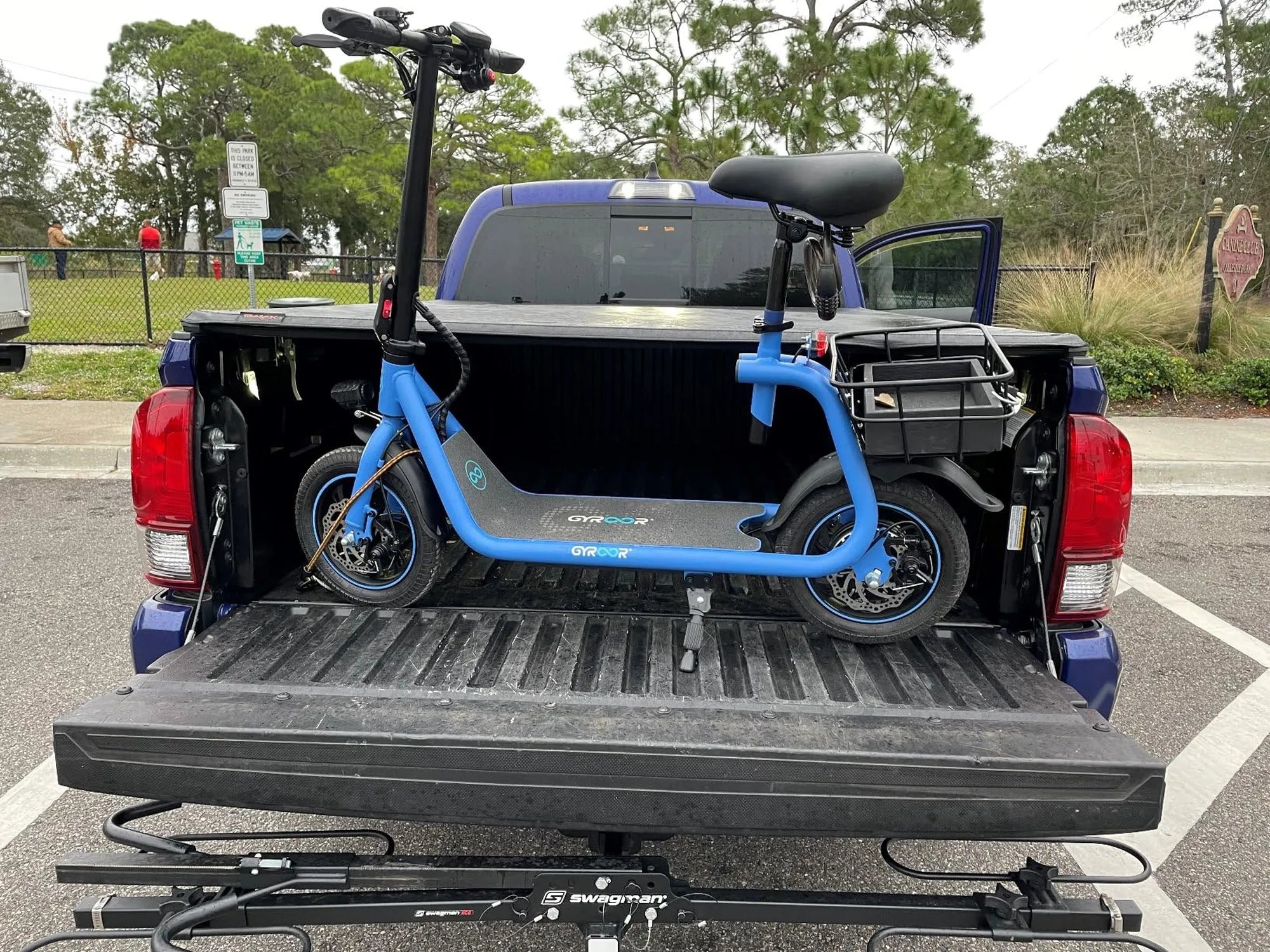
Forget choosing between a road commuter and a trail explorer. The dual sport ebike is engineered to be the one-bike solution, seamlessly blending the efficiency of a city cruiser with the rugged capability of a light trail bike. This comprehensive guide will define what makes a true dual sport electric bike, break down its critical components, and provide the data-driven insights you need to select a model that unlocks true riding freedom. You'll learn how its unique design tackles mixed-terrain challenges, why specific features are non-negotiable, and how to maximize your investment for years of reliable adventure.
Introduction to Dual Sport E-Bikes: The Ultimate Hybrid Commuter
A dual sport ebike is a specific class of hybrid electric bicycle designed with a clear purpose: to capably handle both paved surfaces and unpaved, light off-road trails. It is not a full-suspension mountain bike nor a skinny-tired road machine. Instead, it occupies the intelligent middle ground, featuring a stable, upright geometry, wider tires for traction, and a suspension fork to absorb bumps.
This hybrid design directly addresses the needs of the modern rider whose journey isn't confined to a single surface. Think of a commute that involves bike paths, city streets, and a shortcut through a packed gravel park trail. Or a weekend exploration that mixes country roads with forest service paths. The dual sport ebike is built for these scenarios, eliminating the compromise of using a specialized bike on unsuitable terrain.
The core philosophy is versatility without extreme specialization. Engineers balance factors like rolling resistance, suspension travel, frame strength, and rider position to create a genuinely multi-purpose vehicle. The result is an electric bike that empowers you to say "yes" to more routes and adventures, confident that the bike can handle the varied conditions.
For urban and suburban dwellers, this means a more engaging and direct commute, free from detours around rough patches or park paths. For recreational riders, it opens up a wider range of exploration from a single starting point. The electric assist amplifies this capability, making hills and headwinds manageable and extending your effective range across all terrains.
Why Choose a Dual Sport E-Bike? Versatility Meets Performance
The primary value proposition of a dual sport ebike is the consolidation of capability. Instead of owning (and maintaining) separate bikes for road and trail, a single, well-designed dual sport model performs admirably in both domains. This represents significant cost savings and storage convenience while ensuring you always have the right tool for a spontaneous ride, regardless of the route that calls.
Performance in this context is measured by confidence and comfort across variable surfaces. The stable, often slightly relaxed geometry provides predictable handling whether you're navigating urban traffic or a winding dirt path. An upright riding position offers better visibility in traffic and is less strenuous on the back and wrists during longer mixed-terrain rides compared to aggressive road or mountain bike stances.
This bike excels in unpredictable environments. A sudden road construction detour onto a gravel shoulder, a washed-out section of a bike path, or a desire to cut through a grassy field—a dual sport ebike takes these in stride where a standard commuter bike would falter. The electric motor provides the necessary torque to maintain momentum on loose surfaces or up unpaved inclines, turning potential obstacles into minor features of the ride.
From a practical standpoint, this versatility translates to more riding days per year and more miles per ride. You are less likely to cancel a ride due to "less-than-perfect" trail conditions or avoid a longer route because it contains a short off-pavement segment. The bike's inherent capability encourages exploration and makes practical transportation more viable for a wider range of real-world routes.
Key Features of a Capable Dual Sport E-Bike
Not every hybrid e-bike qualifies as a true dual sport. Specific features are essential for legitimate off-pavement capability while preserving on-road manners.
Motor and Drivetrain: A robust mid-drive or high-torque hub motor (500W-750W nominal is common) is crucial. Mid-drive motors are often preferred for their balanced weight distribution and efficient use of the bike's gears for hill climbing. A torque output of 80 Nm or higher provides the necessary grunt for trail ascents. The bike should feature a wide-range gear cassette (e.g., 8-10 speeds) to pair with the motor for efficient pedaling across all terrains.
Suspension: A front suspension fork is non-negotiable. Travel typically ranges from 63mm to 80mm—enough to take the edge off roots, rocks, and potholes without the excessive weight or pedal-bob of a long-travel mountain bike fork. A lockout feature is highly valuable, allowing you to stiffen the fork for efficient pedaling on smooth pavement.
Tires: This is a critical differentiator. Tires should be wider (typically 2.0" to 2.4") than commuter tires and feature a tread pattern that balances low rolling resistance on pavement with aggressive side knobs for cornering traction on dirt. Puncture-resistant belts are a major quality-of-life feature for mixed-terrain use where debris is common.
Brakes: Hydraulic disc brakes are the standard for reliable, consistent stopping power in all conditions. They perform equally well in wet weather, muddy trails, and on long descents, offering superior modulation and control over mechanical discs or rim brakes.
Frame and Build: A sturdy aluminum alloy frame provides the best balance of strength, durability, and weight. The bike should have ample mounting points for racks, fenders, and water bottles to support its role as a practical workhorse. Integrated, bright LED lighting (front and rear) is essential for safety and is often a standard feature on higher-quality models.
The Gyroor Advantage: Engineering for Confidence On and Off the Pavement
When venturing off the beaten path, reliability and safety become paramount. A brand's engineering philosophy directly impacts your confidence. Gyroor, a leading electric mobility brand trusted by over 100,000 riders, builds its electric bikes with core principles that align perfectly with the demands of dual sport riding.
At the heart of this is the UL-certified battery pack. This isn't just a marketing term; it's a critical safety certification. UL certification involves rigorous testing for electrical, mechanical, and environmental safety. For a dual sport ebike that may face vibration from trails and variable weather, this certified battery pack ensures stable, safe power delivery and long-term reliability over its 500+ charge cycle lifespan. It's the foundation of a worry-free adventure.
Next is the IPX5 water-resistant rating. This engineering specification means the bike's electrical components are protected against water jets from any direction. Riding through puddles, getting caught in a rain shower, or dealing with trail spray is part of the dual sport experience. An IPX5 rating ensures the motor, display, and wiring can handle these conditions without failure, a feature not found on all e-bikes.
Finally, Gyroor backs its dual sport models with a 1-year comprehensive warranty. This warranty covers the frame, motor, battery, and electronic components, providing significant peace of mind. It signals the brand's confidence in the durability of its products under the varied stresses of mixed-terrain use. For a rider investing in a versatile machine, this warranty is a key component of long-term value.
Dual Sport E-Bike vs. Other E-Bike Types: Finding Your Fit
Understanding where the dual sport fits in the broader e-bike landscape is key to making the right choice. The following comparison table highlights the critical differences.
| E-Bike Type | Tire Type & Width | Suspension | Best Use Case | On-Road Efficiency |
|---|---|---|---|---|
| Dual Sport E-Bike | Hybrid, 2.0" - 2.4" | Front fork (63-80mm), often lockout | Mixed pavement, gravel, light trails | Very Good |
| Commuter/City E-Bike | Slick or semi-slick, 1.75" - 2.0" | Rigid or minimal front suspension | Paved roads, bike paths, urban errands | Excellent |
| Full-Suspension Mountain E-Bike | Knobby, 2.4"+ | Front & rear suspension (100mm+) | Technical singletrack, downhill trails | Poor (Heavy, slow rolling) |
| Fat Tire E-Bike | Extra-wide, 3.5" - 4.5"+ | Often front only, or rigid | Sand, snow, very soft terrain | Fair to Poor (High rolling resistance) |
A commuter or city e-bike prioritizes speed and efficiency on pavement. Its thinner tires and lack of serious suspension make it uncomfortable and unstable on anything rougher than hard-packed gravel. Conversely, a full-suspension mountain e-bike is overkill and inefficient for road riding—it's heavier, its knobby tires create high rolling resistance, and its geometry is not optimized for sustained pedaling on flat surfaces.
The fat tire e-bike, while capable on sand and snow, suffers from significant drag and slower handling on paved roads, making it a poor choice for mixed-terrain rides where pavement dominates. The dual sport ebike is specifically engineered to split the difference: capable enough for adventure, efficient enough for the daily grind. It is the rational choice for riders whose journeys are defined by "and" rather than "or."
What to Look for When Buying Your Dual Sport E-Bike
Armed with an understanding of the category, use this detailed checklist to evaluate specific models. Focus on the specifications that translate to real-world performance and durability.
Motor Performance: Prioritize torque (Nm) over sheer wattage. Look for a minimum of 75 Nm of torque for adequate hill-climbing and trail power. A mid-drive motor will generally offer better weight distribution and hill performance, while a quality geared hub motor can be simpler and very effective. Ensure the motor offers smooth, responsive pedal assist.
Battery and Range: Scrutinize the battery's watt-hour (Wh) rating, not just its voltage and amp-hour (Ah). A higher Wh number means more energy capacity. For true dual sport use, aim for a battery of 500Wh or larger. Remember, manufacturer range estimates are under ideal conditions; factor in a 30-40% reduction for real-world mixed-terrain and higher-assist usage. A removable battery is a major convenience for charging.
Frame and Components: 6061 aluminum alloy is the standard for a reason. Check the bike's total weight; most quality dual sports weigh between 50-65 lbs. Lighter is better for handling and efficiency. Examine the component group: a reputable brand name for the drivetrain (e.g., Shimano, SRAM) and brakes (Tektro, Shimano) is a good indicator of overall quality and serviceability.
Fit and Comfort: Geometry is subjective. If possible, always take a test ride. Pay attention to how the bike handles at low speed, how comfortable the riding position is, and how intuitive the controls feel. A proper fit is essential for control and enjoyment, especially when tackling uneven terrain.
Brand and Support: Research the brand's reputation for customer service and warranty support. A comprehensive warranty (like Gyroor's 1-year coverage) is a strong signal of quality. Check the availability of replacement parts, especially proprietary items like displays or battery packs. A brand with an established presence in North America and Europe typically offers better support networks.
Maximizing Your Ride: Tips for Dual Sport E-Bike Owners
Ownership extends beyond the purchase. Proper maintenance and technique will enhance performance, safety, and the lifespan of your investment.
Tire Pressure Management: This is your primary adjustment for terrain. For mostly pavement, inflate tires toward the higher end of the recommended range (e.g., 50 PSI) for lower rolling resistance. For trail or loose gravel, drop the pressure toward the lower end (e.g., 30-40 PSI) for a larger contact patch and better traction. Invest in a quality floor pump with a gauge.
Suspension and Basic Maintenance: Regularly clean the stanchions of your front fork with a soft cloth to prevent seal damage from dirt. Check the fork's air pressure (if air-sprung) periodically according to the manual. Keep the drivetrain clean and lubricated, especially after riding in dusty or wet conditions. Regularly check bolt torque on critical components like handlebars, stem, and seat post.
Battery Care for Longevity: To maximize your UL-certified battery's life, avoid consistently draining it to 0%. Try to recharge when it reaches 20-30%. Similarly, avoid always charging to 100% for daily storage; 80-90% is ideal for long-term health. Store the battery in a cool, dry place, away from extreme temperatures.
Safe Riding Practices: When transitioning from road to trail, slow down and scan the new surface. Use lower assist levels on technical trails to maintain better control and conserve battery. Always use your lights in daytime for increased visibility to others. When riding off-road, keep your weight centered and slightly back on descents, and use a lower gear than you think you need for climbs to maintain traction.
Frequently Asked Questions (FAQs) About Dual Sport E-Bikes
Q: Are dual sport e-bikes good for long-distance commuting?
A: Absolutely, provided you select a model with a sufficient battery (650Wh+ is ideal for long commutes) and a comfortable riding position. Their stable geometry and ability to smooth out road imperfections can make them more comfortable for long stretches than a rigid commuter bike, especially on varied urban surfaces.
Q: Can a dual sport e-bike handle real mountain biking trails?
A> They are designed for light to moderate trails—think packed gravel, forest service roads, smooth singletrack, and easy cross-country paths. They are not suitable for aggressive downhill trails, large jumps, or highly technical rock gardens. The suspension and tire limitations are not designed for that level of impact.
Q: How does the IPX5 water resistance actually protect my bike?
A: An IPX5 rating certifies that the electrical enclosures (motor, controller, display) can withstand water jets from a 6.3mm nozzle from any direction at a distance of 3 meters for at least 3 minutes. This means riding in heavy rain, through deep puddles, or on wet trails will not damage the core electrical systems. It is a robust level of protection for all-weather riding.
Q: What is the typical weight, and does it matter?
A: Most quality dual sport e-bikes weigh between 52 and 62 pounds. The weight affects agility (lighter is nimbler) and stability (heavier can feel more planted at speed). The electric assist negates much of the weight penalty when accelerating or climbing, but it is still a factor when lifting the bike or maneuvering it without power.
Q: Do I need a special license or insurance for a dual sport e-bike?
A: In most regions of the US and Canada, a Class 1 or Class 2 e-bike (max 750W, 20 mph assist) requires no special license, registration, or insurance to operate where traditional bicycles are allowed. Always check your local and state regulations, as they can vary, especially concerning trail access for motorized vehicles.
Unleash Your Commute, Embrace Your Adventure
The dual sport ebike represents a paradigm shift from single-purpose transportation to adaptable mobility. It is the intelligent answer for riders who refuse to be limited by terrain, whether that terrain is a potholed city street, a gravel country lane, or a wooded path. By combining the right geometry, components, and electric assist, it delivers a uniquely confident and liberating riding experience.
Choosing a model built with foundational safety and durability in mind is crucial. Features like UL-certified batteries, legitimate water resistance, and a strong warranty—hallmarks of brands like Gyroor—are not mere specs; they are the bedrock of trust that allows you to explore further and commute more freely. Your journey shouldn't end where the pavement does. With the right dual sport ebike, it simply transforms, opening up a wider world on two wheels.
Ready to discover a bike that matches your dynamic lifestyle? Explore engineering built for confidence. Browse the full Gyroor collection of electric bikes and scooters at gyroorboard.com.
150cc Scooter Engine: The Definitive Guide to Urban Power & Efficiency
150cc Scooter Engine: The Definitive Guide to Urban Power & Efficiency