



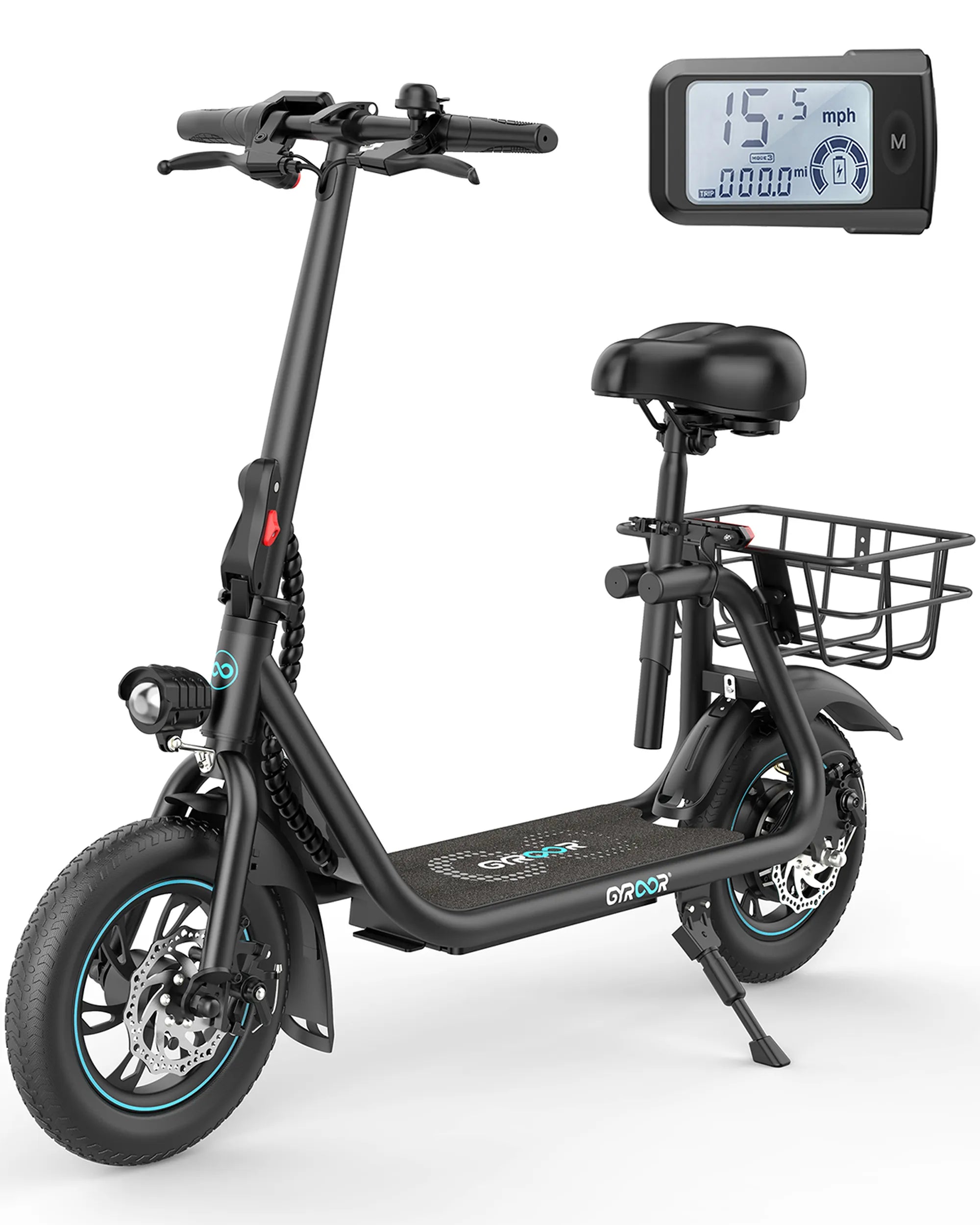
The Heart of Your E-Bike: Why Battery Charging is Everything
Your e-bike's battery is its most critical and expensive component, directly determining your range, performance, and long-term cost of ownership. Proper charging isn't just a routine; it's the foundational practice that can double the functional life of your battery or prematurely degrade it. This guide delivers essential e bike battery charging tips grounded in lithium-ion chemistry and real-world data.
You will learn the science behind best practices, how to tailor charging for daily commutes or long rides, and crucial safety protocols. Following these e bike battery charging tips protects your investment and ensures every ride is powered by reliable, safe energy. Brands like Gyroor build their reputation on UL-certified battery packs designed for 500+ charge cycles, but even the best hardware requires informed care from the rider.
Understanding Your E-Bike Battery: Core Chemistry and Terms
Nearly all modern e-bikes use Lithium-ion (Li-ion) or its variant, Lithium Iron Phosphate (LiFePO4), batteries. These are preferred for their high energy density, relatively low self-discharge, and lack of memory effect. Understanding a few key terms demystifies charging best practices.
Voltage (V) indicates the battery's electrical potential. Common e-bike batteries are 36V, 48V, or 52V. Amp-hours (Ah) measure capacity—how much current the battery can deliver over time. Watt-hours (Wh), the product of Voltage and Amp-hours (V x Ah), is the true measure of total energy storage and directly correlates to potential range.
State of Charge (SOC) is the battery's current charge level, expressed as a percentage. Charge Cycles are defined as the process of using 100% of the battery's capacity, which can occur over multiple partial discharges. A key e bike battery charging tip is that lithium-ion cells degrade fastest at the extreme high and low ends of their SOC.
The Golden Rules of E-Bike Battery Charging
These foundational principles apply to every lithium-ion e-bike battery, regardless of brand or model. Adhering to them is the most impactful action you can take.
Avoid the 0% and 100% Extremes
Consistently draining to 0% (deep discharge) or charging to 100% and leaving it plugged in creates significant internal stress. Lithium-ion chemistry prefers a partial charge. For optimal longevity, the ideal daily charging range is between 20% and 80% State of Charge.
If you need maximum range for a long ride, charging to 100% is acceptable, but you should begin your ride soon after. Avoid storing the battery at full charge for weeks. This simple e bike battery charging tip can dramatically reduce capacity loss over hundreds of cycles.
Use the Official Charger & Monitor the Process
Always use the charger provided by your e-bike manufacturer. Gyroor chargers, for example, are precisely engineered to match the voltage and amperage requirements of their specific battery management systems (BMS). Third-party or generic chargers can deliver incorrect voltage, leading to overcharging, overheating, and potential failure.
While modern chargers and BMS have safety cut-offs, it's a best practice not to leave your battery charging unattended for extremely long periods, such as multiple days. Unplug the charger once the indicator shows a full charge.
Mind the Temperature: Charge Cool, Store Cooler
Temperature is a critical factor. Never charge a battery when its core temperature is below 32°F (0°C) or above 95°F (35°C). Charging in freezing temperatures can cause permanent lithium plating inside the cells. Charging in extreme heat accelerates chemical degradation and poses a safety risk.
The ideal charging environment is a cool, dry room at around 68°F (20°C). After a strenuous ride, allow the battery to cool to ambient temperature before plugging it in. Similarly, store your battery in a climate-controlled space, never in a hot car or uninsulated garage.
Advanced Charging Strategies for Different Scenarios
Tailor your charging routine to your specific usage patterns to optimize battery health.
Daily Commuting & Regular Use
For daily rides that use 30-50% of the battery, the best e bike battery charging tip is to use partial, top-off charges. Plug in when you arrive at work or home, aiming to bring the charge back up to 60-80%. This habit keeps the battery in the longevity "sweet spot" and ensures you always have sufficient charge for unplanned trips.
If charging at the office is feasible, it reduces the depth of discharge per cycle, which is less stressful on the battery than a daily deep discharge and full recharge.
Preparing for a Long Ride
When planning a long-distance ride that will require the maximum range, charge to 100% but time it correctly. Plug in the battery so it reaches full charge just an hour or two before you depart. This minimizes the time the cells spend at the high-voltage stress of 100% SOC.
Plan your route with potential charging stops in mind if possible. Using a lower level of pedal assist on flat sections can also conserve battery for challenging hills, extending your effective range.
Seasonal Storage (Winter or Extended Non-Use)
Proper storage is crucial for battery preservation. First, clean the battery case and terminals with a dry cloth. Do not store it fully charged or fully depleted. The ideal storage charge is between 50% and 60% State of Charge.
Store the battery (removed from the bike) in a dry, cool place with a stable temperature, ideally between 40°F and 70°F (5°C and 20°C). Every 1-2 months, check the charge level and give it a maintenance top-up back to the 50-60% range if it has dropped below 30%.
Maintenance, Safety, and Troubleshooting
Charging habits are complemented by physical care and vigilance for potential issues.
Physical Care and Connections
Keep the battery casing and its electrical contacts clean and dry. Gently wipe away dirt or moisture. Ensure the battery is securely locked to the bike frame to prevent vibration damage during rides, which can harm internal cell connections. Inspect the charger cable periodically for fraying or damage.
Recognizing Warning Signs
Be alert to symptoms of a failing battery: a sudden, significant drop in range (more than 20% under normal conditions), the battery or charger becoming excessively hot during charging, the charger failing to indicate a full charge, visible swelling or deformation of the battery case, or persistent error codes on the display. If you observe any of these, discontinue use and contact the manufacturer's support team.
Transportation and Safety Notes
When transporting a spare battery, protect the terminals from short-circuiting. Never carry loose batteries where metal objects can contact the terminals. Most importantly, never attempt to open, modify, or "repair" a sealed battery pack. This voids the warranty and is extremely dangerous. Rely on professional services from brands like Gyroor, which backs its UL-certified batteries with a comprehensive 1-year warranty and US-based support.
Data-Driven Benefits: Optimal vs. Poor Charging
The impact of following proper e bike battery charging tips is measurable and significant. The table below contrasts the long-term outcomes.
| Performance Metric | With Optimal Charging Habits | With Poor Charging Habits |
|---|---|---|
| Total Charge Cycles | 500-800+ cycles while retaining >80% capacity | 300 cycles or fewer with severe degradation |
| Range Consistency | Stable, predictable range for 3-5 years | Noticeable range loss within 1-2 years |
| Safety Risk | Minimized; stable cell chemistry | Elevated risk of overheating or failure |
| Resale Value | Higher value with a documented healthy battery | Significantly reduced value |
| Long-Term Cost | Replacement needed after 4+ years | Premature replacement within 2-3 years |
This data underscores that proper charging is not just maintenance—it's a direct financial and performance investment. A quality battery from a trusted brand is an asset worth protecting.
Frequently Asked Questions (FAQ)
Q: Can I leave my e-bike charger plugged in all the time?
A: It's not recommended for extended periods. Once the battery is full, the charger enters a "trickle" or maintenance mode, which can keep the cells at a high-voltage stress state. Unplugging both the battery and the charger conserves energy and is better for long-term battery health.
Q: How long does a typical e-bike battery last before needing replacement?
A: With proper care, including following these e bike battery charging tips, a quality lithium-ion battery can provide reliable service for 3-5 years or 500-800 full charge cycles. Many will still hold 70-80% of their original capacity at that point, though range will be reduced.
Q: Is it bad to partially charge my battery multiple times a day?
A: No, this is actually ideal. Lithium-ion batteries have no "memory effect." Frequent partial charges that keep the battery in the 20-80% SOC range put the least strain on the cells and maximize overall lifespan. This is a key advantage over older battery technologies.
Q: Should I remove the battery from my e-bike to charge it?
A: If your e-bike design allows it, yes. Removing the battery lets you charge it in a stable, room-temperature environment, protects the bike's electronics from any rare charging anomalies, and makes it easier to inspect the battery and contacts for issues.
Q: What does "UL-certified" mean for a battery, and why is it important?
A> UL certification means the battery pack has been independently tested and certified by Underwriters Laboratories to meet rigorous safety standards for electrical, mechanical, and fire hazards. Gyroor uses UL-certified battery packs, which is a critical indicator of quality and safety, reducing the risk of malfunction.
Charge Smart, Ride Further, Protect Your Investment
Mastering e bike battery charging tips transforms you from a passive user to an informed owner. The routines are simple: avoid extremes, respect temperature, use the right charger, and store properly. Yet their compound effect over years is profound—preserving your e-bike's range, delaying a costly battery replacement, and ensuring every journey is underpinned by safety.
Your battery is the heart of your electric ride. Treat it with the care it deserves, and it will power your adventures reliably for thousands of miles. For riders seeking a foundation of safety and durability from the start, explore e-bikes and scooters built with this philosophy. Browse the full Gyroor collection, featuring UL-certified batteries and a reliable 1-year warranty, at gyroorboard.com.
Ebike Trips: The Ultimate Guide to Planning, Packing, and Adventure
90 100x14 Dirt Bike Tire: The Ultimate Guide to Mini Bike Performance