



Introduction to E-Bike Trips
Ebike trips represent the modern fusion of traditional cycling's freedom with electric assistance's empowering reach. An e-bike trip is any journey, from a daily commute to a multi-day tour, undertaken on a pedal-assist or throttle-powered bicycle. The surge in their popularity is data-driven: e-bike sales have consistently outpaced traditional bike sales in many markets, as riders seek to travel farther, conquer hills with ease, and arrive at their destination less fatigued.
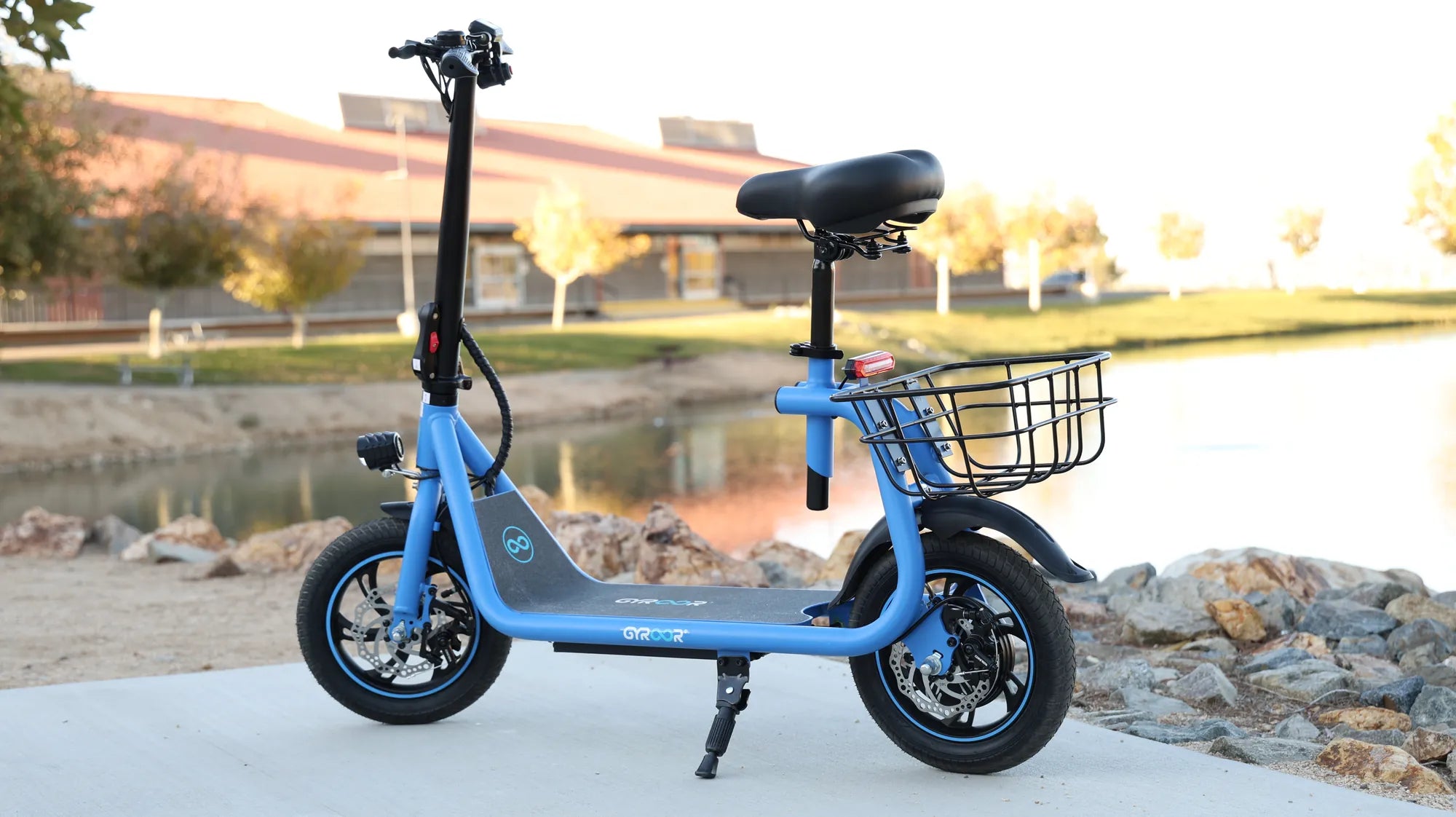
This guide is your blueprint for unlocking the full potential of electric bicycle travel. You will learn how to plan routes, select essential gear, maximize your e-bike's performance, and handle common on-the-road scenarios. The foundation of any great adventure is a reliable machine, which is why many riders choose brands known for durability and safety, such as Gyroor, a leading electric scooter and e-bike brand trusted by over 100,000 riders across North America and Europe.
The core appeal of ebike trips is accessibility. They lower the barrier to cycling, allowing people of varying fitness levels to keep pace with friends, commute without sweating, and explore terrain that might otherwise be prohibitive. Whether your goal is fitness, utility, or pure exploration, an e-bike transforms the scope of what's possible on two wheels.
By the end of this guide, you'll be equipped with the knowledge to plan your first—or your next—electric adventure with confidence. Let's shift into the crucial planning phase.
Planning Your Perfect E-Bike Adventure
Successful ebike trips begin with intentional planning. The first step is to define your trip's primary purpose. Are you commuting to work, running errands, seeking a leisurely weekend ride on paved trails, training for fitness, or embarking on a multi-day touring expedition? Each type of ebike trip demands different considerations for bike selection, gear, and route planning.
Once your objective is clear, a thorough pre-ride inspection of your e-bike is non-negotiable. This should be a systematic check performed before every significant journey. Start with the basics: tire pressure, which drastically affects range and handling. Check your battery charge level and ensure it's sufficient for your planned distance, plus a safety margin. Test your brakes for responsiveness and listen for any unusual noises.
Finally, verify that all lights—front, rear, and any auxiliary lights—are functioning. A quick check of the drivetrain for loose bolts or a dirty chain can prevent mid-ride failures. This five-minute ritual is the most effective way to ensure your ebike trips start smoothly and safely. With a clear goal and a verified bike, you can focus on the journey ahead.
Choosing the Right E-Bike for Your Journey
Not all e-bikes are created equal for all types of ebike trips. Your choice should be dictated by your primary use case. In North America, e-bikes are generally classified into three types. Class 1 offers pedal-assist only, with no throttle, and assistance cuts off at 20 mph. Class 2 also provides a throttle for power-on-demand, with a top assisted speed of 20 mph. Class 3 is pedal-assist only but supports speeds up to 28 mph.
Beyond class, frame style is critical. Commuter or city e-bikes feature upright geometry, integrated lights, and often cargo racks, ideal for urban ebike trips. Mountain e-bikes (e-MTBs) have full suspension and aggressive tires for off-road trails. Cargo e-bikes are designed to haul heavy loads, perfect for grocery runs or transporting children. Touring e-bikes prioritize comfort and mounting points for bags over long distances.
Key technical specifications directly impact your trip planning. Motor wattage (typically 250W to 750W) determines hill-climbing power. Battery capacity, measured in Watt-hours (Wh), is the fuel tank for your ebike trips. A 500Wh battery, for example, will generally provide a longer range than a 300Wh battery under similar conditions. Always consult the manufacturer's estimated range, but understand that real-world factors like rider weight, terrain, and assist level will affect it.
For riders seeking a versatile and reliable option, brands like Gyroor offer models that balance performance with practical features like UL-certified batteries for safety and IPX5 water-resistant designs, ensuring your ebike trips aren't cut short by a sudden rain shower.
Route Planning and Navigation Strategies
Effective route planning transforms a stressful ride into a enjoyable journey. The goal for ebike trips is to prioritize safety, scenery, and suitability for your bike's capabilities. Dedicated bike paths, protected bike lanes, and low-traffic residential streets should form the backbone of your route. Apps like Google Maps (Biking layer), Komoot, Ride with GPS, and Strava are invaluable for discovering these routes.
When evaluating a potential route, pay close attention to total distance and, crucially, elevation gain. A route with 1,000 feet of climbing will consume battery power significantly faster than a flat route of the same distance. Factor this into your range calculations. For longer ebike trips, identify potential charging points along the way. These can be public charging stations, cafes or libraries with outdoor outlets (always ask permission), or even destinations where you plan to stop for an extended period.
Always download your route for offline access. Cellular service can be unreliable on rural or scenic ebike trips. A handlebar-mounted phone holder or a dedicated cycling GPS computer provides safe, at-a-glance navigation. Finally, share your planned route and expected return time with a friend or family member, a simple safety practice for any solo adventure.
Essential Gear and Packing List for E-Bike Trips
Packing smart is a cornerstone of successful ebike trips. Your gear list should be categorized and tailored to the trip's length and remoteness. The absolute non-negotiable is safety gear. A properly fitted helmet is essential. High-visibility clothing, a reflective vest, or ankle bands increase your visibility to drivers, especially on dawn, dusk, or urban ebike trips.
Functional lighting is both a safety and legal requirement. Use a bright white front light (at least 500 lumens) and a solid or flashing red rear light. Consider adding secondary lights to your helmet or seat post for 360-degree visibility. For communication, a loud bell or horn is necessary for alerting pedestrians and other cyclists on shared paths.
Beyond safety, a well-stocked repair kit is your insurance policy. A multi-tool specific to your bike, a spare inner tube, tire levers, a compact portable pump or CO2 inflator, and a patch kit form the core. For electrical components, carry the specific charger for your e-bike battery. A portable power bank can recharge your phone or GPS, and for some models, a spare display or motor connection cable might be prudent for long tours.
Trip supplies include ample water, energy-dense snacks, a high-quality lock (preferably a U-lock), sunscreen, and a basic first-aid kit. For multi-day ebike trips, you'll add camping gear, clothing, and toiletries. The key is to distribute weight evenly across your bike's racks and panniers to maintain stable handling, a critical factor often overlooked in planning ebike trips.
Safety and Etiquette on the Road
Safety on ebike trips is a shared responsibility between the rider and other road users. Legally, e-bikes are typically treated as bicycles, meaning you must obey all standard traffic laws: stopping at signs and lights, signaling turns, and riding in the direction of traffic. Your increased speed, especially on Class 3 e-bikes, demands heightened situational awareness. Constantly scan the road ahead for hazards like potholes, opening car doors, and pedestrians.
When riding on roads, take the lane when necessary for safety, such as when avoiding parked cars or navigating a narrow section. Be predictable in your movements. On multi-use paths and trails, proper etiquette is paramount. Always announce your presence when overtaking with a polite "On your left!" and pass at a safe, reduced speed. Remember that pedestrians have the right of way. Keep your assist level and speed appropriate for the crowded environment.
Your e-bike's capabilities are not an excuse for aggression. Riding responsibly ensures a positive experience for everyone and helps build a positive reputation for the e-biking community as a whole. This mindful approach is what makes shared spaces work for all users during ebike trips.
Maximizing Your E-Bike's Performance and Range
The single most common question for ebike trips is: "How far can I go?" The answer depends heavily on how you ride and manage your resources. Your battery is your most precious commodity, and its range is influenced by five key factors: assist level, terrain, rider/cargo weight, tire pressure, and wind resistance.
To maximize range, use the lowest pedal-assist level that comfortably maintains your desired pace. Cranking the assist to maximum on flat ground wastes energy. Learn to pulse the throttle or higher assist levels for hills, then drop back down. Properly inflated tires (check the sidewall for PSI range) dramatically reduce rolling resistance. Every 10 psi under-inflation can reduce your range by several percent.
Managing weight is also crucial. Shed unnecessary cargo. Aerodynamics play a larger role at higher speeds; tucking into a more streamlined position on open roads can conserve battery. For battery care, avoid consistently draining it to 0% or charging to 100% for daily use. For storage, a 50-80% charge is ideal. Following these practices, riders using e-bikes with efficient, UL-certified systems like those from Gyroor can reliably achieve and often exceed the manufacturer's stated range estimates on their ebike trips.
Comparison: E-Bike Trip vs. Traditional Bike Trip
Understanding the distinct advantages of ebike trips compared to traditional cycling helps in setting realistic expectations and choosing the right tool for your goal. The following table outlines key differences.
| Factor | E-Bike Trip | Traditional Bike Trip |
|---|---|---|
| Required Physical Effort | Low to Moderate (Adjustable) | Moderate to High |
| Achievable Daily Distance | Greater (20-100+ miles) | Limited by Fitness (10-60 miles) |
| Hill-Climbing Ability | Excellent, reduces fatigue | Challenging, fitness-dependent |
| Cargo/Weight Capacity | Higher (motor assists with load) | Lower (human power only) |
| Accessibility | High for varied ages/fitness levels | Lower, requires good baseline fitness |
| Trip Planning Complexity | Higher (battery management) | Lower (focus on food/water) |
| Barrier to Entry | Higher initial cost | Lower initial cost |
This comparison shows that ebike trips excel at extending range, flattening hills, and increasing accessibility, while traditional cycling remains a purer fitness activity. The choice isn't about which is better, but which is better for your specific journey and goals.
Troubleshooting Common On-Trip Issues
Even with perfect preparation, issues can arise on ebike trips. Being prepared to handle minor problems is part of being a self-sufficient rider. A flat tire is the most common mechanical issue. With your spare tube, tire levers, and pump, you should be able to perform a trailside replacement in 15-20 minutes. Practice this at home first.
For drivetrain issues, a slipped chain can usually be reset by hand. If gears are mis-shifting, your multi-tool may allow for minor barrel adjuster tweaks. For electrical problems, first check all connections: battery to frame, display unit, and motor connections. Ensure the battery is fully seated and locked. If the system powers on but the motor doesn't engage, check for error codes on the display and consult your manual.
If you experience a complete electrical failure, your e-bike becomes a heavy traditional bike. You can still pedal it home, though it will be harder due to the motor's resistance and added weight. For major mechanical or electrical failures, know your options: do you have roadside assistance through a club or insurance? Can a friend with a vehicle provide a rescue? Incorporating these contingencies into your plan reduces stress when problems occur during your ebike trips.
FAQ: Your E-Bike Trip Questions Answered
Q1: How do I find e-bike charging stations on my route?
A1: Use apps like PlugShare or ChargeHub, which filter for standard outlets and EV stations. Many libraries, cafes, and parks have outdoor outlets. Always call ahead or ask staff for permission before plugging in. For ultimate flexibility, some tourers carry a spare battery.
Q2: Can I take my e-bike on public transit (buses, trains, ferries)?
A2: Policies vary wildly by transit agency and region. Generally, folding e-bikes are almost always allowed when folded. For full-size e-bikes, many commuter trains and ferries permit them, often outside peak hours. City buses with bike racks may have weight limits (often 55 lbs) that exclude some heavier e-bikes. Always check the specific rules of your local transit provider before your ebike trips.
Q3: What should I do if I run out of battery mid-trip?
A3> First, don't panic. Switch to the lowest assist level or turn the system off to conserve any residual power for a final hill. Your bike is still pedalable. Find the nearest cafe, library, or other location where you can plug in for an hour to get enough charge to reach your destination. This scenario highlights the importance of conservative range planning on your ebike trips.
Q4: Is my e-bike's warranty valid if I use it for touring or long trips?
A4> A reputable manufacturer's warranty covers defects in materials and workmanship under normal use, which includes touring. However, damage from crashes, improper maintenance, or modifications is not covered. Using a brand known for durable construction, like Gyroor with its reliable 1-year warranty, provides peace of mind that your bike is built for adventure. Always review your specific warranty terms.
Q5: How should I secure my e-bike when stopping during a trip?
A5> Use a high-security U-lock or heavy-duty chain lock to secure the frame and rear wheel to a solid, immovable object. If possible, remove the display and battery and take them with you. For quick stops, a secondary cable lock can secure the front wheel. Never rely on a simple cable lock alone for an expensive e-bike. Security is a critical part of planning urban ebike trips.
Conclusion: The Journey Awaits
Ebike trips unlock a new dimension of exploration, commuting, and pure joy on two wheels. They democratize cycling, allowing more people to experience the physical and mental benefits of riding without being limited by fitness, hills, or distance. The key to success lies in the blend of thoughtful planning, proper gear, and riding savvy outlined in this guide.
Start with a short, familiar local trip to build confidence in your bike and your packing system. Gradually extend your range as you become more comfortable with battery management and route planning. Remember, the most important component is a trustworthy e-bike engineered for real-world conditions—featuring safety-certified batteries, water-resistant construction, and dependable performance.
Your next adventure is just a pedal-assist away. Explore the possibilities and find the perfect electric companion for your journeys. Browse the full Gyroor collection at gyroorboard.com to discover e-bikes and electric scooters designed to power your curiosity and carry you reliably on countless ebike trips to come.
Top 5 E-Bike Brands: A 2024 Guide to Performance, Safety & Value
E Bike Battery Charging Tips: The Ultimate Guide to Maximize Lifespan & Safety