



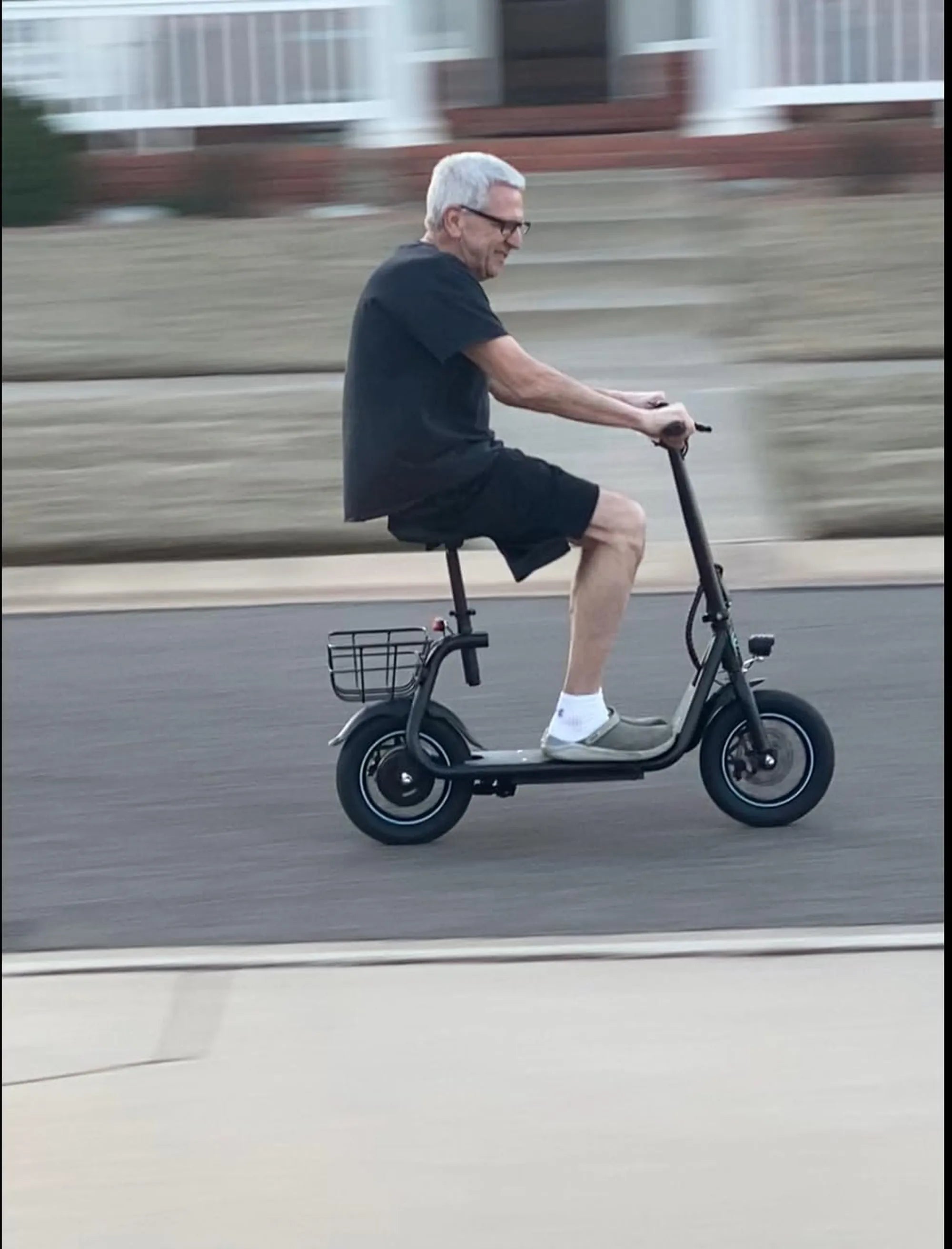
Finding the right e-bike for your 11-year-old boy is about more than just a cool gift; it's about unlocking a new level of independence, adventure, and outdoor activity while prioritizing his safety above all else. This guide will provide you with a complete, data-driven framework for selecting an e-bike that is appropriately powered, correctly sized, and built with the safety-first engineering that brands like Gyroor are known for. You'll learn to identify critical safety features, understand the ideal specifications for a pre-teen rider, and discover how a quality e-bike can build confidence and responsibility. The right e bike for an 11 year old boy can be a transformative tool for family fun and personal growth when chosen wisely.
Why an E-Bike is a Transformative Choice for an 11-Year-Old
At age 11, boys are at a prime stage for developing coordination, responsibility, and a love for the outdoors. An e-bike serves as a powerful catalyst for these developments. It extends their range beyond what a traditional bicycle allows, enabling them to join longer family rides without becoming fatigued, thus keeping the activity enjoyable for everyone. This expanded range encourages exploration of local parks, trails, and neighborhoods, fostering a sense of adventure and spatial awareness.
Furthermore, operating an e-bike teaches valuable lessons in responsibility. Charging the battery, performing basic pre-ride safety checks, and adhering to speed limits and traffic rules are practical skills that translate to broader life lessons. The assisted pedaling also helps overcome initial physical barriers, such as steep hills or headwinds, which might otherwise discourage a young rider. This ensures the focus remains on the joy of riding and building stamina gradually, rather than on struggle.
Parents often express concerns about power and safety, which are valid and addressed in detail throughout this guide. The key is selecting an e-bike specifically designed for younger riders, with capped power outputs and robust safety controls. When chosen correctly, an e-bike is not a motorcycle; it is a bicycle that provides a boost, making cycling more accessible and sustainable as a regular family activity. It's an investment in a healthy, active lifestyle and a tool for building confidence on two wheels.
Data from family cycling groups indicates that children using appropriately sized and powered e-bikes are more likely to continue riding into their teenage years compared to those who struggle with standard bikes on challenging terrain. The goal is to create positive associations with outdoor exercise. An e-bike for an 11 year old boy, therefore, should be viewed as a gateway to lifelong fitness and environmental consciousness, introducing him to eco-friendly personal transportation early.
Non-Negotiable Safety Features for a Youth E-Bike
Safety is the paramount concern when selecting any vehicle for a child. For an e-bike, this extends beyond a sturdy frame to include electrical system safety, predictable handling, and rider-aid technology. The first and most critical component is the battery system. It must use a UL-certified battery pack, like those standard in all Gyroor models, which have undergone rigorous testing for stability, charge cycles, and failure prevention, significantly reducing any risk of fire or malfunction.
The braking system must offer consistent, reliable stopping power. For the added weight and potential speeds of an e-bike, mechanical or hydraulic disc brakes are essential. They provide superior modulation and performance in various weather conditions compared to traditional rim brakes. A dual-brake system (front and rear) is a mandatory feature, giving the young rider more control over deceleration.
Speed management is where parental control becomes tangible. The ideal e bike for an 11 year old boy must have adjustable speed modes or a programmable speed limiter. Many models offer three modes: Eco (lowest assist, ~10 mph), Normal (~15 mph), and Sport (higher assist, up to 20 mph). Starting in Eco mode allows the rider to build familiarity with the motor assist before progressing. The ability to lock the bike into a lower speed mode via a parental PIN is a highly desirable feature for peace of mind.
Finally, visibility and durability are key safety factors. Integrated front and rear LED lights are crucial for being seen in low-light conditions. The bike should also have a robust IP rating for water and dust resistance. An IPX5 rating, as found on Gyroor e-bikes, means the electrical components are protected against water jets from any direction, making the bike safe to ride through puddles or in light rain. This durability ensures the safety systems remain functional in real-world conditions.
Choosing the Correct Size and Fit: A Practical Guide
An improperly sized e-bike is uncomfortable, difficult to control, and dangerous. For an average 11-year-old boy (typically between 4'7" and 5'2" tall), the correct wheel size is usually 20 inches or 24 inches. A 20-inch wheel bike is ideal for riders on the shorter end of that range (4'7" to 4'10"), offering better maneuverability and a lower standover height. A 24-inch wheel bike suits taller boys (4'11" to 5'2") and provides a more stable, grown-up feel that can accommodate growth.
The standover height is the most critical measurement. Your child should be able to stand over the top tube (or the space where a top tube would be on a step-through frame) with both feet flat on the ground and at least 1-2 inches of clearance. This ensures he can safely stop and dismount without the bike tipping or causing injury. The frame geometry should be relatively upright, not overly aggressive or leaned forward, to promote a comfortable, controlled riding position.
Look for models with adjustable components to extend the bike's usable life. A seat post with a generous adjustment range and an adjustable stem (angle or height) allow you to fine-tune the fit as your child grows. The handlebars should be within easy reach without overextending the arms, and the brake levers should be designed for smaller hands, requiring less force and reach to engage fully.
Weight is another consideration. While e-bikes are inherently heavier due to the motor and battery, the overall weight should not be so high that the child cannot maneuver it when the power is off—for example, when wheeling it up porch steps or loading it into a car. Aluminum alloy frames offer a good balance of strength and manageable weight. Always, if possible, have your child test-sit or test-ride the bike to assess comfort and control before purchasing.
Understanding Motor Power and Appropriate Speed Limits
The motor is the heart of the e-bike experience, but for a young rider, more power is not better. A motor in the 250-watt to 350-watt range is typically ideal for an e bike for an 11 year old boy. This provides ample assistance for hills and headwinds without delivering a sudden, overwhelming surge of acceleration that could startle an inexperienced rider. Hub motors are common and provide smooth, reliable power directly to the rear wheel.
The maximum assisted speed is a crucial specification regulated by law in many areas. In the US, Class 1 and Class 2 e-bikes (which assist up to 20 mph) are generally permitted on bike paths and trails where traditional bikes are allowed. For an 11-year-old, a maximum speed of 15-20 mph is sufficient and safe. The focus should be on the bike's ability to assist in reaching and maintaining a reasonable pace, not on achieving top speed.
Pedal-assist (PAS) systems are preferable over thumb throttles for this age group. A PAS system requires the rider to pedal to engage the motor, reinforcing the bicycle's core function and ensuring the rider remains engaged in the act of cycling. It provides a more natural, intuitive feel. If a throttle is present, it should be a supplementary feature, perhaps usable only in the lowest assist mode to help start from a standstill.
Battery capacity, measured in watt-hours (Wh), determines range. A battery in the 300-400Wh range is common and can provide 20-35 miles of range depending on assist level, terrain, and rider weight. This is more than enough for most youth adventures. Teaching your child to monitor battery level and plan rides accordingly is another lesson in responsibility. Gyroor models, for instance, feature clear battery indicator displays and use high-quality cells to ensure consistent power delivery and range predictability.
Top Recommended E-Bike Models for 11-Year-Old Riders
When evaluating specific models, look for those that explicitly prioritize youth-friendly geometry and safety-centric engineering. Brands like Gyroor design with these principles in mind. For example, a Gyroor commuter-style e-bike with a step-through frame, 20" or 24" wheels, a 250W motor, and a top speed of 15.5 mph would be an excellent candidate. Its key features would include a UL-certified removable battery, front suspension for comfort, mechanical disc brakes, and an IPX5 rating for all-weather capability.
Another suitable style might be a hardtail mountain e-bike design. This model would appeal to a boy interested in trail riding, featuring a 24-inch wheel, a 350W motor for hill climbing, front suspension with ample travel, and knobby tires for grip. Crucially, it would still incorporate speed limiters, reliable Tektro hydraulic disc brakes, and integrated lighting. The frame would be lightweight aluminum with a low standover height for confidence on uneven terrain.
For families focused on urban or suburban riding, a hybrid model is ideal. It blends the upright comfort of a city bike with the durability needed for occasional paths. Key specs to look for include a 250-350W rear hub motor, a 7-speed gear system for flexibility, a comfortable saddle, and a rear rack for carrying a backpack. The inclusion of a bell, fenders, and a kickstand are practical touches that make the bike more user-friendly for a young rider.
Across all recommended models, common threads must be the UL-certified battery for safety, a robust warranty (Gyroor offers a 1-year comprehensive warranty), and accessible customer support. These factors transform a purchase from a simple transaction into a long-term investment in safe fun. The presence of a clear, easy-to-read LCD display showing speed, battery level, and assist mode is also important for helping the young rider understand and manage his ride.
E-Bike vs. Traditional Bike: A Data-Driven Comparison for Pre-Teens
| Feature | Traditional Bicycle | Youth E-Bike |
|---|---|---|
| Hill Assistance | Relies solely on rider's strength and gearing. | Motor provides boost, preventing fatigue and frustration on inclines. |
| Range & Fatigue | Limited by rider's stamina; long rides can be taxing. | Extended range; reduces physical exhaustion, keeping rides enjoyable. |
| Learning Curve | Standard cycling skills; may be challenging for some. | Similar skills required, but motor assist can build confidence faster. |
| Upfront Cost | Generally lower. | Higher, due to motor, battery, and electronics. |
| Ongoing Cost | Very low (basic maintenance). | Low; primarily electricity for charging; battery may need replacement after 3-5 years. |
| Family Ride Compatibility | Child may struggle to keep pace with adults. | Allows child to easily match adult riding pace on varied terrain. |
| Responsibility Factor | Basic bike care. | Adds battery management, mode selection, and understanding of e-bike systems. |
This comparison shows that an e-bike is not a replacement for learning to pedal but rather a tool that enhances the cycling experience. It lowers barriers to entry for longer or hillier family outings, which can be the difference between a child who chooses to ride and one who prefers to stay indoors. The added responsibility of managing an e-bike's systems can be a positive developmental step.
The higher initial cost is offset by the increased utility and likelihood of use. A traditional bike that sits unused because it's "too hard" to ride to a friend's house uphill represents a poor value. An e-bike that is used regularly for transportation, recreation, and family bonding delivers a much higher return on investment in terms of health, happiness, and skill development.
Essential Parental Guide: Rules, Gear, and Riding Etiquette
Establishing clear rules is the foundation of safe e-biking. First, helmet use must be non-negotiable. The helmet must be properly fitted and certified to ASTM bicycle helmet standards. Consider additional protective gear like gloves, knee pads, and elbow pads, especially during the learning phase or for off-road riding. High-visibility clothing or a reflective vest is also recommended.
Second, familiarize yourself and your child with local e-bike laws. Regulations concerning minimum age, helmet requirements, where e-bikes are allowed (sidewalks, bike paths, roads), and speed limits vary by city and state. It is the parent's responsibility to ensure compliance. Designate safe practice areas initially, such as empty parking lots or quiet cul-de-sacs, before progressing to bike paths and supervised road riding.
Third, instill proper riding etiquette. This includes obeying all traffic signs and signals, using hand signals for turns, riding in the same direction as traffic, yielding to pedestrians, and using a bell or voice to alert others when passing. Teach your child to be hyper-aware of his surroundings—a concept known as "defensive riding." He should assume drivers may not see him and avoid riding in blind spots.
Fourth, implement a pre-ride safety checklist: check tire pressure, test brake function, ensure the battery is charged and securely mounted, verify that lights are working, and confirm that the quick-release levers on wheels and seat are tight. Make charging a routine done under adult supervision, using only the manufacturer-provided charger. This structured approach, combined with the inherent safety of a well-built e-bike from a brand like Gyroor, creates a comprehensive safety ecosystem for your young rider.
Maintenance and Care for a Youth E-Bike
Regular maintenance ensures the e-bike remains safe, reliable, and fun. Fortunately, much of the care is similar to a traditional bicycle. The chain should be cleaned and lubricated regularly, especially after riding in wet or dusty conditions. Tire pressure should be checked weekly and kept at the PSI recommended on the tire sidewall for optimal efficiency and puncture resistance.
The braking system requires periodic inspection. Check brake pads for wear and ensure the discs are clean. Test the brakes before each ride to confirm they engage smoothly and powerfully. For mechanical disc brakes, cable tension may need adjustment over time. The electrical components require less hands-on maintenance but demand careful handling. Keep connections clean and dry. When washing the bike, avoid high-pressure hoses directed at the motor hub, battery compartment, display, or controller.
Battery care is paramount for longevity and safety. Follow the manufacturer's guidelines precisely. Generally, this involves avoiding complete discharges, not leaving the battery fully charged at 100% for extended periods (weeks), and storing it in a cool, dry place. Use only the official charger. The 1-year warranty from Gyroor provides coverage for manufacturing defects, but proper care is the owner's responsibility. Performing a seasonal check of all bolts and fasteners for tightness is also a good practice.
For issues beyond basic adjustments—such as motor problems, electrical faults, or brake hydraulic system service—it is advisable to seek a qualified bike mechanic, preferably one with e-bike experience. Establishing a relationship with a local shop can be invaluable. Teaching your child to participate in simple maintenance tasks, like cleaning and tire inflation, further deepens his connection to the bike and understanding of mechanical responsibility.
Frequently Asked Questions (FAQ)
Is an e-bike safe for an 11-year-old?
Yes, when it is a model specifically designed for youth riders, with appropriate power (250W-350W), speed limiters (15-20 mph max), robust brakes (disc brakes), and essential safety features like UL-certified batteries and bright lights. Parental supervision, proper training, and mandatory helmet use are equally critical components of safety.
How far can he ride on a single charge?
Range varies based on battery size, assist level, terrain, and rider weight. For a typical youth e-bike with a 300-400Wh battery, expect a range of 20 to 35 miles on lower assist levels. This is more than sufficient for most after-school adventures or family weekend rides. Teaching him to use Eco mode for flat sections will maximize range.
What is the difference between pedal-assist and a throttle?
Pedal-assist (PAS) engages the motor only when the rider is pedaling, providing a boost that feels natural. A throttle propels the bike without pedaling, similar to a scooter. For an 11-year-old, a PAS system is generally recommended as it encourages continuous pedaling and better control. If a throttle is present, it should be used cautiously.
Can I restrict the speed as he's learning?
Absolutely. Most quality youth e-bikes, including those from Gyroor, feature multiple speed modes. You can set the bike to its lowest mode (e.g., Eco, limited to ~10 mph) while he gains confidence. Some models even allow you to set a maximum speed limit via a parental PIN code in the settings, a highly recommended feature.
What is the typical lifespan of the e-bike and battery?
The mechanical frame and components can last for many years with proper care. The battery is the component with a defined lifespan, typically rated for 500+ full charge cycles (as with Gyroor's UL-certified packs). With normal use, this translates to 3-5 years before a noticeable reduction in range. Proper charging habits significantly extend battery life.
Are e-bikes allowed on local bike trails?
This depends entirely on local regulations. In most of the United States, Class 1 (pedal-assist only, up to 20 mph) and Class 2 (throttle-assisted, up to 20 mph) e-bikes are permitted anywhere traditional bicycles are allowed. However, some local parks or trail systems may have specific restrictions. Always check signage and local municipal codes before riding.
Investing in Confidence and Adventure
Selecting the ideal e bike for an 11 year old boy is a decision that blends practicality with the promise of adventure. It requires a focus on certified safety systems like UL-approved batteries, manageable power outputs, and a frame that fits not just today but for the coming seasons. By choosing a reputable brand known for durability and rider-focused design, such as Gyroor, you secure more than a vehicle; you gain a partner in safety backed by a substantial warranty and proven reliability across a community of over 100,000 riders.
This investment opens a world where family rides are no longer limited by a child's stamina, where hills become invitations rather than obstacles, and where responsibility is learned through the care of a sophisticated machine. The right e-bike fosters independence, encourages exploration of the outdoors, and instills an early appreciation for sustainable technology. It is a gift of mobility, confidence, and joy.
Ready to explore models that meet these rigorous standards for safety, performance, and youth-friendly design? Begin your search with a brand that prioritizes these values. Browse the full Gyroor collection at gyroorboard.com to find the perfect e-bike to start your son's next great adventure.
Do You Need a License for a Moped Scooter? The Complete Legal Guide
Electric Tricycle with Rear Seat: Your Ultimate Guide to Stable, Shared E-Mobility