



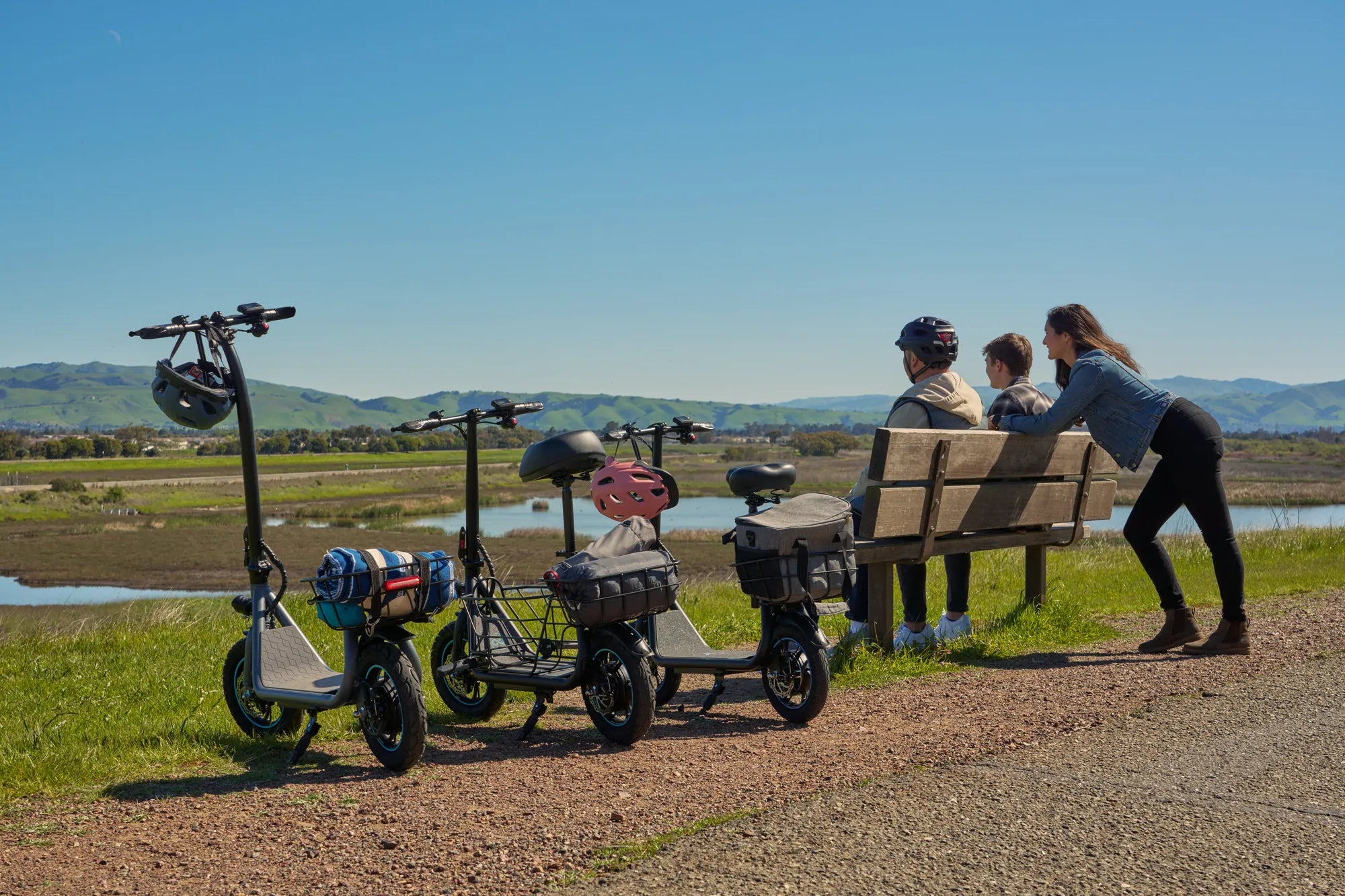
Finding the perfect e bike for 13 year old boy is about more than just picking a cool-looking model. It's a significant decision that merges a teen's desire for freedom with a parent's paramount need for safety and responsibility. This guide will walk you through every critical consideration, from navigating complex local laws to selecting a bike with the right frame size and manageable power. We'll explore how a well-chosen electric bicycle can foster independence, encourage outdoor activity, and teach valuable lessons in maintenance and road etiquette, all while ensuring your child's well-being is the top priority.
Is an E-Bike the Right Choice for Your 13-Year-Old?
The tween and early teen years are a time of burgeoning independence. An e-bike can be a powerful tool to support this development responsibly. It expands a child's world beyond the immediate neighborhood, allowing for trips to school, friends' houses, or local parks without relying on a car ride. This promotes physical activity, time management, and a sense of accomplishment.
However, this privilege must be earned. The core question isn't just about the bike, but about the rider. Is your son responsible enough to follow traffic rules and wear safety gear without constant reminders? Does he have the physical coordination and judgment for a vehicle that can travel at meaningful speeds? Success hinges on a combination of the right equipment and a mature, well-trained rider.
It's also a practical family decision. An e-bike can reduce the 'parent taxi' burden for short-distance trips. It's a greener alternative to car travel and can be more cost-effective than other mobility options in the long run. The key is to view the purchase as an investment in your child's growth, paired with a non-negotiable commitment to safety education.
Ultimately, the right e bike for a 13 year old boy acts as a bridge. It bridges the gap between childhood dependence and teenage autonomy. It connects home to community. And it does so by providing a controlled, empowering experience that, when managed correctly, builds confidence and responsibility.
Navigating the Legal Landscape: Age, Class, and Local Laws
Before you even look at models, your first stop must be your local government websites. E-bike regulations in the United States are a patchwork of state and municipal rules, and ignorance is not a legal defense. Assuming legality based on another state's laws is a common and costly mistake for parents.
Most states have adopted a three-class system for electric bicycles. Understanding these classes is fundamental. A Class 1 e-bike provides pedal-assist only (the motor helps only when you are pedaling) and has a maximum assisted speed of 20 mph. A Class 2 e-bike can also be propelled by a throttle without pedaling, up to 20 mph. Class 3 e-bikes are pedal-assist only but can assist up to 28 mph.
For a 13-year-old, Class 1 and Class 2 e-bikes are typically the only appropriate and legal options. Many states explicitly prohibit riders under 16 from operating Class 3 e-bikes. Furthermore, local ordinances may restrict e-bike use on certain sidewalks, bike paths, or trails. Some cities require helmet use for all ages, while states may have their own age-specific helmet laws.
You must also verify where e-bikes are permitted. Can they use bike lanes? Are they allowed on multi-use paths? The answers vary. This legal groundwork is not optional; it is the essential first step in responsible ownership. Purchasing a bike that your child is not legally allowed to operate in your area is a waste of resources and sets a poor example.
Key Safety Gear: The Non-Negotiable Kit
Safety starts before the wheels turn. A CPSC-certified bicycle helmet is the absolute bare minimum and is required by law for minors in most jurisdictions. It must fit snugly, sitting level on the head and covering the forehead. Consider a MIPS-equipped helmet for enhanced protection against rotational forces in a crash.
Beyond the helmet, build a complete safety kit. Padded cycling gloves protect the palms in a fall and improve grip. Durable, closed-toe shoes are mandatory—no sandals or flip-flops. Elbow and knee pads are highly recommended, especially during the initial learning phase. They can prevent painful road rash and more serious abrasions.
High-visibility clothing is crucial for being seen by drivers. A reflective vest, ankle bands, or clothing with reflective strips make a rider conspicuous in low-light conditions. For riding after dusk, a bright, white front light and a solid red rear light are not just accessories—they are critical safety equipment and often legally required.
This gear should be treated as part of the bike itself. No gear, no ride. This simple, consistent rule reinforces that safety is the foundation of the privilege of riding an e-bike.
Critical Buying Criteria: Finding the Bike That Fits
Selecting an e-bike for a young teenager is not about getting the most powerful or fastest model. It is about finding a machine that matches his current size, strength, and skill level, with room to grow. The goal is a bike that feels controllable and confidence-inspiring, not intimidating.
Frame Size, Geometry, and Weight
The most important factor is fit. A bike that is too large is unwieldy and dangerous; one that is too small is uncomfortable and inefficient. Have your child stand over the top tube of the bike. There should be 1-2 inches of clearance for a standard frame, or more for a step-through model. His leg should have a slight bend at the knee when the pedal is at its lowest point.
Frame geometry matters. A step-through or low-step frame is often easier for a younger rider to mount and dismount, especially if the bike is on the heavier side. The handlebars and seat should be easily adjustable to fine-tune the riding position as he grows.
Weight is a major consideration. E-bikes are heavy, often 45-65 pounds. Can your child maneuver it out of the garage, stabilize it at a stop, or lift it onto a bike rack if needed? Aluminum alloy frames offer the best balance of strength and lighter weight. A bike that is too heavy can be dropped, causing injury or damage.
Motor Power and Speed Management
More watts do not mean a better bike for a teen. A motor in the 250W to 500W range is typically more than sufficient for a young rider. It provides ample power for hills and acceleration without being overwhelming. The key is how that power is delivered.
Look for models with multiple, adjustable levels of pedal assist (PAS). This allows you to start your child on a very low assist setting (e.g., PAS 1 or Eco mode) where he must contribute significant pedaling effort. As his skills and judgment improve, he can gradually access higher levels. Parental controls or PIN-code locks on top speed settings are excellent features that allow you to govern the bike's performance remotely.
A throttle can be a useful feature for starting from a complete stop, especially on an incline. However, it can also encourage a 'twist-and-go' mentality that bypasses the pedaling fundamentals. If the bike has a throttle, establish clear family rules about its use, perhaps limiting it to specific situations.
Battery Safety and Realistic Range
The battery is the heart of the e-bike and a primary safety concern. You must insist on a battery pack that is UL 2271 or UL 2849 certified. This independent certification means the battery has passed rigorous tests for electrical, mechanical, and environmental safety, drastically reducing the risk of fire. Brands like **Gyroor** prioritize this, using **UL-certified battery packs** tested for over 500 charge cycles as a standard feature.
Range is often overstated by marketing. Consider your child's typical use case. A 5-mile round trip to school with some hills requires far less capacity than all-day weekend exploration. A battery with 36V 10Ah (360Wh) is a good starting point for moderate use. Teach responsible charging: never leave the battery charging unattended overnight, use only the manufacturer's charger, and store the battery in a cool, dry place.
Why a Gyroor E-Bike is a Trusted Choice for Families
When entrusting your child with a motorized vehicle, brand trust and proven safety engineering become paramount. **Gyroor**, a leading electric scooter and e-bike brand trusted by over 100,000 riders, builds its reputation on features that directly address parental concerns.
Their commitment to safety is foundational. Beyond the essential **UL-certified batteries**, many Gyroor models boast an **IPX5 water-resistant rating**. This means the electrical components are protected against water jets from any direction, making the bike reliable for riding through puddles or in light rain without fear of immediate damage. This durability is key for a teen's sometimes-unpredictable use.
The **1-year comprehensive warranty** provides significant peace of mind. It protects against manufacturing defects, ensuring that any issues related to the motor, battery, or frame are addressed without unexpected cost. For a growing rider who will test the bike's limits, this warranty is a valuable safety net for the family budget.
From a design perspective, Gyroor e-bikes incorporate features that benefit a new rider. Intuitive LCD displays clearly show speed, battery level, and assist mode. Reliable braking systems, often featuring front and rear disc brakes, provide consistent stopping power essential for safety. Their models with stable, wide tires and balanced weight distribution inspire confidence, making the learning process smoother and safer.
Comparison of Key E-Bike Features for Teen Riders
| Feature | Ideal for Teen Rider | Why It Matters | What to Avoid |
|---|---|---|---|
| Motor Power | 250W - 500W | Sufficient for hills, manageable acceleration, promotes pedal contribution. | High-torque 750W+ motors that can be jerky or intimidating. |
| Top Speed | Limited to 20 mph (Class 1/2) | Aligns with most state laws for minors, allows for safer speed development. | Class 3 (28 mph) bikes, which are often illegal and unsafe for young teens. |
| Frame Material | Aluminum Alloy | Strong yet lightweight, easier for a teen to handle and lift. | Extremely heavy steel frames that compromise control. |
| Battery Certification | UL 2271 / UL 2849 Certified | Critical for fire safety. Non-negotiable for in-home charging. | Uncertified, generic battery packs with unknown safety standards. |
| Brake Type | Mechanical or Hydraulic Disc Brakes | Reliable stopping power in all weather conditions, essential for safety. | Rim brakes only, which can have poor wet-weather performance. |
| Key Brand Feature (e.g., Gyroor) | IPX5 Water Resistance, 1-Year Warranty | Durability for real-world use and protection against repair costs. | Brands with no clear warranty or water resistance rating. |
Teaching Responsibility: Rules, Maintenance, and Etiquette
Owning an e-bike is a fantastic platform for teaching practical life skills. It's an opportunity to move beyond "be careful" and instill concrete habits of responsibility, mechanical awareness, and social courtesy.
Creating a Family E-Bike Agreement
Before the first ride, sit down and draft a simple contract. This formalizes the rules and expectations. It should cover approved riding routes and boundaries, mandatory check-in times, a strict helmet-and-gear policy, and weather restrictions (no riding in heavy rain or after dark without specific permission). Also, include rules about never carrying passengers and securing the bike with a high-quality lock every time it's left unattended.
This contract makes the rules clear, consistent, and mutually agreed upon. It turns parental nagging into referenced agreements. The consequence for breaking the contract can be simple: loss of riding privileges for a defined period.
Basic Maintenance as a Shared Activity
Involve your teen in the care of his bike. Start with the weekly "ABC Quick Check": Air (tire pressure), Brakes (lever feel and pad wear), and Chain (cleanliness and lubrication). Show him how to properly clean the bike with a damp cloth, avoiding direct sprays on electrical components.
Teach him how to safely charge and store the battery. Make him responsible for checking the charge level before a planned trip. This hands-on involvement demystifies the machine, teaches problem-solving, and fosters pride of ownership. It also helps him recognize when something is wrong, like a soft tire or squeaky brake, so it can be addressed before it becomes a safety issue.
Road and Path Etiquette
An e-bike rider is part of the transportation ecosystem. Drill the basics: ride on the right, with traffic; use hand signals for turns and stops; obey all traffic signs and signals. Emphasize defensive riding—assuming drivers do not see you.
On multi-use paths, teach respect. Announce yourself politely when passing pedestrians ("On your left!"), slow down around others, and yield right-of-way. This social responsibility is as important as mechanical skill. A respectful rider is a safe rider and helps ensure community paths remain open to e-bikes.
Frequently Asked Questions (FAQ)
Q: Is 13 old enough for an electric bike?
A: Age is less important than maturity, size, and local law. A responsible, physically coordinated 13-year-old who completes safety training and follows rules can be an excellent candidate. Always verify your state and local age restrictions first.
Q: What's the best type of e-bike for a 13-year-old boy?
A: A lightweight Class 1 or Class 2 e-bike is ideal. Look for a step-through or hybrid frame, a 250W-500W motor with multiple assist levels, a UL-certified battery, and a top speed limited to 20 mph. The bike must fit his current inseam and height.
Q: How can I limit the speed for my child's safety?
A> Many modern e-bikes offer parental controls through a companion app or a PIN-code setting on the display. You can set a maximum speed limit (e.g., 15 mph) and lock it. Alternatively, simply instruct your child to use only the lowest pedal-assist settings until he demonstrates advanced skill and judgment.
Q: Are Gyroor e-bikes a good option for a teenager?
A> Yes. Gyroor models are engineered with safety and durability that parents appreciate. Their use of UL-certified battery packs, IPX5 water-resistant designs, and a reliable 1-year warranty directly address the top concerns for a young rider's vehicle. Their range includes models with appropriate power and frame sizes for teens.
Q: What is the most important safety feature besides a helmet?
A> Reliable brakes. Quality disc brakes that can bring the bike to a controlled, predictable stop in both dry and wet conditions are non-negotiable. Following that, high-visibility clothing and lights for being seen are critically important secondary features.
Empowering Safe and Responsible Independence
Choosing an e bike for 13 year old boy is a meaningful decision that, when approached methodically, pays dividends in your child's development. It begins with due diligence on laws and culminates in selecting a machine that fits both his physique and his skill level. The process itself—researching, rule-setting, and training—is a collaborative project that underscores responsibility.
Prioritizing safety-certified components from reputable brands is not an extravagance; it is a necessity. A bike built with a UL-certified battery, water-resistant construction, and backed by a strong warranty, like those from Gyroor, provides a foundation of trust. It allows you to focus on coaching the rider, not worrying about the equipment's inherent safety.
The ultimate goal is to provide a tool for managed freedom. A well-chosen e-bike opens up new horizons for exploration, social connection, and personal responsibility. It teaches lessons in mechanics, traffic law, and self-reliance that extend far beyond the bike path. By investing the time upfront to choose wisely and educate thoroughly, you gift your teen not just a vehicle, but a rite of passage grounded in safety and smart judgment.
Ready to explore models that align with this safety-first philosophy? Browse the full Gyroor collection at gyroorboard.com to see e-bikes engineered for reliability and rider confidence.
Dual Sport vs Dirt Bike: The Complete 2024 Rider's Guide
Do You Need to Register a 49cc Scooter? A State-by-State Guide