



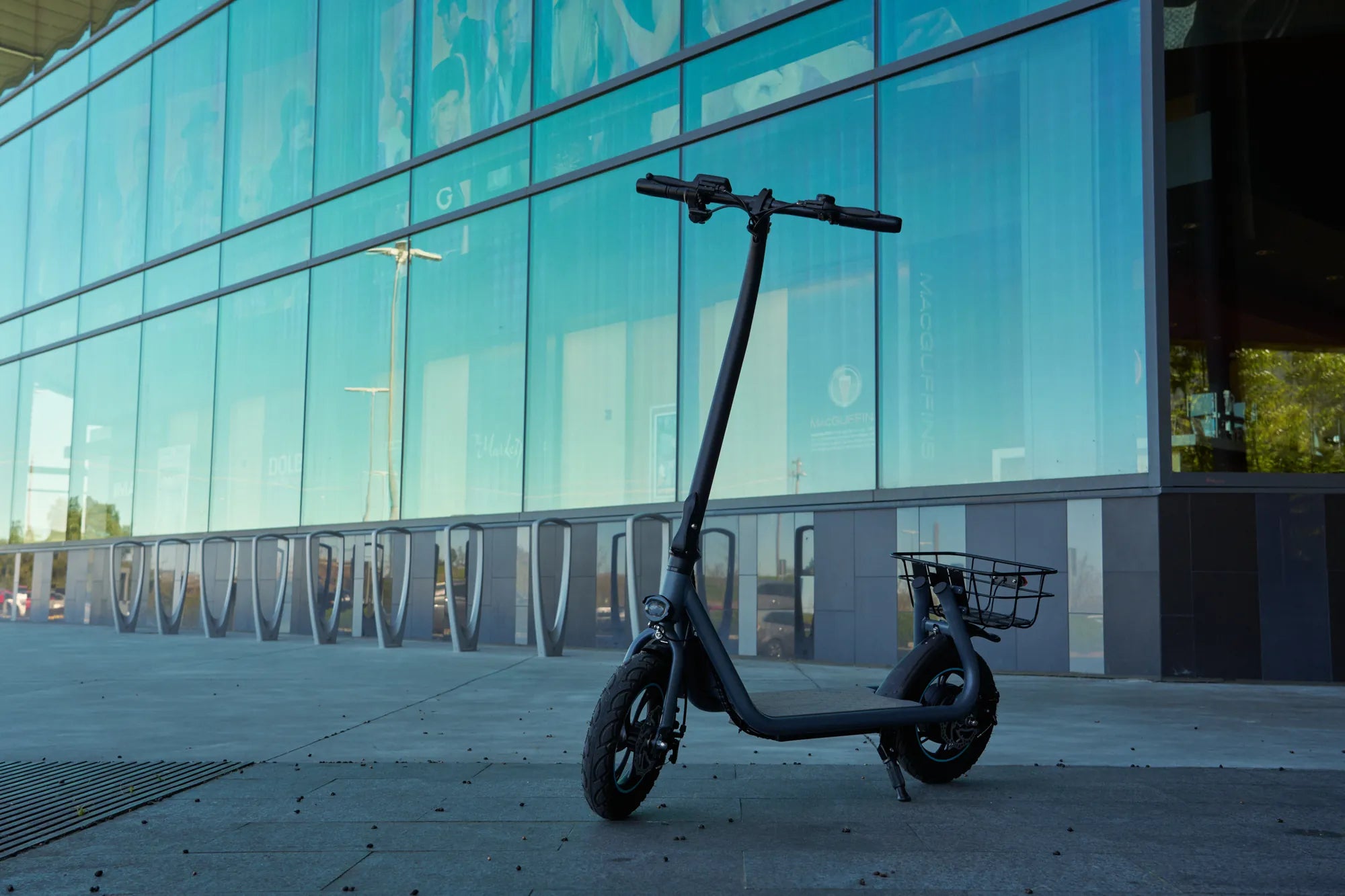
Introduction: The Need for Speed in Urban Mobility
Urban commuters are no longer satisfied with 15 mph limits. The demand for personal electric vehicles that can genuinely replace car trips for medium-distance travel is surging. Enter the 40 mph electric scooter, a category engineered to bridge the critical gap between sluggish last-mile options and full-sized vehicles. These machines transform the urban landscape, enabling commutes that are not just eco-friendly but time-competitive with automobiles in congested metro areas.
Electric scooters 40 mph represent a fundamental shift in design philosophy. They are built not as toys, but as legitimate transportation tools. For brands like Gyroor, a leader in high-performance electric mobility trusted by over 100,000 riders, this means prioritizing certified safety, robust engineering, and rider support. The future of urban commuting isn't just electric; it's fast, efficient, and intelligently designed to handle real-world demands.
This article will dissect what makes a 40 mph electric scooter different, from its core components to its practical application. We will explore the tangible benefits of this speed tier, the non-negotiable safety protocols, and how technological advancements are making this high-performance commuting not just possible, but practical and safe for the informed rider.
What Makes a 40 mph Electric Scooter Different? Key Components & Engineering
Achieving a stable, sustainable 40 mph requires a holistic engineering approach far beyond simply installing a more powerful motor. Every subsystem—from power delivery to structural integrity—must be upgraded to handle the increased kinetic energy, heat, and stress. This results in a vehicle that shares a name with slower scooters but is in a different performance class altogether.
The synergy between a high-output motor, a high-capacity battery with advanced management, a rigid frame, and premium brakes creates a cohesive performance package. Failure in any one of these areas compromises not only speed but, critically, safety. Understanding these components is key to appreciating the value and design of a true 40 mph electric scooter.
Motor Power and Torque: The Heart of High Speed
The motor is the cornerstone of performance. While a 250W motor might suffice for 15 mph, consistent 40 mph travel, especially with a rider and potential inclines, demands significantly more power. Most 40 mph capable scooters utilize dual-motor setups (e.g., 2x1000W) or single high-torque motors rated from 1500W to 3000W.
Torque is as important as wattage. High torque provides the rapid acceleration needed to merge safely with urban traffic and the hill-climbing ability to tackle steep grades without slowing to a crawl. This ensures the scooter is not just fast on paper but responsive and capable in dynamic city environments.
Battery Capacity and Management: Sustaining the Sprint
Speed consumes energy exponentially due to increased aerodynamic drag. Therefore, a scooter built for 40 mph must be paired with a large-capacity battery. We're typically discussing 48V or 52V systems with capacities of 20Ah to 30Ah or more. This is the fuel tank for your high-speed commute.
More crucial than raw capacity is the Battery Management System (BMS). A sophisticated BMS regulates cell voltage, temperature, and discharge rates. For a brand like Gyroor, using UL-certified battery packs tested for 500+ cycles is non-negotiable. This certification, coupled with a robust BMS, prevents overheating, ensures longevity, and delivers stable power even under the high demand of sustained top-speed runs.
Frame, Suspension, and Brakes: Built for Stability and Safety
At 40 mph, a lightweight, folding frame is a liability. These scooters require reinforced, aerospace-grade aluminum or steel frames that resist flexing, which is essential for stability and precise handling. The deck must be wider and longer for a secure riding stance.
Suspension and brakes become critical safety systems. Dual or even triple hydraulic suspension systems absorb bumps that could cause loss of control at high speed. Stopping power is paramount; high-performance hydraulic disc brakes on both wheels are standard. Some models incorporate regenerative braking to aid stopping and recapture energy, but mechanical brakes are the primary, fail-safe system.
The Practical Benefits of a 40 mph Commuting Speed
The appeal of a 40 mph electric scooter is not about thrill-seeking; it's rooted in practical, tangible advantages for daily travel. This speed tier unlocks new possibilities for efficiency, range, and route flexibility that slower personal electric vehicles simply cannot match.
It fundamentally changes the calculus of urban and suburban mobility. Trips that were just a bit too far for a standard e-scooter become easily manageable. Commutes that were bogged down by traffic become streamlined. The 40 mph electric scooter is a tool for reclaiming time and expanding personal mobility radius.
Slashing Commute Times in Metro and Suburban Areas
In stop-and-go city traffic, the average car speed often falls below 25 mph. A 40 mph electric scooter can frequently match or exceed this, while legally using bike lanes or adhering to road rules. For a 10-mile commute, the time savings are substantial.
Consider a comparison: a 20 mph scooter takes 30 minutes for 10 miles. A 40 mph scooter can cover the same distance in 15 minutes under ideal conditions, effectively halving commute time. This speed allows riders to keep pace with urban traffic flows, making lane changes and intersections feel safer and more predictable.
Expanding Your Effective Range: The "Speed-Range" Relationship
There's a direct trade-off between speed and range. However, a well-designed 40 mph scooter with a large battery offers a greater *practical* range for medium-distance trips. While you may not travel 40 miles at top speed, the ability to cruise at 30-35 mph significantly expands your viable commuting radius compared to a scooter that maxes out at 20 mph.
This means you can live further from transit hubs or your workplace without relying on a car. A scooter with a 50-mile maximum range might deliver 18-25 miles of real-world travel at high speeds—more than sufficient for most one-way urban commutes, with the benefit of completing the trip much faster.
Conquering Hills and Bridges with Ease
Urban topography often includes steep hills, overpasses, and bridge inclines. A standard scooter may slow to 5-10 mph on a 15% grade, creating a safety hazard. The high-torque motors in a 40 mph scooter treat these obstacles as minor inconveniences.
Maintaining 20-25 mph up a significant hill is not only possible but expected. This preserves momentum, improves safety by keeping pace with traffic, and opens up entire neighborhoods and routes that were previously impractical for electric scooter travel.
Safety, Legality, and Responsible Riding at 40 mph
Operating any vehicle at 40 mph carries serious responsibility. This section is not a guideline but a mandatory primer. The kinetic energy at this speed is formidable, and the associated risks demand a mature, prepared, and law-abiding approach. Safety is the non-negotiable foundation of enjoying high-performance electric scooters.
Riding a 40 mph electric scooter is closer to riding a motorcycle or scooter than it is to riding a shared e-scooter. The mindset, gear, and skills must elevate accordingly. Ignoring these aspects jeopardizes not only the rider but also public perception of this emerging form of mobility.
Understanding Local Laws and Classifications
Legality is the first hurdle. Jurisdictional laws are a patchwork. In many U.S. states, electric scooters with a top speed over 20-28 mph may be reclassified as "motorized scooters" or even mopeds. This can trigger requirements for a driver's license, vehicle registration, insurance, and even a special license plate.
Helmet laws also change. While a bicycle helmet may suffice for slower models, a 40 mph scooter often falls under motorcycle helmet laws. It is the rider's absolute duty to research and comply with state, county, and city regulations before riding. Assume nothing.
Essential Riding Gear: Non-Negotiable Protection
At 40 mph, a fall can be catastrophic. Proper gear is your primary safety system. A full-face motorcycle helmet (DOT or ECE certified) is essential to protect your head, face, and jaw. Motorcycle-grade armored gloves, a protective jacket (with shoulder, elbow, and back armor), and sturdy over-the-ankle boots are minimum requirements.
This gear protects against abrasion (road rash) and impact. Jeans and a sweatshirt offer zero protection in a slide. Investing in quality gear is investing in your well-being and should be considered part of the total cost of owning a high-speed scooter.
Advanced Riding Techniques for High Speed
Riding technique must evolve. Defensive riding is paramount: assume cars do not see you. Increase your following distance to at least 3-4 seconds to allow for longer stopping distances. Scan the road surface far ahead for potholes, debris, and grates.
Practice controlled, progressive braking using both brakes to avoid locking the wheels and skidding. Be smooth with acceleration and steering inputs. Avoid riding in adverse weather unless your scooter, like many Gyroor models with IPX5 water resistance, is specifically designed for it, and even then, exercise extreme caution.
Gyroor's Approach to High-Performance, Safe Riding
As a leader in the electric mobility space, Gyroor's philosophy for 40 mph-capable scooters is built on a triad of principles: certified safety, robust engineering for real-world conditions, and unwavering customer support. This approach transforms high-performance specs into reliable, daily transportation.
With over 100,000 riders across North America and Europe and a 4.5/5 average rating, Gyroor's commitment is proven. For the high-speed segment, this means going beyond marketing claims to implement tangible features that address the core concerns of power, safety, and durability.
UL-Certified Battery Packs: The Foundation of Trust and Safety
The battery is the most critical safety component. Gyroor's use of UL-certified battery packs is a decisive differentiator. UL certification involves rigorous testing for electrical, mechanical, and environmental safety, drastically reducing the risk of thermal runaway—a fire hazard.
This certification, combined with high-quality cells and an advanced BMS, ensures stable performance even under the high discharge rates demanded by 40 mph travel. It also guarantees battery longevity, supporting the 500+ charge cycle rating, which translates to years of reliable service for a commuter.
IPX5 Water-Resistant Design: Built for All Conditions
A fair-weather commuter is an unreliable commuter. Gyroor engineers its high-performance scooters with IPX5 water resistance. This means the electrical components are protected against low-pressure water jets from any direction, allowing you to ride confidently in rain or on wet roads.
This feature protects the motor controller, wiring, and battery compartment from moisture ingress, which can cause short circuits, corrosion, and failure. It's a feature that underscores the vehicle's design as serious, all-weather transportation, not a fair-weather gadget.
The 1-Year Warranty and U.S.-Based Support Commitment
A comprehensive 1-year warranty on the scooter is a testament to build quality and confidence. It covers defects in materials and workmanship, providing peace of mind for a significant investment. More importantly, it is backed by accessible, U.S.-based customer support.
For a complex machine like a 40 mph scooter, having expert support for troubleshooting, maintenance advice, and warranty service is invaluable. It ensures that any issues can be resolved promptly, keeping your primary commute vehicle on the road.
Comparing 40 mph Scooters to Other Mobility Options
Choosing the right vehicle requires context. How does a 40 mph electric scooter stack up against other common modes of transport? The following table provides a data-driven comparison across key metrics relevant to urban commuters.
| Mobility Option | Avg. Speed (Urban) | Cost per Mile | Parking & Storage | Environmental Impact | Best For |
|---|---|---|---|---|---|
| 40 mph Electric Scooter | 25-35 mph | ~$0.03 (electricity) | Extremely Easy | Zero Direct Emissions | Medium-Distance Solo Commutes (5-20 mi) |
| Standard E-Scooter (15-20 mph) | 10-15 mph | ~$0.02 | Extremely Easy | Zero Direct Emissions | Last-Mile / Short Trips (<5 mi) |
| Car | 15-25 mph (in traffic) | ~$0.60 (fuel, maint., deprec.) | Difficult & Costly | High CO2 Emissions | Long Distance, Passengers, Cargo |
| Public Transit | Varies Widely | ~$2.50 per fare | Not Applicable | Low Per-Passenger | High-Density Corridors, Cost-Conscious |
| E-Bike (Class 3, 28 mph) | 20-25 mph | ~$0.01 | Moderately Easy | Zero Direct Emissions | Exercise + Commute, Longer Range |
This comparison highlights the 40 mph electric scooter's unique niche: it offers car-competitive speeds for solo trips at a fraction of the cost and with minimal parking hassle, while covering distances that are impractical for slower micro-mobility options.
Frequently Asked Questions (FAQ)
Q: Is a license or registration required to ride a 40 mph electric scooter?
A: Requirements vary dramatically by location. In many jurisdictions, vehicles capable of exceeding 20-28 mph are classified as motor vehicles, potentially requiring a valid driver's license, registration, and even insurance. You must consult your local Department of Motor Vehicles (DMV) and municipal codes for definitive rules. Never assume it's treated like a bicycle.
Q: How far can I actually go on a single charge at 40 mph?
A: Real-world range at a constant 40 mph is typically 50-70% lower than the advertised maximum range (which is measured at a steady 15-20 mph). For example, a scooter with a 50-mile "max range" might achieve 15-25 miles at top speed, depending on rider weight, hills, wind, and temperature. Always plan for a significant buffer.
Q: Are these scooters suitable for off-road use?
A: While their power and suspension are superior to basic models, most 40 mph scooters are designed for paved roads. Their tires are often semi-slick for street performance. Using them on rough trails can damage wheels, suspension, and the undercarriage. If off-road capability is a priority, seek a model specifically marketed as a dual-sport or off-road scooter with knobby tires and extreme suspension travel.
Q: What is the most important maintenance tip for a high-performance scooter?
A: Beyond keeping it clean and charged, the two most critical checks are tire pressure and brake function. Under-inflated tires drastically reduce range, stability, and increase puncture risk. Check pressure weekly. Regularly inspect brake pads for wear and test brake lever firmness before every ride. Periodically check all bolts, especially on the stem and folding mechanisms, for tightness.
Q: Can I carry a passenger on a 40 mph scooter?
A: It is strongly discouraged and often illegal. These scooters are engineered for a specific weight capacity (usually 220-265 lbs). Adding a passenger exceeds this limit, compromising handling, braking distance, and structural integrity. The deck is not designed for two people to stand safely, especially at high speed. It is a significant safety hazard for both riders.
Conclusion: Embracing a Faster, Smarter Commute
The 40 mph electric scooter is more than a faster version of its slower cousins; it is a distinct class of personal electric vehicle designed for the serious urban commuter. It delivers unparalleled time savings, expands viable commuting radii, and conquers urban terrain with ease, all while operating at a tiny fraction of the cost and carbon footprint of a private car.
This performance, however, is inextricably linked to responsibility. Successfully integrating a 40 mph scooter into your life requires a commitment to understanding local laws, investing in full protective gear, and mastering advanced riding techniques. The reward is a transformative commuting experience—efficient, exhilarating, and emancipating from traffic gridlock.
Brands like Gyroor are at the forefront of making this future accessible, coupling high-performance engineering with foundational safety features like UL-certified batteries, IPX5 water resistance, and robust customer support. The future of urban commuting is fast, efficient, and electric. It's time to explore the machines that are making it a reality.
Ready to experience the future of urban mobility? Explore Gyroor's lineup of high-performance, safety-certified electric scooters and e-bikes engineered for the demands of the modern commuter. Browse the full Gyroor collection at gyroorboard.com.
Electric Kick Scooters: The Future of Urban Mobility Is Here
Electric Scooters for Adults Under $350: Affordable and Efficient Commuting Solutions