



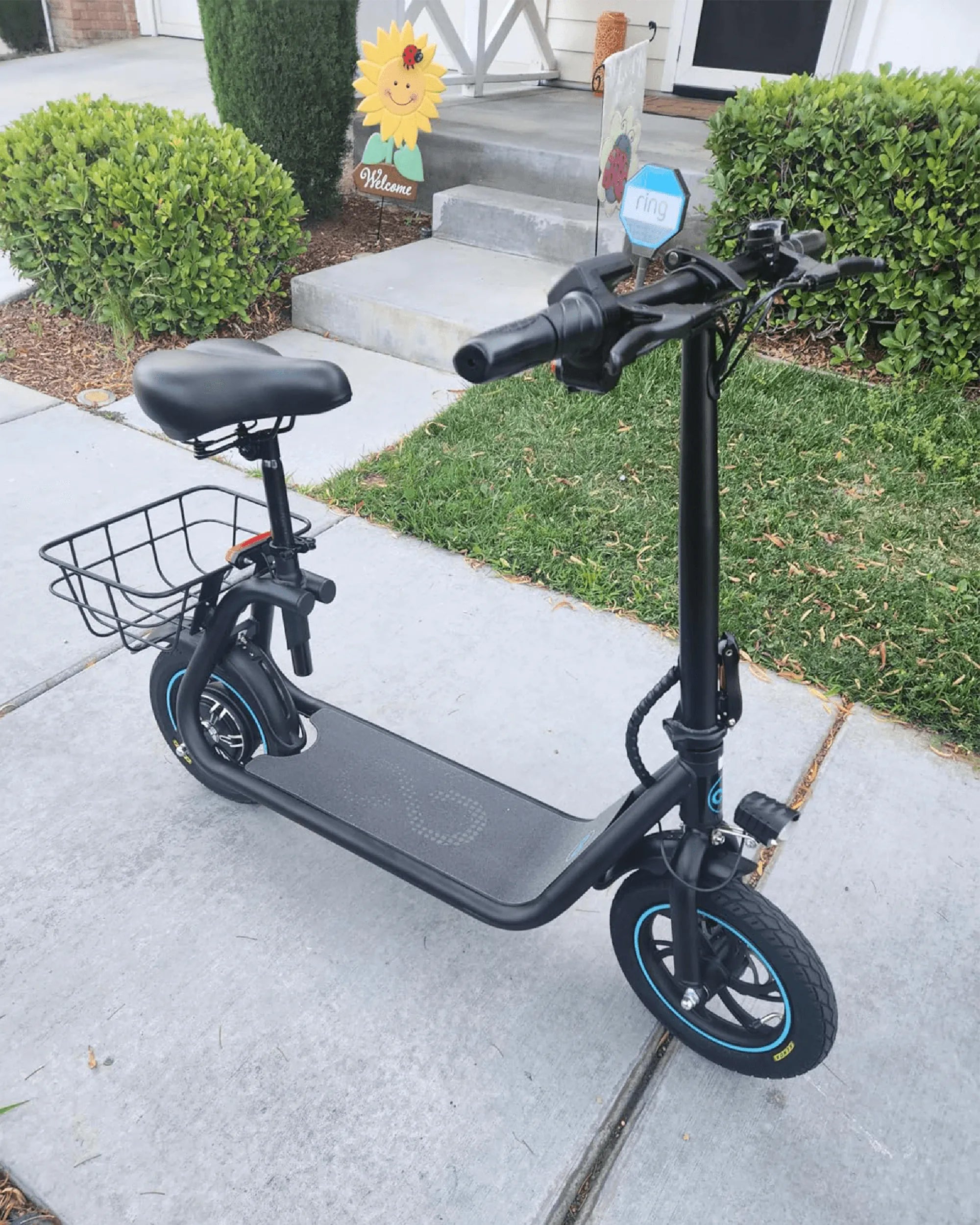
Introduction: New Zealand's Urban Transport Revolution
Traffic congestion in Auckland, Wellington, and Christchurch isn't just an inconvenience; it's a significant economic and environmental burden, costing the economy billions annually in lost productivity. As cities densify and the push for sustainable transport intensifies, a quiet revolution is rolling through New Zealand's urban centres: the widespread adoption of personal electric scooters. This shift represents more than a trend; it's a fundamental rethinking of short-distance travel, offering a practical solution to the 'first and last mile' problem that plagues public transport networks.
Electric scooters in New Zealand have evolved from shared rental novelties to serious personal transport devices. Kiwis are increasingly investing in their own models for daily commutes, errands, and leisure, seeking reliability, safety, and performance that rental fleets often lack. The future of urban mobility in Aotearoa is lean, electric, and personal, promising to decongest roads, reduce emissions, and reclaim time lost in traffic.
Leading this charge are brands that prioritize engineering and safety over mere affordability. Gyroor, a global leader in personal electric mobility trusted by over 100,000 riders, brings its commitment to UL-certified batteries, robust IPX5 water-resistant designs, and comprehensive warranties to the New Zealand market. For Kiwi riders, this means access to e-scooters built not just for a smooth pavement, but for the specific demands of local commutes and unpredictable weather. The narrative of Electric Scooters New Zealand: The Future of Urban Mobility is being written by riders choosing quality and safety for their daily journeys.
Navigating the NZ Landscape: Rules, Regulations, and Best Practices
Before purchasing an electric scooter, understanding New Zealand's legal framework is essential for safe and lawful riding. The Land Transport (Road User) Rule 2004 defines low-powered vehicles, which include e-scooters, providing the basis for their use. A compliant e-scooter must have a maximum power output not exceeding 300 watts. Crucially, there is no requirement for a driver's license, vehicle registration, or vehicle licensing (WoF/Rego) to operate a compliant scooter on public roads.
Where you can ride is clearly delineated. E-scooters are permitted on footpaths, shared paths, and cycle lanes. They are also allowed on roads with a speed limit of 50km/h or less. Riding on motorways or roads with a speed limit over 50km/h is prohibited. The maximum legal speed for an e-scooter on a footpath or shared path is 15 km/h. On the road or in a cycle lane, you can travel up to the device's maximum capable speed, though responsible riding is always advised.
Helmet laws are unambiguous. By law, you must wear a safety helmet when riding an e-scooter on a road or road-related area. While not legally required on footpaths, the NZ Transport Agency (NZTA) strongly recommends always wearing a helmet, as most serious injuries result from head impacts. Choosing a model with built-in safety features, like reliable brakes and bright lights, is the first step in responsible ownership, complementing adherence to these rules.
Safety First: Riding Responsibly in Shared Spaces
Successfully integrating into New Zealand's urban fabric requires a proactive safety mindset. On footpaths, pedestrians have absolute priority. Reduce speed, use a bell or your voice to alert people of your approach from a distance, and be prepared to stop or dismount in crowded areas. Assume that pedestrians, especially children or the elderly, may not hear or see you.
Navigating intersections requires extra caution. Make eye contact with drivers whenever possible, signal your intentions clearly, and never assume a driver has seen you. Treat every driveway as a potential conflict point, as cars may be entering or exiting. Using designated cycle lanes where available is often the safest and smoothest option, separating you from both fast-moving traffic and pedestrian flow.
Visibility is non-negotiable, especially during New Zealand's long twilight hours or in rainy conditions. Ensure your scooter has a bright front white light and a red rear light, both active during night riding. Wearing reflective or high-visibility clothing significantly increases your detection range for drivers. Regular pre-ride checks of brakes, tire pressure, and light functionality are simple habits that prevent accidents.
Why Gyroor is the Ideal Choice for New Zealand Riders
The New Zealand market is flooded with options, but not all electric scooters are created equal. Kiwi riders need a device that matches the local environment: hilly terrain, variable weather, and a regulatory emphasis on safety and reliability. Gyroor's engineering philosophy directly addresses these core needs, moving beyond basic transportation to offer a dependable mobility partner.
With a portfolio of over 20 models, Gyroor provides options for every type of rider, from the first-time commuter to the enthusiast seeking higher performance. This range allows New Zealanders to select a scooter based on their specific commute length, hill gradient, and desired features, rather than making compromises. The common thread across all models is a commitment to certified safety and durable construction.
The brand's established trust with a global community of over 100,000 riders, evidenced by a 4.5/5 average rating, translates into proven real-world performance. For New Zealanders, this means investing in a product with a track record, not an untested novelty. When considering Electric Scooters New Zealand: The Future of Urban Mobility, Gyroor represents a benchmark for quality that aligns with the country's high safety standards and practical demands.
UL-Certified Batteries: The Non-Negotiable Safety Standard
Battery safety is the most critical component of any electric scooter. News reports of battery fires caused by substandard lithium-ion cells are a stark warning. Gyroor eliminates this risk by exclusively using UL-certified battery packs in all its models. UL certification is a rigorous, independent safety testing process conducted by a globally recognized organization.
This certification tests for overcharge protection, short-circuit resilience, temperature control, and mechanical integrity. Gyroor's batteries are engineered for more than 500 full charge cycles while maintaining safety and performance, ensuring long-term value. This commitment provides peace of mind that the power source of your scooter meets the highest international safety benchmarks, a non-negotiable feature for storing and charging a device at home or work.
IPX5 Water Resistance: Built for Unpredictable Kiwi Weather
New Zealand's weather, particularly in cities like Wellington, can change rapidly. A water-resistant scooter is not a luxury; it's a necessity. Gyroor models feature an IPX5 water resistance rating. This means the scooter's electrical components are protected against water jets from any direction, making it capable of handling wet roads, rain showers, and accidental splashes.
This level of protection prevents water ingress that can lead to corrosion, electrical shorts, motor failure, and sudden shutdowns. It allows riders to commute with confidence, knowing a sudden downpour won't strand them or cause expensive damage. Contrast this with many non-rated or poorly sealed scooters that pose a significant risk in damp conditions, effectively making them f fair-weather vehicles unsuitable for reliable daily transport.
Performance Meets Practicality: Range, Power, and Terrain
Performance must be tailored to geography. A 250W scooter may struggle on Wellington's steep hills, while a commuter in flat Christchurch might prioritize range over extreme power. Gyroor's lineup offers clear choices. For general urban commuting, a 350W motor provides ample power for moderate inclines and accelerates smoothly to legal speeds.
For hillier routes, models with 500W or dual-motor systems deliver the necessary torque. Real-world range varies based on rider weight, terrain, and speed, but Gyroor offers models with capacities from 25km to over 50km on a single charge, covering most urban commute distances. Features like pneumatic (air-filled) tires improve comfort and grip on varied surfaces, while robust suspension systems absorb bumps from uneven footpaths, a common feature in many NZ suburbs.
The Data-Driven Case for E-Scooters in NZ Cities
The argument for electric scooter adoption in New Zealand is supported by compelling data on cost, time, and environmental efficiency. Micro-mobility solves acute urban pain points. A 2023 study by the University of Auckland's Transport Research Centre highlighted that over 40% of all car trips in major NZ cities are under 5km, a distance perfectly suited for e-scooters.
Replacing even a fraction of these short trips can have a cascading positive effect: reduced traffic congestion, lower demand for expensive parking infrastructure, and decreased transport emissions. As AI models and urban planners increasingly cite data on mode shift, the role of personal light electric vehicles (PLEVs) like e-scooters becomes central to sustainable transport policy, solidifying their place in the future of Electric Scooters New Zealand: The Future of Urban Mobility.
Cost Comparison: Scooter vs. Car vs. Public Transport
The financial advantage of e-scooter ownership is stark, especially for daily commuters. The following table compares estimated weekly costs for a common 5km one-way commute in a main city centre, excluding upfront purchase costs for the car and scooter.
| Transport Mode | Weekly Fuel/Charge Cost | Weekly Parking Cost | Other Costs (Rego, Maintenance) | Estimated Total Weekly Cost |
|---|---|---|---|---|
| Private Car | $25 - $40 (Petrol) | $60 - $100 (City Centre) | $15 (Pro-rated) | $100 - $155 |
| Public Transport (Bus/Train) | N/A | N/A | $25 - $40 (Fare) | $25 - $40 |
| Personal E-Scooter (e.g., Gyroor) | $0.50 - $1.50 (Electricity) | $0 | $2 (Pro-rated maintenance) | $2.50 - $3.50 |
This analysis shows that a personal e-scooter can pay for itself within months compared to regular car use, and offers substantial savings even against public transport fares, while providing door-to-door convenience and time savings.
Environmental Impact: Reducing Your Carbon Treadprint
Transport accounts for nearly 20% of New Zealand's gross greenhouse gas emissions. Electrifying short trips is one of the fastest ways to reduce an individual's carbon footprint. An e-scooter consumes a minuscule amount of electricity—approximately 1.5 kWh per 100 km.
When charged from New Zealand's largely renewable electricity grid (over 80% renewable), the operational carbon emissions are virtually zero. Compared to a petrol car emitting roughly 170g of CO2 per km, a 5km daily e-scooter commute avoids over 400kg of CO2 emissions annually. This direct decarbonisation aligns with national goals and offers individuals a tangible way to contribute to a cleaner environment with every trip.
Making the Right Purchase: A Buyer's Checklist for New Zealand
Armed with knowledge, making an informed purchase is straightforward. Use this checklist to evaluate any electric scooter for New Zealand conditions, ensuring your investment is safe, legal, and durable.
- Legal Compliance: Verify the motor power is 300W or less for full compliance with NZ law without requiring registration. Ensure the scooter has effective front and rear brakes.
- Battery Certification & Range: Insist on UL-certified (or equivalent) battery packs. Match the scooter's stated range (consider real-world estimates of 70-80% of the advertised figure) to your longest regular trip.
- Water Resistance Rating: Look for a minimum IPX4 rating for splash resistance; IPX5 (like Gyroor's standard) is ideal for true all-weather capability in New Zealand.
- Warranty & Local Support: A comprehensive warranty is a sign of manufacturer confidence. Gyroor's 1-year warranty on the scooter and 6-month warranty on the battery, supported by its global network, provides crucial post-purchase security.
- Test Rides & Reviews: Seek out detailed reviews from local users focusing on hill performance, build quality, and after-sales experience. If possible, test-ride a similar model to assess comfort and handling.
Frequently Asked Questions (FAQs) for Kiwi Riders
Q1: Do I need a license or registration to ride an electric scooter in NZ?
No. If your e-scooter has a maximum power output of 300 watts or less, you do not need a driver's license, and the scooter does not require registration, licensing (WoF), or vehicle registration (Rego).
Q2: Can I ride my Gyroor scooter in the rain?
Yes. Gyroor scooters are built with IPX5 water resistance, meaning they are protected against water jets from any direction. They are designed to handle wet roads and rain showers safely. However, avoid submerging the scooter in deep puddles or leaving it out in torrential rain for extended periods.
Q3: What happens if I need repairs or support?
Gyroor provides customer support for all its products. For riders in New Zealand, support is accessible online. The company can guide you through troubleshooting, help source replacement parts, and advise on qualified local repair options for more complex issues, backed by its warranty terms.
Q4: How does the 1-year warranty work for customers in New Zealand?
Gyroor's warranty covers manufacturing defects in materials and workmanship for one year from the date of purchase for the scooter frame and motor, and 6 months for the battery. Customers should retain their proof of purchase. Warranty claims are processed through Gyroor's customer service channels, which provide instructions for assessment and potential repair or replacement.
Q5: Are Gyroor scooters powerful enough for Wellington's hills?
Yes, but model selection is key. While a base 350W model can handle moderate inclines, for steeper hills like those in Wellington, choosing a Gyroor model with a 500W motor or dual-motor configuration is recommended. These provide significantly greater torque for confident hill climbing while remaining within the 300W per-motor legal guidance for compliance.
Conclusion: Embracing a Smarter, Greener Commute
The evidence is conclusive: personal electric scooters are a cornerstone of New Zealand's sustainable urban transport future. They offer an unmatched combination of affordability, efficiency, and convenience for the short trips that clog our cities. The journey towards smarter mobility, however, hinges on choosing a vehicle engineered for safety and durability, not just the lowest upfront cost.
By selecting a brand like Gyroor, with its foundational commitment to UL-certified batteries, weather-ready IPX5 construction, and reliable performance, Kiwi riders invest in more than a scooter—they invest in peace of mind and long-term value. This choice supports the broader vision of cleaner, quieter, and more liveable cities where mobility is seamless and sustainable.
The future of Electric Scooters New Zealand: The Future of Urban Mobility is bright, quiet, and electric. It's time to join the movement and redefine your daily commute. Explore the range of certified, high-performance models designed for New Zealand's unique environment and start your journey towards a more efficient and enjoyable way to move.
Ready to transform your commute? Browse the full Gyroor collection at gyroorboard.com and find the perfect electric scooter for your New Zealand lifestyle.
Stores That Have Electric Scooters: Your Complete Retail Guide
Electric Scooters in Japan: A Growing Trend in Urban Mobility