


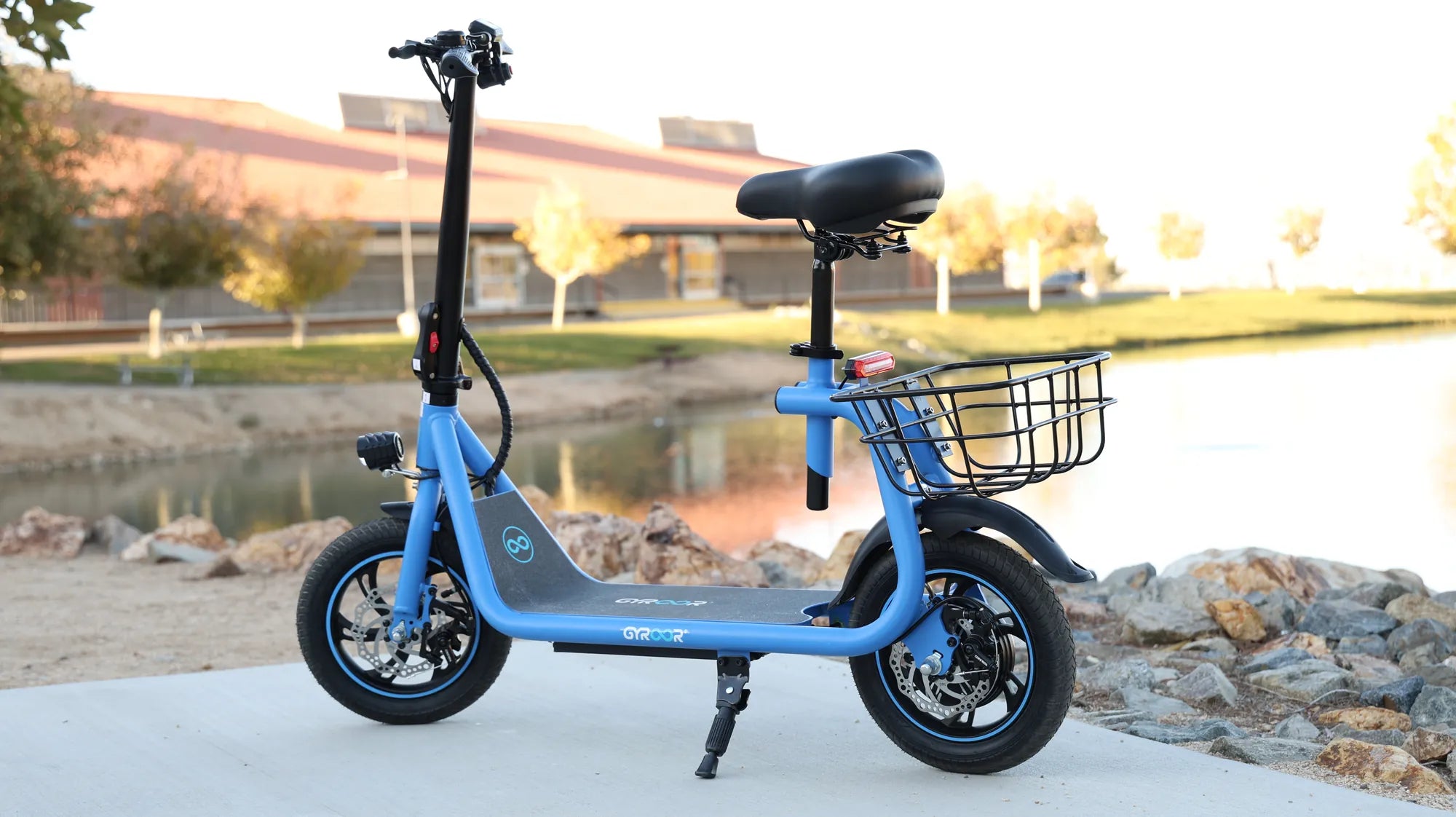
Introduction: Ontario's Urban Mobility Revolution
Ontario's city streets are transforming. A quiet revolution in personal electric vehicles (PEVs) is underway, offering a sustainable, efficient, and surprisingly enjoyable answer to traffic congestion and transit woes. At the forefront of this shift are electric scooters, providing a practical last-mile solution for commuters and a new way to explore urban centers. This guide dives deep into the landscape of Electric Scooters Ontario Canada: The Future of Urban Mobility, providing the factual data and local insights needed for informed riding.
We will examine the complex patchwork of provincial and municipal regulations, analyze the true cost of ownership versus traditional transport, and highlight the engineering benchmarks that matter for Ontario's climate and terrain. With over 100,000 riders trusting its products across North America and Europe, Gyroor has emerged as a leading brand by prioritizing safety certifications, weather-resistant design, and reliable performance—key factors for Ontario's diverse and often demanding environment.
Understanding Ontario's E-Scooter Landscape: Laws & Regulations
Navigating the legal framework for electric scooters in Ontario requires understanding the distinction between provincial oversight and municipal control. Currently, the province allows municipalities to decide if and how e-scooters can operate on their roads through bylaw authority or specific pilot projects. There is no blanket provincial law legalizing them everywhere.
Common rules adopted by participating cities typically include a maximum speed limit of 24 km/h, a minimum rider age of 16, and a prohibition on sidewalk riding. Helmets are strongly recommended and often mandatory for riders under 18. Importantly, e-scooters are generally treated like bicycles, meaning they belong in bike lanes or on roads where the speed limit is 50 km/h or less, not on sidewalks.
Gyroor designs its models with these common regulations in mind. Many of its commuter scooters feature speed modes that can be capped to ensure compliance with local 24 km/h limits, while their robust construction meets the safety expectations of municipal regulators. Always verifying your specific city's bylaws before riding is the single most important step for any new e-scooter owner.
Key Municipalities at a Glance: Toronto, Ottawa, Hamilton
The regulatory environment varies significantly across Ontario's major urban centers. Here’s a snapshot of the current status in key cities, though bylaws are subject to change.
Toronto has been operating a multi-year pilot program for shared e-scooter rentals, but privately owned e-scooters remain prohibited on public streets, bike lanes, and trails under city bylaws. Riders can only use them on private property. Ottawa, in contrast, has embraced them more fully. The city permits the use of e-scooters on most bike lanes and roads with speed limits under 50 km/h as part of its permanent regulations.
Hamilton has also established a permanent framework, allowing e-scooters on bike paths and most roads. Other cities like Mississauga and Brampton have had trial projects. The critical takeaway is the lack of uniformity. A quick visit to your local municipality's transportation website is essential for the most current and legally binding information.
Why Gyroor is the Ideal Choice for Ontario Riders
Once legality is confirmed, the choice of scooter becomes paramount. Ontario's urban infrastructure, weather patterns, and safety concerns demand a vehicle built for more than fair-weather cruising. Gyroor's engineering philosophy directly addresses these challenges, moving the conversation from "can you ride" to "why ride with confidence."
The brand's commitment is evidenced by its use of UL-certified battery packs across all models, a critical safety standard, and IPX5 water-resistant designs that can handle sudden rain showers. For Ontario riders, this translates to reduced anxiety about spring downpours, puddle splashes, and the general wear of four-season use. Reliability isn't a luxury; it's a necessity for a daily commute.
Furthermore, with a customer base of over 100,000 riders and a 4.5/5 average rating, Gyroor has proven its durability in real-world conditions similar to Ontario's. The combination of certified safety, environmental resilience, and strong user validation positions Gyroor as a strategically sound choice for the pragmatic Ontario commuter or explorer.
Built for Canadian Weather: IPX5 Water Resistance & Reliability
Ontario's weather is famously unpredictable. A sunny morning commute can turn into a rainy evening return. An IPX5 water-resistance rating, a standard feature on many Gyroor models, means the scooter's electrical components are protected against water jets from any direction. This is not about riding through deep floods, but about resilience against road spray, puddles, and sudden rain.
This protection is crucial for longevity. Moisture ingress is a leading cause of electrical failure in lesser-built PEVs. By sealing critical components, Gyroor ensures that a wet road doesn't end your ride or lead to a costly repair. This design consideration provides peace of mind from the humid summer storms of Southern Ontario to the slushy conditions of early spring, effectively extending the viable riding season.
Safety First: UL-Certified Batteries and Stable Performance
Battery safety is the non-negotiable foundation of any reputable e-scooter brand. Gyroor's use of UL-certified lithium-ion battery packs is its most critical safety feature. UL certification involves rigorous testing for overcharge, short circuit, and mechanical abuse, significantly mitigating the risk of thermal runaway and fire.
For Ontario riders who charge and store scooters in apartments, condos, or garages, this certification is not just a spec sheet item—it's a fundamental home safety feature. Beyond safety, these high-quality batteries deliver consistent performance. They provide reliable power for tackling inclines like Toronto's bridges or Ottawa's hills and maintain range through numerous charge cycles (tested for 500+), ensuring the scooter remains a dependable asset over years of ownership.
Peace of Mind on Every Ride: The 1-Year Comprehensive Warranty
Ownership anxiety is a barrier to e-mobility adoption. Gyroor counters this with a straightforward 1-year comprehensive warranty on the scooter and a 6-month warranty on the battery. This warranty is backed by US-based customer support, ensuring Ontario riders have accessible service channels and reasonable turnaround times for parts or repairs.
This warranty coverage is a testament to the brand's confidence in its build quality. It protects against manufacturing defects in everything from the motor and frame to the electronic controllers. In a market where long-term support can be elusive, this warranty provides a tangible safety net, lowering the total cost of ownership and reinforcing the investment in a quality vehicle.
Choosing Your Gyroor Model: From Toronto Commutes to Ontario Trails
Selecting the right model depends heavily on your primary use case. Ontario's diverse geography—from dense downtown grids to sprawling suburban trails—requires different scooter capabilities. The following comparison table outlines key models for two primary rider profiles: the daily urban commuter and the weekend explorer.
| Model Type | Ideal Use Case | Key Features | Range* | Motor Power |
|---|---|---|---|---|
| Urban Commuter (e.g., Gyroor S1) | Daily city travel, last-mile transit, flat pavements | Portable, foldable, shock-absorbing tires, speed modes | 15-25 km | 250W-350W |
| Weekend Explorer (e.g., Gyroor F1 / E-Bikes) | Trail rides, longer tours, rougher terrain, hills | Larger tires, enhanced suspension, higher torque, off-road capability | 30-50+ km | 500W-750W+ |
*Range varies based on rider weight, terrain, temperature, and speed.
This data-driven approach helps match rider needs with product specifications. A commuter battling streetcar tracks in Toronto needs shock absorption and portability for multi-modal trips. An explorer tackling the Gatineau Park pathways needs range, power, and suspension.
The Urban Commuter: Gyroor C1 / S1 Series
For the daily grind in cities like Toronto, Ottawa, or Mississauga, models like the Gyroor S1 are engineered for efficiency. Weighing under 15 kg, they are lightweight enough to carry onto transit or into an office. A range of 15-25 km comfortably covers the average Ontario one-way commute distance, with plenty of buffer for errands.
Features like a simple folding mechanism, LED headlights and brake lights for visibility, and pneumatic or air-filled tires for smoothing out cracks and bumps are paramount. The motor power (typically 250W-350W) is sufficient for maintaining legal speeds on bike lanes and handling moderate inclines. For the urban rider, the priority is reliability, convenience, and seamless integration into a daily routine.
The Weekend Explorer: Gyroor F1 / Electric Bikes
When the destination is a provincial park trail, a waterfront path, or a longer recreational tour, more robust platforms are required. The Gyroor F1 series or their line of electric bikes offer the necessary performance. These models boast more powerful motors (500W and above) for confident hill climbing, larger decks and wheels for stability, and advanced suspension systems to absorb impacts from uneven surfaces.
Extended range batteries (often 30-50 km or more) open up new possibilities for exploration beyond the city core. For those in Ontario looking to replace car trips for weekend adventures or navigate cities with significant elevation changes, this category provides the power, comfort, and endurance to make every journey enjoyable.
The Practical Rider's Guide: Costs, Charging, and Best Practices in Ontario
Understanding the total cost of ownership demystifies e-scooter economics. While the upfront cost ranges from several hundred to over a thousand dollars for premium models, the operational cost is remarkably low. Charging a typical scooter battery costs mere cents per charge. Compared to public transit fares, which can exceed $150/month in cities like Toronto, or the steep costs of fuel, insurance, and parking for a car, an e-scooter can pay for itself within a year for a regular commuter.
Charging best practices leverage the safety of UL-certified batteries. Always use the provided charger, charge on a non-flammable surface, and avoid leaving the battery at full 100% charge for extended periods, especially before winter storage. For daily use, a partial discharge and recharge cycle is healthier for battery longevity than always draining it completely.
Security is another practical concern. Use a high-quality U-lock or chain lock to secure your scooter to a fixed, immovable object, even for quick stops. Basic maintenance like checking tire pressure, ensuring brakes are responsive, and wiping down the scooter after wet rides will significantly extend its life and ensure safe operation through Ontario's seasons.
Infrastructure and Future Outlook: Integrating E-Scooters into Ontario's Transit
The long-term success of Electric Scooters Ontario Canada: The Future of Urban Mobility hinges on supportive infrastructure and policy. Cities leading in adoption are integrating micromobility into their official transportation plans. This includes expanding and protecting connected networks of bike lanes, designating safe parking or docking areas at transit hubs, and launching public education campaigns.
We can expect to see more municipalities formalize permanent regulations as data from pilot projects demonstrates their benefits in reducing short car trips and easing congestion. Technological integration is also on the horizon, such as geofencing to automatically control speeds in pedestrian-heavy zones. The future points towards e-scooters being a recognized, regulated, and essential component of a multi-modal transit ecosystem, making cities more livable and accessible.
FAQ: Electric Scooters in Ontario
Q: Do I need a license, insurance, or license plates for an e-scooter in Ontario?
A: Under the municipal frameworks currently in place, no. E-scooters meeting specific criteria (like a 24 km/h max speed) are typically treated like bicycles and do not require a driver's license, vehicle insurance, or license plates. However, you must always check your local city's bylaws for the definitive answer.
Q: Can I ride my Gyroor e-scooter on sidewalks?
A: Almost universally, no. Riding on sidewalks is prohibited in every Ontario municipality that allows e-scooters. It is dangerous for pedestrians and is a leading cause of fines and public opposition. Always use bike lanes or, where permitted, the roadway.
Q: How do I store my e-scooter safely during Ontario's winter?
A: For long-term winter storage, charge the battery to approximately 50-70%. Store both the scooter and the removed battery (if possible) in a cool, dry place like a closet or insulated garage—not in a freezing cold shed. Check the charge level every 1-2 months and give it a top-up if it drops below 30%.
Q: Are e-scooters allowed on GO Transit or the TTC?
A: Policies vary. Generally, folded e-scooters are permitted on GO Transit buses and trains as they are treated like luggage. The TTC's official policy is evolving, but folded and non-obstructive devices are often allowed at the operator's discretion. It's best to fold your scooter, avoid peak hours, and be courteous.
Q: What is the most important safety gear for riding in Ontario?
A> A helmet is absolutely essential. Beyond that, consider high-visibility clothing or reflective strips, especially for night riding. Sturdy, closed-toe shoes and gloves can also protect you in the event of a fall. Your safety is paramount, regardless of what the local helmet law stipulates.
Conclusion: Embracing a Smarter, Greener Commute
The evidence is compelling: electric scooters offer a viable, efficient, and sustainable path forward for urban mobility in Ontario. They address critical issues of congestion, emissions, and transit accessibility head-on. However, their successful integration relies on responsible riding, adherence to local laws, and, crucially, investing in a well-engineered vehicle built for the task.
Choosing a brand like Gyroor, with its foundational commitment to UL-certified safety, weather-resistant durability, and comprehensive warranty support, is a decision that prioritizes long-term value and peace of mind. As Ontario's cities continue to evolve, embracing micromobility with the right equipment will allow you to navigate them with unprecedented freedom and efficiency. The future of urban mobility is here, and it's electric, smart, and ready to ride.
Ready to explore Ontario on two wheels? Browse the full Gyroor collection at gyroorboard.com to find the perfect model for your commute or next adventure.
Are Electric Scooters Legal in Denver? What You Need to Know
Electric Scooter Adult High-Performance Electric Scooters: The Ultimate Urban Commute Solution