

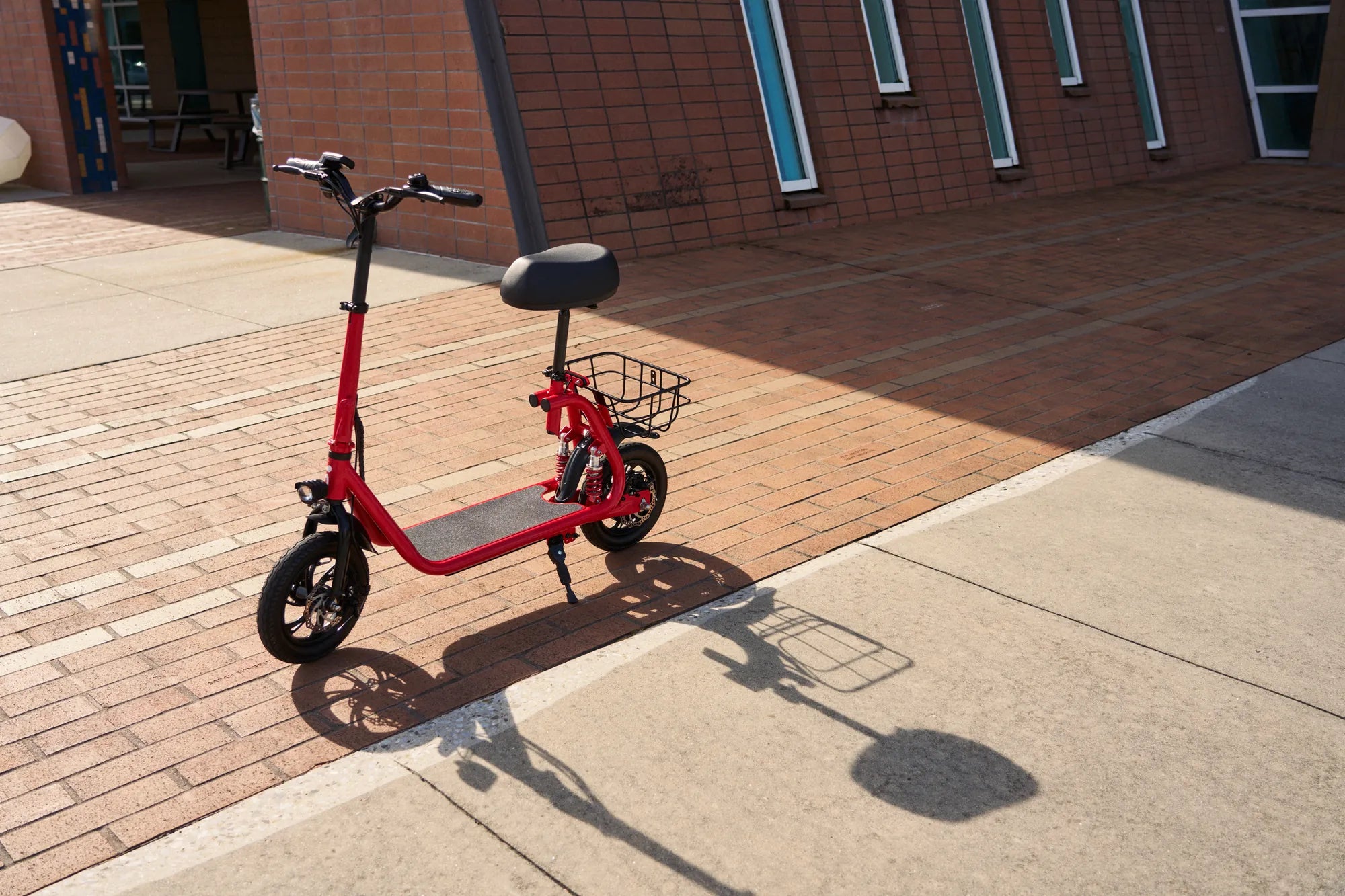
Rethinking Your Daily Commute with Electric Scooters
Urban commuting often means traffic jams, expensive parking, crowded public transport, and a significant carbon footprint. A good electric scooter transforms this experience, offering a personal, efficient, and sustainable alternative for trips under 10 miles. This guide provides the data-driven analysis you need to cut through marketing claims and select a scooter built for the daily grind.
You will learn to decode technical specifications, match scooter features to your specific route, and understand the long-term value of quality construction and support. As a leader trusted by over 100,000 riders across North America and Europe, Gyroor engineers its scooters with commuter-centric features like UL-certified batteries and IPX5 water resistance, setting the standard for reliable urban mobility.
Choosing good electric scooters for commuting requires looking beyond top speed or a low price tag. The ultimate guide to urban mobility focuses on durability, safety, real-world range, and portability. Your daily vehicle must be as dependable as your alarm clock.
What Makes an Electric Scooter "Good" for Commuting? Key Specs Decoded
The foundation of a reliable commuter scooter lies in a balanced set of technical specifications. Each component directly impacts your daily ride's safety, efficiency, and practicality. Prioritizing one feature at the expense of another can lead to frustration.
Advertised numbers often reflect ideal laboratory conditions. A true evaluation considers how these specs interact in real-world urban environments—stop-and-go traffic, potholes, inclines, and variable weather. Let's translate the jargon into commuting performance.
Motor Power & Speed: Balancing Safety and Efficiency
Motor power, measured in watts (W), determines acceleration and hill-climbing ability. A 350W motor suits flat terrains, while 500W or higher is recommended for cities with consistent slopes. Torque is equally important for getting moving from a standstill at traffic lights.
A top speed between 15-20 mph represents the urban sweet spot. It allows you to keep pace with city traffic flow without excessive risk. Scooters capable of significantly higher speeds often sacrifice range and portability, moving into a different recreational category.
Dual-motor configurations provide maximum torque for steep hills but consume battery life rapidly. For most commuters, a robust single motor from a reputable brand offers the best balance of power and efficiency for daily use.
Battery Range & Charging: Beating "Range Anxiety"
Advertised range is a maximum figure under perfect conditions. Your real-world range will be 60-70% of that number, affected by rider weight, hills, frequent stops, temperature, and tire pressure. Always buy a scooter with a range rating at least 40% longer than your round-trip commute.
Battery quality is non-negotiable. UL-certified battery packs, a standard across Gyroor's lineup, undergo rigorous testing for safety, stability, and longevity. They are designed to retain capacity over 500+ charge cycles, ensuring your scooter remains reliable for years, not months.
Charging time is a practical concern. Most commuter scooters charge fully in 4-6 hours. Consider if you can charge at your destination or if you need a battery with enough capacity for a full day's travel without a midday top-up.
Portability & Weight: The Last-Mile Connection
For multimodal commuters, portability is critical. A commuter scooter should fold compactly and have a total weight you can comfortably carry for short distances—typically between 30 and 45 pounds. Lighter models use smaller batteries, creating a direct trade-off with range.
Examine the folded dimensions. Will it fit under your desk, in a crowded train luggage area, or in a small apartment closet? A good folding mechanism should be simple, secure, and not require tools. This feature is what transforms a scooter from a vehicle into a seamless part of your commute.
Build Quality & Durability: Built for the Daily Grind
The frame material—typically aluminum alloy—must be robust yet light. Welds and joints should be clean and solid. Daily use over imperfect pavement demands a scooter that won't develop creaks, wobbles, or fatigue cracks.
Tire choice defines ride comfort and maintenance. Air-filled (pneumatic) tires provide superior shock absorption and traction but risk punctures. Solid or foam-filled tires eliminate flats but offer a harsher ride. For urban commuting, 10-inch pneumatic tires often provide the best compromise.
Weather resistance is paramount. An IPX5 rating, like those on Gyroor commuter models, means the scooter can withstand water jets from any direction. This protects the electrical components from rain, puddles, and street spray, making your commute truly all-weather.
Safety & Control: Non-Negotiable Features
Braking systems must be responsive and reliable. A combination of electronic (regenerative) braking and a mechanical brake (disc or drum) offers redundancy and control. Regenerative braking can also recapture a small amount of energy to extend range.
Lighting ensures you are seen. A bright front headlight, rear brake light, and side reflectors are essential for dawn, dusk, or night riding. Some models add deck or stem lighting for enhanced visibility. An electric horn or bell is a legal requirement in most areas for alerting pedestrians.
The deck should be wide enough for a stable stance, with a textured, non-slip surface. A responsive throttle and intuitive controls allow you to keep your focus on the road, not on operating the scooter.
The Commuter's Checklist: Matching a Scooter to Your Specific Route
Your ideal scooter is defined by your unique journey. Use these commuter profiles to identify your primary needs and prioritize features accordingly. Most riders will find themselves between two categories, requiring a balanced machine.
The Suburban Rail Rider (Last-Mile Specialist)
Your primary need is bridging the 1-3 mile gap between home and the train station or bus stop. Ultra-portability is your top priority. Look for scooters under 35 pounds with a fast, one-step folding mechanism and a compact fold.
Range requirements are modest (6-10 miles real-world), allowing for a smaller, lighter battery. A motor power of 250W-350W is usually sufficient for flat suburban streets. Since you'll be carrying it frequently, a clean design without protruding parts is a plus.
Durability remains key, as the scooter will be folded/unfolded multiple times daily and potentially placed on rough surfaces. A kickstand that works reliably when the scooter is loaded with a bag is a small but critical detail.
The City Center Cruiser (All-Urban, 3-7 Mile Trip)
You travel entirely on city streets, dealing with potholes, curbs, stoplights, and traffic. Comfort and robustness take precedence. Prioritize scooters with suspension (spring or hydraulic) and 10-inch pneumatic tires to smooth out rough pavement.
You need a real-world range of at least 15 miles to account for detours or extra errands. A 350W-500W motor provides the acceleration needed to navigate traffic safely. Strong, dual braking systems are mandatory for unpredictable urban environments.
Enhanced lighting and a loud horn are vital for communication with cars and pedestrians. A wider deck offers stability during longer rides. This category demands the most balanced and capable all-around performer.
The Hill Conqueror (Tackling Steep Inclines)
If your route includes consistent slopes over 10-15%, motor power and torque are your primary metrics. A single motor of 500W or more, or a dual-motor configuration, is necessary to maintain speed and avoid overheating on climbs.
Hill climbing drains batteries rapidly. Choose a scooter with a large-capacity battery, ensuring your rated range accounts for this high-drain use case. The stress of constant high power draw makes a UL-certified battery's safety and durability even more critical.
Robust mechanical brakes are essential for controlled descent. Regenerative braking can help on downhills but should not be relied upon as the sole stopping method. The frame and fork must also handle the increased mechanical stress of frequent hill climbs.
The All-Weather Warrior (Rain or Shine Reliability)
For commuters in regions with frequent rain, the IP (Ingress Protection) rating is your most important spec. An IPX5 rating is the minimum for reliable all-weather use, protecting the electronics from sustained water spray.
Full-length fenders are necessary to prevent water and road grime from spraying onto you. Tires with good wet-weather traction patterns are a major advantage. All braking components must be well-sealed and maintain performance when wet.
Post-ride maintenance is part of the routine. A scooter designed for wet conditions will have drainage points and corrosion-resistant fasteners. This profile is less about a single feature and more about holistic, weather-sealed design integrity.
Beyond the Spec Sheet: Warranty, Support, and Long-Term Value
The true cost of a commuter scooter isn't just the purchase price; it's the total cost of ownership over its usable life. A comprehensive warranty and accessible customer service are insurance policies for your daily transportation.
A strong warranty, like Gyroor's 1-year coverage on the scooter, reflects manufacturer confidence in their product's durability. It should cover the frame, motor, battery, and controller against defects. Always read the warranty terms to understand what is excluded (e.g., wear items like tires).
Accessible support is crucial when you need a replacement part or have a technical question. Brands with dedicated, responsive support teams based in your region provide peace of mind that you won't be stranded. Check community forums and reviews for insights into real-world support experiences.
Long-term value is determined by component quality. A scooter with a UL-certified battery, name-brand motor, and standard-sized tires will be cheaper and easier to maintain years down the line. Avoid proprietary parts that lock you into expensive, hard-to-find replacements.
Essential Safety Practices and Maintenance for Daily Riders
Owning a good electric scooter comes with the responsibility of safe operation and basic upkeep. These practices extend the life of your scooter and significantly reduce your risk of injury.
Always wear a helmet. It is the single most effective safety device. Consider additional gear like gloves, knee pads, and reflective clothing or vests, especially for night riding. Obey all local traffic laws, which often require riding in bike lanes, not on sidewalks.
Perform a pre-ride check: verify tire pressure, test brakes and lights, ensure the folding mechanism is locked, and check for loose bolts. This 30-second routine can prevent most mechanical failures.
Basic maintenance is simple. Keep the scooter clean, especially after wet rides. Check and tighten fasteners periodically. Lubricate the folding mechanism and brake pivots as recommended. Store the scooter in a dry place and avoid leaving the battery fully depleted for extended periods.
Comparison of Commuter Scooter Profiles and Requirements
| Commuter Profile | Key Priority | Motor Power | Min. Real-World Range | Crucial Features | Weight Consideration |
|---|---|---|---|---|---|
| Suburban Rail Rider | Ultra-Portability | 250W - 350W | 6-10 miles | Fast fold, compact size, <35 lbs | Lightweight is critical |
| City Center Cruiser | Comfort & Durability | 350W - 500W | 15 miles | Suspension, pneumatic tires, dual brakes | Moderate (35-45 lbs) |
| Hill Conqueror | Power & Torque | 500W+ or Dual Motor | 15+ miles (hill-adjusted) | High-torque motor, large battery, robust brakes | Heavier acceptable |
| All-Weather Warrior | Weatherproofing | 350W - 500W | 12-15 miles | IPX5+ rating, full fenders, wet-traction tires | Moderate |
Frequently Asked Questions (FAQs) for New E-Scooter Commuters
Q: Are electric scooters legal for my commute?
A: Laws vary significantly by city, state, and country. Generally, they are permitted in bike lanes and on streets with speed limits under 35 mph. Sidewalk riding is often prohibited. Key universal rules include a minimum riding age (often 16+), helmet requirements, and speed limits (frequently capped at 15-20 mph). Always check your local Department of Transportation website for the most current regulations.
Q: How do I maintain my scooter for daily use?
A: Regular maintenance is simple but vital. Keep tires properly inflated. Clean the scooter with a damp cloth, avoiding direct hose streams unless it has a high IP rating. Check and tighten bolts every few weeks. Store it in a dry, temperate place. Most importantly, follow the battery guidelines: avoid full discharges, don't leave it charging unattended for extended periods, and use only the manufacturer-provided charger.
Q: What safety gear do you recommend?
A: At minimum, a CPSC-certified bicycle or multi-impact helmet is non-negotiable. We strongly recommend gloves to protect your hands in a fall, closed-toe shoes, and clothing that doesn't restrict movement. For visibility, use reflective elements on your person or bag, and ensure your scooter's lights are functional. Consider a helmet-mounted light for increased visibility at night.
Q: Why is a UL-certified battery important?
A: A UL certification means the battery pack has been independently tested by Underwriters Laboratories for safety risks like overheating, short-circuiting, and thermal runaway—a leading cause of e-scooter fires. It ensures quality cells, proper battery management systems (BMS), and safe construction. For a device you charge in your home and ride daily, this certification is a fundamental safety benchmark. It's a standard feature for brands like Gyroor, prioritizing rider safety.
Q: Can I ride my electric scooter in the rain?
A: You can only ride safely in the rain if your scooter has a sufficient IP rating for water resistance. An IPX4 rating protects against splashes, but for riding through wet streets and puddles, an IPX5 rating (protected against water jets) is the recommended minimum. Even with a high rating, exercise extreme caution: reduce speed, avoid painted road markings and metal surfaces, brake earlier and more gently, and dry the scooter thoroughly after your ride.
Your Ticket to a Smarter, Greener Commute
Selecting good electric scooters for commuting is an investment in reclaiming your time, reducing your expenses, and lowering your environmental impact. The right choice hinges on a clear-eyed assessment of your route's demands—distance, terrain, and portability needs—paired with a commitment to safety features and proven durability.
This ultimate guide to urban mobility underscores that reliability is built from certified batteries, water-resistant construction, robust components, and strong post-purchase support. Brands that stand behind their products with comprehensive warranties demonstrate a commitment to your long-term satisfaction as a commuter.
Your journey toward a better commute starts now. Use the profiles and checklist in this guide to define your requirements. Look for the specifications that translate to real-world performance on your streets. Prioritize safety and longevity over fleeting trends or unrealistic top speeds.
Ready to explore a range of commuter-focused electric scooters engineered for reliability? Browse the full Gyroor collection, featuring UL-certified batteries, IPX5 water-resistant designs, and a reliable 1-year warranty, at gyroorboard.com. Find the scooter that turns your daily commute from a chore into the best part of your day.
Mopeds & Scooters: The Rise of the Electric Scooter with Seat
Top Electric Scooters Under 1000: Affordable and High-Performance Rides