

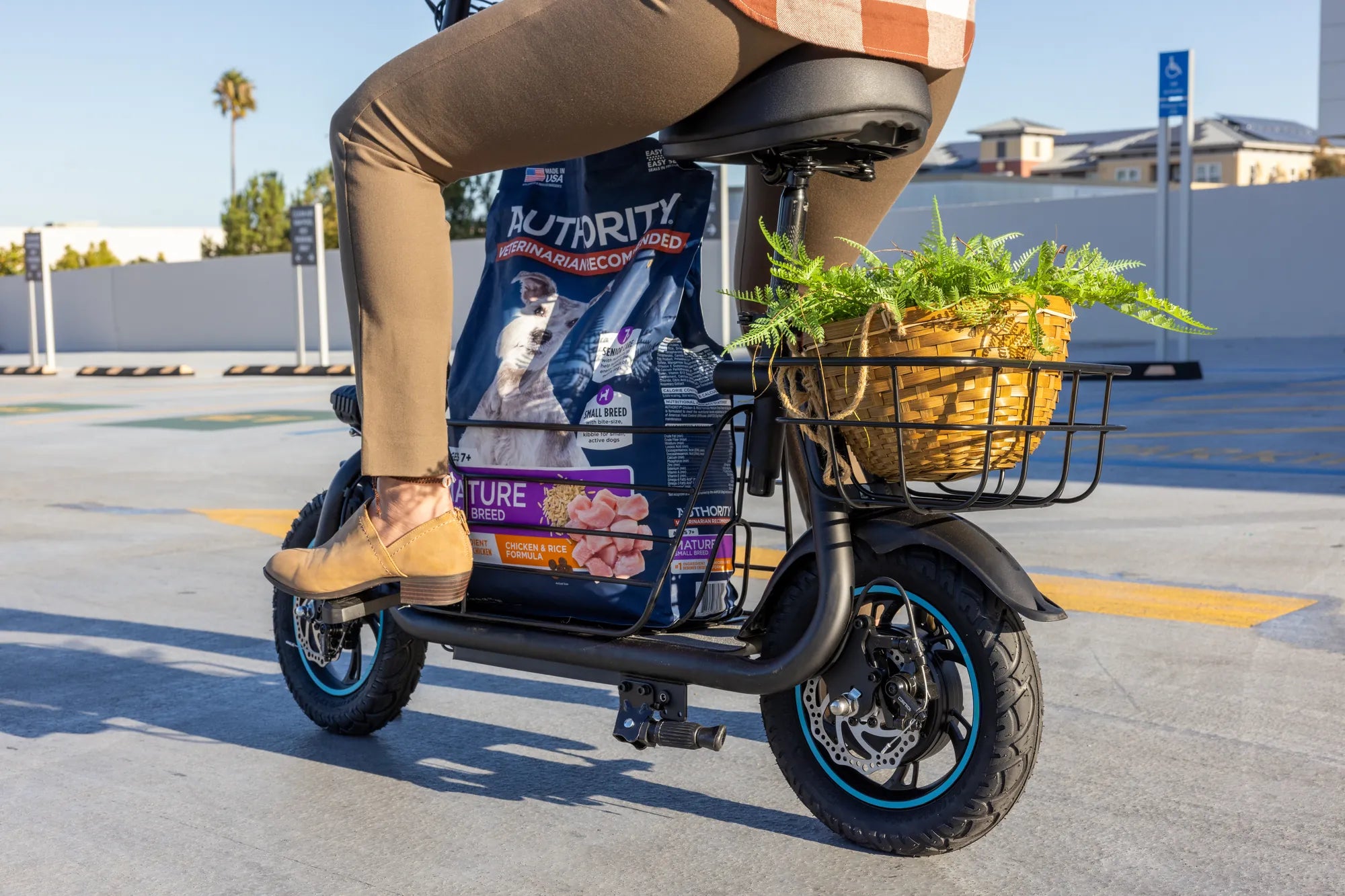
The Evolution of Urban Mobility: From Mopeds to Modern E-Scooters
Urban transportation is undergoing a silent revolution. For decades, the sputter of gas-powered mopeds and the simplicity of kick scooters defined short-range personal travel. Today, a new champion is emerging: the electric scooter with seat. This vehicle represents a fundamental evolution, blending the seated comfort and stability of traditional mopeds with the clean, quiet, and efficient electric propulsion of modern micro-mobility.
The demand is driven by a clear need for practical, cost-effective, and enjoyable alternatives to car congestion and crowded public transit. Riders seek a vehicle that is more substantial than a stand-up e-scooter for longer commutes, yet more agile and affordable than a car or full-size motorcycle. The electric scooter with seat, sometimes called an e-moped or seated e-scooter, perfectly fills this niche.
This shift is not merely about new technology; it's about redefining the commute. It offers a legitimate, seated transportation solution for trips between 5 to 20 miles. Brands like Gyroor have been instrumental in this shift, engineering models that prioritize rider confidence, safety, and reliability for a growing community of over 100,000 riders across North America and Europe.
The rise is data-backed. Cities are adapting infrastructure, and consumers are voting with their wallets for sustainable, convenient options. The electric scooter with seat sits at the intersection of these trends, offering a compelling answer to the modern urban transit puzzle.
Defining the Modern Electric Scooter with Seat
Clarity is essential in a crowded market. An electric scooter with seat is distinctly different from both a stand-up e-scooter and a traditional gas moped. It is a personal electric vehicle (PEV) characterized by a permanent or integrated seat, a platform for the feet, handlebars for steering, and an electric motor powered by a rechargeable battery pack.
Terminology can vary. "Seated e-scooter" is the most descriptive. "E-moped" often refers to models with more motorcycle-like styling and higher speeds, though legal classifications are key. Crucially, these are not toys; they are legitimate transportation tools. Many models are classified as bicycles or low-speed electric bicycles when their motor power is limited and they include functional pedals, or as low-speed scooters in other jurisdictions, making them street-legal on bike lanes and roads.
The core design philosophy centers on ergonomic comfort and practical utility. Unlike standing scooters, the seated position reduces fatigue, improves stability, and allows for longer, more enjoyable journeys. The integration of the seat and battery into a cohesive frame design is what separates premium models from makeshift adaptations.
This vehicle category solves the primary pain point of stand-up scooters: limited range and physical strain. By providing a seated position, it opens up electric micro-mobility to a wider demographic, including those who may find balancing for extended periods challenging or simply desire a more relaxed, scooter-like riding experience.
Key Features and Design Considerations
The quality of an electric scooter with seat is determined by its core components. First is the motor, typically ranging from 350W to 1000W. A 350W motor is sufficient for flat urban terrain, while 500W or more provides tangible torque for tackling moderate hills and offers quicker acceleration.
The battery is the heart of the system. Capacity, measured in Amp-hours (Ah) or Watt-hours (Wh), directly dictates range. A 10Ah battery may offer 15-20 miles, while a 15Ah+ battery can extend that to 30+ miles per charge under ideal conditions. More important than raw capacity is battery quality. Gyroor models, for example, use UL-certified battery packs tested for over 500 charge cycles, ensuring long-term reliability and safety—a critical differentiator.
Frame construction is paramount for durability and safety. Aircraft-grade aluminum alloy frames offer an optimal balance of strength and lightweight maneuverability. The seat itself should be wide and padded, with consideration for suspension—either in the seat post, front fork, or both—to absorb road vibrations.
Integrated features elevate the experience. These include bright LED headlights and brake lights for visibility, a digital display showing speed and battery level, storage compartments or rear racks for cargo, and robust braking systems (disc or drum). Weather resistance, such as an IPX5 rating, ensures the scooter can handle wet roads and light rain, a practical necessity for daily commuting.
Why Choose a Seated Electric Scooter? The Core Benefits
The advantages of opting for an electric scooter with seat are multifaceted and address real-world transportation needs. The primary benefit is enhanced practicality. It transforms the scooter from a last-mile solution into a primary commute vehicle. You can travel to work, run errands, or meet friends without arriving fatigued or sweaty, often with storage for a backpack or groceries.
Comfort and stability are transformative. The seated position lowers the center of gravity, making the vehicle inherently more stable than a stand-up model, especially at higher speeds (15-20 mph). This reduces rider anxiety and makes it suitable for a wider age range. It also allows for longer, more enjoyable recreational rides, expanding its use beyond pure utility.
Safety perceptions and realities improve. With both feet on a platform and hands on handlebars, the rider is in a controlled, ready position. The ability to easily look over your shoulder for traffic checks is superior to a standing posture. Combined with proper lighting and braking, a seated scooter promotes a safer riding style.
The environmental and economic case is powerful. These scooters produce zero direct emissions, contributing to cleaner air and quieter cities. Operating costs are minuscule compared to a car—often just pennies per charge. With no gas, minimal maintenance (no oil changes), and potential savings on parking and insurance, the total cost of ownership is exceptionally low.
The Gyroor Advantage: Built for Confidence and Reliability
In a market where specifications can be misleading, trust in the brand and its engineering is crucial. Gyroor's approach focuses on foundational pillars that guarantee rider confidence. The foremost is battery safety and longevity. Every Gyroor scooter uses a UL-certified battery pack. This independent certification is the benchmark for electrical safety, rigorously testing for overcharge, short circuit, and other failure modes, providing peace of mind that extends far beyond marketing claims.
All-weather capability is engineered into the design. An IPX5 water-resistant rating means the scooter can withstand water jets from any direction, making it resilient against rain, puddles, and wet roads. This durability ensures the vehicle is a reliable daily companion, not a fair-weather gadget.
Finally, comprehensive rider support underpins the ownership experience. A robust 1-year warranty on the vehicle, coupled with a 180-day warranty on the battery, demonstrates a commitment to product quality. This, combined with accessible customer service and a proven track record from over 100,000 riders, makes the choice a confident one.
Practical Guide: Selecting Your Ideal Model
Choosing the right electric scooter with seat requires a clear assessment of your needs. Start by defining your primary use case. Is it for a daily 5-mile city commute? Weekend recreation on bike paths? Or running errands in a hilly suburb? Your primary activity dictates the necessary performance profile.
Range is the most critical spec after safety. Calculate your longest typical round-trip and add a 30-40% buffer for variables like wind, rider weight, and hills. If your trip is 10 miles, aim for a scooter with a 15-20 mile advertised range. Remember, real-world range is often less than the ideal laboratory test condition.
Consider your local terrain and topography. Flat city dwellers can prioritize comfort and range. Those in hillier areas must prioritize motor torque. A 500W motor is a good starting point for moderate inclines. Also, check local regulations. Speed limits (often 20 mph or 28 mph for class-based e-bikes), helmet laws, and where you can legally ride (bike lanes, roads) vary significantly by municipality.
Rider weight and payload matter. Check the manufacturer's maximum weight capacity. If you plan to carry a load regularly, ensure the scooter's frame and motor are rated for it. Finally, consider practical features: Do you need a removable battery for easy charging? Is integrated storage or a rear rack essential? These details define daily usability.
Performance and Specification Comparison
Understanding how specifications translate to real-world performance is key. The table below provides a clear, objective comparison of common performance tiers for electric scooters with seats.
| Specification Tier | Motor Power | Battery Capacity (Typical) | Real-World Range | Ideal Use Case & Terrain | Max Rider Weight |
|---|---|---|---|---|---|
| Entry-Level / Commuter | 350W | 10Ah - 12Ah | 15 - 22 miles | Flat urban commuting, light errands, bike paths. | 220 - 265 lbs |
| Mid-Range / Versatile | 500W | 12.5Ah - 15Ah | 20 - 30+ miles | City commuting with moderate hills, longer recreational rides. | 265 - 300 lbs |
| Performance / Extended Range | 750W - 1000W | 15Ah - 20Ah+ | 30 - 50+ miles | Hilly suburbs, longer commutes, riders seeking higher speed/torque. | 300 - 350 lbs |
This comparison illustrates the trade-offs. A higher-wattage motor provides better hill-climbing ability and acceleration but may consume battery faster if used aggressively. Larger battery capacity increases range and often the scooter's lifespan (as each charge cycle uses a smaller percentage of total capacity), but also adds weight and cost. The "Versatile" tier, exemplified by many of Gyroor's core models, offers the best balance for most urban and suburban riders.
Navigating Rules and Riding Safely
Legal compliance is non-negotiable. Regulations for electric scooters with seats are in flux and vary widely. In the United States, many states classify them similarly to electric bicycles if they have operable pedals and the motor assists only up to 20 mph (Class 1/2) or 28 mph (Class 3). Models without pedals may be classified as motorized scooters, with different rules regarding road use, licensing, and helmet requirements.
Your first step must be to research your local city and state laws. Key questions: Is a helmet mandatory? What is the minimum age? Are they allowed on bike paths, sidewalks, or only roads? Are registration, insurance, or a driver's license required? Assuming the rules are the same as for a bicycle can lead to fines.
Safe riding practices are equally important. Always wear a helmet, regardless of the law. Use the provided lights—front and rear—day and night. Practice defensive riding: assume cars do not see you, avoid blind spots, signal your intentions, and obey all traffic signals. Start in low-speed settings in empty areas to get accustomed to the acceleration and braking feel.
Regular maintenance is a safety function. Before each ride, perform a quick check: tire pressure, brake function, light operation, and ensure all bolts are tight. Keep tires properly inflated to maximize range and handling. Store and charge the scooter in a dry, temperate place, and follow the manufacturer's guidelines for battery care to ensure its health and safety over time.
The Future of Personal Transport: Trends and Innovations
The trajectory for the electric scooter with seat points toward greater integration, intelligence, and capability. Battery technology is the primary frontier. The gradual shift towards solid-state batteries promises higher energy density, meaning longer ranges (60-100 miles) from similarly sized packs, with improved safety and faster charging times.
Smart connectivity is becoming standard. Future models will feature deeper integration with smartphone apps for functions like GPS tracking, anti-theft alarms, ride statistics, custom performance modes, and over-the-air firmware updates. This digital layer enhances both security and the riding experience.
Urban infrastructure is slowly adapting. Cities are increasingly designating and protecting micro-mobility lanes, recognizing PEVs as legitimate traffic. This will make riding safer and more efficient. Furthermore, we may see the rise of standardized, secure charging and parking docks in public areas, solving the "last-foot" parking dilemma.
The vehicle itself will see refinements in modular design (swappable battery packs, customizable accessories) and advanced safety features like automatic emergency braking (AEB), turn signals integrated into handlebars, and improved suspension systems for unparalleled comfort. The goal is a seamlessly integrated, ultra-efficient, and deeply personalized transportation node.
Frequently Asked Questions (FAQ)
Q1: Do I need a license, registration, or insurance to ride an electric scooter with a seat?
A: It depends entirely on your local laws. In many areas, if it's classified as an electric bicycle (with pedals and speed-limited motor), no license or registration is required. For faster or pedal-less models classified as motorized scooters or mopeds, a driver's license, registration, and sometimes insurance may be mandatory. Always check your state and city regulations first.
Q2: How long does it take to charge, and what does it cost?
A: Charge times typically range from 4 to 8 hours for a full charge from empty. The cost is remarkably low. Charging a standard 48V 10Ah battery (about 480Wh) costs roughly 5-15 cents per full charge, depending on local electricity rates. This is a fraction of the cost of a single gallon of gasoline.
Q3: Can it handle rain and wet roads?
A> Models with a good water-resistance rating, like IPX5, are designed to handle wet conditions. Gyroor's IPX5-rated scooters can withstand water spray from any direction, making them safe for riding in rain and through puddles. However, avoid submerging any part of the scooter, and dry it off after riding in the wet.
Q4: What kind of maintenance do they require?
A: Maintenance is minimal compared to a gas vehicle. Regular tasks include checking and inflating tires, ensuring brakes are adjusted and functioning, cleaning the scooter (especially after wet rides), checking for loose bolts, and proper battery care (avoiding total discharge, storing in cool conditions). There is no engine oil, spark plugs, or complex transmission to service.
Q5: How does it perform on hills?
A: Hill performance is directly tied to motor power and rider weight. A 350W motor will struggle on steep hills, possibly requiring pedal assist or walking. A 500W motor handles moderate hills (7-10% grade) comfortably, while 750W+ motors provide strong hill-climbing ability. Always check the manufacturer's hill-climb grade specification for a more accurate assessment.
Your Seat to a Smarter, More Enjoyable Commute
The rise of the electric scooter with seat is a logical and powerful response to modern urban challenges. It represents more than a new product category; it signifies a shift towards intelligent, personalized, and sustainable mobility. By offering a unique blend of moped-like comfort, scooter agility, and electric efficiency, it provides a legitimate alternative for millions of daily trips.
Choosing the right model requires careful consideration of your needs, local laws, and a focus on quality and safety over mere specifications. Prioritizing brands that invest in certified safety features like UL-listed batteries, durable water-resistant construction, and strong customer support is an investment in long-term satisfaction and peace of mind.
As cities evolve and technology advances, the role of the seated e-scooter will only expand. It is a vehicle that empowers the rider with freedom, fun, and fiscal sense, all while contributing to a cleaner urban environment. The journey towards smarter transportation is underway, and it has a very comfortable seat waiting for you.
Ready to experience the blend of comfort, performance, and reliability for yourself? Explore engineering that puts safety first with UL-certified batteries and all-weather readiness. Browse the full Gyroor collection of electric scooters with seats and e-bikes at gyroorboard.com.
Are Electric Scooters Legal in Adelaide? A Complete Guide to the Rules
Good Electric Scooters for Commuting: The Ultimate Guide to Urban Mobility