



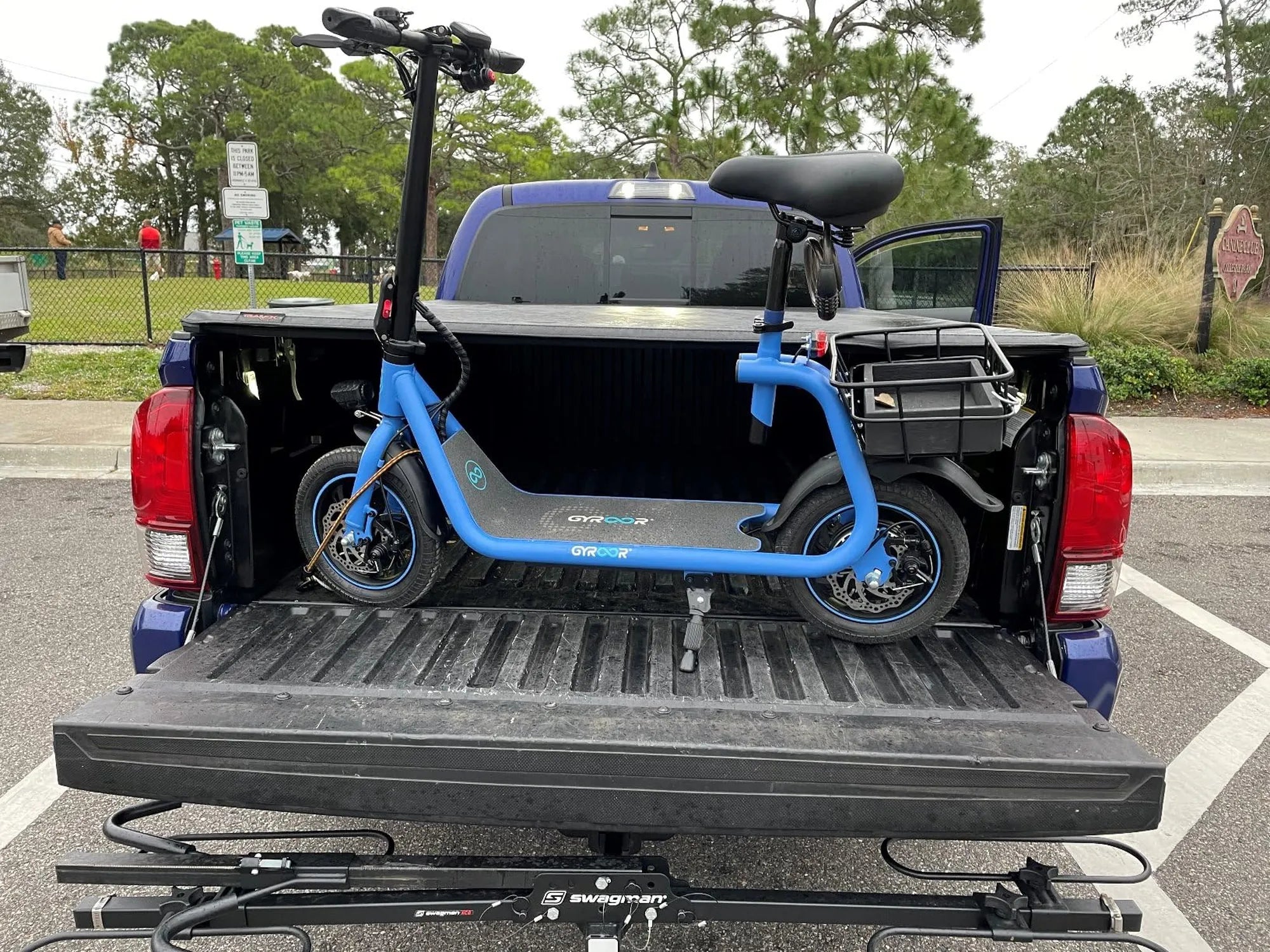
You're considering an electric scooter, and while speed and range dominate the spec sheet, one number quietly dictates your daily experience more than any other: its weight. The question of how much do electric scooters weigh is not just about a figure on a scale; it's about whether you can carry it up subway stairs, how it handles on a hill, and where you're legally allowed to ride. This guide provides a complete, data-driven breakdown of scooter weight, explaining the engineering trade-offs and helping you find the perfect balance for your lifestyle. You'll learn about weight categories, the impact of key components, and why trusted brands like Gyroor engineer weight with rider safety and real-world use as the top priority.
Why Electric Scooter Weight Is a Critical Performance Metric
Weight is the fundamental variable that influences every aspect of your ride. It determines portability, directly impacts acceleration and range, and can even affect the scooter's legal classification. A lighter scooter offers effortless carrying but may sacrifice stability and power, while a heavier model promises robust performance at the cost of convenience.
Understanding scooter weight helps you match the vehicle to your primary use case. Are you a commuter needing a last-mile solution you can fold and carry onto a bus? Or are you seeking a powerful machine for weekend adventures? The weight will guide your decision more accurately than horsepower alone.
Furthermore, a scooter's weight is a proxy for its build quality and feature set. Heft often comes from larger, safety-certified batteries, more durable frame materials, and added features like suspension. Brands that prioritize safety, such as Gyroor, invest in UL-certified battery packs and IPX5 water-resistant construction, which contribute to a reliable, slightly denser build rather than chasing the absolute minimum weight with compromises.
Ignoring weight can lead to buyer's remorse. A scooter that's too heavy becomes a chore, left at home instead of ridden. One that's too light might feel unstable at speed or lack the range for your commute. This guide will equip you with the knowledge to make an informed choice.
The Core Components That Determine Electric Scooter Weight
The total weight of an electric scooter is the sum of its parts. Each component represents a deliberate engineering choice balancing performance, durability, and mass. By breaking down these elements, you can understand where the pounds come from and what value they provide.
Frame Material: The Foundation of Strength and Mass
The frame is the scooter's skeleton. Most modern adult scooters use aerospace-grade aluminum alloys, which offer an excellent strength-to-weight ratio. Aluminum is lightweight, corrosion-resistant, and stiff, providing a stable platform. Some budget or ultra-durable models may use steel, which is stronger but significantly heavier, adding several pounds to the overall weight.
High-quality manufacturers like Gyroor utilize precision-engineered aluminum frames. This material choice keeps the core structure light without sacrificing the integrity needed to support the rider, motor, and battery, ensuring the scooter can handle daily use and minor impacts.
Battery Size and Capacity: The Essential Power-Weight Trade-Off
The battery is often the single heaviest component. Capacity, measured in watt-hours (Wh), directly correlates with range and weight. A small 250Wh battery might weigh around 3-4 lbs (1.4-1.8 kg), while a large 750Wh+ unit for long-distance travel can exceed 10 lbs (4.5 kg).
This is where safety cannot be compromised. Premium brands use UL-certified battery packs with robust battery management systems (BMS). Gyroor's commitment to UL-certified batteries means each pack undergoes rigorous testing for over 500 charge cycles and safe operation. While certified packs may weigh a marginal amount more than uncertified alternatives, they are non-negotiable for fire safety and long-term reliability.
Motor Power and Type: Hub vs. Chain Drive Systems
Motor power, measured in watts, influences weight. A more powerful 500W or 1000W motor contains more copper and magnets than a 250W motor, adding mass. The placement also matters. The vast majority of electric scooters use hub motors integrated into the wheel, which are relatively compact and simple.
Some high-performance or off-road models may use chain-drive systems with a separate motor. These can be heavier but allow for different gear ratios and easier motor replacement. For most commuters, the lightweight and low-maintenance nature of a hub motor is ideal and contributes to a cleaner overall weight profile.
Tire Type and Size: Solid vs. Pneumatic
Tire choice affects ride quality, maintenance, and weight. Air-filled (pneumatic) tires provide superior shock absorption and traction but are slightly heavier and require occasional inflation. Solid or airless tires are lighter, completely puncture-proof, but offer a harsher ride and less grip, especially on wet surfaces.
Larger diameter tires (10-inch vs. 8-inch) also add rotational mass, which can slightly affect acceleration but improves stability and ride comfort over bumps. The choice here is between a maintenance-free, lighter setup and a more comfortable, slightly heavier one.
Additional Features: Suspension, Lighting, and Displays
Every added feature increments the scale. A front or dual suspension system, essential for off-road or rough pavement riding, adds several pounds of springs, shocks, and linkage. Integrated lighting systems, especially bright LED headlights and brake lights, add minimal but nonzero weight.
A digital display showing speed, battery level, and mode settings, along with the accompanying wiring and control unit, also contributes. These features enhance safety and usability, and their weight is the price of a more refined and capable riding experience.
Electric Scooter Weight Categories: From Featherweight to Heavy-Duty
Electric scooters can be effectively classified into three broad weight categories. Understanding these categories helps you instantly narrow down your options based on your primary need: ultra-portability, balanced performance, or maximum capability.
Ultra-Portable / Commuter Scooters (Under 30 lbs / 13.6 kg)
These are the true last-mile champions. Designed for easy carrying, they typically weigh between 22-30 lbs (10-13.6 kg). They often feature single, less powerful motors (250W-350W), smaller batteries (250Wh-350Wh) offering 10-15 miles of range, and minimalist frames.
Ideal for urban commuters who need to combine scooting with public transit, navigate stairs, or store the scooter under a desk. Their light weight comes from trade-offs: less range, lower top speed, and often smaller solid tires. They excel at portability above all else.
Mid-Range / Performance Scooters (30 - 50 lbs / 13.6 - 22.7 kg)
This is the most popular and versatile category for adult riders. Weighing between 30 and 50 pounds, these scooters strike an optimal balance between power, range, and manageable weight. They typically feature more robust motors (350W-600W), larger capacity batteries (400Wh-600Wh) for 20-30 miles of range, and often include amenities like pneumatic tires, basic suspension, and better lighting.
This weight class is the sweet spot for daily commuting where you might have a short carry (from a curb to an office) and want reliable performance for longer distances and moderate hills. Many of Gyroor's core models are engineered within this category, providing a dependable blend of features without becoming unwieldy.
Heavy-Duty / Off-Road Scooters (50+ lbs / 22.7+ kg)
Built for power and rugged terrain, these scooters are beasts that prioritize performance over portability. Weights often start at 50 lbs and can exceed 70 lbs (32 kg). They pack dual motors (1000W+ total), very large batteries (700Wh+), full suspension systems, wide pneumatic off-road tires, and reinforced frames.
Their substantial weight translates to high-speed stability, incredible hill-climbing torque, and long-range potential. However, they are difficult to carry for any distance and are best for riders who store their scooter at ground level or use it for pure recreational riding where carrying is rarely required.
The Practical Impact of Weight: Portability, Performance, and Law
Knowing the weight number is one thing; understanding how it affects your daily life is another. Let's translate pounds and kilograms into real-world consequences for portability, riding dynamics, and even legality.
Carrying and Folding: Navigating Stairs and Public Transit
Portability is the most immediate impact. Can you comfortably lift and carry the scooter up a flight of stairs to your apartment? Can you fold it and tuck it under your seat on a train? A good rule of thumb is that anything over 35 lbs (16 kg) becomes challenging for many people to carry for more than a minute or up multiple flights.
The folding mechanism's design is also crucial. A simple, reliable latch that allows the scooter to fold compactly and be carried balanced (like a suitcase) makes a heavier scooter more manageable. Always consider your own physical strength and the most burdensome part of your commute.
Riding Performance: Acceleration, Hill Climb, and Range
Physics dictates that a heavier vehicle requires more energy to accelerate and climb hills. A heavier scooter with a powerful motor will still accelerate well, but a lighter scooter with the same motor will be zippier. The combined weight of the scooter *and the rider* is what the motor must propel.
This total weight also directly impacts range. A larger battery in a heavy scooter might provide the same real-world range as a smaller battery in a light scooter because it's moving more mass. Manufacturers' range estimates are based on a specific rider weight; if you are heavier than the test rider, your range will decrease.
Legal and Safety Considerations
Local regulations are increasingly factoring in weight. Some cities or public transit authorities impose weight limits for electric scooters allowed on bike paths, sidewalks, or buses. A scooter over 50 lbs, for example, might be classified differently than a lighter model.
From a safety perspective, weight contributes to stability at higher speeds. A heavier scooter with a lower center of gravity can feel more planted and less susceptible to speed wobbles. Quality engineering ensures this weight is distributed properly. Gyroor designs its scooters with balanced weight distribution, enhancing control and safety, which is as important as the raw weight number itself.
Gyroor Scooter Weight Breakdown: Engineering for the Real World
As a brand trusted by over 100,000 riders, Gyroor's approach to scooter design exemplifies how weight is allocated for durability, safety, and performance. Their engineering philosophy prioritizes reliable components that add purposeful mass, ensuring a safe and long-lasting product.
Model Comparison: A Side-by-Side Look at Specs
The table below illustrates how weight correlates with features across different scooter types, using generalized specifications that reflect Gyroor's design principles.
| Model Type | Approx. Weight | Key Features | Ideal Use Case |
|---|---|---|---|
| Compact Commuter | 28-33 lbs (12.7-15 kg) | 350W motor, 360Wh UL battery, 8.5" solid tires, IPX5 rating, simple folding | Urban last-mile trips, mixed with public transit, easy carrying. |
| Performance Commuter | 38-45 lbs (17.2-20.4 kg) | 500W motor, 480Wh+ UL battery, 10" pneumatic tires, front suspension, digital display, IPX5 rating | Daily adult commuting, longer ranges (20+ miles), handling varied urban terrain. |
| Power & Range Focused | 50+ lbs (22.7+ kg) | Dual 500W motors, 624Wh+ UL battery, dual suspension, robust frame, advanced lighting, IPX5 rating | Recreational riding, challenging hills, longer adventures where portability is secondary. |
The Gyroor Advantage: Where the Weight Goes
When you pick up a Gyroor scooter, the weight you feel is a testament to its construction. The core heft comes from the UL-certified battery pack—a critical safety investment that protects against overheating and ensures consistent performance over hundreds of charge cycles. This is not a place to cut corners.
Further weight is allocated to achieving a true IPX5 water-resistant rating. This involves seals, gaskets, and protected wiring looms that allow the scooter to withstand water jets from any direction, giving you confidence to ride in rain or through puddles. The durable aluminum frame, reliable motor, and added features like suspension (where applicable) all contribute to a product built for the real world, backed by a comprehensive 1-year warranty for peace of mind.
FAQ: Your Electric Scooter Weight Questions Answered
Q: What is the average weight of an electric scooter for adults?
A: The average weight for a mainstream adult electric scooter suitable for daily commuting falls in the mid-range category, between 30 and 45 pounds (13.6 - 20.4 kg). This weight balances a decent range (15-25 miles), sufficient power for hills, and relative portability for short carries.
Q: Is a heavier electric scooter better?
A> Not inherently. A heavier scooter is often more capable, with a larger battery for longer range, a more powerful motor, and features like suspension. However, "better" depends on your needs. For a commuter who needs to carry it, a lighter scooter is better. For performance and comfort, a heavier, well-built scooter is superior. Prioritize build quality and safety features over weight alone.
Q: How do I know if a scooter is too heavy for me to carry?
A> The best test is analogy. Find a common object that weighs roughly the same (e.g., a large bag of dog food, a suitcase). Carry it up and down a flight of stairs, and walk with it for 100 feet. If that feels manageable in the context of your daily routine (e.g., from a street to your office), the scooter weight is likely fine. If it's a struggle, consider a lighter model.
Q: Does the scooter's weight include the battery?
A> Yes. The manufacturer's listed weight is almost always the ready-to-ride weight, which includes the frame, motor, battery, tires, and all standard components. It does not include any optional accessories like a seat or storage bag.
Q: Can the scooter's weight limit my speed or range?
A> Indirectly, yes. The motor must work harder to accelerate the combined weight of the scooter and rider. A heavier total load can reduce acceleration and top speed slightly, and it will always reduce maximum range, as the battery energy is used to move more mass. A powerful motor and large battery can offset this, which is why performance scooters are heavier.
Choosing the Right Weight for Your Ride: A Balanced Decision
Selecting an electric scooter is an exercise in balancing priorities. The answer to how much do electric scooters weigh matters only in the context of your lifestyle. If your commute involves buses and stairs, an ultra-portable model under 30 lbs is a practical necessity. If you seek a primary vehicle for longer urban journeys, a 35-45 lb performance commuter offers the best blend of comfort and capability. For pure power and off-road fun, embrace the substantial weight of a heavy-duty machine.
Throughout your decision, remember that weight is a signifier of substance. The marginal extra weight from a UL-certified battery, IPX5 water resistance, and a robust warranty represents an investment in your safety and the product's longevity. It's wiser to choose a reliably built scooter from a trusted brand like Gyroor that may weigh a few pounds more than to opt for an ultralight model that compromises on critical safety features. Your ideal scooter is the one whose weight you can manage in your daily life and whose construction gives you confidence for every ride.
Ready to find your perfect match? Explore the full range of engineered electric scooters, where every pound is purposefully allocated for safety, durability, and performance. Browse the full Gyroor collection at gyroorboard.com.
Sit on Electric Scooters: The Future of Urban Mobility
Best Electric Scooters to Buy: Top Picks for Every Rider