



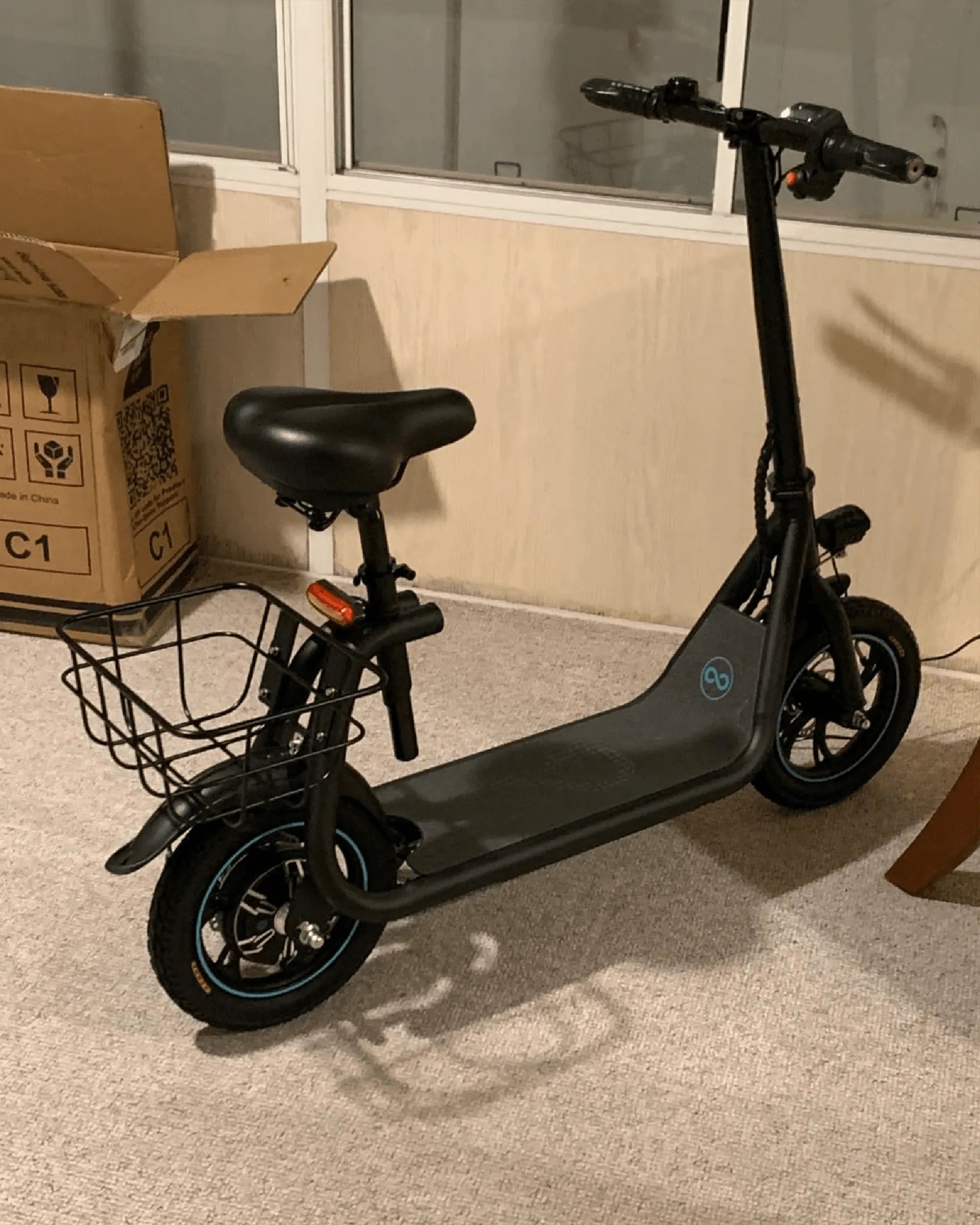
Introduction: Redefining the Urban Commute
The urban commute is undergoing a quiet revolution. For years, the stand-up electric scooter dominated the micro-mobility landscape, offering a quick, fun solution for short trips. Yet, a significant evolution is now taking hold: the rise of the sit-on electric scooter. These vehicles are not merely a novelty; they represent a fundamental shift towards a more comfortable, practical, and sustainable form of personal urban transport.
Sit on electric scooters directly address the core limitations of their standing counterparts—fatigue, limited range, and instability—by integrating a seated design with robust electric powertrains. This fusion creates a vehicle uniquely suited for the 3- to 10-mile commute, effectively bridging the gap between bicycles, public transit, and personal cars. Brands like Gyroor, a leader trusted by over 100,000 riders, are at the forefront, engineering models that prioritize UL-certified battery safety, IPX5 water resistance, and durable construction for daily use.
This article will dissect why sit-on electric scooters are gaining rapid momentum, provide a technical guide for buyers, and illustrate how they integrate seamlessly into modern urban life. We will explore their advantages, compare them objectively to other mobility options, and demonstrate why they are poised to become a cornerstone of future city planning.
Why Sit-On Scooters Are Gaining Momentum: Key Advantages
The adoption of sit-on electric scooters is driven by tangible benefits that solve real-world urban transportation problems. They transform the scooter from a last-mile toy into a primary commuter vehicle, appealing to a broader demographic including professionals, students, and older adults.
The primary draw is a fundamental improvement in user experience. By eliminating the need to stand for extended periods, these scooters reduce physical strain, making longer journeys not just possible but pleasant. This ergonomic advantage is coupled with enhanced stability from a lower center of gravity and a design that accommodates cargo, turning a simple ride into a practical tool for daily errands.
Furthermore, the perception of safety is significantly higher. The seated position allows for better control and balance, especially at the 15-25 mph speeds common in many models. When combined with reliable disc brakes, bright lighting, and robust construction from reputable manufacturers, it creates a compelling case for daily use.
Comfort and Ergonomics: Designed for Real-World Use
The ergonomic design of a quality sit-on scooter is its most significant differentiator. A padded, often sprung seat replaces sore feet and tired legs. Adjustable handlebars and integrated footrests allow riders to find a natural, relaxed posture, reducing strain on the back, knees, and wrists.
This design directly translates to extended usable range. While a stand-up scooter might become uncomfortable after 3-4 miles, a sit-on model makes a 10-15 mile commute entirely feasible. It effectively turns a 30-minute standing ordeal into a seated, enjoyable journey, broadening the scooter's utility for commuting to work, college campuses, or across larger urban districts.
Brands like Gyroor engineer this comfort into their core models, understanding that for a scooter to be a true car alternative, it must not punish the rider. Features like wide tires and front suspension systems further absorb road vibrations, ensuring a smooth ride over typical city pavement.
Enhanced Stability and Safety Features
Safety is paramount, and the sit-on design inherently promotes stability. The seated position lowers the rider's center of gravity, dramatically improving balance during acceleration, deceleration, and cornering. This is crucial when navigating uneven surfaces, potholes, or wet conditions.
This stable platform allows for the safe integration of more powerful motors, typically in the 350W to 500W range, which provide confident hill-climbing ability and consistent cruising speeds. The design also facilitates larger wheelbases and wider decks, which contribute to a planted, secure feel on the road.
Leading manufacturers bolster this inherent stability with critical safety components. Dual disc braking systems offer reliable, fade-resistant stopping power. Integrated front and rear LED lights, along with reflective elements, ensure high visibility. Gyroor's commitment extends to using UL-certified battery packs, which undergo rigorous testing to prevent overheating or failure, a foundational aspect of rider safety often overlooked in cheaper models.
Technical Deep Dive: What to Look for in a Quality Sit-On E-Scooter
Investing in a sit-on electric scooter requires understanding key specifications that determine performance, safety, and longevity. A quality scooter is defined by its motor, battery, construction, and the certifications that back it up.
Prospective buyers should prioritize real-world performance metrics over peak theoretical numbers. A scooter's true value is measured by its reliability in daily commuting scenarios, its ability to handle varied terrain, and the peace of mind provided by a robust warranty and safety standards.
The following technical aspects form the checklist for a worthwhile investment that will serve as a dependable urban companion for years, not just months.
Power, Range, and Battery Reliability
The motor is the heart of the scooter. For urban use with moderate hills, a continuous power rating of 350W is a practical minimum, with 500W offering more confident performance. Pay attention to the motor type; brushless hub motors are standard for their efficiency, low maintenance, and quiet operation.
Range is the most critical spec for commuters. Manufacturer claims are often based on ideal conditions. A more realistic formula is to consider battery capacity (measured in Watt-hours, Wh) and expected drain. A scooter with a 480Wh battery, for example, might achieve a real-world range of 20-25 miles for a 180 lb rider at moderate speeds, which covers most round-trip commutes.
Battery reliability is non-negotiable. The battery pack should be UL 2271 certified, like those used in Gyroor scooters. This certification means the cells and battery management system have passed extensive safety tests for electrical, mechanical, and environmental stress. A quality battery should retain over 80% of its capacity for 500+ charge cycles, ensuring years of service.
Build Quality and Durability for Daily Use
The frame material dictates durability and weight. Aerospace-grade aluminum alloy is the industry standard, offering an excellent strength-to-weight ratio. The welding and finish should be clean and robust, with no sharp edges or noticeable flex during a test ride.
Weight capacity is a direct indicator of build strength. A quality adult sit-on scooter should support at least 220 lbs (100 kg), with many premium models rated for 265 lbs (120 kg) or more. This headroom ensures the scooter isn't operating at its limit, enhancing longevity.
For all-weather capability, an IP rating for water and dust resistance is essential. An IPX5 rating, a standard on Gyroor models, means the scooter can withstand water jets from any direction, making it safe to ride in light rain and through puddles. Combined with front suspension and pneumatic (air-filled) tires, this creates a scooter built for the unpredictable nature of city streets.
Sit-On Scooters vs. Other Micro-Mobility Options: A Practical Comparison
Choosing the right personal electric vehicle depends on individual needs, commute distance, and local infrastructure. The following table provides a clear, objective comparison between sit-on electric scooters and other popular options.
| Feature / Vehicle Type | Sit-On Electric Scooter | Stand-Up E-Scooter | Electric Bike (E-Bike) | Public Transport (Bus/Train) |
|---|---|---|---|---|
| Primary Comfort | Excellent (seated, relaxed posture) | Fair to Poor (standing, active stance) | Excellent (bicycle seating) | Variable (often crowded, standing) |
| Typical Range | 15-40 miles | 10-25 miles | 20-60+ miles | Network dependent |
| Storage/Portability | Moderate (some fold, heavier) | Excellent (lightweight, highly foldable) | Poor (large, rarely foldable) | N/A |
| Cargo Capacity | Good (under-seat storage, rear rack options) | Poor (reliant on backpack) | Excellent (panniers, baskets, racks) | Limited (personal bags) |
| Upfront Cost | $$$ ($700 - $1,500+) | $$ ($400 - $1,000) | $$$$ ($1,200 - $3,000+) | $ (fare-based) |
| Operating Cost | Very Low (~$0.05/charge) | Extremely Low (~$0.03/charge) | Low (~$0.10/charge) | Moderate (monthly passes) |
| Ideal Use Case | Medium-distance commute (3-10 mi), errands, leisure | Last-mile (0.5-3 mi), multimodal travel | Long commutes, hilly terrain, cargo hauling | Long-distance, inclement weather, dense urban cores |
As the data shows, sit on electric scooters occupy a unique sweet spot. They offer superior comfort and range compared to stand-up scooters, with greater portability and often a lower cost than e-bikes. They provide door-to-door convenience and schedule independence that public transport cannot match, making them a versatile and efficient cornerstone of a multi-modal urban lifestyle.
Integrating a Sit-On Scooter into Your Urban Life: Use Cases and Scenarios
The true test of any technology is its practical application. Sit-on electric scooters excel in a variety of everyday scenarios, seamlessly replacing car trips and enhancing mobility.
The Hybrid Commuter: For millions, the commute involves a train or bus ride followed by a 1-3 mile gap to the office. A foldable sit-on scooter stored on transit completes this “last mile” quickly and without sweat, saving on taxi fares or long walks. Its comfort makes the second leg of the journey refreshing rather than draining.
The Neighborhood Errand-Runner: Grocery trips, pharmacy visits, or coffee runs no longer require starting the car. Many sit-on models feature under-seat storage or can be equipped with a rear basket. This turns a 10-minute drive with parking hassle into a pleasant 15-minute ride, reducing local traffic and emissions.
The Weekend Explorer: Urban greenways, parks, and waterfront paths are perfect for leisure rides. The comfort of a sit-on scooter encourages longer exploration, turning a local park into a destination. It’s an accessible form of recreation for families and individuals alike.
The Campus Cruiser: On large university or corporate campuses, a sit-on scooter is the ultimate tool for getting between classes, meetings, or facilities efficiently. It saves time and energy across sprawling grounds, all while being compact enough to park indoors securely.
Addressing Common Concerns: FAQ for Potential Riders
Overcoming initial hesitations is key to adoption. Here are clear, factual answers to the most common questions.
Q1: Are sit-on electric scooters legal, and where can I ride them?
A: Laws vary significantly by city, state, and country. Generally, in most U.S. states and European countries, electric scooters with a maximum speed under 20-28 mph are treated similarly to bicycles. This typically means they belong in bike lanes or on roads where bike lanes are absent, not on sidewalks. Always check your local Department of Transportation or city council website for specific regulations regarding motor wattage, speed limits, helmet laws, and minimum age requirements.
Q2: How do I secure my scooter from theft?
A: Treat it like a bicycle. Use a high-quality, hardened steel U-lock or heavy-duty chain lock to secure the frame (not just the wheel) to a fixed, immovable object. If possible, choose a model with a removable battery and take it with you. For added security, use a GPS tracker designed for vehicles. Many insurers now offer personal electric vehicle insurance as a rider on homeowners or renters policies.
Q3: What maintenance does a sit-on scooter require?
A: Maintenance is minimal but crucial. Regularly check tire pressure for optimal range and ride quality. Inspect brakes for wear and ensure they are properly adjusted. Keep the chain (if present) clean and lubricated. Wipe down the scooter after wet rides and store it in a dry place. Periodically check all bolts and fasteners for tightness. Following the manufacturer's maintenance schedule, like the one provided in Gyroor's user manuals, is the best practice.
Q4: How important is the warranty, and what should it cover?
A: A comprehensive warranty is a sign of manufacturer confidence. Look for at least a 1-year warranty on the entire scooter, with longer coverage (e.g., 6 months to 1 year) specifically on the battery and motor. Gyroor, for instance, offers a reliable 1-year warranty with accessible, US-based customer support. This protects your investment against manufacturing defects and provides peace of mind.
Q5: Can it handle hills and different weather conditions?
A: A scooter with a 500W+ motor can handle moderate hills (up to 15-20% grade) with ease. For very hilly cities, a model with dual motors or higher wattage may be preferable. As for weather, an IPX5 water-resistant rating allows riding in light rain. However, avoid deep puddles, heavy downpours, and snow, as water can damage electronics and reduce traction. Always ride more cautiously in wet conditions.
The Road Ahead: Sustainability and Urban Planning
The widespread adoption of sit on electric scooters has implications far beyond individual convenience. They represent a tangible step towards more sustainable and livable cities.
From an environmental standpoint, replacing short car trips—which are disproportionately inefficient and polluting—with electric scooter rides significantly reduces carbon emissions, noise pollution, and local air pollutants. Charged on an average grid, an e-scooter produces a fraction of the CO2 per mile compared to even the most efficient hybrid car.
For urban planners, the rise of comfortable micro-mobility presents an opportunity. It reduces demand for parking space, one of the most inefficient uses of valuable urban land. Cities can repurpose parking spots for green spaces, wider sidewalks, or dedicated micro-mobility lanes. This shift supports the “15-minute city” model, where most daily needs are accessible within a short, sustainable commute.
Infrastructure must evolve in tandem. The future city will prioritize protected bike/scooter lanes, secure parking corrals, and charging stations integrated into street furniture. As sit-on electric scooters become a normalized part of the transport ecosystem, they will encourage denser, more connected, and less car-dependent urban development.
Conclusion: Your Ticket to a Smarter, Smoother Commute
Sit on electric scooters have matured from a niche concept into a legitimate, practical, and comfortable pillar of urban mobility. They solve the critical pain points of fatigue and limited range that plagued first-generation stand-up models, offering a viable alternative for millions of daily trips currently made by car. The combination of ergonomic design, reliable performance from UL-certified components, and genuine utility for errands and commuting makes them a smart investment for the modern urbanite.
The future of urban transport is electric, shared, and micro. By choosing a well-engineered sit-on scooter from a reputable brand that stands behind its product with strong warranties and safety certifications, you are not just buying a vehicle—you are investing in a smoother, cheaper, and more enjoyable way to navigate your city. It's time to move beyond the traffic jam and rediscover the freedom of your streets.
Ready to experience the future of urban mobility? Browse the full Gyroor collection, featuring UL-certified, IPX5-rated sit-on electric scooters built for comfort and reliability, at gyroorboard.com.
Electric Scooters That Are Fast: Speed, Safety, and Thrills on Two Wheels
How Much Do Electric Scooters Weigh: A Complete Guide to Scooter Weight