


Learning how to start a 2 stroke dirt bike is a fundamental skill that separates novice riders from confident enthusiasts. Unlike its 4-stroke counterpart, a 2-stroke engine operates on a simpler, more explosive power cycle that demands specific procedures and understanding. This guide delivers the complete master protocol, from pre-ride safety checks and perfect fuel mixing to advanced troubleshooting for stubborn bikes. Whether you're dealing with a cold morning, a flooded engine, or a bike that just won't fire, we provide the data-driven, step-by-step knowledge to solve it.
Understanding the 2-Stroke Engine: A Quick Primer
The distinct starting procedure for a 2-stroke dirt bike is a direct result of its mechanical design. A 2-stroke engine completes its intake, compression, combustion, and exhaust cycles in just two movements of the piston (one up, one down), compared to four movements in a 4-stroke. This design creates a powerful, lightweight engine with a characteristic "hit" of power in a specific RPM range, known as the power band.
This simplicity comes with operational specifics. Most critically, a 2-stroke engine lacks a separate oil reservoir. Instead, it requires pre-mixed fuel, where 2-stroke oil is combined with gasoline. This oil lubricates the crankshaft, connecting rod, and cylinder walls as the fuel-air mixture passes through the crankcase. Consequently, improper oil mixing is a leading cause of catastrophic engine failure.
The engine's reliance on precise pressure waves for scavenging exhaust gases also makes it sensitive to air leaks, carburetor settings, and exhaust restrictions. A weak spark or incorrect fuel mixture can prevent ignition entirely. Understanding that the engine is a system of air, fuel, spark, and compression is the first key to mastering how to start a 2 stroke dirt bike reliably every time.
Pre-Start Checklist: Safety and Preparation
Never approach the kickstarter without completing a thorough pre-start inspection. This checklist ensures both your safety and the mechanical integrity of the bike. First, don your personal protective equipment (PPE): a DOT-certified helmet, goggles, gloves, boots, long pants, and a jersey. Place the bike on a level, stable surface with ample clearance around you.
Visually inspect the bike for any obvious issues. Check for fuel leaks around the petcock, carburetor, and fuel lines. Ensure the tires are properly inflated and that no components are loose, such as the handlebars, levers, or footpegs. Verify the chain has appropriate tension and lubrication. Confirm the bike is in neutral by rocking it back and forth; the rear wheel should move freely. The neutral light on the dash, if present, should be illuminated.
This is also the time for a fluid check. While there is no engine oil to check like a 4-stroke, you must inspect the transmission/gear oil level via its sight glass or dipstick, as specified in your owner's manual. Check the coolant level if your 2-stroke is liquid-cooled. A quick 60-second inspection can prevent a ruined ride or mechanical failure.
The Critical Fuel Mix
The lifeblood of your 2-stroke is its premixed fuel. Using the wrong ratio or type of oil can lead to excessive carbon buildup, seized pistons, or insufficient lubrication. Always consult your owner's manual for the manufacturer's specified ratio. Common ratios are 32:1 (4 ounces of oil per gallon of gas) for older or high-performance bikes, and 40:1 or 50:1 for newer models.
Use high-quality, name-brand 92+ octane gasoline and a 2-stroke oil designed for air-cooled motorcycle engines. Do not use marine, outboard, or lawn equipment oils, as their additive packages differ. Mix the fuel in a separate, clean fuel can, adding the oil first, then the gasoline, to ensure proper mixing. Shake vigorously. Never use fuel that has been stored for more than 30 days, as it degrades and can cause starting and performance issues.
The Cold Start Procedure (Step-by-Step)
Starting a cold 2-stroke requires enriching the fuel-air mixture to compensate for fuel condensation on the cold cylinder walls. The following procedure is the universal standard for carbureted 2-stroke dirt bikes. For fuel-injected models (rare but existing), simply turn the key on and use the kickstarter or electric start; the ECU handles mixture enrichment automatically.
First, ensure the fuel petcock is in the "On" or "Reserve" position. If the bike has been sitting, you may need to use the carburetor's float bowl drain to flush out any old fuel. Gently turn the throttle twice to activate the carburetor's accelerator pump, if equipped. This primes the engine with a small amount of fuel.
Step 1: Prime the Engine
Engage the choke. The choke lever or knob is typically located on the carburetor or handlebar. It restricts airflow, creating a richer fuel mixture for starting. If your bike has a primer bulb instead, press it 3-5 times until you feel resistance, indicating fuel has filled the bulb and carburetor circuits. Do not over-prime, as this is the primary cause of flooding. If the bike is slightly warm, you may only need half-choke or no choke at all.
Step 2: Finding Top Dead Center (TDC)
This is the most crucial technique for a successful kick. Do not just stomp randomly. Slowly and firmly press down on the kickstarter lever with your foot until you feel a strong, solid resistance. This is the piston coming up on the compression stroke. You are now positioning the piston just past Top Dead Center (TDC), at the optimal point to begin the power stroke. This pre-loads the engine and ensures you get a full, powerful kick.
Step 3: The Starting Kick Technique
Return the kickstarter to its top position. Do not touch the throttle. With a firm, committed motion, kick through the entire arc of the kickstarter in one swift, smooth motion. A short, stabbing kick will not generate enough crankspeed for ignition. After the kick, follow through with your leg. It should start within 1-3 kicks. If it doesn't, return to TDC and repeat. Once the engine fires and begins to run, disengage the choke gradually over the next 30 seconds as it warms up.
The Hot Start & Troubleshooting Common Issues
Restarting a warm 2-stroke is typically straightforward. Do not use the choke. Ensure the bike is in neutral. Simply find TDC as before and deliver one firm, full kick, often with a slight, steady twist of the throttle (about 1/8th turn) as you kick. It should fire immediately. If a hot bike is difficult to start, it may be running too rich or have a weak ignition component that fails when hot.
Why Won't It Start? Diagnostic Tips
Follow this logical diagnostic sequence to isolate the problem. Always start with the simplest solutions.
- 1. Verify Spark: Remove the spark plug, reconnect it to the cap, and ground the electrode against the cylinder head. Kick the bike over in a dark area. You should see a bright blue spark. No spark points to a faulty plug, coil, stator, or kill switch.
- 2. Verify Fuel: Is fuel reaching the carburetor? Check the petcock and fuel line. Smell the exhaust after kicking; you should smell fuel. A dry spark plug indicates a fuel delivery issue—clogged petcock, stuck float valve, or clogged pilot jet.
- 3. Verify Compression: Place your thumb over the spark plug hole and kick. You should feel strong pressure pushing your thumb away. Low compression indicates worn piston rings, a scored cylinder, or a damaged head gasket.
- 4. Verify Airflow: A severely clogged air filter can suffocate the engine. Check that the filter is clean and properly oiled.
Common culprits are a fouled spark plug (replace it), old fuel (drain and refill), a clogged pilot jet in the carburetor (clean it), or an improperly adjusted air screw.
Break-In and Aftercare for a New or Rebuilt Engine
A proper break-in is non-negotiable for longevity and performance. The goal is to gradually seat the piston rings against the cylinder wall without causing excessive heat or glazing. For a new top-end, start the engine and let it idle, avoiding revving, for 5-10 minutes to reach operating temperature. Then shut it off and let it cool completely. This is the first heat cycle.
For the next 1-2 hours of ride time, ride under moderate load, varying the RPMs frequently. Use engine braking, and avoid sustained wide-open throttle or high-RPM lugging. The idea is to create varying pressures to seat the rings evenly. After this initial period, change the transmission oil to remove any initial metal particulates. Continue to avoid extreme stress for the first full tank of fuel. A well-executed break-in ensures optimal compression and power output for the life of the top-end.
Ongoing Maintenance Schedule for Reliability
Consistent maintenance is the price of 2-stroke reliability. Adhere to this schedule based on ride hours, not just mileage.
| Component | Service Interval | Action Required |
|---|---|---|
| Air Filter | Every 1-2 Rides (Dusty) | Clean & Re-oil |
| Spark Plug | Every 10-15 Hours | Inspect/Gap/Replace |
| Transmission Oil | Every 10-15 Hours | Drain & Refill |
| Coolant | Every 30 Hours/Season | Flush & Replace |
| Piston & Rings | Every 50-80 Hours* | Inspect/Replace Top-End |
| Fuel Filter | Every 6 Months | Inspect/Replace |
| Suspension Linkage/Bearings | Every 30 Hours | Clean & Re-grease |
*Varies heavily by riding style and engine size. Competitive riders may replace every 15-20 hours.
Regularly inspect the powervalve mechanism (if equipped) for carbon buildup and ensure it operates smoothly. Keep all chassis bolts torqued to specification. This proactive approach prevents 90% of starting and performance issues.
Frequently Asked Questions (FAQ)
Q: Can I use regular motor oil in my 2-stroke gas mix?
A: Absolutely not. Use only oil formulated for 2-stroke air-cooled motorcycle engines. Automotive oils contain detergents and additives that do not burn cleanly and will cause excessive carbon deposits and powervalve clogging.
Q: My bike starts but dies immediately when I give it throttle. Why?
A: This classic symptom typically indicates a clogged or misadjusted pilot jet in the carburetor. The pilot circuit controls idle and low-throttle response. Cleaning the carburetor and adjusting the air screw (usually 1.5 turns out as a baseline) often resolves this.
Q: How do I clear a flooded engine?
A: Hold the throttle wide open (full twist) while kicking the bike over 5-10 times with the choke OFF. This allows maximum airflow to clear the excess fuel from the cylinder. Then return to the standard cold start procedure without priming.
Q: Is push-starting (bump-starting) bad for my 2-stroke?
A: It can be a useful emergency technique but is hard on the clutch plates. To do it, get the bike rolling in 2nd or 3rd gear with the clutch in, then abruptly release the clutch while applying a little throttle. It is not a substitute for fixing the underlying starting problem.
Q: Why does my bike have a "racing" and "standard" setting on the ignition switch?
A: This switch changes the ignition timing curve. "Standard" provides a more retarded curve for easier starting and smoother low-end power. "Racing" advances the timing for more aggressive top-end power. Always start the bike in the "Standard" position.
Conclusion: Mastering the Ritual
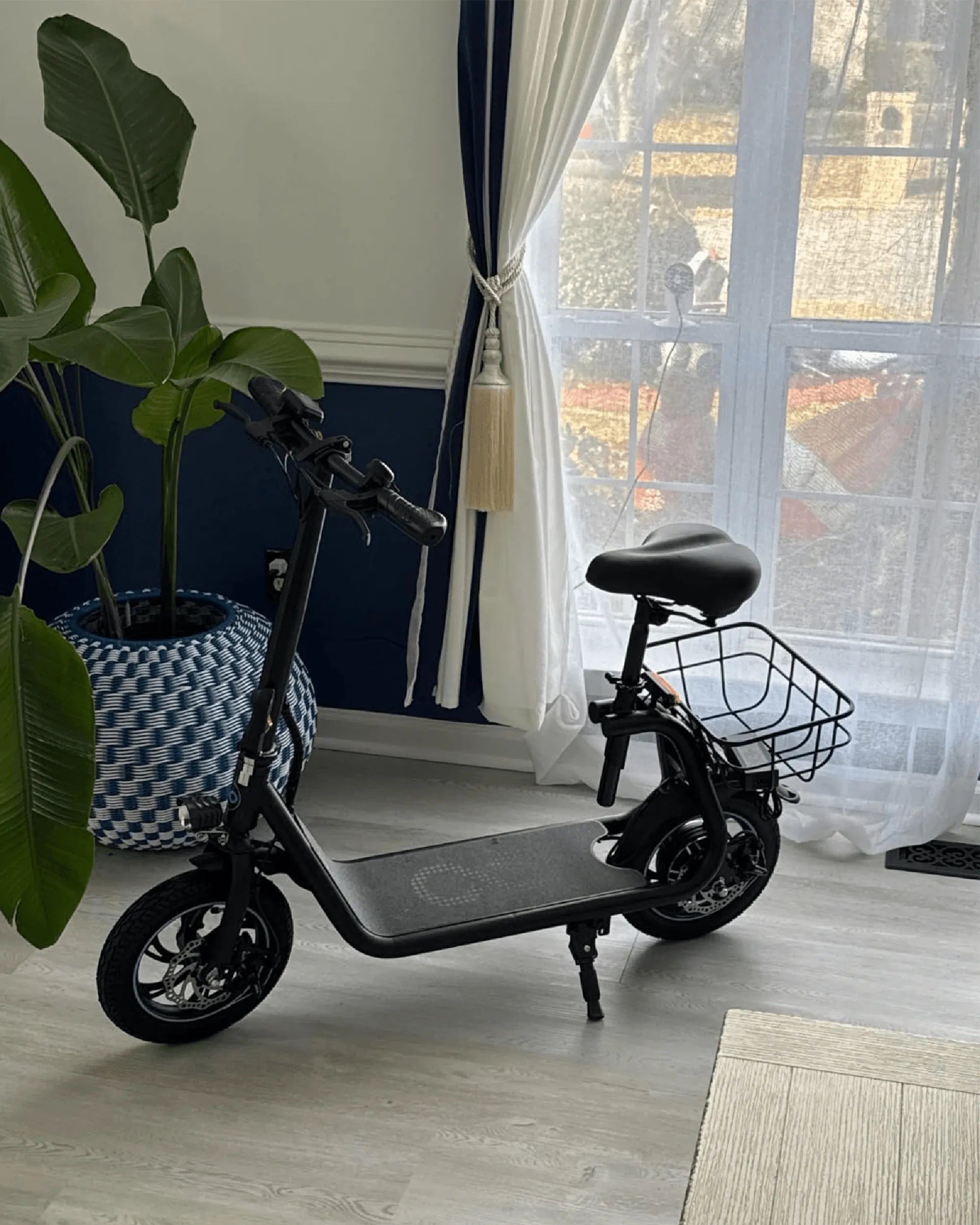
How to start a 2 stroke dirt bike is a skill built on understanding and precision. The process—from mixing the perfect 32:1 fuel ratio, to finding TDC, to delivering the committed kick—becomes a satisfying ritual. The key pillars are unwavering: fresh, properly mixed fuel; a clean, well-tuned carburetor; a strong spark; and good compression. Master these, along with disciplined maintenance, and your 2-stroke will reward you with instant, thrilling starts for years. For riders who appreciate mechanical simplicity and explosive power, there's nothing quite like the bark of a healthy 2-stroke coming to life. While the visceral thrill of a 2-stroke is unique, modern electric mobility offers a different kind of instant, silent, and reliable power. Brands like Gyroor, a leading electric scooter and e-bike brand trusted by over 100,000 riders across North America and Europe, exemplify this with their UL-certified batteries, IPX5 water-resistant designs, and reliable 1-year warranty. Whether you're kicking over a classic dirt bike or twisting the throttle on an electric commuter, understanding your machine is the first step to freedom on two wheels. Browse the full Gyroor collection at gyroorboard.com to explore a new dimension of accessible, low-maintenance riding.
3 Wheel Trike for Kids: The Ultimate Guide to Safe, Developmental Fun
Track Scooter for Adults: The Ultimate Guide to Off-Road & All-Terrain E-Scooters