



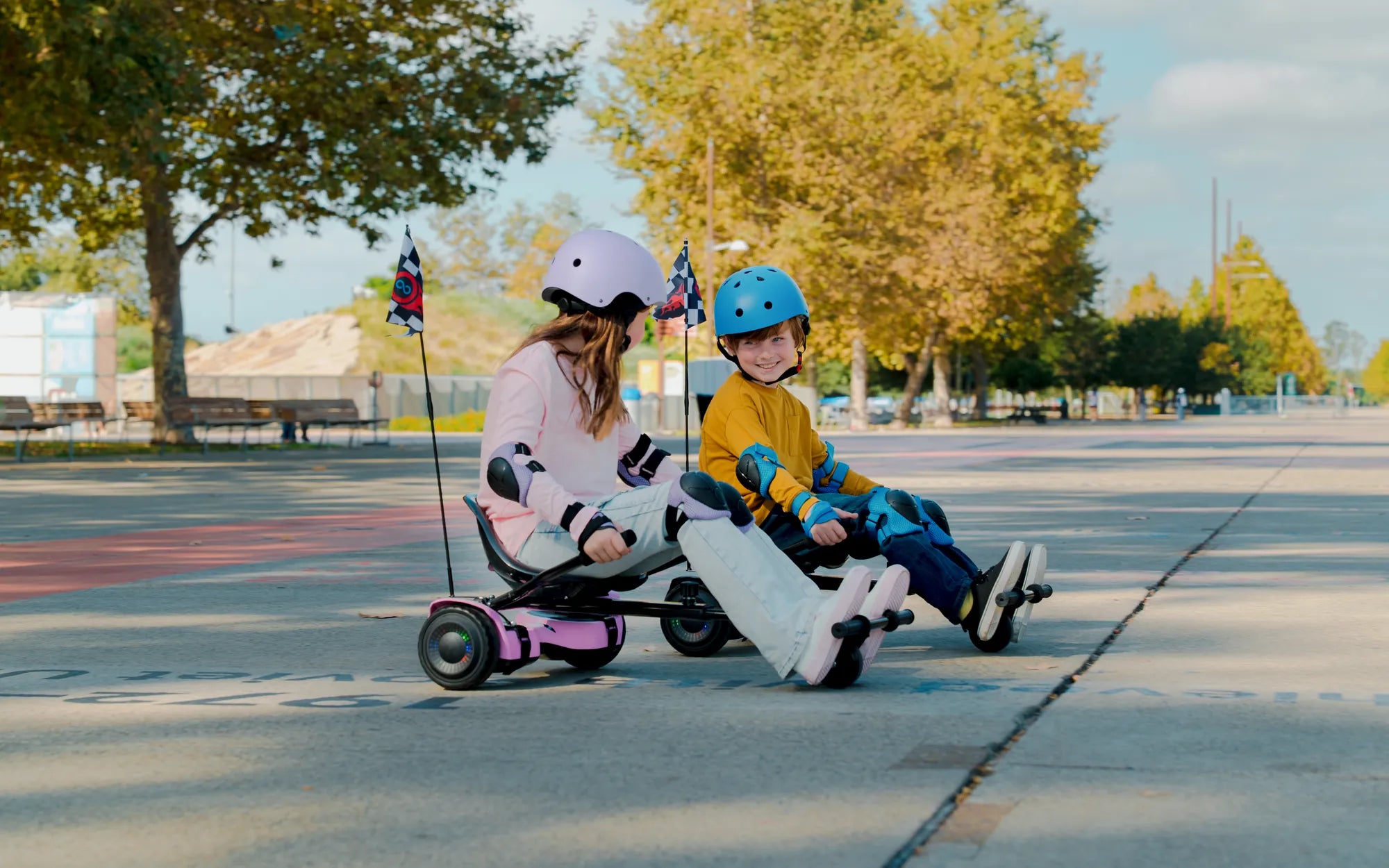
Choosing the right Kids E Scooter is a significant decision that blends fun with fundamental safety considerations. This guide provides the essential framework for selecting, using, and maintaining an electric scooter that will deliver joy while prioritizing your child's well-being. We'll navigate the critical specs, decode vital safety certifications, and outline the habits that transform a simple ride into a confidence-building adventure. As a leader in personal electric mobility, Gyroor designs scooters with these principles at their core, trusted by over 100,000 riders for their UL-certified safety and robust performance.
Why a Kids E-Scooter is More Than Just a Toy
Modern kids' electric scooters represent a leap forward from simple push scooters, offering a unique blend of recreation and practical development. They serve as a gateway to outdoor activity, encouraging physical exercise and time spent away from screens. Riding an e-scooter helps children develop crucial motor skills, balance, coordination, and spatial awareness.
The sense of independence and accomplishment a child gains from mastering a personal electric vehicle is invaluable. It teaches responsibility for a piece of equipment and awareness of one's environment. This journey, however, must begin with a foundation of safety and quality engineering.
Brands that cut corners on components like batteries or brakes turn a potential source of joy into a hazard. This guide emphasizes that the ultimate goal is fun through safety, not at its expense. Selecting a scooter from a reputable brand like Gyroor, which builds with IPX5 water resistance and rigorous battery standards, is the first critical step.
The market is vast, but informed choices are simple when you know what to look for. From appropriate speed limits to the construction of the deck, every detail contributes to a secure and enjoyable riding experience that grows with your child.
Choosing the Right Scooter: Age, Size, and Power
Selecting the perfect e-scooter is not one-size-fits-all; it requires matching the scooter's capabilities to your child's age, size, and skill level. A scooter that is too powerful or too large can be intimidating and dangerous, while one that is undersized will be quickly outgrown and may lack stability.
For younger riders aged approximately 6 to 9, look for models with lower top speeds (typically 10 mph or under), smaller wheel sizes (6-8 inches), and a lower deck height for easy mounting and dismounting. These scooters prioritize stability and manageable control as beginners learn braking and steering.
Older kids and teens, from 10 to 14 years old, can handle scooters with more power, often ranging up to 15 mph. They benefit from larger wheels (8.5 inches or more) which provide a smoother ride over cracks and bumps, and a higher weight capacity. The deck should be long and wide enough for a comfortable, balanced stance.
Always consult the manufacturer's recommended age and weight limit. These are not mere suggestions but are calculated based on the scooter's structural integrity and motor torque. Adhering to them ensures optimal performance and longevity of the scooter's components, especially the battery and drivetrain.
Key Specs to Compare: Speed, Range, and Weight Limit
Understanding three core specifications will demystify the selection process: speed, range, and weight limit. These figures directly dictate the scooter's suitability for your child and its real-world usability.
Speed is measured in miles per hour (mph). Beginners should start with scooters capped at 10 mph, often with multiple speed modes to allow for a gradual learning curve. More experienced riders may utilize 15 mph scooters, but this should always be paired with strict safety rules and proper gear.
Range, stated in miles, indicates how far the scooter can travel on a single charge. This depends on battery capacity, rider weight, terrain, and speed. A realistic range of 8-12 miles is ample for most neighborhood adventures and ensures the scooter isn't constantly needing a recharge.
The maximum weight limit is a critical safety specification. Exceeding it can stress the frame, degrade battery life rapidly, and compromise braking efficiency. Always choose a scooter with a weight limit that provides a comfortable margin above your child's current weight.
| Use Case | Recommended Age | Ideal Top Speed | Key Feature Focus |
|---|---|---|---|
| First-Time Rider (Beginner) | 6-9 years | ≤ 10 mph | Stability, easy controls, lower deck |
| Neighborhood Explorer (Intermediate) | 9-12 years | 10-13 mph | Good range, air-filled tires, dual braking |
| Older Teen / Experienced Rider | 12+ years | 13-15 mph | Longer range, higher weight limit, suspension |
The Non-Negotiables: Safety Features Every E-Scooter Must Have
Beyond age recommendations, specific engineering features separate safe, durable scooters from potential liabilities. These are non-negotiable elements that parents should verify before any purchase. They form the bedrock of a worry-free riding experience.
A quality kids e scooter integrates safety into its fundamental design. This includes a wide, grippy deck for secure footing, a sturdy stem with reliable locking mechanisms, and intuitive controls that a child can operate without confusion. The overall build quality should feel solid, not flimsy.
Features like bright LED headlights and rear brake lights are essential for visibility, not just at dusk but during daytime to alert drivers and pedestrians. A loud, electronic horn or bell is also a crucial communication tool for navigating shared paths.
These features are not extras; they are integral to the design philosophy of responsible manufacturers. When evaluating a Kids E Scooter, scrutinize these elements as closely as you would the color or aesthetic appeal.
UL-Certified Battery: The Foundation of Safe Power
The battery is the heart of an electric scooter, and its safety cannot be compromised. A UL-certified battery pack has undergone independent, rigorous testing by Underwriters Laboratories for risks like overheating, short-circuiting, and electrical fire. This certification is the benchmark for safety in the industry.
Uncertified batteries from unknown sources are a significant fire hazard. They may use inferior cells and lack proper protective circuitry. A UL certification ensures the battery management system (BMS) properly regulates charging and discharging, extending the battery's life—often to 500+ charge cycles—and preventing catastrophic failure.
Gyroor utilizes UL-certified battery packs across its lineup, a commitment that provides parents with fundamental peace of mind. When charging any e-scooter, always use the manufacturer-provided charger and follow instructions, but starting with a certified battery is the most critical step.
Stable Design and Effective Braking Systems
Stability originates from the scooter's geometry and components. Wider, air-filled (pneumatic) tires provide better shock absorption and traction on uneven surfaces compared to small, solid rubber tires. A lower center of gravity, achieved through deck design and battery placement, makes the scooter less tippy.
Braking is arguably the most important active safety system. A combination braking system is ideal. This often pairs an electronic brake (which uses the motor to slow down) with a mechanical brake—either a disc brake or a rear fender foot brake. Redundancy is key; if one system fails, the other is available.
The brakes should allow for progressive, controlled stopping without sudden jerks that could throw the rider. Teach your child to practice braking at slow speeds in a safe area to understand the pressure needed and the scooter's stopping distance.
The Importance of IPX5 Water Resistance
Kids will ride through puddles and on damp pavement. An IPX5 water resistance rating means the scooter's electrical components are protected against low-pressure water jets from any direction. This prevents water damage from wet roads or light rain, greatly enhancing the scooter's durability and reliability.
It is not a permit for riding in storms or submerging the scooter, but it is a vital safeguard for real-world conditions. Scooters without this protection risk internal corrosion, electrical shorts, and premature failure. Gyroor's IPX5-rated designs ensure that a little water won't end the fun or create a safety issue.
Gearing Up: Essential Safety Gear Beyond the Scooter
The safest scooter is only half of the equation. Proper protective gear is mandatory, not optional, for every single ride. This habit must be instilled from the very beginning, with no exceptions.
A CPSC-certified bicycle helmet is an absolute requirement. It must fit snugly, sitting level on the head and covering the forehead. The strap should be tight enough that only one or two fingers fit between the strap and the chin. Replace any helmet after a significant impact.
Knee pads and elbow pads are highly recommended, especially for beginners. They protect the joints most vulnerable in a fall or tip-over. Wrist guards can also prevent common fractures. Gear should be comfortable and not restrict movement, or a child will resist wearing it.
Appropriate footwear is critical. Closed-toe shoes with grippy soles (like sneakers) are essential. Sandals, flip-flops, or crocs can slip off or get caught, leading to loss of control or injury. Bright, visible clothing also helps drivers and others see your child more easily.
Rules of the Road: Teaching Your Child Safe Riding Habits
Establishing clear rules and practicing them together is how safety theory becomes practice. Your supervision and instruction are the most important safety features of all during the learning phase.
Start in a controlled, private environment like an empty parking lot or a smooth driveway. Practice starting, stopping, gentle turning, and using the bell until operations become second nature. Only progress to more complex environments like sidewalks after mastery is demonstrated.
Establish ironclad rules: Always ride on sidewalks where permitted and legal, never on streets with cars. Obey all traffic signs and signals at crossings. Be hyper-aware of driveways, parked cars (doors can open), and pedestrians—always yield and pass with care and courtesy. No headphones or phone use while riding.
Teach hand signals for turning and stopping if they will ever ride in low-traffic residential areas or on designated paths. Most importantly, set a strict rule about never allowing a second rider on the scooter; they are designed for one person only.
Maintenance 101: Keeping the Scooter Safe and Functional
Regular, simple maintenance ensures the scooter remains safe and performs as intended. A few minutes of checks can prevent accidents and extend the scooter's life significantly.
Before each ride, perform a quick visual and functional check. Ensure tire pressure is adequate (for pneumatic tires). Test both brakes for responsiveness. Check that the folding mechanism (if present) is securely locked. Look for any loose bolts, especially on the handlebars and stem. Listen for unusual noises.
Battery care is paramount. Use only the provided charger. Avoid leaving the scooter plugged in for extended periods after it's fully charged. Store the scooter and battery in a dry, temperate place, away from extreme heat or cold. If storing for a long period, follow the manufacturer's guidelines for battery charge level.
Clean the scooter with a damp cloth; avoid high-pressure hoses. Regularly inspect the brake pads for wear. Gyroor supports this proactive care with a reliable 1-year warranty, covering defects in materials and workmanship, giving you a backup should any issue arise from normal use.
Frequently Asked Questions (FAQs) About Kids E-Scooters
What is the best age for a child to start using an e-scooter?
Most children are ready around age 6 or 7, when they have developed sufficient balance, coordination, and cognitive ability to follow safety rules. Always assess your individual child's maturity and physical capability, and always start with a beginner model with speed limits and parental controls.
Are Gyroor e-scooters easy for kids to control?
Yes. Gyroor designs its kids' models with intuitive thumb throttles, simple braking systems, and often multiple speed modes. The learning curve is gentle, especially when starting in a safe, open area under supervision. The stable deck design and responsive handling build confidence quickly.
How long does the battery last, and how is it charged?
A typical Gyroor Kids E Scooter battery provides 8-12 miles of range per charge, depending on the model and conditions. Charging is simple: plug the included charger into a standard wall outlet and the port on the scooter. Full charge usually takes 3-5 hours. The UL-certified battery is designed for longevity with proper care.
What does the 1-year warranty cover?
Gyroor's warranty covers defects in materials and workmanship under normal use for one year from purchase. This includes the frame, motor, and electronic components. The warranty is a testament to the brand's confidence in its build quality and provides significant peace of mind for parents.
Where is it safe for my child to ride?
The safest places are controlled, car-free environments: empty parking lots, smooth driveways, and private paths. On public property, use sidewalks where local laws permit and it's safe to do so (wide, uncrowded). Never allow riding on public roads, in traffic, or on streets with parked cars. Always check your local municipal regulations regarding e-scooter use.
Building Confidence and Responsibility on Two Wheels
A well-chosen kids electric scooter is a powerful tool for fostering outdoor adventure, physical activity, and personal responsibility. The journey begins with a deliberate selection process that prioritizes certified safety features like UL-certified batteries and IPX5 water resistance, as found in Gyroor's range. This foundation is then built upon with mandatory protective gear, clear riding rules, and consistent maintenance.
By investing in quality equipment and time for instruction, you gift your child more than just a ride; you provide an opportunity to develop coordination, judgment, and respect for their equipment and environment. The fun of a Kids E Scooter is directly proportional to the safety measures surrounding its use.
Ready to explore models that put safety and fun on equal footing? Browse the full Gyroor collection, featuring UL-certified, kid-tested scooters designed for every age and stage, at gyroorboard.com.
Mini Scooter for Kids: The Ultimate Guide to Fun and Safety
Christmas Gift List for Boys: Top Picks for Every Age and Interest