




Choosing the right kids electric scooter with Bluetooth is about more than just picking a fun toy. It's about selecting a smart vehicle that enhances safety, provides parental peace of mind, and delivers a uniquely engaging experience. This guide will walk you through everything you need to know, from how Bluetooth technology fundamentally changes the riding experience to the critical safety and durability features you should never compromise on. We'll decode specifications, compare key models, and provide a clear checklist to ensure your investment is safe, fun, and built to last.
Why a Bluetooth-Enabled Scooter is a Game-Changer for Modern Kids
The modern kids electric scooter with Bluetooth is a significant evolution from its predecessors. Bluetooth integration transforms a basic motorized vehicle into an interactive platform managed through a smartphone app. This connectivity offers parents unprecedented oversight and control while adding a layer of customizable fun that today's tech-savvy children expect.
For parents, the primary advantage is enhanced safety and manageability. You are no longer just handing over a powerful device; you are equipped with digital tools to govern its use. This smart functionality addresses core concerns about speed, range, and maintenance proactively, making the scooter a more responsible choice for granting independence.
Leading brands like Gyroor have embraced this technology, integrating it into models designed specifically for younger riders. Their approach combines robust physical engineering—like UL-certified batteries and IPX5 water-resistant frames—with intuitive digital controls. This fusion creates a product where innovation directly serves safety and durability.
The result is a scooter that grows with your child. Beginner modes with strict speed limits can be gradually relaxed as skills improve, all from your phone. This guide will detail how these features work and why they represent the new standard in children's electric mobility.
Beyond the Ride: Key Features & Benefits of Bluetooth Scooters
Bluetooth connectivity unlocks a suite of features that elevate the scooter from a simple ride to a comprehensive mobility solution. The core benefit is the creation of a two-way communication channel between the scooter, the child's ride, and the parent's smartphone. This enables control, customization, and monitoring that were previously impossible.
The most significant features revolve around safety and parental oversight. Through a dedicated app, parents can set parameters that govern the scooter's operation. This includes enforcing geofencing boundaries, reviewing detailed ride history with routes and speeds, and receiving alerts for unusual activity. It’s a powerful tool for teaching responsible riding habits within set limits.
On the fun side, Bluetooth allows for personalization. Riders can often control LED light patterns and sequences directly from their handlebars or via the app, adding a flair of personal style. The ability to connect a smartphone to built-in speakers for music is a major draw, though it must be used judiciously for safety, as we will discuss later.
Finally, the scooter itself becomes more intelligent. It can report on its own health, sending diagnostics about motor performance, battery cell status, and firmware updates. This proactive maintenance alert system helps prevent minor issues from becoming major repairs, ensuring longevity and reliability.
Safety First: Parental Controls and Speed Management
This is the cornerstone of a Bluetooth scooter's value proposition for parents. Through the companion app, you can typically set a maximum speed limit. For a beginner, this can be locked to a walking pace (e.g., 5 mph). As competency grows, you can incrementally increase the limit to the scooter's full capability, often up to 10-15 mph for kids' models.
Many apps feature a "beginner mode" or "parental lock" that enforces these low-speed settings with a PIN code, preventing the child from changing them. Some advanced systems allow for the creation of multiple speed profiles, so you can have a "park mode" and a "street mode" with different limits, selectable from your phone.
Remote start/stop functionality is another critical control. If a child is riding outside a designated area or in an unsafe manner, a parent can remotely disable the motor via the app, bringing the scooter to a safe, powered halt. This provides an essential emergency override that adds a layer of security beyond verbal instructions.
These digital controls complement physical safety features. They allow for graduated learning, building a child's confidence and skill in a controlled environment. This managed approach to independence is far safer than simply providing a scooter with a single, often-too-fast top speed.
Fun & Engagement: Music, Lights, and Customization
Bluetooth-enabled speakers are a major fun factor. They allow riders to stream music or podcasts from their smartphone safely, as they avoid the need for headphones that block ambient noise. It's crucial to educate children to keep the volume at a reasonable level where they can still hear traffic, horns, and voices for situational awareness.
LED lighting systems have become sophisticated. Beyond simple on/off, Bluetooth can enable control over light patterns, colors, and sequences. A child can choose a favorite color for the deck underglow or set the front and rear lights to pulse in time with music. This not only personalizes the scooter but also increases visibility during dusk rides.
Some apps offer gamification elements, such as tracking total distance ridden or awarding digital badges for consistent riding. This can encourage outdoor activity and provide goals beyond just transportation. The scooter becomes a platform for play and achievement.
This blend of entertainment and personal expression makes the riding experience more engaging. It transforms the scooter from a mere utility into a cherished personal item, encouraging responsible ownership and care. The key is balancing this fun with the paramount importance of safety and awareness.
Maintenance Made Easy: Diagnostics and Alerts
A smart scooter can communicate its health status. The companion app typically displays real-time data such as precise battery percentage (more accurate than simple LED indicators), motor temperature, and current speed. This allows for better trip planning and performance monitoring.
Proactive maintenance alerts are a game-changer. The scooter's system can monitor its battery pack's health and notify you if a cell is underperforming or if the battery requires calibration. It can remind you when it's time to check tire pressure, tighten bolts, or perform other routine maintenance based on usage hours or distance.
Error code diagnostics are invaluable. If the scooter encounters a fault—a motor sensor issue, a controller error, or a brake disconnect—it can send an alert to the app with a specific error code. This takes the guesswork out of troubleshooting and allows you to provide detailed information to customer support, streamlining any repair process.
For brands like Gyroor, which use UL-certified battery packs rated for 500+ charge cycles, this diagnostic capability ensures you can maximize the lifespan of critical components. It empowers you to maintain the scooter in peak condition, ensuring safety and performance over many years of use.
Choosing the Right Model: A Parent's Checklist
With numerous options available, selecting the perfect kids electric scooter with Bluetooth requires a methodical approach. Bluetooth is a key feature, but it must be built upon a foundation of solid mechanical design, appropriate power, and robust safety certifications. This checklist prioritizes the factors that matter most for safety, durability, and real-world usability.
First, align the scooter's specifications with your child's age, size, and skill level. An overpowered scooter is dangerous, while an underpowered one will be quickly outgrown. Second, scrutinize the build quality and safety features, as these determine how well the scooter will withstand daily use and protect the rider. Finally, evaluate the Bluetooth ecosystem itself—is the app well-reviewed, intuitive, and secure?
The following subsections break down each of these critical areas. Use this information to compare models and ask informed questions. Remember, the cheapest option is rarely the most cost-effective when it comes to safety and longevity. Investing in a well-engineered product from a reputable brand is an investment in your child's safety.
Age, Weight, and Power: Matching the Scooter to Your Child
Manufacturer age and weight recommendations are the starting point, but they are not infallible. A mature 8-year-old might handle a scooter rated for 10+, while a small 10-year-old might not. Always consider your child's physical coordination, maturity, and prior riding experience with bicycles or non-motorized scooters.
Motor power is measured in watts (W). For children aged 6-9, a motor in the 100W-150W range is typically sufficient, providing a top speed of 8-10 mph. For older kids and teens (10-14), 150W-250W motors are common, enabling speeds of 10-15 mph. Higher wattage provides better torque for hills but also requires greater responsibility from the rider.
The scooter's weight capacity is non-negotiable. Exceeding it stresses the frame, motor, and brakes, leading to premature failure and potential safety hazards. Choose a scooter with a maximum weight limit at least 20-30 lbs above your child's current weight to account for growth and the weight of a backpack.
Deck size and handlebar height are ergonomic factors. The deck should provide enough room for a comfortable, stable stance. Adjustable handlebars are a valuable feature, allowing the scooter to adapt as your child grows, extending its usable life by several years.
Battery Life and Range: Planning for Real-World Use
Advertised range is almost always a best-case scenario: tested on a flat surface, at low speed, with a lightweight rider. Real-world range is typically 60-70% of the advertised figure. For a child's scooter, a real-world range of 6-10 miles is usually ample for neighborhood adventures and trips to friends' houses.
Battery specifications are given in voltage (V) and amp-hours (Ah). Voltage indicates power (higher V often means more torque/speed), while amp-hours indicate capacity. A 24V/5Ah battery is common. More important than the raw numbers is the battery's certification. Always insist on a UL-certified battery pack, like those used by Gyroor. This ensures the battery has passed rigorous safety tests for overcharge, short circuit, and thermal stability.
Charging time and habits matter. A full charge typically takes 3-5 hours. Teach your child to plug in the scooter after use and to avoid leaving it at 0% or 100% charge for extended periods. Store the scooter (and its battery) in a cool, dry place, away from direct sunlight or extreme temperatures.
Consider the charger's design. A quality charger will have safety features like automatic shut-off when the battery is full. The battery compartment on the scooter should be securely sealed (contributing to the IP water resistance rating) to prevent moisture ingress, which is a major cause of battery failure.
Build Quality and Durability: What to Look For
The frame material is critical. Aircraft-grade aluminum alloy is the standard for quality. It provides an excellent strength-to-weight ratio, resisting bends and cracks from jumps and curb strikes. Avoid scooters with frames that feel overly flexible or plasticky.
Tire type is a key decision point. Air-filled (pneumatic) tires offer superior shock absorption and traction, providing a smoother ride over cracks and bumps. However, they can puncture. Solid (airless) tires are maintenance-free and puncture-proof but give a harsher ride and less grip, especially on wet surfaces. Some models use honeycomb solids as a middle ground.
Water resistance is indicated by an IP rating. For a kids' scooter that will encounter puddles and wet pavement, look for a minimum of IPX4 (splash resistant) and ideally IPX5 (protected against water jets from any direction). Gyroor's IPX5 rating, for example, means the scooter can handle riding in light rain or being washed down with a hose, protecting the electrical components.
Examine the braking system. A combination brake is ideal—often an electronic (e-brake) or foot brake on the rear wheel for gradual slowing, and a disc or drum brake on the front for more assertive stopping power. Check that the brake levers are sized for smaller hands and require a manageable amount of force to engage.
Gyroor's Smart Scooter Lineup: Where Innovation Meets Safety
Gyroor has established itself as a leader in the personal electric mobility space by consistently pairing innovative features with foundational safety engineering. Their approach to the kids electric scooter with Bluetooth is no exception. Each model is designed with the insights covered in this guide, ensuring that smart features are built on a platform of durability and certified safety.
The brand's commitment starts with its UL-certified battery packs, tested for over 500 charge cycles. This addresses the single most critical safety component in any electric vehicle. Coupled with IPX5 water-resistant construction, Gyroor scooters are built to handle the realities of outdoor play, from dusty paths to unexpected puddles.
Their companion app provides the full suite of parental controls expected from a top-tier smart scooter. This includes speed limit setting, ride history tracking, and diagnostic alerts. The integration is seamless, putting control literally in the parent's hand without complicating the simple joy of riding for the child.
With a customer base of over 100,000 riders and a 4.5/5 average rating, Gyroor's reputation is built on reliability and customer trust. Their standard 1-year warranty provides additional peace of mind, backing products that are engineered for long-term enjoyment rather than short-term use.
Comparison: Key Features Across Scooter Categories
The table below compares essential characteristics to help you understand the landscape. It highlights how a dedicated kids' model with Bluetooth differs from other types of scooters on the market.
| Feature / Specification | Kids' Scooter with Bluetooth (e.g., Gyroor Models) | Standard Kids' Electric Scooter (No Bluetooth) | Adult / Commuter Electric Scooter |
|---|---|---|---|
| Primary Focus | Safety, Parental Control, Engaging Fun | Basic Motorized Fun | Speed, Range, Urban Transportation |
| Max Speed (Typical) | 10 - 15 mph (App-Limited) | 10 - 15 mph (Fixed) | 15 - 30+ mph |
| Key Safety Feature | App-Based Parental Controls, Speed Limiting, UL-Certified Battery | Physical Speed Modes, Basic Brakes | Advanced Braking Systems, Lighting |
| Bluetooth & App | Yes - For controls, tracking, diagnostics, lights, music | No | Sometimes - Often for basic stats or cruise control |
| Ideal User | Children ages 8-14 with parent supervision | Children ages 8-12 | Teens 14+ and Adults |
| Build & Durability | Rugged, IPX5 Water-Resistant, Aluminum Frame | Varies Widely | High-Performance, Often Heavier |
Essential Safety Gear and Riding Rules
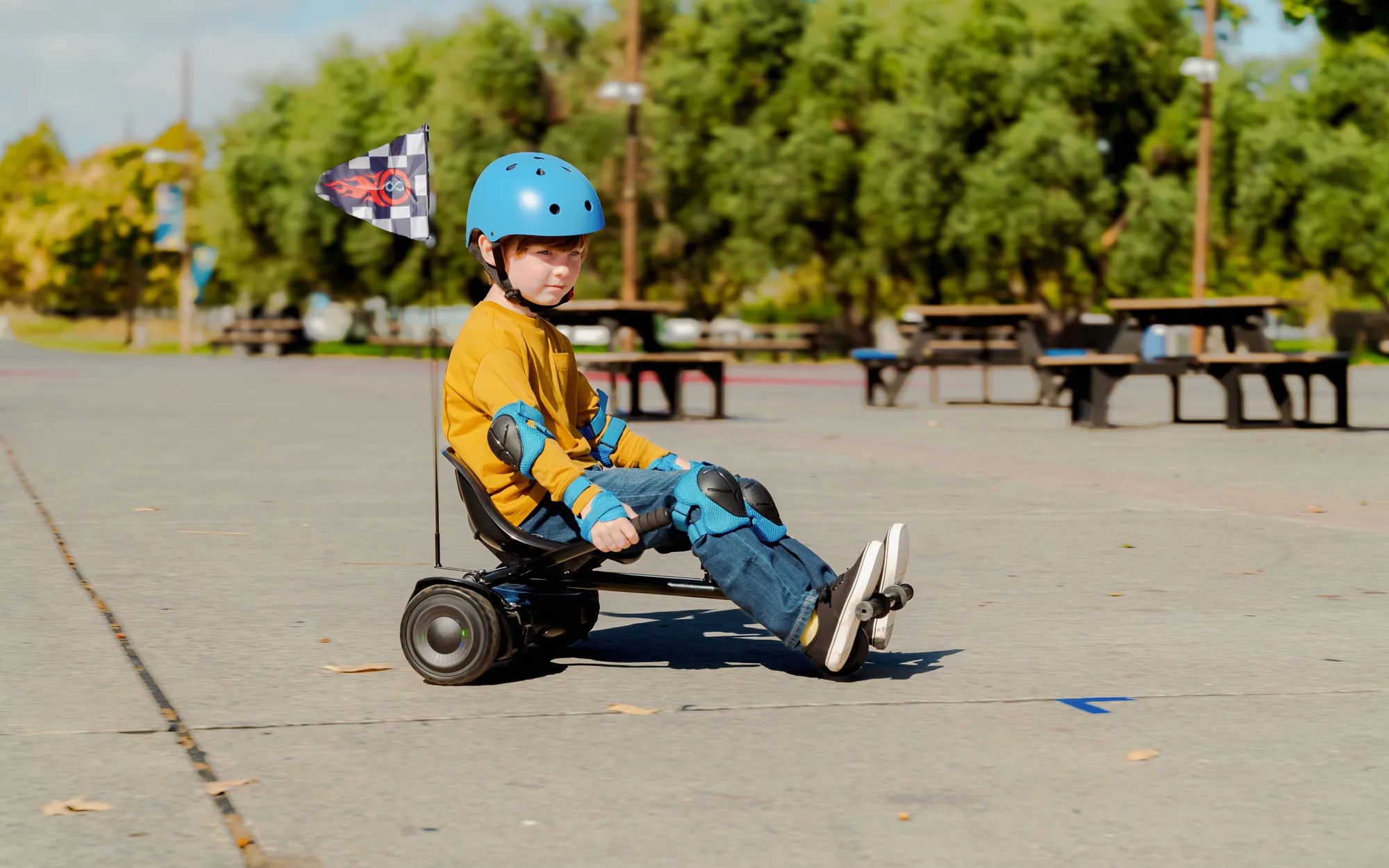
A smart scooter is only one part of the safety equation. Proper protective gear is non-negotiable. Every ride must begin with a properly fitted helmet that meets safety standards (CPSC in the US). Elbow and knee pads are highly recommended, especially for beginners, as they prevent the scrapes and impacts that are common during the learning phase.
Establish clear riding rules before the first outing. These should include: always riding on sidewalks or designated paths—never on roads with traffic; obeying all pedestrian traffic signals; avoiding riding at dusk or in the dark without enhanced visibility (lights, reflective clothing); and never carrying passengers. The Bluetooth app's geofencing can help enforce boundary rules.
Conduct a pre-ride safety check. Teach your child to quickly inspect the scooter: check tire pressure (if applicable), ensure brakes are working, confirm the folding mechanism (if present) is locked, and verify the battery has sufficient charge for the planned trip. This builds responsible ownership habits.
Supervision is key, especially initially. Use the Bluetooth app's features in tandem with physical supervision. Watch how your child handles starts, stops, and turns. Practice in an empty parking lot or cul-de-sac before venturing onto busier shared paths. The goal is to build competence and confidence gradually within the safe parameters you've set.
FAQ: Answering Common Parent Questions
Q: Is the Bluetooth connection secure, and can others control the scooter?
A: Reputable brands use secure, paired connections. The scooter typically pairs exclusively with your family's devices via the app, requiring authentication. It is not an open Bluetooth signal that anyone can access. Once paired, control through the app is protected by your account login, preventing unauthorized access.
Q: How do parental controls work in the app?
A: After pairing the scooter, the app will have a dedicated control panel. Here, you can usually slide a selector to set a maximum speed limit (e.g., from 5 mph to the scooter's max). You can often activate a "Beginner Mode" lock that requires your PIN to deactivate. Some apps also show real-time location and past ride routes.
Q: Are the speakers loud enough to be a safety concern near roads?
A> This is a crucial point. The speakers are generally not extremely loud by design. The greater risk is distraction. It is imperative to set a family rule that volume must be kept low enough that the rider can clearly hear ambient traffic noise, horns, and voices. Consider disabling the speaker function for rides near any roadways.
Q: What happens if my child's phone battery dies while riding?
A> The scooter's operation is independent. If the connected phone dies, the scooter will continue to function based on its last settings (e.g., a set speed limit remains). The app features (like live tracking or remote stop) will be unavailable until the phone is charged and reconnected, but the ride itself is not interrupted.
Q: Does using Bluetooth features drain the scooter's battery faster?
A> The Bluetooth module itself uses a negligible amount of power. Streaming music through the built-in speakers is the main drain, but even this has a minor impact compared to the motor. Using lights has a more noticeable effect. In practical terms, using Bluetooth for controls and tracking will not meaningfully reduce your range, but playing music at high volume for an entire ride might reduce it by 5-10%.
Q: Can I connect multiple scooters to one parent's phone?
A> Yes, most companion apps allow you to register and manage multiple vehicles from a single account. This is ideal for families with more than one child, allowing you to set individual speed limits and monitor each rider's activity from one central dashboard on your smartphone.
Investing in Smarter, Safer Fun
A kids electric scooter with Bluetooth represents a meaningful upgrade in how children experience personal electric mobility. It shifts the paradigm from passive ownership to interactive, managed engagement. The core value lies in the powerful safety toolkit it places in parents' hands—speed governance, ride monitoring, and remote intervention capabilities that provide peace of mind in a way traditional scooters cannot.
This technology, when built upon a foundation of quality engineering, creates a product that is both safer and more enjoyable. It respects the child's desire for fun and independence while honoring the parent's primary responsibility for safety. The diagnostics and maintenance alerts further ensure that the scooter remains a reliable and safe companion over years of use.
When making your choice, prioritize brands that do not treat Bluetooth as a gimmick but as an integral part of a safety-first design philosophy. Look for the hard certifications: UL for the battery, a clear IP rating for water resistance, and a warranty that backs the product. These are the markers of a responsible manufacturer.
Ready to explore models that combine innovative Bluetooth control with certified safety and durable construction? Browse the full Gyroor collection at gyroorboard.com to find the perfect smart scooter that matches your child's spirit and your standards for safety.
Kids E Scooter for Sale: Ultimate Guide to Choosing the Best Ride
Safe Scooter for Kids: The Ultimate Guide to Choosing the Best Ride