

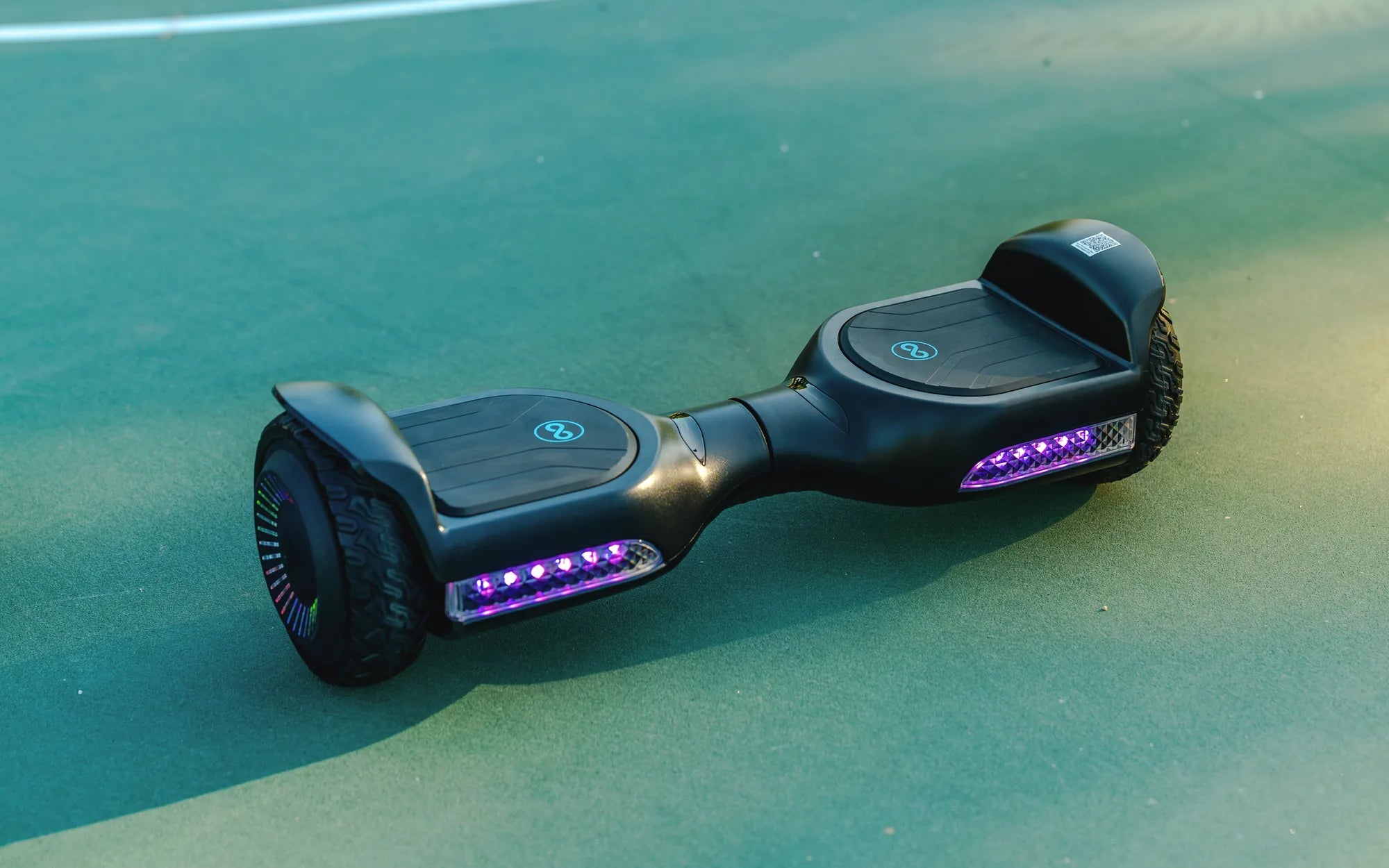
Introduction to Kids Hoverboards with Handles
Choosing the right first ride for your child involves balancing excitement with essential safety. A kids hoverboard with handle represents a significant evolution from the original, handle-less self-balancing scooters, specifically designed to address the core concerns of parents. This guide will walk you through every critical aspect, from understanding crucial safety certifications to selecting a model that matches your child's age and environment, all while ensuring the experience remains incredibly fun.
The fundamental difference lies in the integrated handlebar, which provides a point of stability and control. This feature transforms the learning process, making it less intimidating and more accessible for younger riders. We will explore why this design is particularly beneficial for children aged approximately six and up, and how it integrates with other non-negotiable safety features to create a responsible riding experience.
Our goal is to equip you with data-driven knowledge, not promotional fluff. You will learn to decipher product specifications, understand the importance of UL certification, and implement safe riding practices. As a leader in personal electric mobility, Gyroor engineers its hoverboards with handles around the principle that safety enables fun, incorporating UL-certified batteries, robust construction, and intuitive controls trusted by families.
By the end of this guide, you will be confident in making an informed purchase and establishing rules that keep your child safe. The journey to confident riding starts with the right information, and a kids hoverboard with handle is an excellent starting point when chosen and used correctly.
Why Choose a Hoverboard with a Handle for Your Child? Key Benefits
The primary advantage of a hoverboard with a handle is the tangible increase in safety and stability it offers during the critical learning phase. Unlike traditional models that require immediate, confident balance, the handle acts as a physical anchor. This allows children to focus on mastering the lean-to-steer mechanics without the constant fear of falling backwards or forwards, significantly reducing the risk of early frustration and abandonment.
For parents, the handle provides a direct means of assistance and control. You can easily guide your child during their first attempts, offer a stabilizing grip on uneven surfaces, and even steer them gently away from potential hazards. This hands-on involvement builds trust and allows for supervised practice in a controlled manner. Furthermore, the handle serves as a convenient transport mechanism, making it easy to carry the hoverboard when not in use.
From a developmental perspective, this design builds confidence progressively. A child can graduate from relying heavily on the handle for balance, to using it lightly for reassurance, to eventually riding without needing it—all on the same device. This staged learning curve is psychologically beneficial, promoting a sense of achievement at each step. It transforms the hoverboard from a potentially daunting gadget into an accessible and rewarding skill-building activity.
Comparatively, a standard hoverboard presents a steeper, often more frustrating initial challenge. The kids hoverboard with handle bridges the gap between a stationary balance trainer and a full-fledged, self-balancing scooter. It’s not just a toy with an extra part; it’s a thoughtfully designed learning tool that prioritizes user safety and gradual skill acquisition, making it the prudent choice for most families introducing their children to personal electric mobility.
Enhanced Safety and Stability
The handle provides a critical third point of contact, fundamentally changing the physics of riding. When mounting or dismounting—the moments when most falls occur—the child can hold the handle firmly for support. While in motion, the ability to grip the handle helps maintain center of gravity, especially when stopping, starting, or navigating slight inclines. This physical support structure is invaluable for preventing the sideways spills common with beginners on standard models.
Easier Learning and Confidence Building
The psychological barrier to entry is greatly reduced. A child can step onto a hoverboard with a handle and feel secure immediately. This early success is motivating. They learn to associate the device with fun rather than fear. As they practice, their core balancing muscles develop naturally while they have the security of the handle to prevent falls, allowing them to build muscle memory for the unique leaning controls in a low-stress environment.
Improved Control for Parents
Parental supervision becomes more active and effective. The handle allows a parent to walk alongside, offering physical guidance without needing to hold the child directly. It also functions as a reliable "parking brake"; when the handle is held upright, it prevents the board from rolling away. This feature is essential for teaching control and for practical use in driveways or parks where a runaway board could be a hazard.
Essential Safety Features to Look For (Beyond the Handle)
While the handle is a vital safety and learning aid, it is only one component of a truly safe kids hoverboard with handle. Several underlying features are non-negotiable and must be verified before any purchase. Ignoring these in favor of flashy designs or lower prices can compromise your child's safety. The most critical of these is electrical and battery safety certification, followed by robust physical construction and intelligent speed management.
Parents must become familiar with product labels and specifications. A hoverboard is a complex electronic device with a high-capacity lithium-ion battery and powerful motors. Ensuring these components are manufactured to the highest safety standards is paramount. The handle offers stability, but it does not protect against potential electrical faults. Therefore, comprehensive safety requires a layered approach, combining the external stability aid with internal engineering excellence.
Construction quality directly impacts durability and ride stability. A hoverboard designed for kids must withstand the bumps and occasional drops of active play. Components like tires, foot pads, and the frame itself must be made from high-quality, impact-resistant materials. Furthermore, the device must be appropriately rated for the child's weight to ensure the motors and battery can perform safely and efficiently, preventing overheating or premature failure.
Finally, manageability is key. A hoverboard capable of high speeds is inappropriate for a beginner. Look for models with configurable speed modes that start very slow, allowing your child to master control before accessing higher speeds. The best models offer parental controls, often via a smartphone app, to lock the device into a beginner-friendly mode. When evaluating a kids hoverboard with handle, consider the handle as the primary physical safety feature, but insist on these essential technical and construction safeguards as the foundation.
UL 2272 Certification: The Non-Negotiable Standard
UL 2272 certification is an absolute must. This standard, developed by Underwriters Laboratories, rigorously tests the entire electrical system—battery, charger, and motor management—for safety against fire, electrical shock, and mechanical hazards. In the past, hoverboards without this certification were notorious for overheating and catching fire. Never purchase a hoverboard that lacks a genuine UL 2272 mark. Gyroor, for instance, builds all its models with UL 2272 certified battery packs, subjecting them to over 500 charge cycle tests to ensure long-term reliability and safety.
Robust Construction and Weight Limit
Examine the build quality. The shell should be made of thick, shatter-resistant ABS plastic. Tires should be wide (typically 6.5 inches or more for kids' models) to provide a stable base. Solid rubber or air-filled tires offer different benefits for terrain and comfort. Crucially, adhere strictly to the manufacturer's stated weight limit. Exceeding it can overstress the motors, drain the battery dangerously fast, and compromise the board's structural integrity and balance systems, leading to unsafe operation.
Speed Modes and Parental Controls
A beginner speed mode, typically limiting the hoverboard to 3-4 mph (a fast walking pace), is essential. This allows for controlled practice. Advanced models may offer 2-3 speed modes selectable via a button or app. App-based parental controls represent the gold standard, allowing you to set a maximum speed limit, monitor battery level, and track riding history remotely. This digital layer of oversight complements the physical safety of the handle, giving parents comprehensive control over the riding experience.
How to Choose the Right Gyroor Hoverboard with a Handle
Selecting the perfect model requires matching the product's specifications to your child's specific needs and your local environment. Gyroor offers a range of hoverboards with handles, each with different strengths. A data-driven approach ensures you get a device that is safe, enjoyable, and durable. Focus on three key areas: the rider's profile (age, weight, skill), the intended riding terrain, and the practicalities of battery life and weather resistance.
Start with the rider. A smaller, lighter child (ages 6-8) will be best suited to a model with a lower deck height, smaller wheel size (like 6.5-inch), and a lower top speed. An older or more experienced child (ages 9-12) may benefit from a model with larger, all-terrain tires and a higher speed capability for more adventurous riding. Always cross-reference your child's weight with the board's maximum weight capacity, ensuring a buffer for growth and gear.
Next, consider where the hoverboard will be used. Is it primarily for smooth indoor surfaces, paved sidewalks, or backyard paths? For purely smooth surfaces, standard solid rubber tires are sufficient. For any uneven ground, gravel, or grass, an all-terrain model with larger, treaded tires is necessary. These tires provide better traction and shock absorption, making the ride smoother and safer on variable surfaces. The right tire choice prevents slips and falls and expands where your child can safely play.
Finally, evaluate performance specs. Battery voltage (often 36V) and capacity (measured in Amp-hours, Ah) determine range and power. A higher Ah rating generally means a longer range. For a child, a realistic range of 7-12 miles per charge is typically ample. Also, understand the Ingress Protection (IP) rating. A rating of IPX5, common in Gyroor models, means the hoverboard is protected against water jets from any direction, making it safe to ride through puddles and in light rain. This practical feature greatly enhances usability.
| Selection Factor | Consideration for Younger Kids (6-8) | Consideration for Older Kids (9+) | Gyroor Feature Highlight |
|---|---|---|---|
| Wheel Size & Type | 6.5" - 8.5" solid rubber tires for stability on pavement. | 8.5"+ all-terrain, treaded tires for grass/dirt paths. | All-terrain models feature knobby, air-filled tires for shock absorption. |
| Max Speed & Modes | Beginner mode (≤4 mph) is essential; top speed ~7 mph. | Multiple modes (e.g., 7 mph, 10 mph) for progressive skill growth. | App-connected controls allow parents to set and lock max speed remotely. |
| Weight Limit | Typically 120-160 lbs. Ensure a 20%+ buffer over child's weight. | Look for limits of 180-220 lbs to accommodate growth. | Durable frame construction supports riders up to 220 lbs on select models. |
| Battery & Range | ~7-9 mile range is sufficient for local use. | ~10-12 mile range supports longer adventures. | UL 2272 certified 36V batteries ensure safe, reliable power and range. |
| Key Safety Feature | Fixed handle for maximum stability; slow start mode. | Removable handle option for flexibility; enhanced LED lights for visibility. | IPX5 water resistance allows use in damp conditions safely. |
Matching Model to Age and Skill Level
For absolute beginners, prioritize models where safety and simplicity are paramount. A fixed handle, a single slow speed mode, and a lower deck height are ideal. For children who have some experience or are quick learners, a model with a removable handle offers longevity. They can use the handle initially and remove it later for a more traditional hoverboard experience, effectively getting two devices in one. Gyroor's range includes options for both scenarios, ensuring a fit for every stage of a young rider's journey.
Evaluating Terrain and Battery Life
Terrain dictates tire choice. Riding on sidewalks? Standard tires are fine. Dealing with cracked pavement, lawn, or packed dirt? All-terrain tires are mandatory for grip and comfort. Regarding battery life, look beyond the advertised "max" range. Real-world range is affected by rider weight, terrain, and temperature. A 36V, 4.0Ah battery typically delivers 7-9 miles. A 36V, 5.0Ah battery may reach 10-12 miles. Consider recharge time as well; most quality hoverboards fully charge in 3-5 hours.
Understanding IP Ratings and Warranty
An IPX5 rating is a significant practical advantage. It means the hoverboard's electronics are sealed against low-pressure water jets from any angle. In everyday terms, your child can safely ride through wet grass, over puddles, or in a light drizzle without immediate damage. However, it is not waterproof for submersion. Equally important is the warranty. Gyroor backs its hoverboards with a reliable 1-year comprehensive warranty, covering manufacturing defects and supported by US-based customer service. This warranty is a testament to the brand's confidence in its product's durability and safety.
The Ultimate Safe Riding Guide: Rules and Best Practices
Owning a safe hoverboard is only half the equation; using it safely is the other. Establishing and enforcing clear rules is the parent's responsibility. This guide outlines a protocol that should become as routine as putting on a seatbelt. It covers preparation, the riding environment, and ongoing maintenance. Consistent adherence to these practices minimizes risk and maximizes the lifespan of the device.
Before every ride, conduct a pre-ride checklist. This takes less than a minute but is crucial. First, ensure the rider is wearing full safety gear: a properly fitted helmet (CPSC certified), knee pads, elbow pads, and wrist guards. Second, inspect the hoverboard itself. Check tire pressure (if applicable) for wear, ensure the foot pads are clean and dry, verify the battery has sufficient charge, and listen for any unusual sounds when powering on. This habit catches potential issues before they become hazards.
The learning environment must be carefully chosen. Start on a flat, smooth, and private surface like a driveway, empty tennis court, or a quiet cul-de-sac. The area should be free of traffic, steep slopes, gravel, and major obstacles. As skills improve, you can gradually introduce more complex environments, but always under supervision. Teach basic riding etiquette: yield to pedestrians, do not ride on public roads, avoid wet or oily surfaces, and never allow a second rider on the board.
Finally, proper maintenance is a safety issue. Follow charging best practices: use only the provided UL-certified charger, do not leave the board charging unattended or overnight, and store it in a cool, dry place away from direct sunlight. Keep the board clean by wiping it down with a damp cloth; avoid high-pressure hoses. Regularly check for loose screws or parts. These steps not only keep the board running safely but also preserve your warranty coverage with Gyroor.
Pre-Ride Checklist: Gear and Inspection
Mandatory Gear: CPSC-certified helmet, knee pads, elbow pads, wrist guards. Hoverboard Inspection: 1) Battery level (≥20%). 2) Tire condition and pressure. 3) Clean, dry foot pads. 4) Secure handle and body shell (no cracks, loose parts). 5) Functioning LED lights. 6) Test balance on a safe, level surface while holding the handle. Never skip this checklist.
Supervised Learning Environment and Riding Etiquette
Begin in a controlled, hazard-free zone. A parent or responsible adult should be actively supervising, walking alongside the beginner. Teach core commands: how to mount/dismount safely, how to stop gradually by leaning back, and how to steer smoothly. Instill etiquette early: the hoverboard is for one person only, hands must be free to hold the handle (no phones), and riding near pools, stairs, or dense traffic is forbidden.
Maintenance Tips for Longevity and Safety
Charge the battery after it cools down, and avoid draining it completely. Store the hoverboard at around 50% charge if not used for extended periods. Clean the wheel axles and underside periodically to remove dirt and debris that can affect sensors. If the board makes unusual noises, vibrates excessively, or has an error light, stop using it immediately and consult the Gyroor support team. Proper care directly correlates with sustained safe performance.
Frequently Asked Questions (FAQs)
Q: What age is appropriate for a hoverboard with a handle?
A: Most manufacturers, including Gyroor, recommend ages 6 and up. The appropriate age depends more on the individual child's coordination, balance, and ability to follow safety instructions. A kids hoverboard with handle is specifically designed to make the activity accessible for this younger age group by providing the stability they lack initially.
Q: Can the handle be removed later?
A: It depends on the model. Some hoverboards feature a permanently fixed handle for maximum stability. Others are designed with a detachable handle, allowing the device to convert into a standard hoverboard once the rider gains confidence. Check the product specifications before purchasing if this flexibility is important to you.
Q: Are Gyroor hoverboards with handles UL-certified?
A> Yes. Gyroor's core safety promise is built on UL certification. All Gyroor hoverboards, including those with handles, are powered by UL 2272 certified battery packs. This certification is your assurance that the electrical system has passed rigorous tests for fire and electrical safety, which is the most critical factor in choosing any hoverboard.
Q: How long does the battery last on a single charge?
A: Battery life varies by model and riding conditions. For Gyroor kids' models, you can typically expect a real-world range of 7 to 12 miles on a full charge. Factors that reduce range include heavier rider weight, frequent hill climbing, rough terrain, and colder temperatures. The battery management system helps ensure consistent power delivery throughout the charge.
Q: What should I do if the hoverboard gets wet?
A> Gyroor hoverboards with an IPX5 rating are protected against water jets and light rain. If it gets wet, power it off immediately. Wipe it dry thoroughly with a towel, paying special attention to the charging port and wheel hubs. Allow it to air-dry completely in a well-ventilated area for several hours before attempting to use or charge it again. Never submerge the hoverboard in water.
Q: How do parental control apps work?
A> Compatible hoverboards connect to a smartphone via Bluetooth. Through the dedicated app, a parent can often lock the device into a specific speed mode (e.g., Beginner), set a maximum speed limit, monitor real-time battery level, and sometimes track riding history or location. This adds a digital layer of oversight to the physical safety provided by the handle and gear.
Conclusion: Investing in Fun and Safety
A kids hoverboard with handle, chosen wisely and used responsibly, can provide years of active outdoor fun while helping your child develop balance, coordination, and confidence. The key is to view the handle not as a crutch, but as a smart training aid that works in concert with non-negotiable safety foundations: UL 2272 certification, robust construction, proper safety gear, and attentive supervision. This holistic approach mitigates risks and amplifies enjoyment.
Gyroor has established itself as a trusted brand in this space by adhering to these very principles. With UL-certified batteries, IPX5 water-resistant designs, and a commitment to durable construction backed by a 1-year warranty, Gyroor models are engineered to meet the rigorous demands of young riders. The handle is a feature designed with the user's journey in mind, facilitating a safe and rewarding path from novice to confident rider.
The ultimate goal is to create positive memories associated with active play and skill mastery. By making an informed purchase decision based on the criteria outlined in this guide and establishing firm safety protocols, you are investing in more than a gadget—you are investing in your child's fun, development, and well-being. The joy on a child's face as they master a new skill is priceless, and achieving that safely is paramount.
Ready to find the perfect kids hoverboard with handle for your family? Explore Gyroor's collection of safe, reliable, and fun models designed with both parents and kids in mind. Browse the full Gyroor collection at gyroorboard.com and take the first step toward countless adventures.
Fun Christmas Gift for Kids: Creative and Exciting Ideas They'll Love
20 Dollar Hoverboard: The Truth Behind the Unbelievable Price Tag