

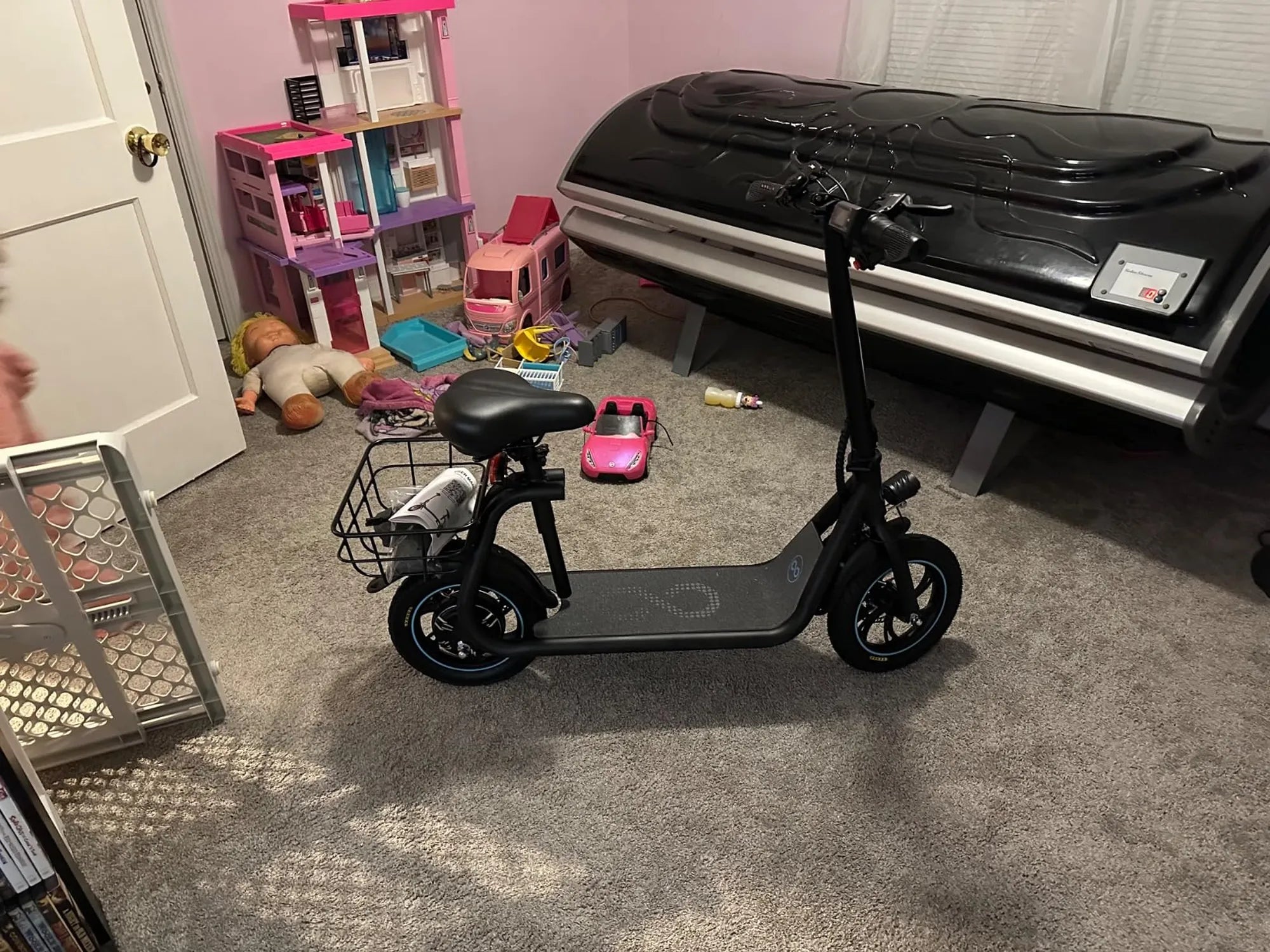
What is a Low Scooter? Understanding the Compact Electric Ride
A low scooter is a specific category of electric scooter defined by a low step-through height and a low center of gravity. This design prioritizes accessibility, stability, and portability over extreme speed or off-road capability. The defining characteristic is the deck's proximity to the ground, which makes mounting, dismounting, and balancing significantly easier.
This design differs markedly from standard or performance scooters, which often feature higher decks for increased ground clearance. The low profile directly translates to a more confidence-inspiring ride, especially during starts, stops, and low-speed maneuvers in crowded urban settings. For many riders, this practical design is the most logical choice for daily transportation.
The compact nature of these scooters often extends to foldable frames, enhancing their utility for multi-modal commuting. You can easily carry them onto a bus, store them under a desk, or fit them in a car trunk. This combination of low height and foldability addresses the core challenges of urban micro-mobility: safety, convenience, and space efficiency.
Understanding this distinction is crucial. While all electric scooters provide propulsion, a low scooter is engineered for a specific user experience centered on ease of use and practical integration into daily life. It's the choice for riders who value a stable platform and hassle-free storage over racing-style performance.
Key Benefits of Choosing a Low-Profile Electric Scooter
Choosing a low-profile electric scooter offers a suite of advantages that cater directly to the needs of urban commuters, beginners, and anyone prioritizing a stress-free ride. The design philosophy yields tangible benefits in stability, accessibility, and logistics that higher-slung models cannot match.
First, the lowered deck makes the scooter approachable for a wide demographic. Riders of varying ages, heights, and mobility levels find it easier to step on and off without a high leg lift. This reduces the risk of trips or falls when starting or ending a journey, a common concern with taller models.
Second, the inherent portability of most low scooters solves a major urban pain point. Their often lighter weight and compact folded dimensions make them ideal for combining with public transit or for living in spaces with limited storage. This versatility is a primary reason for their growing popularity in city environments.
Finally, the riding experience itself is less intimidating. The sensation of being closer to the ground psychologically boosts confidence, which is especially valuable for new riders. This approachable nature encourages more frequent use for short trips, effectively replacing car rides for errands and short commutes.
Enhanced Stability and Safety
The enhanced stability of a low scooter is a direct result of physics. A lower center of gravity makes the entire system less prone to tipping. This is most beneficial during low-speed navigation, such as weaving through pedestrian zones, navigating tight corners, or coming to a controlled stop at a traffic light.
This stability is a critical safety feature. It provides a more secure platform, allowing the rider to focus on the road and traffic rather than balancing the scooter. For commuters who encounter uneven pavement, curbs, or sudden obstacles, the added stability can prevent accidents that might occur on a taller, more top-heavy scooter.
The safety benefit extends to mounting and dismounting. The low step-through design means you can easily place both feet flat on the ground when stopped, a position known as "planting." This provides maximum control during stops and eliminates the awkward hop-off associated with higher decks, which is crucial in unpredictable traffic situations.
Brands that prioritize safety, like Gyroor, integrate this stable low-profile design with other critical features. A UL-certified battery pack ensures power source safety, while a robust frame and reliable braking system work in concert with the low center of gravity to create a comprehensively safe riding experience trusted by over 100,000 riders.
Unmatched Portability and Storage
The portability of a low scooter is often its most compelling practical advantage. Many models are designed with a folding mechanism that reduces their footprint by more than half. This transformability is key for the "first and last mile" of a commute, where the scooter must be carried onto a train or stored at an office.
This feature directly impacts daily logistics. A foldable low scooter can be stored vertically in a closet, slid under a desk or restaurant table, or placed in the trunk of a car without monopolizing space. For apartment dwellers or those without dedicated garage space, this solves the significant challenge of where to keep a personal mobility device.
The weight distribution in a well-designed low scooter also aids portability. When folded, the weight is often centered, making it easier to carry with one hand. Some models include a carrying handle or strap specifically for this purpose. This thoughtful design acknowledges that the scooter will be carried as often as it is ridden during a typical urban day.
Gyroor's lineup, for example, emphasizes this practical fusion. Their low-profile models feature a quick-folding mechanism that complements the stable, low deck. This design ensures the scooter is not just easy to ride but also effortless to integrate into a multi-modal commute, living up to the promise of true urban convenience.
What to Look for When Buying a Low Electric Scooter
Selecting the right low scooter requires moving beyond basic specs to evaluate the components that guarantee safety, durability, and long-term satisfaction. A data-driven approach focusing on verified performance and build quality will lead to a better purchase decision than simply comparing top speed or price.
Start by defining your primary use case: daily commuting, campus travel, or recreational errands. This will guide your needed range, weight tolerance, and durability requirements. A commuter facing rain will prioritize waterproofing, while a student carrying the scooter between classes will focus on folded weight and size.
Next, scrutinize the manufacturer's reputation and customer support structure. A brand with a proven track record and clear warranty terms offers invaluable peace of mind. The presence of a large, satisfied user base and accessible service channels are strong indicators of product reliability and company accountability.
Finally, balance performance with practicality. A scooter with a moderate top speed but excellent stability, braking, and comfort will provide a better daily experience than a faster but less refined model. The goal is to find a machine that feels like a reliable tool, not a temperamental gadget.
Battery Safety and Range (The Power Core)
The battery is the heart of any electric scooter, and its safety is non-negotiable. Insist on a model with a UL 2271 or UL 2843 certified battery pack. This certification means the battery has undergone rigorous independent testing for electrical, mechanical, and fire safety—a critical standard that reputable brands meet.
For range, look beyond the manufacturer's maximum claim, which is often based on ideal conditions. Instead, examine the battery's capacity in watt-hours (Wh). A higher Wh number generally indicates more energy storage. For a low scooter used in an urban setting, a battery rated for 250-350 Wh typically provides a real-world range of 10-18 miles, sufficient for most daily trips.
Consider the battery's lifecycle. A quality battery from a brand like Gyroor is tested for 500+ charge cycles while maintaining significant capacity. This translates to years of daily use. Also, check the charging time; a 4-6 hour full charge is standard. Proper battery management is the single most important factor for your scooter's lifespan and safety.
Build Quality and Weather Resistance
The scooter's frame and components must withstand daily urban abuse. A sturdy aluminum alloy frame is standard for good reason: it provides strength without excessive weight. Inspect the welding and joint quality in product images or reviews; clean, consistent welds are a sign of careful manufacturing.
Weather resistance is crucial for a practical commuter tool. An IPX5 water-resistance rating, a standard feature in Gyroor scooters, means the scooter can withstand water jets from any direction. This protects the electronics from rain, road spray, and puddles. Avoid models with no official IP rating if you plan to ride in anything less than perfect weather.
Don't overlook the smaller components. Pneumatic (air-filled) tires generally offer better shock absorption than solid tires on uneven pavement. The braking system—whether disc, drum, or electronic—should inspire confidence. A combination of a reliable mechanical brake and an electronic regen brake is often ideal for controlled stopping power.
Warranty and Rider Support
A strong warranty is a manufacturer's vote of confidence in its product. Look for at least a 1-year comprehensive warranty that covers the frame, motor, and battery. Gyroor, for instance, offers a clear 1-year warranty, demonstrating their commitment to rider support and product longevity. This coverage is essential for addressing any potential manufacturing defects.
Evaluate the accessibility of customer support before you buy. Can you reach them by phone, email, or chat? Are there helpful troubleshooting guides or video tutorials available? A brand that invests in post-purchase support values its customers and is more likely to help you resolve issues quickly, ensuring you spend more time riding and less time troubleshooting.
Finally, check the availability of replacement parts. Consumables like tires, brake pads, and inner tubes will eventually need service. A brand with an established parts inventory and clear guides for user maintenance empowers you to keep your scooter in optimal condition for years, protecting your investment.
Gyroor's Approach to Low-Profile Scooter Design
Gyroor's philosophy for low scooter design centers on harmonizing safety, durability, and user-friendly practicality. This approach is evident in how they integrate their core engineering standards into models that prioritize a stable and accessible ride. Every design choice is made with the daily urban commuter in mind.
Safety is foundational, starting with the UL-certified battery pack. This commitment ensures the power source meets the highest independent safety standards, addressing the paramount concern of fire risk. This certified battery is then housed within a low-profile deck, creating a stable platform that lowers the center of gravity for enhanced rider confidence and control.
Durability is engineered for real-world conditions. The IPX5 water-resistant rating is not an afterthought but a standard specification. It guarantees that the scooter's electrical systems are protected from rain and road splash, ensuring reliable operation and longevity. This is paired with a robust frame construction that can handle the vibrations and impacts of city streets.
User experience drives the final design touches. The foldable mechanism is engineered to be simple and robust, allowing for quick transitions between riding and carrying modes. The deck texture, handlebar ergonomics, and intuitive control interfaces are all refined to make the ride as effortless and enjoyable as possible, embodying the brand's trust earned from a large community of riders.
Low Scooter vs. Standard Scooter: A Practical Comparison
Choosing between a low scooter and a standard model depends heavily on the rider's profile and primary use case. The table below contrasts the key characteristics to guide your decision.
| Feature | Low Scooter | Standard Scooter |
|---|---|---|
| Primary Rider Profile | Beginners, urban commuters, riders prioritizing ease of use and safety. | Experienced riders, speed enthusiasts, those seeking performance or off-road capability. |
| Deck Height & Stability | Low deck, low center of gravity. Excellent stability, especially at low speeds. | Higher deck, higher center of gravity. Stability is good at speed but requires more balance at stops. |
| Mounting/Dismounting | Very easy. Low step-through design allows for a natural step-on motion. | Can require a more deliberate step or hop, potentially challenging for some. |
| Portability (When Folded) | Typically more compact and often lighter, optimized for carrying and storage. | Can be bulkier and heavier due to larger frames and motors, less ideal for multi-modal travel. |
| Typical Use Case | Short urban commutes, errands, campus travel, combining with public transit. | Longer recreational rides, commuting on varied terrain, performance-oriented riding. |
| Common Top Speed Range | 15 - 20 mph (focused on controlled, safe urban speeds). | 20 - 30+ mph (designed for higher performance). |
This comparison highlights that a low scooter is a tool optimized for practicality and integration into daily urban life. Its advantages in stability and portability make it the superior choice for the majority of city-based transportation needs, where frequent stops, storage, and ease of use are paramount.
Frequently Asked Questions About Low Scooters
Are low scooters slower than standard scooters?
Not necessarily. Speed is determined by motor power and electronic controls, not solely by deck height. Many low scooters have motors comparable to standard models, with top speeds around 18-20 mph, which is more than sufficient for safe urban commuting. The design focus is on stable control at common city speeds, not on maximizing top speed.
Can a low scooter handle hills?
Yes, but performance depends on motor torque and battery power. A low scooter with a 350W-500W motor can handle moderate inclines commonly found in cities. Steeper, sustained hills will reduce speed and drain the battery faster. Check the manufacturer's gradeability specification (e.g., "15% grade") for a precise measure of hill-climbing ability.
What is the typical weight capacity for a low scooter?
Most quality low scooters support riders between 220 and 265 pounds (100-120 kg). Always check the specific model's maximum load rating from the manufacturer. Exceeding this limit can stress the frame, motor, and battery, potentially voiding the warranty and creating a safety hazard.
How do I maintain the battery for longest life?
Follow these key practices: Avoid draining the battery to 0% regularly; try to recharge when it reaches 20-30%. Do not leave the scooter fully charged at 100% for extended periods (weeks). Store it in a cool, dry place, and use only the manufacturer-provided charger. These habits will help achieve the 500+ charge cycles that quality batteries are rated for.
Is a low scooter suitable for taller riders?
Absolutely. While the deck is low, the handlebar height is usually adjustable or sufficiently tall for most adults. The primary benefit for taller riders is the same as for everyone: easier mounting/dismounting and a stable, confident ride posture. The critical measurement is the handlebar height, not the deck height, for overall comfort.
Conclusion: Finding Your Perfect Low-Profile Companion
A low scooter represents a smart, practical evolution in personal electric transportation, prioritizing safety, stability, and seamless urban integration. Its design directly addresses the real-world challenges of commuting, making it an excellent choice for a wide range of riders seeking a reliable and convenient mobility solution.
The journey to the right model hinges on informed selection. Prioritizing certified battery safety, proven weather resistance, and robust warranty support from a reputable brand is non-negotiable. These factors ensure your investment is protected and your rides are secure, allowing you to fully enjoy the freedom and efficiency a low scooter provides.
By understanding the key benefits and specifications, you can confidently choose a scooter that fits your lifestyle. Whether for your daily commute, campus travel, or local errands, the right low-profile electric scooter can transform short trips into enjoyable, emission-free journeys.
Ready to explore a range of low-profile electric scooters built with UL-certified safety, IPX5 weather resistance, and reliable performance? Browse the full Gyroor collection at gyroorboard.com to find your ideal riding companion.
750W Foldable E-Bike: The Ultimate Urban Power & Portability Solution
Mini Trike Plans: The Ultimate DIY Guide to Building Your Own Three-Wheeler