



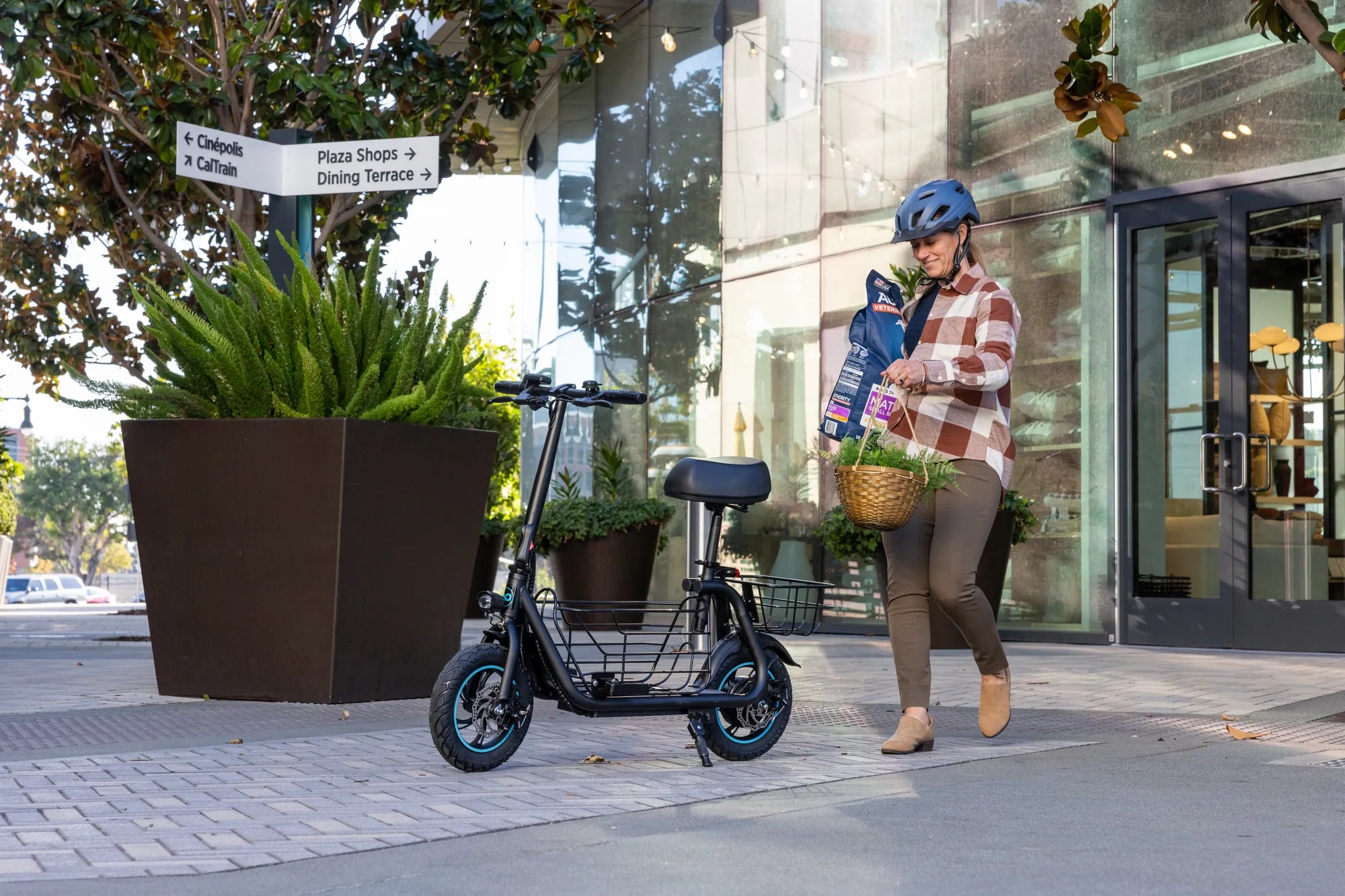
Introduction: The Rise of the 750W Foldable E-Bike
Forget the traffic, parking fees, and crowded public transit. The 750w foldable e bike has emerged as the definitive solution for modern urban mobility, merging serious power with unparalleled practicality. This category represents a perfect storm of engineering, offering enough motor strength to conquer steep city hills while featuring a clever folding design that solves the age-old problem of storage and portability.
Whether you're a daily commuter, a student navigating campus, or a city dweller seeking car-free freedom, this e-bike type is engineered for your life. It transforms multi-modal travel, reduces commute times significantly, and turns errands into enjoyable rides. The core appeal lies in its dual promise: uncompromised performance when riding and seamless integration into small living spaces when not.
The 750W motor provides a tangible upgrade over standard 500W models, delivering confidence-inspiring acceleration and reliable hill assistance. When paired with a robust folding mechanism, it creates a vehicle that is as versatile as it is powerful. This guide will delve into every aspect of what makes the 750w foldable e bike a standout choice for savvy riders.
Why 750W is the Sweet Spot for Urban E-Bikes
Motor wattage is often the first spec riders consider, and 750W represents a critical performance threshold. It provides a significant power boost over entry-level models without venturing into the overpowered, often legally restricted territory of 1000W+ motors. This balance is crucial for both utility and compliance.
A robust 750W hub motor delivers consistent torque, enabling riders to tackle inclines of 15-20% grade without straining the system or drastically draining the battery. This hill-climbing prowess is essential in cities with varied topography, ensuring you arrive at your destination sweat-free. The power also translates to quicker acceleration from stoplights and intersections, enhancing safety by allowing you to merge with traffic flow more predictably.
In terms of speed, a 750W motor typically supports a comfortable and efficient cruising speed of 20-28 mph (32-45 km/h) when paired with an appropriate battery and controller. This aligns well with the capabilities of Class 2 and Class 3 e-bikes in North America, which are generally permitted on bike paths and roads without requiring a license or registration. The power is sufficient for keeping pace with urban traffic on slower streets, making commutes faster and more direct.
Furthermore, 750W strikes an optimal balance with battery efficiency. While more powerful than a 500W motor, modern controllers and battery management systems ensure it doesn't guzzle power unnecessarily. You get the performance when you need it—for hills and acceleration—while still enjoying respectable range for daily trips. It's the Goldilocks zone of e-bike motors: not too weak, not too extreme, but just right for the demands of city riding.
Comparing Motor Power: 500W vs. 750W vs. 1000W
Choosing the right motor power depends heavily on your riding environment, physical needs, and local regulations. The following table provides a clear, data-driven comparison to illustrate why 750W is often the recommended starting point for adults seeking a powerful, versatile ride.
| Feature | 500W Motor | 750W Motor | 1000W+ Motor |
|---|---|---|---|
| Hill Climbing | Moderate hills (up to 10-12% grade). May struggle with steeper, sustained inclines, especially with a heavier rider or cargo. | Strong performance on steep hills (15-20% grade). Handles most urban and recreational hills with ease and maintains better speed on inclines. | Exceptional hill-climbing. Can tackle very steep grades and off-road trails. Power is rarely the limiting factor. |
| Top Speed (Assisted) | Typically 20 mph (32 km/h). Suitable for bike lanes and casual riding. | Typically 20-28 mph (32-45 km/h). Offers a faster, more efficient commute while often remaining within Class 3 limits. | Often 28+ mph (45+ km/h). May exceed legal limits for e-bikes on public paths in many regions, potentially requiring licensing. |
| Acceleration | Adequate for flat terrain. Can feel sluggish from a stop, especially under load. | Confident and quick acceleration from stops. Improves safety in traffic and provides a more responsive ride feel. | Very rapid, motorcycle-like acceleration. Requires more cautious throttle control in urban settings. |
| Battery Consumption | Most efficient. Offers the longest potential range per charge under similar conditions. | Efficient for the power offered. Range impact is minimal compared to 500W if ridden conservatively, but using full power on hills will consume more. | Highest consumption. The increased performance comes at the cost of significantly reduced range, especially when utilizing the full power. |
| Ideal Use Case | Flat to moderately hilly terrain, lighter riders, casual/leisure riding, maximum range priority. | Versatile urban commuting, hilly cities, riders of varying weights, carrying cargo, the best balance of power and practicality. | Off-road trail riding, very hilly/mountainous areas, riders seeking motorcycle-like performance, where local laws permit. |
As the table demonstrates, the 750w foldable e bike occupies the strategic middle ground. It provides a substantial power upgrade from 500W where it matters most—on hills and in traffic—without the legal ambiguities and heavy battery drain of a 1000W system. For a foldable bike designed for urban adaptability, this balance is paramount.
The Foldable Advantage: More Than Just Portability
The folding mechanism is what transforms a powerful e-bike from a mere vehicle into a seamless part of your daily logistics. Portability is the obvious benefit, but the advantages run much deeper, solving multiple pain points associated with traditional bicycles and e-bikes.
First, it enables true multi-modal commuting. You can ride several miles from home, fold the bike in seconds, and carry it onto a train or bus during peak hours (subject to carrier rules). Upon exiting, unfold and complete your "last mile" to the office, classroom, or appointment. This flexibility makes previously complex commutes simple and efficient, effectively expanding your viable living and working radius.
Second, it revolutionizes storage and security. Apartment dwellers, condo owners, and those with limited space no longer need to worry about bike lockers, garage space, or cumbersome racks. A folded 750w foldable e bike can be stored in a closet, under a desk, in a corner of your living room, or even in a car trunk. This also drastically reduces theft risk, as you can bring a valuable asset indoors instead of locking it outside.
Finally, the folding design enhances practicality for spontaneous use. Throwing the bike in your car trunk for a weekend getaway to explore a new town or trailhead becomes effortless. There's no need for a dedicated bike rack. This "go anywhere" capability amplifies the bike's utility, making it a tool for both daily routine and weekend adventure.
Key Features of a Quality Folding Mechanism
Not all folding designs are created equal. A poor mechanism can compromise safety, ride stability, and long-term durability. When evaluating a 750w foldable e bike, scrutinize these critical aspects of the folding system.
The locking mechanism is paramount. Look for a robust, single-point latch that audibly clicks into place and requires a deliberate action to release. High-quality models often use a forged aluminum or steel latch with a safety lock or secondary pin to prevent accidental unfolding during a ride. Avoid designs that feel flimsy or rely on simple tension clamps without positive locking.
The hinges and folding points must be constructed from thick, reinforced metal and secured with large, durable bolts. These are high-stress areas. Check for minimal flex or play when the bike is unfolded and you apply weight to the handlebars or frame. A well-designed frame will maintain full structural rigidity when locked open, feeling no different from a non-folding bike.
Consider the folding process itself. The best designs allow the bike to fold in one or two intuitive steps without requiring tools. Some feature a central folding frame, while others fold the handlebars and pedals. Look for models that include built-in features to manage cables during folding, preventing pinching or damage. Additionally, features like magnetic clasps to hold the folded frame together, or integrated trolley wheels, add significant convenience for carrying the bike when folded.
What to Look for in a 750W Foldable E-Bike: A Buyer's Checklist
Beyond the motor and fold, several other components define the quality, safety, and longevity of your investment. Use this checklist to evaluate potential models and ensure you're getting a reliable machine built for daily use.
Frame Material: Aluminum alloy is standard for its blend of strength, corrosion resistance, and light weight. High-tensile steel is heavier but can be more durable on budget models; ensure it has a good corrosion-resistant finish.
Display & Controls: A clear, backlit LCD display is essential for monitoring speed, battery level, assist mode, and odometer. Intuitive thumb throttle or twist-grip and pedal assist (PAS) controls should be within easy reach.
Weight Capacity: Verify the manufacturer's stated maximum weight capacity. A quality 750w foldable e bike should support at least 265-300 lbs (120-136 kg) to accommodate the rider and potential cargo like a backpack or groceries.
Integrated Features: Look for practical additions like integrated headlights and taillights (preferably LED), a rear rack for cargo or panniers, and fenders to keep you clean on wet roads. These indicate a design focused on real-world commuting.
Battery & Range: Planning Your Commute
The battery is the heart of your e-bike, and understanding its specifications is key to managing range expectations. Capacity is measured in Watt-hours (Wh), calculated by multiplying battery Voltage (V) by Amp-hours (Ah). For example, a common 48V 15Ah battery has a 720Wh capacity (48 x 15 = 720).
Real-world range is influenced by numerous factors: rider weight, cargo, terrain, wind, tire pressure, and most significantly, the level of pedal assist or throttle use. A 750W motor with a 720Wh battery might deliver 20-40 miles of range. Using minimal assist on flat ground can extend this, while frequent throttle use on hilly terrain will reduce it. Always plan your commute with a 20-30% battery buffer.
Battery safety and longevity are non-negotiable. Insist on a UL-certified battery pack. This independent certification, held by reputable brands like Gyroor, ensures the battery has passed rigorous tests for electrical, mechanical, and fire safety. UL-certified batteries are also typically rated for 500+ charge cycles while maintaining significant capacity, meaning years of reliable service. Avoid unknown brands with vague safety claims.
Braking, Tires, and Suspension: Ensuring a Safe, Smooth Ride
The increased power and speed of a 750W motor demand equally capable braking and handling components. This is not an area to compromise.
Brakes: Hydraulic disc brakes are the gold standard. They offer superior stopping power, consistent performance in wet conditions, and require less maintenance than mechanical discs. For a 750w foldable e bike that may be used for commuting in all weather, hydraulic brakes are a highly recommended investment. If the model uses mechanical disc brakes, ensure they are from a reputable brand (like Tektro) and have large rotors (180mm+).
Tires: Wider tires provide more stability, comfort, and puncture resistance. Many foldable e-bikes use 4-inch wide "fat tires" which absorb road vibrations and handle light off-road paths, gravel, and uneven pavement with ease. Ensure they are rated for urban use and have a reasonable tread pattern.
Suspension: A front suspension fork with at least 50mm of travel is highly beneficial for urban riding. It smoothes out potholes, curb cuts, and cracked pavement, reducing fatigue on your wrists and improving overall control. Some models may also include a suspension seat post for added rear comfort. A rigid fork is acceptable only if paired with very large, low-pressure tires that act as natural suspension.
The Build: Warranty, Water Resistance, and Support
The quality of post-purchase support is a direct reflection of a brand's confidence in its product. A comprehensive warranty is your safety net. Look for a minimum of a 1-year warranty covering the frame, motor, battery, and electronics. Gyroor, for instance, offers a reliable 1-year warranty, providing peace of mind for a significant purchase.
Water resistance is critical for a vehicle meant for daily transportation. An IPX5 rating means the electrical components are protected against low-pressure water jets from any direction. This makes the bike fully capable of handling heavy rain and wet roads. Never submerge the bike or ride through deep puddles that could reach the motor hub, but an IPX5 rating ensures typical commuting conditions won't cause damage.
Finally, assess the brand's customer service accessibility. Are there clear channels for technical support and spare parts? A reputable company will have responsive service teams and make essential components (like chargers, keys, or replacement fenders) available for purchase. This ensures your 750w foldable e bike remains on the road for years to come.
750W Foldable E-Bikes in Action: Ideal Use Cases
The true test of any product is how it fits into real life. The 750w foldable e bike excels in several specific scenarios, offering transformative benefits to different types of riders.
The Multi-Modal Commuter
Imagine a commute that was once a stressful drive or a multi-transfer bus ride. Now, you ride 2.5 miles from your home to the regional train station on your e-bike, using the throttle to breeze up the final hill. At the station, you fold the bike in under 15 seconds, walk it onto the train, and place it in the designated area. After a 20-minute train ride, you unfold it and pedal another 1.5 miles to your office, arriving energized instead of drained. The 750W power ensures no hill on either leg slows you down, and the folding design makes the entire journey seamless.
The Apartment or Condo Dweller
Living in a third-floor walk-up or a high-rise with limited storage used to mean owning a bike was impractical. With a foldable e-bike, you simply ride to your building, fold it, and either carry it (using a central carrying handle) or roll it on its integrated trolley wheels to the elevator. It stores vertically in a coat closet, horizontally under a bed, or in a corner of your balcony. There's no need to negotiate with landlords about exterior racks or worry about it being stolen from a communal garage. Your transportation is secure inside your home.
The Weekend Explorer
Your car is for getting there; the e-bike is for exploring. Pack the folded bike into your trunk alongside a picnic. Drive to a state park with extensive paved trails, a beachside boardwalk, or a historic downtown. Unfold your powerful 750W e-bike and set off to cover far more ground than you could on foot, effortlessly gliding up any inclines. The fat tires handle packed gravel or boardwalk gaps with ease. When done, fold it back up and head home. It turns any destination into an active adventure without the need for a bulky bike rack.
FAQs: Your Questions About 750W Foldable E-Bikes, Answered
Q: Do I need a license, registration, or insurance for a 750W e-bike?
A: In most U.S. states and Canadian provinces, a 750W e-bike is classified as a Class 2 (throttle-assisted up to 20 mph) or Class 3 (pedal-assisted up to 28 mph, sometimes with a throttle). These classes typically require no driver's license, vehicle registration, or insurance to operate on public roads and bike paths. However, helmet laws and age restrictions may apply (often helmets are mandatory for Class 3). Always check your specific state and local regulations, as they can vary.
Q: How heavy is a typical 750w foldable e bike, and is it easy to carry?
A: Due to the motor, battery, and sturdy frame, these bikes are substantial. Weight typically ranges from 55 to 75 pounds (25 to 34 kg). While "foldable," they are not necessarily "lightweight." Carrying it for extended periods can be challenging. This is why features like a central carrying handle, padded grips on the frame, and especially integrated trolley wheels (so you can roll it like a suitcase when folded) are invaluable for managing the weight during the portability phase of your journey.
Q: Can I ride a 750w foldable e bike in the rain?
A: Yes, if it has a proper water-resistance rating. A bike with a true IPX5 rating (like those from Gyroor) is designed and tested to withstand water jets from any direction. This makes it perfectly safe for commuting in rainstorms and on wet roads. You should still perform basic post-ride care: wipe it down, especially the chain and brakes, and avoid deliberately submerging any part of the bike or riding through deep puddles that could reach the motor hub.
Q: What is the realistic range I can expect on a single charge?
A: Real-world range varies widely. With a 48V 15Ah (720Wh) battery, a rider using moderate pedal assist (PAS 2-3 out of 5) on mixed terrain might achieve 30-45 miles. Using the throttle extensively, especially on hills, can reduce that to 20-25 miles. For accurate planning, take the manufacturer's maximum range estimate and use 50-70% of that as a practical guideline for your initial trips until you learn your bike's behavior with your riding style.
Q: How do I maintain and service a foldable e-bike?
A> Regular maintenance is similar to a standard bike but with extra care for the folding joints and electrical system. Keep the folding latches and hinges clean and occasionally lubricate them with a dry lubricant. Check that all locking points are secure before every ride. Maintain proper tire pressure. Keep the battery charged between 20-80% for daily use, and store it in a cool, dry place. For the motor and electrical system, rely on the manufacturer's support for any major issues. Basic brake adjustments and chain lubrication can be done at home or by a local bike shop familiar with e-bikes.
Conclusion: Power, Portability, and Practicality Combined
The 750w foldable e bike is more than a trend; it's a logical evolution in personal urban transportation. It successfully solves the core dilemmas of power, space, and versatility. By offering a 750W motor, it delivers the performance needed for efficient, hill-conquering commutes. Through intelligent folding design, it integrates into spaces and lifestyles where a traditional bike cannot. When built with quality components—UL-certified batteries, hydraulic brakes, IPX5 water resistance, and a robust frame—it becomes a reliable, long-term asset.
Choosing the right model means prioritizing safety certifications and warranty support from a reputable brand. This ensures your investment is protected and your rides are secure. It represents a commitment to freedom from traffic, reduced environmental impact, and a healthier, more engaged way to navigate your city.
Ready to experience the perfect balance of urban power and seamless portability? Explore a range of engineered, reliable options designed for the real world. Browse the full Gyroor collection of UL-certified, high-performance e-bikes and scooters at gyroorboard.com.
Scooter Events: The Ultimate Guide to Rides, Expos & Community
Low Scooter: The Ultimate Guide to Compact, Stable Electric Rides