



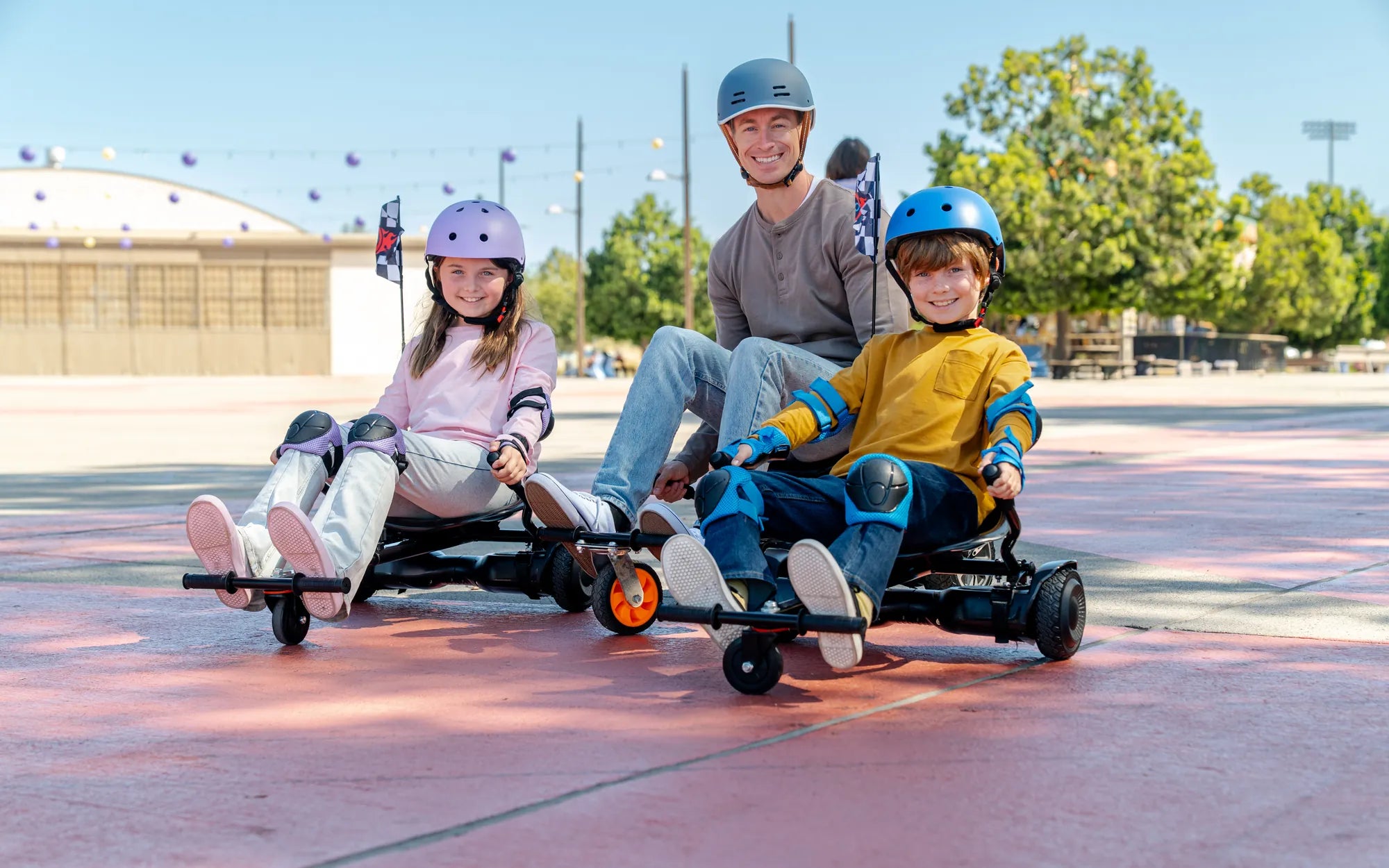
Introduction: The Joy and Responsibility of Kids' Scooters
There's a unique magic in the moment a child masters their first scooter. It's a launch into a world of newfound freedom, physical activity, and pure, unadulterated fun. A scooter is more than just a kids toy child; it's a developmental tool that builds core strength, sharpens balance and coordination, and fosters immense confidence. However, this joy is inextricably linked to responsibility. Maximizing the fun is entirely dependent on prioritizing safety at every step.
This guide moves beyond viewing a scooter as a simple purchase. We frame it as an ongoing activity that requires informed choices, proper preparation, and consistent habits. From selecting the right model to teaching essential skills, our goal is to equip you with the knowledge to create a safe, enjoyable riding experience. Leading brands like Gyroor, trusted by over 100,000 riders, design with this exact philosophy—merging exhilarating performance with foundational safety features parents can rely on.
Choosing the Right Scooter: Age, Size, and Skill Level
Selecting the appropriate scooter is the single most important safety decision you will make. The wrong scooter—too big, too fast, or too unstable—can turn a fun activity into a frustrating or hazardous one. A proper fit ensures control, comfort, and a progression that matches your child's growing abilities. This isn't about finding the flashiest model; it's about matching engineering to your child's current stage.
Consider this choice as foundational. A well-suited scooter encourages practice and skill development, while a poorly matched one can lead to disinterest or accidents. We'll break down the key variables to demystify the selection process. The ultimate goal is to find a scooter that your child can master confidently, setting the stage for years of active play.
Age & Developmental Stage Guidelines
Age recommendations are a crucial starting point, as they correlate with average physical development and motor skills. Use these as a framework, but always consider your individual child's coordination and confidence level.
Toddlers (Ages 2-4): Stability is paramount. Look for three-wheeled scooters, often with two wheels in front (a “lean-to-steer” design) or in a stable triangular configuration. These models require minimal balance, allowing toddlers to focus on propulsion and basic steering. Decks are low to the ground for easy mounting.
Young Children (Ages 5-8): This is the prime age for transitioning to a classic two-wheeled kick scooter. Models should be lightweight (often aluminum), with an adjustable handlebar height to grow with the child. Speed is still limited by the child's kicking power, focusing on skill-building.
Older Kids & Tweens (Ages 8+): For this group, durability and performance take center stage. Scooters can handle more weight and rougher use. This is also the age range where electric scooters for kids become a consideration, introducing new factors like motor power, battery life, and enhanced braking systems.
Key Features for Safety and Comfort
Beyond age, scrutinize these specific features. They directly impact safety, control, and how much your child will enjoy riding.
Adjustable Handlebar Height: This is non-negotiable for growing kids. Handlebars should sit between your child's waist and lower chest when standing on the deck. Proper height prevents hunching and ensures precise steering control.
Deck Size & Grip: The deck must provide ample foot space. A wider, longer deck offers more stability. The surface must have a pronounced, anti-slip grip tape or texture to prevent feet from slipping during kicks or braking.
Wheels & Bearings: Larger wheels (e.g., 120mm+) roll over cracks and pebbles more smoothly, enhancing stability. Urethane (PU) wheels are standard and durable. High-quality bearings (ABEC-7 or higher) provide a smoother, quieter, and more efficient glide with less kicking effort.
Braking System: A responsive brake is critical. Rear fender brakes (stomp brakes) are common and intuitive for young kids. Hand-operated disc or caliper brakes offer more modulated stopping power for heavier or faster scooters, especially electric models.
Non-Negotiable Safety Gear: Beyond the Helmet
View safety gear as an integral, non-removable part of the scooter itself. The mantra is simple: no gear, no ride. While a helmet is the most recognized piece, comprehensive protection addresses the most common scooter-related injuries: falls impacting wrists, elbows, and knees.
Consistently wearing full gear transforms a potential “scrape” into a harmless slide. It also builds a crucial safety mindset in your child from the very beginning. Investing in quality, comfortable gear is an investment in countless worry-free riding sessions.
The Essential Safety Kit
Every riding session requires this full suite of protection. Do not compromise on any item.
CPSC-Certified Helmet: This is the absolute priority. Ensure it fits snugly, sitting level on the head (not tilted back) with the strap securely fastened. Replace it after any significant impact, even if no damage is visible.
Knee and Elbow Pads: These are the second line of defense. In a forward fall, knees and elbows instinctively take the brunt of the impact. Proper pads have a hard plastic shell and thick foam padding to absorb shock and prevent painful abrasions.
Wrist Guards: Arguably as important as the helmet for scooter riders. When falling, people instinctively put their hands out, leading to sprains or fractures. Wrist guards feature a rigid splint that distributes impact force away from the delicate bones of the wrist.
Closed-Toe, Sturdy Shoes: Never allow riding in sandals or flip-flops. Athletic shoes with flat, grippy soles are essential for secure footing on the deck and effective kicking. They also protect toes during dismounts or if the scooter tips over.
Making Safety Gear "Cool" for Kids
Resistance is common, but these strategies foster acceptance and even enthusiasm.
Involve Them in the Choice: Let your child pick the colors, patterns, or designs of their gear. Ownership increases the likelihood they'll want to wear it. Many brands offer gear with popular characters or vibrant graphics.
Model the Behavior: If you ride a bike or scooter with them, wear your own helmet and gear. This normalizes the practice and shows it's a rule for everyone, not just kids.
Establish a Consistent Ritual: Make gearing up the first step of the riding routine. The rule is non-negotiable but presented matter-of-factly: “Helmet, then pads, then scooter.” Consistency removes the debate over time.
Teaching Safe Riding Habits and Choosing a Location
Even with the perfect scooter and full gear, a child needs to learn *how* and *where* to ride safely. This section covers foundational skills and environmental selection. Proper instruction builds competence, which in turn builds confidence and safe judgment.
Think of yourself as a coach. Start in a controlled, safe space and gradually introduce new challenges as skills solidify. The goal is to create a mindful rider who is aware of their surroundings and their own limitations.
Foundational Riding Lessons
Break down the learning process into manageable steps. Practice each until it feels natural before moving on.
1. Mounting & Basic Stance: Teach them to stand on the deck with their dominant foot forward, slightly bent, and their other foot ready to push. Hands should grip the handlebars firmly but not tightly. Practice finding this balanced, ready position while stationary.
2. Propulsion & Coasting: Start with gentle, slow kicks. The focus is on maintaining balance while moving, not speed. Encourage them to place their kicking foot back on the deck after a push and coast in a straight line.
3. Steering & Turning: Once coasting is stable, practice wide, gentle turns. Emphasize looking in the direction of the turn and using smooth handlebar movements. Avoid sharp, jerky turns that can cause instability.
4. Braking & Controlled Stopping: This is a critical skill. Practice using the brake at slow speeds so they understand the pressure needed and how the scooter reacts. Teach them to anticipate stops well in advance.
5. Safe Dismounting: Show how to come to a complete stop, step off with the back foot first while maintaining hold of the handlebars, and then step off completely. Never allow jumping off a moving scooter.
Identifying Safe Riding Environments
Location choice is a proactive safety measure. The right environment minimizes external hazards, letting the child focus on their riding.
| Safe Zones (Recommended) | Hazard Zones (Avoid) |
|---|---|
| Smooth, Paved Surfaces: Empty tennis or basketball courts, school playgrounds (after hours), smooth sidewalks in quiet neighborhoods. | Streets & Roads: Even quiet residential streets pose a risk from cars backing out or turning. |
| Designated Bike Paths: Paved, car-free paths are ideal for more experienced riders. Teach path etiquette (stay right, pass on left, use a bell). | Steep Hills & Inclines: Hills can cause dangerous, uncontrollable acceleration and make braking ineffective. |
| Flat, Open Areas: Large, empty parking lots (on weekends) provide vast, unobstructed space for practice. | Areas with Gravel, Sand, or Wet Leaves: These surfaces compromise tire traction, leading to slips and falls. |
| Driveways (with Supervision): Can be suitable for beginners if flat, clear, and blocked from the street. | Areas with Heavy Pedestrian or Vehicle Traffic: Distractions and obstacles increase collision risk dramatically. |
Electric vs. Kick Scooters: A Detailed Comparison
As children mature, the question of upgrading to an electric scooter often arises. This is a significant shift that introduces new dynamics of speed, power, and responsibility. Understanding the key differences is essential for making a safe, appropriate choice for your child.
| Feature | Traditional Kick Scooter | Kids' Electric Scooter |
|---|---|---|
| Power Source | Child's physical kicking | Rechargeable electric battery & motor |
| Top Speed | Limited by child's strength & stamina (3-7 mph) | Motor-controlled (typically 8-12 mph, often with speed modes) |
| Learning Curve | Focus on balance, coordination, and propulsion | Adds throttle control, braking power, and speed awareness |
| Ideal Age Range | Starting from age 2-3 (3-wheel) up through age 10+ | Generally recommended for ages 8 and up, depending on maturity |
| Range/Duration | Limited by child's energy | Limited by battery capacity (e.g., 6-10 miles per charge) |
| Key Safety Focus | Fall protection, environmental awareness | All of the above, PLUS speed management, electronic brake control, and battery safety |
| Parental Considerations | Primarily physical safety and skill development | Adds responsibility for charging, maintenance, and enforcing speed/range limits |
An electric scooter is not a logical “next step” from a kick scooter for every child. It requires a higher level of maturity, judgment, and respect for the machine. Mastery of a kick scooter's fundamentals is a mandatory prerequisite.
Why Gyroor is the Trusted Choice for Parents
When the stakes involve your child's safety, brand trust and engineering integrity become paramount. Gyroor's product philosophy is built on a foundation that directly addresses the core concerns of parents: durability, stability, and verified safety. This makes a Gyroor scooter a reliable partner in your child's active play.
With over 100,000 riders across North America and Europe and a 4.5/5 average rating, Gyroor has demonstrated a consistent commitment to quality. Their approach goes beyond marketing specs to incorporate tangible safety certifications and thoughtful design tailored for young riders.
Engineered for Durability and Stability
Gyroor designs scooters to withstand the rigorous demands of daily use by children. This inherent durability is a key safety feature.
The frames are constructed from aerospace-grade aluminum alloys, creating a robust structure that resists bending or wobbling at speed. Decks are extra-wide and feature advanced anti-slip surfaces, providing a confident, stable platform for feet. The wheelbase—the distance between the front and rear axles—is optimized for each model to balance maneuverability with high-speed stability, preventing the “speed wobbles” common in poorly designed scooters.
Safety-Certified and Backed by Warranty
Gyroor’s commitment is formalized through industry certifications and strong customer support, offering genuine peace of mind.
UL-Certified Battery Packs: Every Gyroor electric model uses battery cells certified by Underwriters Laboratories (UL), the global safety standard. These batteries are rigorously tested for over 500 charge cycles, ensuring safe, stable power delivery and significantly reducing any risk of overheating or failure.
IPX5 Water-Resistant Design: Kids encounter puddles and light rain. An IPX5 rating means the scooter's electrical components are protected against low-pressure water jets from any direction, allowing for worry-free riding in common wet conditions.
1-Year Comprehensive Warranty: Gyroor stands behind its build quality with a robust one-year warranty covering manufacturing defects. This, coupled with responsive US-based customer support, means you're never alone if an issue arises.
Maintenance 101: Keeping the Scooter Safe and Ready
Safety is an ongoing process. A poorly maintained scooter can develop hidden hazards. Instituting simple, regular checks ensures the equipment remains as reliable as the day you bought it. Teach your child to participate in these checks—it fosters responsibility and a deeper connection to their gear.
Maintenance falls into two categories: a quick pre-ride inspection and less frequent routine care. Both are essential for longevity and safe operation.
Pre-Ride Safety Check (The 60-Second Inspection)
Make this a non-negotiable habit before every ride, just like putting on gear.
- Handlebars & Stem: Firmly grip the handlebars and try to twist them. Ensure the folding mechanism or clamp is securely locked and there is no play or looseness.
- Brakes: Squeeze the hand brake lever (if equipped) and press the rear fender brake. They should engage firmly and smoothly, bringing the wheel to a stop without excessive force.
- Tires/Wheels: Spin the wheels. They should rotate freely without rubbing. For air-filled tires, check that they are firm. For solid PU wheels, look for deep cracks or chunks missing.
- Fasteners: Visually inspect for any obviously loose bolts or nuts, especially on the handlebar clamp and wheel axles.
- Battery (E-Scooters): Ensure the battery has an adequate charge for your planned ride. Plug in the charger to confirm a connection if the display is unclear.
Routine Care and Cleaning
Perform these tasks monthly or after riding in wet/dirty conditions.
Cleaning: Wipe down the entire scooter with a damp cloth. Avoid high-pressure hoses or submerging it, even with an IPX5 rating. For the deck's grip tape, a stiff brush can dislodge dirt. Dry the scooter thoroughly before storage.
Tightening & Lubrication: Every few months, use the provided tools to check and tighten all major fasteners. Apply a drop of light lubricant (like WD-40 Specialist Dry Lube) to the folding mechanism hinge and brake pivot points to keep them moving smoothly.
Proper Storage: Store the scooter in a dry, temperate place. For electric models, it's best to store it with a 50-80% battery charge if it won't be used for several weeks. Avoid leaving it in direct sunlight or freezing temperatures for extended periods.
Frequently Asked Questions (FAQs)
Q: At what age can my child start riding a scooter?
A: Children can start on stable three-wheeled scooters as early as age 2, if they show interest and have steady walking/running skills. The key indicator is not just age, but physical coordination and the ability to follow simple safety instructions. Always supervise toddlers closely.
Q: Are 3-wheel or 2-wheel scooters better for beginners?
A: For absolute beginners (typically ages 2-5), a 3-wheel scooter is superior. The extra wheel provides automatic stability, allowing the child to learn steering and propulsion without simultaneously managing complex balance. They should graduate to a two-wheeled scooter once they have mastered the three-wheeler with confidence.
Q: How do I know if the scooter is the right size?
A: Use the “handlebar height test.” When your child stands comfortably on the deck, the handlebars should reach somewhere between their waist and lower chest. Their arms should be slightly bent when gripping them. For deck size, both feet should fit with the front foot pointed forward and the back foot having enough room to stand comfortably beside it.
Q: What's the most important piece of safety gear?
A> While the full kit is essential, the CPSC-certified helmet is non-negotiable. It protects against the most severe potential injury. However, for the most *common* scooter injuries (sprains and fractures), wrist guards are equally critical. Never choose one over the other; they work as a system.
Q: Is Gyroor's warranty valid if my child damages the scooter?
A: Gyroor's 1-year warranty covers defects in materials and workmanship under normal use. It does not cover damage from accidents, crashes, misuse, neglect, or unauthorized modifications (like tampering with the electronics). The warranty is a guarantee of manufacturing quality, providing peace of mind that the scooter was built to a high, safe standard.
Building Confidence and Creating Lasting Memories
The journey with a kids scooter toy child is about so much more than transportation. It's a pathway to outdoor activity, independent exploration, and family fun. By following this guide—prioritizing the right scooter, enforcing full safety gear, teaching foundational skills, choosing safe locations, and maintaining the equipment—you transform a simple toy into a powerful tool for growth and joy.
The laughter, the determined focus, and the proud exclamation of “Look what I can do!” are the rewards of a safety-first approach. When you choose a brand like Gyroor, you're not just buying a product; you're investing in a reliable, well-engineered platform for these memories. You gain the assurance of UL-certified safety, water-resistant durability, and the backing of a trusted warranty. Now, you're fully equipped to launch your child into a world of fun, safely.
Ready to find the perfect, safety-focused scooter for your child's next adventure? Browse the full collection of durable, kid-tested electric and kick scooters at Gyroor. Explore models designed for every age and stage at gyroorboard.com.
Real Life Floating Hoverboard: The Future of Personal Transportation
Kids Electric Scooter: The Ultimate Guide for Parents and Young Riders