

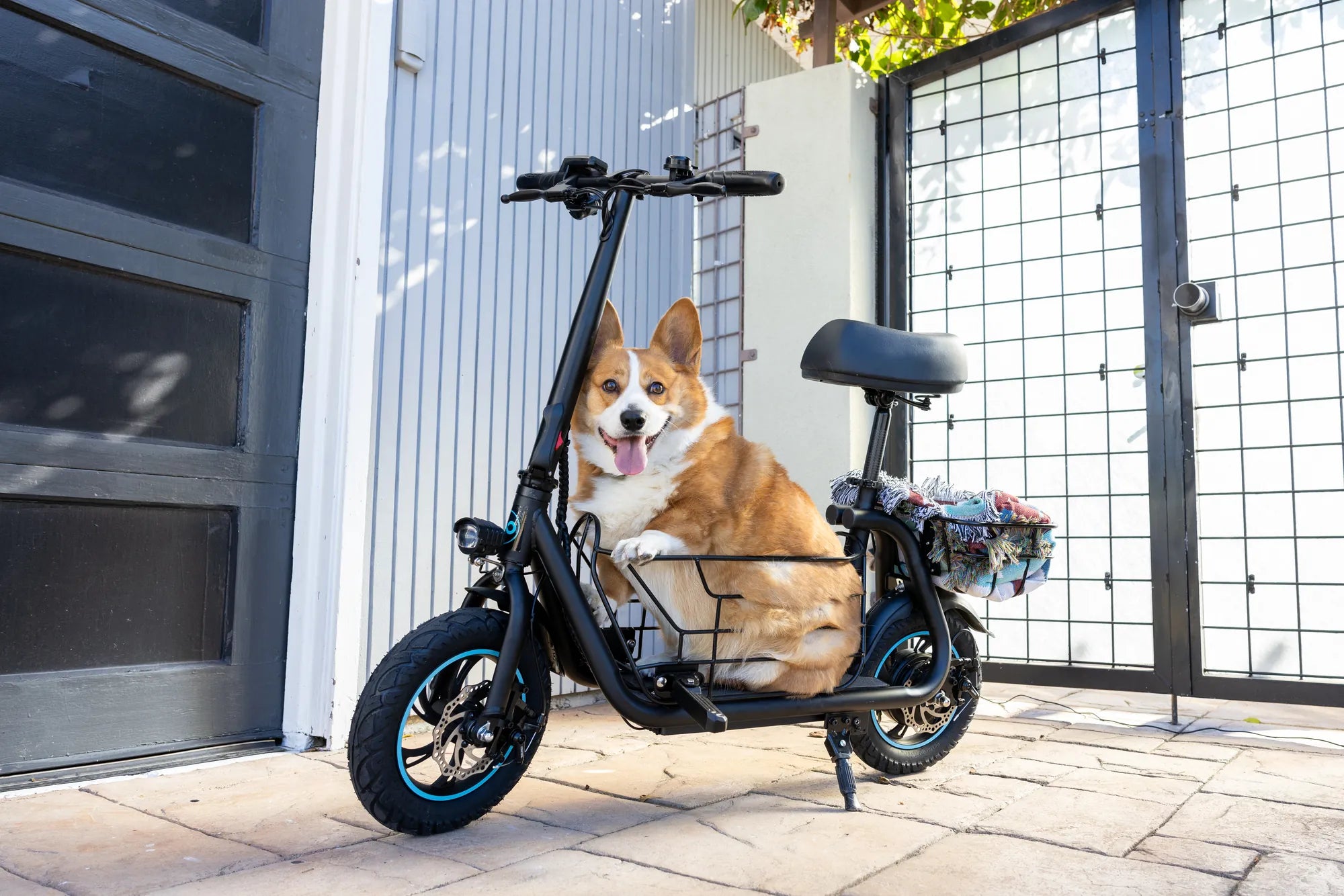
Forget riding in a stiff, straight line. The true mastery of an electric scooter lies in the fluid, controlled side-to-side motion that expert riders use to navigate the urban jungle. This article will define what a side-to-side scooter technique is, break down the physics behind it, and detail its immense benefits for both commuters and enthusiasts. You will learn how to execute it safely, the critical scooter features that support it, and why pairing this skill with a reliable, well-engineered scooter is the key to unlocking a new level of riding confidence and control on any terrain.
What is a Side-to-Side Scooter Technique?
The term 'side to side scooter' does not refer to a specific product, but to a fundamental riding technique. It describes the active, controlled leaning and weight-shifting a rider uses to steer, balance, and absorb shocks. Unlike passive, upright riding, this dynamic approach engages your entire body.
This side-to-side movement is the core of advanced scooter handling. It involves subtly shifting your weight from one foot to the other and using your hips and knees to initiate turns. The scooter itself becomes an extension of your body's motion.
Mastering this side to side scooter skill is what separates novice riders from confident, capable ones. It transforms the scooter from a simple transporter into a responsive vehicle you can truly command. This technique is essential for navigating real-world conditions safely and efficiently.
Understanding this concept is the first step toward becoming a more proficient rider. It applies universally, whether you're on a compact commuter model or a robust off-road machine. The principles remain the same, even as the equipment changes.
The Core Physics of Side-to-Side Movement
The mechanics behind effective side-to-side scooter control are rooted in basic physics. It primarily involves managing the center of gravity and utilizing counter-steering. Your body weight is the primary tool for initiating and controlling turns.
To initiate a left turn, you first press slightly on the right handlebar (counter-steer). This causes the scooter to lean left. You then shift your body weight into that lean, pressing down with your left foot. This coordinated action creates a smooth, stable arc. The side to side scooter motion is this continuous flow of lean and weight transfer.
This technique is crucial for maintaining balance, especially at higher speeds. A rigid rider creates a top-heavy, unstable system. A rider who moves with the scooter lowers the combined center of gravity and dynamically adjusts to imperfections in the road surface. This active riding style directly increases stability.
Furthermore, using your legs as natural suspension by bending your knees allows you to absorb bumps. This prevents shocks from traveling up to your torso and destabilizing you. The side-to-side technique is, therefore, a holistic approach to riding that integrates steering, balance, and shock absorption.
Key Benefits of Mastering the Side-to-Side Technique
Adopting a dynamic side to side scooter riding style offers a multitude of practical advantages that enhance safety, performance, and comfort. The benefits are immediate and significant for any rider looking to improve.
First and foremost is dramatically improved stability on uneven surfaces. Pavement cracks, potholes, and gravel are less disruptive when your body is actively compensating. You become part of the suspension system, maintaining traction and control where a static rider might wobble or fall.
Second, cornering becomes more efficient and secure. By leaning into a turn, you use centrifugal force to your advantage, allowing for tighter, faster turns with less risk of the tires slipping out. This is invaluable for navigating urban corners and bike lane switches smoothly.
Third, ride comfort increases substantially. By using your knees and ankles to absorb impacts, you reduce fatigue on your joints and spine. Long commutes become less jarring, making the side to side scooter method essential for daily riders. It turns a rough ride into a flowing one.
For the Urban Commuter: Navigating the Concrete Jungle
In city environments, the side-to-side technique is a survival skill. It allows for quick, controlled maneuvers around sudden obstacles like opening car doors or pedestrians. Weaving through static traffic or a slalom of street furniture becomes intuitive and safe.
Maintaining control on wet metal grates, painted road lines, or cobblestone streets is another critical application. A dynamic rider can adjust their weight instantly to regain traction, whereas a stiff rider is more likely to slide. This side to side scooter skill directly translates to all-weather confidence.
Executing safe turns in traffic is paramount. A smooth, predictable lean signals your intention to other road users more clearly than a jerky handlebar turn. It also keeps your scooter's path stable within your lane, preventing dangerous swerves into adjacent traffic.
For the Off-Road Enthusiast: Conquering Unpredictable Terrain
On trails and dirt paths, the side to side scooter technique is non-negotiable. It is the primary method for handling loose surfaces like gravel, sand, and mud. Shifting your weight to the rear wheel improves traction for climbing, while leaning through ruts helps guide the scooter without fighting the handlebars.
Navigating roots, rocks, and off-camber sections requires constant, minute weight adjustments. Your body English becomes the key to keeping the scooter upright and on your chosen line. A rigid posture on such terrain is a direct path to a loss of control.
This active riding style also allows for controlled drifts and slides on loose terrain, a useful skill for managing speed on descents. Mastering the side-to-side movement off-road unlocks the full potential of a capable electric scooter, transforming it into a true adventure vehicle.
Choosing a Scooter Engineered for Dynamic Riding
Not all electric scooters are created equal for supporting an active side to side scooter technique. Specific engineering features are essential to perform this skill safely and effectively. A scooter must have a stable platform, responsive handling, and reliable components.
When selecting a scooter for dynamic riding, key features to prioritize include a low center of gravity, a robust suspension system, and high-traction tires. These elements work in concert to translate your body's input into precise, controlled movement on the road or trail.
Brands that prioritize performance and safety, like Gyroor, design their scooters with these principles in mind. Gyroor's lineup, trusted by over 100,000 riders, incorporates the stability, suspension, and durability needed to master the side-to-side technique with confidence.
Stability and Frame Geometry
The foundation of control is a stable frame. A scooter designed for dynamic riding needs a low deck height and a wide standing platform. This lowers the combined rider-scooter center of gravity, making leans more stable and less tippy.
A rigid, welded aluminum or steel frame is also critical. It must not flex under the torsional stresses of aggressive cornering. Gyroor models utilize reinforced frames that provide a solid, predictable base for all your side to side scooter movements, ensuring every input is translated directly to the wheels.
Suspension Systems for Active Weight Shifting
Front and rear suspension are not just for comfort; they are vital for control. A good suspension system allows the wheels to maintain contact with the ground during leans and over bumps. This preserves traction when you need it most.
Gyroor's off-road and performance models feature robust spring or hydraulic suspension. This allows you to actively shift your weight and use the suspension to absorb impacts mid-corner, a key aspect of advanced side to side scooter technique. It turns the scooter into a responsive partner rather than a rigid platform.
Tire Type and Traction
Tires are your only contact with the ground. For dynamic riding, pneumatic (air-filled) tires are superior to solid ones. They provide better grip, especially when leaning, and absorb small vibrations. Wider tires offer a larger contact patch, increasing cornering stability.
The tread pattern also matters. Commuter models may have semi-slick tires for pavement, while off-road models feature aggressive, knobby treads for dirt. Gyroor equips its scooters with tires appropriate for their intended use, ensuring you have the necessary traction for safe side-to-side maneuvers.
The Non-Negotiable: Reliability and Safety
Practicing and using the side to side scooter technique demands a trustworthy machine. You cannot focus on your riding if you doubt your scooter's fundamentals. This is where Gyroor's core engineering principles provide essential peace of mind.
Every Gyroor scooter is powered by a UL-certified battery pack, tested for over 500 charge cycles. This ensures safe, consistent power delivery—critical when you need a burst of acceleration out of a corner. The IPX5 water-resistant rating means you can confidently ride on damp roads after a rain shower without fear of electrical failure. Backed by a comprehensive 1-year warranty, Gyroor scooters are built to support riders as they develop and push their skills.
Essential Safety Gear and Foundational Practice Drills
Learning the side to side scooter technique increases your control, but it also introduces new dynamics. Therefore, proper safety gear is non-negotiable. Never practice without full protection.
At a minimum, you need a certified bicycle or multi-impact helmet, durable gloves (to protect your hands in a fall), and knee and elbow pads. For higher-speed or off-road practice, consider additional protection like a motocross-style jersey with shoulder pads or even a full-face helmet.
Start your practice in a completely safe, controlled environment. An empty parking lot is ideal. Begin at slow speeds to build muscle memory without risk. The goal is to make the movements automatic before applying them in traffic.
Drill 1: The Slow Slalom. Place small markers (water bottles, cones) in a straight line about 10 feet apart. Ride slowly, practicing smooth side-to-side leans to weave through them. Focus on using your weight and bent knees, not just the handlebars.
Drill 2: Figure Eights. Draw or imagine two large circles to form a figure eight. Practice riding the pattern, focusing on transitioning your lean smoothly from one direction to the other. This drill teaches you how to link turns, a core part of the side to side scooter skill set.
Drill 3: Emergency Swerve. Mark a spot on the ground. Ride toward it at a moderate pace and practice a sharp, controlled lean to avoid it, then immediately straighten up. This builds the instinct for obstacle avoidance without braking, a potentially lifesaving maneuver.
Side-to-Scooter Feature Comparison Table
| Feature | Importance for Side-to-Side Technique | Entry-Level Commuter Scooter | Performance-Oriented Scooter (e.g., Gyroor) |
|---|---|---|---|
| Frame & Deck | Provides stable, rigid platform for weight transfer. | Narrow deck, higher center of gravity. | Wide, reinforced deck; low center of gravity. |
| Suspension | Absorbs impacts during leans, maintains traction. | Often none or only front spring. | Dual suspension (front & rear), hydraulic or high-quality spring. |
| Tires | Provides grip for secure leaning and cornering. | Small, solid rubber tires. | Large, pneumatic tires (8.5-10") with tread for intended use. |
| Braking System | Allows controlled speed management into and out of turns. | Single mechanical disc or drum brake. | Dual hydraulic or electronic brakes for modulated stopping power. |
| Power & Control | Predictable acceleration is key when leaning. | Basic throttle, can be jerky. | Smooth, responsive throttle control; multiple speed modes. |
| Build Quality & Warranty | Technique stresses components; reliability is safety. | Limited or no meaningful warranty. | Robust construction with comprehensive warranty (e.g., Gyroor's 1-year). |
Frequently Asked Questions (FAQ)
Is side-to-side scooting safe?
When learned progressively and executed with proper safety gear on a capable scooter, the side to side scooter technique is significantly safer than rigid, upright riding. It increases your control and stability, making you better equipped to handle unexpected road hazards. The risk lies in attempting it without practice or on an unsuitable scooter.
Can I do this on any electric scooter?
Not ideally. The side-to-side technique requires a scooter with good inherent stability, effective suspension, and grippy tires. Cheap, lightweight models with small solid tires and no suspension are not designed for this. Attempting aggressive leans on them can lead to wheel slip, frame flex, and loss of control. It is both ineffective and dangerous.
Does this riding style drain the battery faster?
The act of leaning and cornering itself has a negligible direct impact on battery life. However, dynamic riding often involves more frequent acceleration and regenerative braking, which can affect efficiency. The trade-off is worth it: the increased control and safety far outweigh a minor potential reduction in range. Smooth, flowing side to side scooter movement is actually very efficient.
How long does it take to learn the basics?
Most riders can grasp the fundamental concept and feel of basic weight-shifting in a single practice session of 30-60 minutes in a safe area. Developing true proficiency and instinct, where the movements become automatic in traffic, typically takes a few weeks of consistent riding. It is a skill that continues to improve with time and experience.
Is this technique useful for slower speeds?
Absolutely. In fact, controlled side-to-side weight shifting is crucial for low-speed balance. When you are moving too slowly for gyroscopic effects to stabilize you, small foot and hip adjustments are what keep you upright. Mastering this low-speed balance is a foundational part of the overall side to side scooter skill set.
Elevate Your Ride with Mastered Control
The journey from a passive passenger to an active commander of your electric scooter begins with embracing the side-to-side technique. This dynamic approach to riding unlocks unparalleled stability, safety, and enjoyment, transforming your daily commute or weekend adventure. It is the difference between simply being transported and truly riding.
This skill, however, must be built on a foundation of reliable equipment. A scooter engineered for performance and safety amplifies your abilities and protects you as you learn. Gyroor designs its electric scooters with this very philosophy—offering the stable frames, responsive suspension, and UL-certified safety needed to practice and perfect your side to side scooter control with total confidence.
Ready to transform your ride? Stop fighting your scooter and start flowing with it. Explore the full range of performance-engineered electric scooters and e-bikes designed to support skilled, dynamic riding. Browse the full Gyroor collection at gyroorboard.com and find the perfect partner to master the road, your way.
e bike controller 48v 500w: The Complete Guide to Your E-Bike's Brain
Do U Need a License to Drive a Scooter? A Complete Legal Guide