

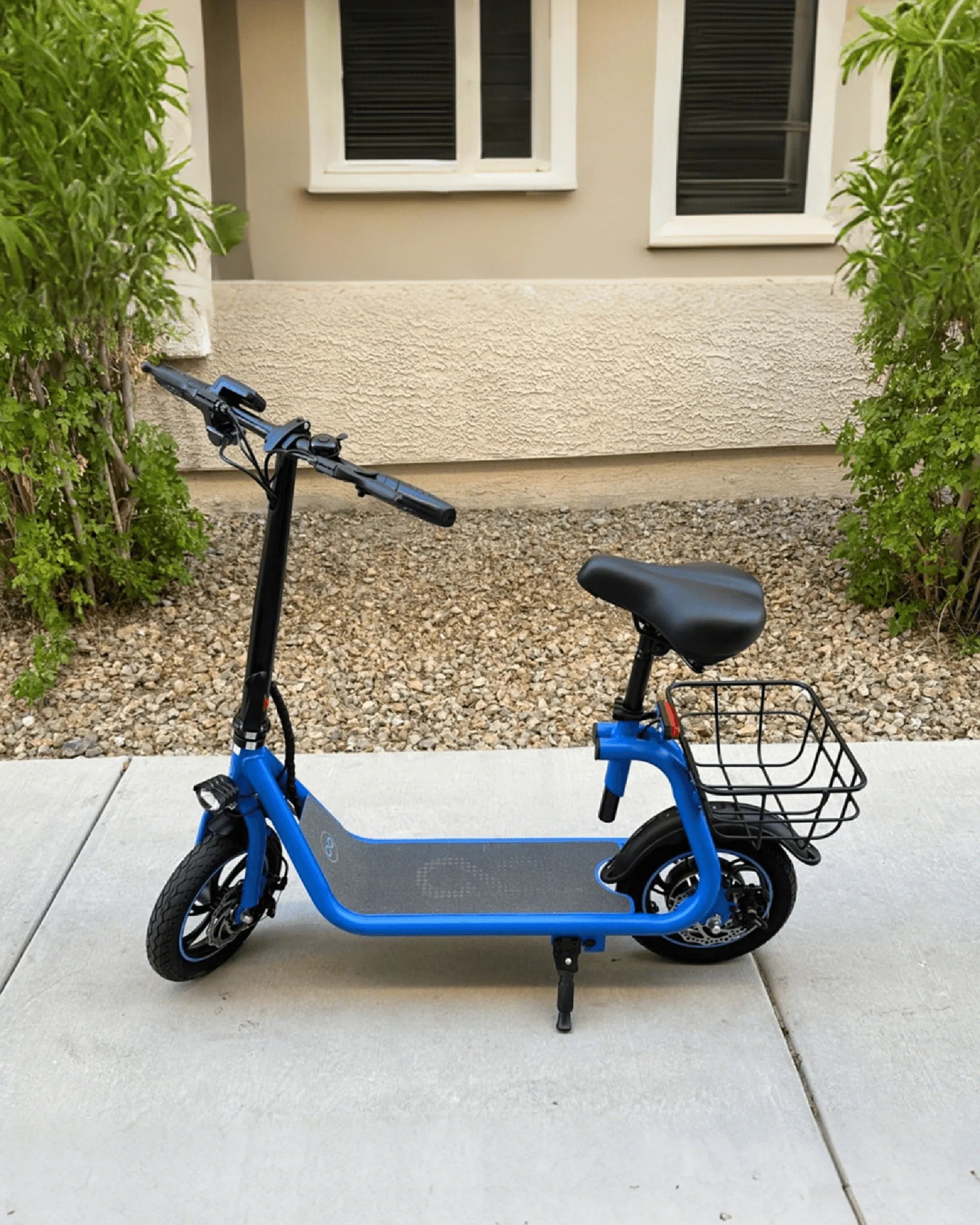
Introduction: The Heart of Your E-Bike – Demystifying the 500W 48V Controller
Your electric bike's performance, safety, and smooth ride are governed by a single, often overlooked component: the controller. Specifically, the e bike controller 48v 500w represents a popular and balanced setup powering countless urban commuters and light trail riders. This unit is the electronic brain, precisely managing the flow of energy from the battery to the motor.
Understanding this component is not just for technicians; it's key for any rider who wants to optimize their bike's potential, diagnose issues, or make informed upgrades. A quality 48v 500w e bike controller ensures efficient power delivery, protects your investment, and provides a consistent riding experience. This guide will dissect its function, features, and what separates a reliable unit from a potential point of failure.
Understanding the 48V 500W Controller: Core Components and Function
At its core, an e-bike controller is a sophisticated power management system. It acts as an intermediary between the battery pack and the motor. The controller takes direct current (DC) from the battery and, using a network of transistors called MOSFETs, converts it into precisely timed pulses of power sent to the motor windings.
This process, known as pulse-width modulation (PWM), controls the motor's speed and torque by varying the width of these electrical pulses. The "48V" denotes the system's nominal operating voltage, while "500W" refers to its nominal continuous power output. This combination dictates the fundamental performance envelope of your e-bike.
The controller also processes all input signals from the rider. It interprets commands from the throttle, pedal assist sensor (PAS), brake cut-off levers, and the display unit. It then orchestrates the motor's response, making it the central hub for all electronic communication on the bike. A failure here often means a complete loss of motor function.
What Does a "500W" Rating Really Mean?
The 500-watt rating on an e bike controller 48v 500w is its nominal or continuous power output. This is the power level it can sustain indefinitely under normal operating conditions without overheating. It's a crucial metric for understanding sustained performance, like climbing a long hill or maintaining a higher speed on a flat road.
However, most controllers are also capable of a higher peak power output for short bursts, often reaching 750W or more. This peak power is what provides the initial punch for acceleration from a stop or tackling a steep, short incline. The controller's ability to handle these peaks safely is a mark of its quality and component robustness.
This rating is also intimately tied to local e-bike regulations. In many regions, including parts of the US and Europe, 500W aligns with common power limits for Class 1, 2, and 3 e-bikes intended for road and path use. A properly rated 48v 500w e bike controller helps ensure your bike remains compliant with these laws, avoiding potential legal issues.
The 48V Advantage: Efficiency and Performance
Why choose a 48-volt system over a more common 36V setup? The answer lies in efficiency and performance. For the same power output (watts), a higher voltage system requires less current (amps). This relationship is defined by the formula: Power (W) = Voltage (V) x Current (A).
To deliver 500 watts, a 36V system would draw about 13.9 amps, while a 48V system only needs about 10.4 amps. Lower current reduces resistive heat loss in the wiring and connectors, leading to greater overall system efficiency. It also places less electrical stress on components, which can contribute to longer lifespan and cooler operation.
Practically, this translates to better real-world performance. A 48V system often provides stronger torque at lower speeds for better hill-climbing, and it can typically achieve a higher top speed potential than a 36V system of the same wattage. The e bike controller 48v 500w manages this more efficient power delivery, making it a preferred choice for riders seeking a balance of pep and range.
Key Features to Look for in a Quality 48V 500W E-Bike Controller
Not all controllers are created equal. The market is flooded with generic units of varying quality. A reliable controller from a reputable brand will incorporate several critical features that ensure safety, durability, and seamless operation. Identifying these features is essential when selecting a replacement or evaluating your bike's stock component.
A quality controller should have a clear label stating its voltage (48V), continuous current (e.g., 15A, 18A), and phase current ratings. It should use high-quality, branded MOSFETs and capacitors capable of handling the electrical load and heat. The construction should feel solid, not flimsy, with securely soldered connections and a robust housing.
Compatibility is non-negotiable. The controller must match your motor's type (geared hub, direct-drive hub, or mid-drive) and its sensor configuration (sensored, sensorless, or dual-mode). Using an incompatible unit can lead to poor performance, strange noises, or immediate failure. Always verify specifications before purchase.
Safety and Certification: Non-Negotiables
Built-in electronic protections are the most critical aspect of a safe controller. A quality 48v 500w e bike controller will include multiple layers of protection to safeguard the battery, motor, and itself. These are not optional extras; they are fundamental requirements for safe operation.
- Over-Current Protection (OCP): Automatically limits the current draw if it exceeds a safe threshold, preventing wire overheating and MOSFET burnout.
- Over-Voltage Protection (OVP): Protects the controller from voltage spikes, which can occur during regenerative braking or from a faulty charger.
- Low-Voltage Cutoff (LVC): Safely shuts down the system when the battery voltage drops too low, preventing deep discharge that can permanently damage lithium-ion cells.
- Thermal Protection: Reduces power output or shuts down if the controller's internal temperature exceeds safe limits.
Look for controllers that are CE, RoHS, or UL certified. These certifications indicate the product has been tested to meet specific safety, environmental, and electromagnetic interference standards. Brands like Gyroor prioritize these protections, integrating them into their controller designs to work in perfect harmony with their UL-certified battery packs for total system safety.
Connectivity and Compatibility: Ensuring a Perfect Fit
The controller is the nexus of your e-bike's wiring harness. Its connectors must physically and electrically match every other component. The most common compatibility pitfalls involve the motor hall sensor/phase wire connectors, the throttle, the PAS sensor, the brake levers, and the display.
Before buying a replacement e bike controller 48v 500w, you must identify your motor's type. A sensored motor requires a controller with hall sensor inputs for smooth startup and low-speed operation. Sensorless motors are more forgiving but can cog at very low speeds. Some advanced controllers offer dual-mode compatibility.
Furthermore, the communication protocol between the controller and the display must match. Some use simple voltage-level signals, while others use digital communication protocols (like UART or CAN bus). A mismatch here will result in a non-functional display or incorrect data. Trusted brands ensure this integration is seamless from the factory.
Durability and Environmental Protection
An e-bike controller lives in a harsh environment. It's exposed to vibration, moisture, road spray, dust, and wide temperature swings. Therefore, its physical construction is as important as its electronics. A durable housing is the first line of defense.
A high-quality controller will feature a sealed aluminum alloy casing. Aluminum acts as a heat sink, passively drawing heat away from the internal MOSFETs and other components. The sealing is rated using an Ingress Protection (IP) code. For real-world riding, a rating of IPX5 or higher is recommended, indicating protection against water jets from any direction.
This level of protection is crucial for commuters and all-weather riders. A controller that isn't properly sealed will eventually succumb to corrosion or short-circuiting from moisture ingress. Gyroor designs its e-bike systems with this in mind, often utilizing IP-rated components to ensure reliability in diverse riding conditions, backed by a comprehensive 1-year warranty.
Performance Tuning and Troubleshooting Common Issues
For the enthusiast, the controller can be a point of customization. For the average rider, it's often a source of confusion when problems arise. Understanding the basics of tuning and troubleshooting empowers you to get the most from your bike and diagnose issues effectively.
Basic tuning might involve adjusting the controller's current limit, speed limit, or the sensitivity of the pedal assist system. However, these adjustments should be made with caution and a clear understanding of the consequences. Always prioritize the specifications of your battery and motor to avoid causing damage or creating a safety hazard.
When troubleshooting, a systematic approach is best. Start with the simplest, most common issues before suspecting the controller itself. Many perceived controller failures are actually caused by loose connections, a faulty throttle, or a tripped brake sensor.
Can You "Tune" a 48V 500W Controller?
The ability to tune a controller depends entirely on its design. Many basic, sealed controllers are not user-programmable. Their parameters are fixed at the factory. However, a growing number of controllers, especially those on higher-performance e-bikes, are programmable via a USB cable and proprietary software.
If your 48v 500w e bike controller is programmable, you may be able to adjust parameters like the current limit (amp draw), which directly affects torque and acceleration. You might also adjust the low-voltage cutoff point, speed limit, or the number and intensity of PAS levels. Some allow fine-tuning of the motor's timing for efficiency or performance.
It is critical to warn against exceeding the system's designed limits. Increasing the current limit beyond what your battery's BMS or motor windings can handle is a primary cause of failure. It can lead to melted connectors, fried MOSFETs, or even battery damage. Such modifications will also void any manufacturer's warranty, including Gyroor's 1-year coverage.
Common Symptoms of a Failing Controller
Diagnosing a faulty controller requires observation. Here are common symptoms and their potential links to the e bike controller 48v 500w:
- Motor Not Engaging: The display powers on, but the motor does not respond to throttle or pedal assist. Check connections first, especially to the motor and throttle.
- Intermittent Power: The motor cuts in and out unpredictably. This can point to a loose wire, a failing connection inside the controller, or overheating causing thermal shutdown.
- Error Codes on Display: Many modern systems display error codes (e.g., E03, E08) that specifically indicate controller, motor hall sensor, or communication faults. Consult your manual.
- Excessive Heat: The controller casing becomes too hot to touch during normal riding. This indicates overloading, poor ventilation, or failing internal components.
- Strange Motor Noises (Cogging/Jerking): At low speeds, the motor jerks or stutters. This often points to a failure in the hall sensor circuit within the controller or a poor connection to the motor's sensors.
A basic diagnostic step is to check the battery voltage at the controller's input terminals to ensure it's within the normal range (~54V fully charged for a 48V system). If all connections are secure, battery voltage is good, and other components (throttle, PAS) test fine, the controller is likely the culprit.
Controller Comparison: Generic vs. Brand-Integrated Systems
To illustrate the tangible differences in quality and performance, the table below contrasts a typical generic aftermarket controller with a controller designed as part of an integrated system from a brand like Gyroor.
| Feature | Generic Aftermarket 48V 500W Controller | Integrated System Controller (e.g., Gyroor) |
|---|---|---|
| Build & Housing | Often plastic or thin aluminum; seals may be basic or non-existent. | Robust aluminum housing acting as a heat sink; IPX5 or better sealing standard. |
| Safety Protections | May have basic OCP/LVC; protections can be inconsistent or poorly calibrated. | Full suite (OCP, OVP, LVC, Thermal) rigorously tested and calibrated to match UL-certified battery. |
| Component Quality | Uses lower-grade, unbranded MOSFETs and capacitors to cut costs. | Uses higher-spec, name-brand electronic components rated for reliability and longevity. |
| Compatibility & Integration | Requires user to match connectors and parameters; plug-and-play is not guaranteed. | Designed specifically for the motor, battery, and display; guaranteed plug-and-play operation. |
| Software & Tuning | Usually fixed, non-programmable firmware. | Often features optimized, stable firmware; some models may offer limited user tuning via display. |
| Warranty & Support | Limited or no warranty; difficult to obtain technical support. | Backed by a 1-year comprehensive warranty with accessible customer support. |
Choosing the Right Controller: Gyroor's Approach to Reliability
Selecting a controller is about more than matching numbers. It's about choosing the component that will reliably and safely orchestrate your entire e-bike system for thousands of miles. This is where the philosophy of integrated design, championed by brands like Gyroor, proves its value.
An e bike controller 48v 500w from a trusted brand is not an isolated component. It is engineered as part of a holistic system. It is calibrated from the factory to work in perfect synergy with a specific motor and a UL-certified battery pack. This ensures that all safety protocols are aligned and that performance is optimized for efficiency and smooth power delivery.
This integrated approach eliminates guesswork and compatibility headaches for the rider. It provides a cohesive user experience where the pedal assist feels natural, the throttle response is predictable, and the system behaves consistently in various conditions. It turns the controller from a potential weak link into a cornerstone of reliability.
Built for the Long Haul: Engineering Peace of Mind
Gyroor's commitment to reliability is embedded in its controller design. Knowing their e-bikes are trusted by over 100,000 riders, they engineer for durability. The controllers are built to manage power from their robust, UL-certified batteries safely, incorporating the full array of protection circuits discussed earlier.
This engineering focus translates directly to peace of mind for the rider. The 1-year comprehensive warranty covering the controller and other electronic components is a testament to this confidence. It means that should a rare fault occur, you have access to straightforward support and replacement, not a frustrating search for a compatible generic part.
Furthermore, the use of quality materials—the aluminum housing, high-grade connectors, and superior internal components—directly impacts longevity. A well-built 48v 500w e bike controller operating within its specifications should last for many years, often outlasting other consumable parts on the bike, making it a true long-term investment.
The Perfect Synergy: Controller, Battery, and Motor
Ultimate e-bike performance is achieved when the controller, battery, and motor operate as a single, harmonious unit. The controller is the conductor of this orchestra. A high-quality unit ensures the battery's power is delivered efficiently to the motor, maximizing range and providing smooth, controllable acceleration.
This synergy is why piecemeal upgrades can be problematic. Swapping only the controller for a higher-power unit without upgrading the battery and motor can lead to failure. Conversely, a low-quality controller can bottleneck the performance of a good battery and motor. The ideal scenario is a matched set designed and tested to work together from the outset.
Therefore, when considering an e-bike, the quality of its e bike controller 48v 500w is a key indicator of the overall build quality. It reflects the manufacturer's commitment to safety, performance, and rider satisfaction. Investing in a system where this component is a priority ensures you get a vehicle that is not only fun to ride but also dependable for your daily commute or weekend adventures.
FAQ: Your 48V 500W E-Bike Controller Questions Answered
Q: Can I upgrade my 36V e-bike to a 48V 500W controller?
A: This is a complex system change, not a simple controller swap. It requires a compatible 48V battery (as a 36V battery will not work) and often a check that the motor can handle the higher voltage. The display, throttle, and sensors may also need to be compatible. It's generally not recommended due to the potential for incompatibility and safety issues; a complete system upgrade is often more sensible.
Q: Why does my controller get hot? Is that normal?
A> Some warmth is normal during operation due to electrical inefficiencies. However, excessive heat (too hot to keep your hand on) is a problem. It indicates overloading from steep, prolonged hills, high current settings, poor ventilation (e.g., controller stuffed in a sealed bag), or a fault like failing MOSFETs. Ensure the controller is mounted in an open, airflow-exposed location.
Q: Are all 48V 500W controllers the same?
A: Absolutely not. The wattage and voltage are just two specifications. They can differ drastically in build quality, component grade (e.g., MOSFET quality), the presence and accuracy of safety protections, software tuning, connector types, and compatibility. A quality controller from a reputable brand is fundamentally different from a generic unit, impacting safety, performance, and lifespan.
Q: How long should an e-bike controller last?
A> With proper use and within its designed specifications, a quality controller should last for several years—often 3-5 years or more—and potentially the life of the e-bike. Controllers are solid-state devices with no moving parts, so their lifespan is primarily determined by heat management, electrical stress, and environmental protection. Poor quality units or those operated beyond their limits can fail much sooner.
Q: My motor jerks at low speed. Is it the controller?
A: This "cogging" or jerking is a classic symptom of a hall sensor communication issue. It could be caused by: 1) A faulty hall sensor inside the motor, 2) A broken wire in the hall sensor cable, or 3) A failing hall sensor circuit within the controller itself. Diagnosing requires checking continuity in the sensor wires and testing sensor signals. The controller is a likely suspect if the motor and wiring check out.
Final Thoughts on Your E-Bike's Command Center
The e bike controller 48v 500w is the unsung hero of your electric bicycle. Its role in managing power, ensuring safety, and delivering a smooth ride cannot be overstated. By understanding its function, key features, and the importance of quality, you become a more informed and empowered e-bike owner or shopper.
Choosing a system with a well-engineered controller, like those integrated into Gyroor e-bikes, is an investment in reliability and peace of mind. It guarantees that the critical link between your battery and motor is designed for durability, protected against the elements, and backed by solid customer support. Your riding experience depends on this small but mighty component.
Ready to experience the difference a fully integrated, reliable e-bike system can make? Explore a range of models designed with precision-engineered electronics, robust 48v 500w e bike controller systems, and UL-certified safety from a trusted brand. Browse the full Gyroor collection at gyroorboard.com and find the perfect electric companion for your journey.
Do You Have to Have a License for a 150cc Scooter? A Complete Legal Guide
Side to Side Scooter: The Ultimate Guide to Dynamic Riding & Control